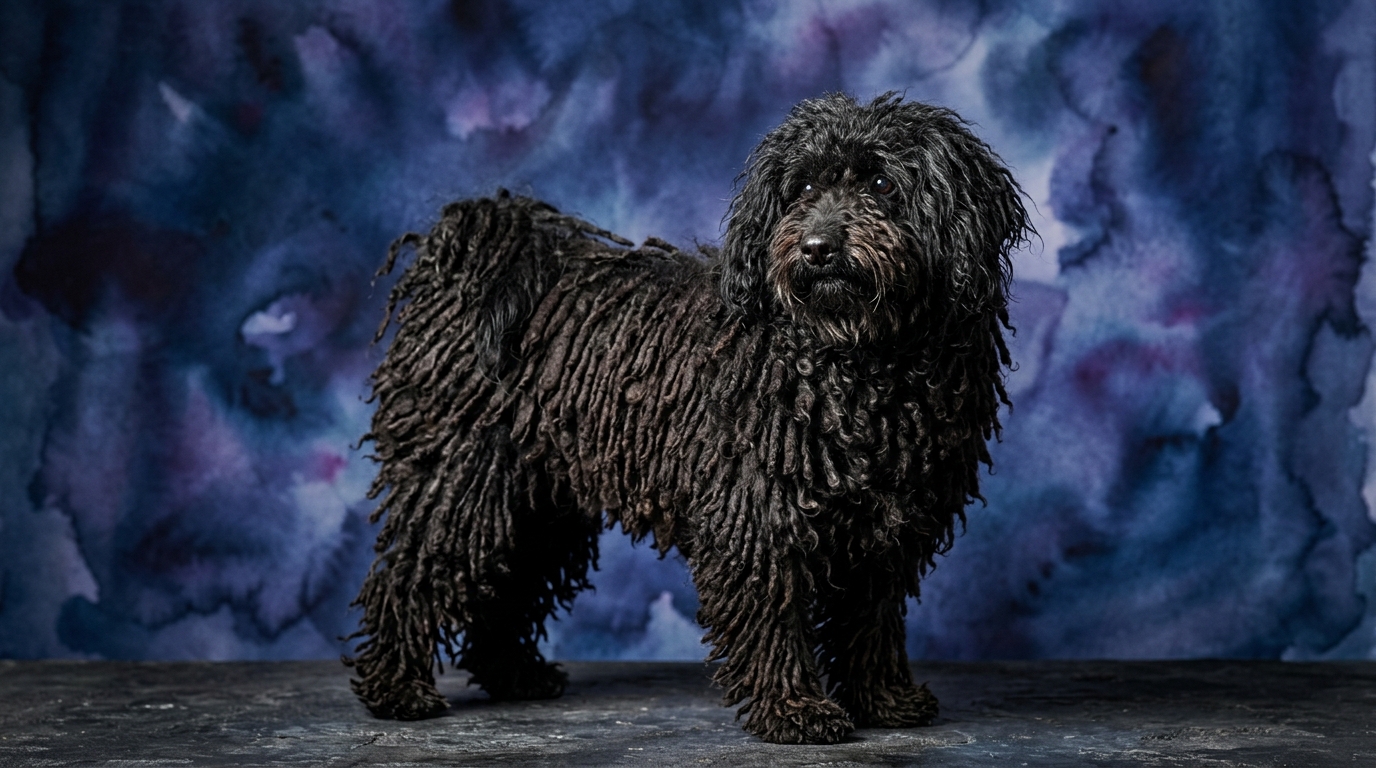
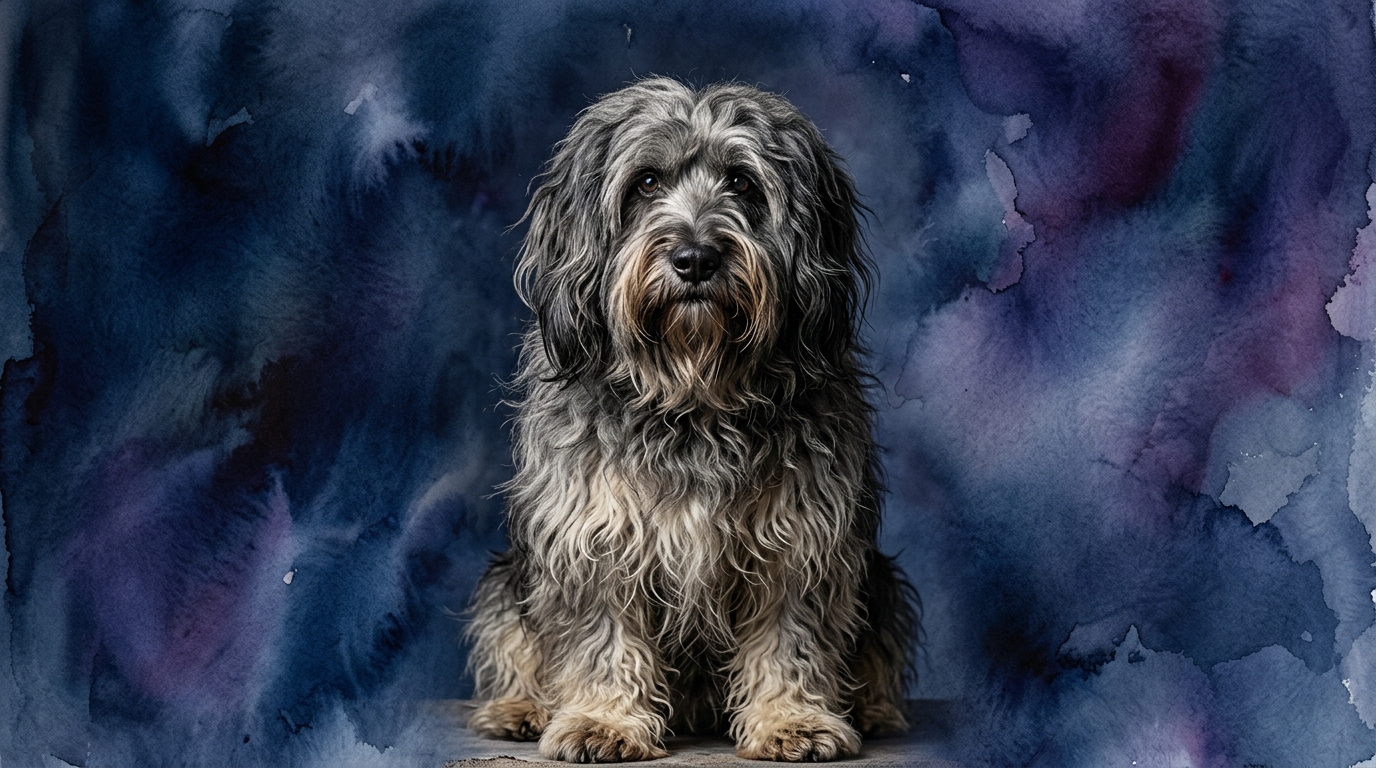
Side-by-Side IQ Profile: Puli vs. Polish Lowland Sheepdog
The Puli, a distinctively corded Hungarian herding dog, holds a notable position in canine cognition, ranking #25 on Stanley Coren's scale of working and obedience intelligence. Our Pet IQ Lab assessment reveals a robust profile: Problem Solving at 4/5, Training Speed at 4/5, Social Intelligence at 3/5, Instinctive Drive at 3/5, and Memory at 4/5. This suggests a breed that quickly grasps new concepts and retains information effectively, often finding innovative solutions to challenges.
In contrast, the Polish Lowland Sheepdog, a shaggy, robust herding dog originating from Poland, does not appear on Coren's specific ranking, yet possesses its own commendable cognitive strengths. Our Pet IQ Lab scores for this breed are consistent across the board: Problem Solving at 3/5, Training Speed at 3/5, Social Intelligence at 3/5, Instinctive Drive at 3/5, and Memory at 3/5. This indicates a steady, reliable cognitive approach, perhaps less prone to independent problem-solving but still capable and adaptable within its working context. Both breeds share a 3/5 in Social Intelligence and Instinctive Drive, suggesting a balanced approach to pack dynamics and an inherent drive for their ancestral herding tasks, without being overly dominant or excessively driven.
The key distinctions emerge in Problem Solving, Training Speed, and Memory, where the Puli consistently scores a point higher. This numerical difference, though seemingly small, can translate into noticeable variations in how each breed learns, adapts, and interacts with its environment and human companions. Understanding these specific cognitive scores provides a clearer picture of their inherent capabilities and how they might manifest in daily life and training scenarios.
Where the Puli Excels Cognitively
The Puli's cognitive advantages are evident in its superior scores for Problem Solving (4/5), Training Speed (4/5), and Memory (4/5). This combination suggests a dog that not only learns rapidly but also applies that learning to novel situations and retains complex sequences of commands or behaviors over time. A Puli might, for instance, figure out how to open a child-proof gate by observing its human, or quickly generalize a learned behavior from one context to another, like 'stay' commands working equally well inside or outside the home. Their higher problem-solving aptitude means they are often more resourceful in navigating their environment, which can be both a blessing and a challenge for owners. They aren't just following instructions; they are often processing information and making decisions based on their understanding of the situation.
This breed's expedited training speed means fewer repetitions are typically needed for a Puli to master a new command or trick. This efficiency in learning can make training sessions feel more dynamic and rewarding for both dog and owner. Furthermore, their strong memory ensures that once a concept is learned, it is not easily forgotten, providing a solid foundation for advanced training and long-term behavioral consistency. This cognitive profile makes the Puli particularly well-suited for activities requiring quick thinking, agility, and the ability to recall intricate routines, such as competitive obedience or dog sports.
Where the Polish Lowland Sheepdog Shines Cognitively
While the Polish Lowland Sheepdog's scores of 3/5 across all five cognitive dimensions might appear modest compared to the Puli's, they represent a distinct and valuable cognitive style. This breed's consistent 3/5 in Problem Solving, Training Speed, and Memory suggests a steady, thoughtful, and reliable learner rather than a rapid, independent innovator. Their cognitive strength lies not in outsmarting a situation, but in their consistent application of learned behaviors and their ability to maintain focus without becoming easily overstimulated or distracted by external novelties.
The Polish Lowland Sheepdog's balanced cognitive profile means they are less likely to overthink or independently deviate from established routines. This can translate into a more predictable companion, one that reliably executes tasks without constantly seeking new ways to accomplish them or challenging boundaries with creative solutions. Their 3/5 in memory, for example, indicates they will retain information effectively, but perhaps require slightly more consistent reinforcement than a Puli to solidify complex behaviors. This steadiness makes them excellent partners for owners who appreciate a dog that is dependable and learns through consistent, positive reinforcement, building trust and understanding over time rather than through rapid-fire commands. They shine in environments where consistency and calm application of skills are valued.
Training Ease: Puli vs. Polish Lowland Sheepdog
When it comes to ease of training, the Puli generally holds an advantage due to its 4/5 scores in Training Speed and Problem Solving, compared to the Polish Lowland Sheepdog's 3/5 in both categories. A Puli typically processes new commands and concepts more quickly, requiring fewer repetitions to achieve mastery. This means that an owner might introduce a new trick or obedience command, and the Puli will grasp the core idea and perform it correctly within a few short sessions. Their problem-solving ability also means they can often generalize commands to new environments or slight variations in cues with minimal additional instruction.
The Polish Lowland Sheepdog, while certainly trainable, will likely require a more patient and consistent approach. Their 3/5 Training Speed indicates they will need more repetitions and a longer period of consistent practice to solidify new behaviors. This isn't a deficit in their capacity to learn, but rather a difference in their learning pace and style. They are less likely to make intuitive leaps or try novel solutions, preferring to learn through clear, consistent instruction and positive reinforcement. Owners of Polish Lowland Sheepdogs will find success by breaking down complex tasks into smaller steps and celebrating incremental progress, reinforcing a steady, reliable understanding rather than expecting instant comprehension.
Suitability for Active vs. Relaxed Owners
The Puli, with its higher Problem Solving (4/5) and Memory (4/5) scores, often thrives with active owners who can provide ample mental stimulation alongside physical exercise. These dogs possess an active mind that needs to be engaged; without sufficient mental challenges, a Puli might become bored and invent its own 'puzzles' to solve, which may not always align with human expectations. Owners who enjoy dog sports, complex training routines, or simply integrating their dog into a busy, mentally stimulating lifestyle will find the Puli to be an eager and capable partner. Their quick learning and strong recall make them adaptable to various activities, from agility to herding trials, requiring an owner willing to consistently provide structured engagement.
The Polish Lowland Sheepdog, with its consistent 3/5 scores, is well-suited for owners who appreciate a steady, less intensely driven companion, yet still understand the need for consistent engagement. While they are herding dogs and require regular physical activity, their cognitive profile suggests they might be less prone to inventing complex mischief if under-stimulated, compared to a Puli. They benefit from owners who are consistent in their routines and training, providing clear expectations and a calm, predictable environment. A relaxed owner who enjoys consistent walks, regular training sessions that reinforce learned behaviors, and a generally stable home life will find the Polish Lowland Sheepdog a steadfast and loyal companion, appreciating their dependable nature over a need for constant novelty.
The Verdict
Choose the Puli if you seek a quick-thinking, rapidly learning companion eager for complex mental challenges and consistent engagement in dog sports or advanced training. Their problem-solving prowess and memory make them excellent partners for active, experienced owners who can channel their cognitive energy effectively.
Opt for the Polish Lowland Sheepdog if you prefer a steady, reliable companion who learns effectively through consistent, patient guidance, valuing a predictable routine. They are ideal for owners who appreciate a dependable dog that, while needing activity, thrives on a calm and structured environment rather than constant novelty.
🧠 Find Your Pet's IQ Score
Our Pet IQ Lab assessment covers 25+ tests across 5 cognitive dimensions — personalized to your breed.
Take the Full IQ Test →Frequently Asked Questions
Do Pulik make good family pets?
Yes, Pulik can be wonderful family pets, especially with active families who understand their need for mental and physical engagement. Their social intelligence of 3/5 means they are generally amenable to family life but benefit from early socialization to ensure they are comfortable with children and other pets.
Is the Polish Lowland Sheepdog good with children?
The Polish Lowland Sheepdog, with its social intelligence of 3/5, can be very good with children, often forming strong bonds. However, like all herding breeds, they may try to 'herd' children, so supervision and teaching appropriate interactions are crucial to ensure harmonious relationships within the family.
Which breed requires more grooming, Puli or Polish Lowland Sheepdog?
Both breeds require significant grooming, but the Puli's unique corded coat demands specialized care to prevent matting and maintain its distinctive appearance. The Polish Lowland Sheepdog's shaggy double coat also needs regular brushing to prevent tangles and remove loose hair, but it is typically less complex than managing Puli cords.