Side-by-Side IQ Profile: Puli vs. Scottish Terrier
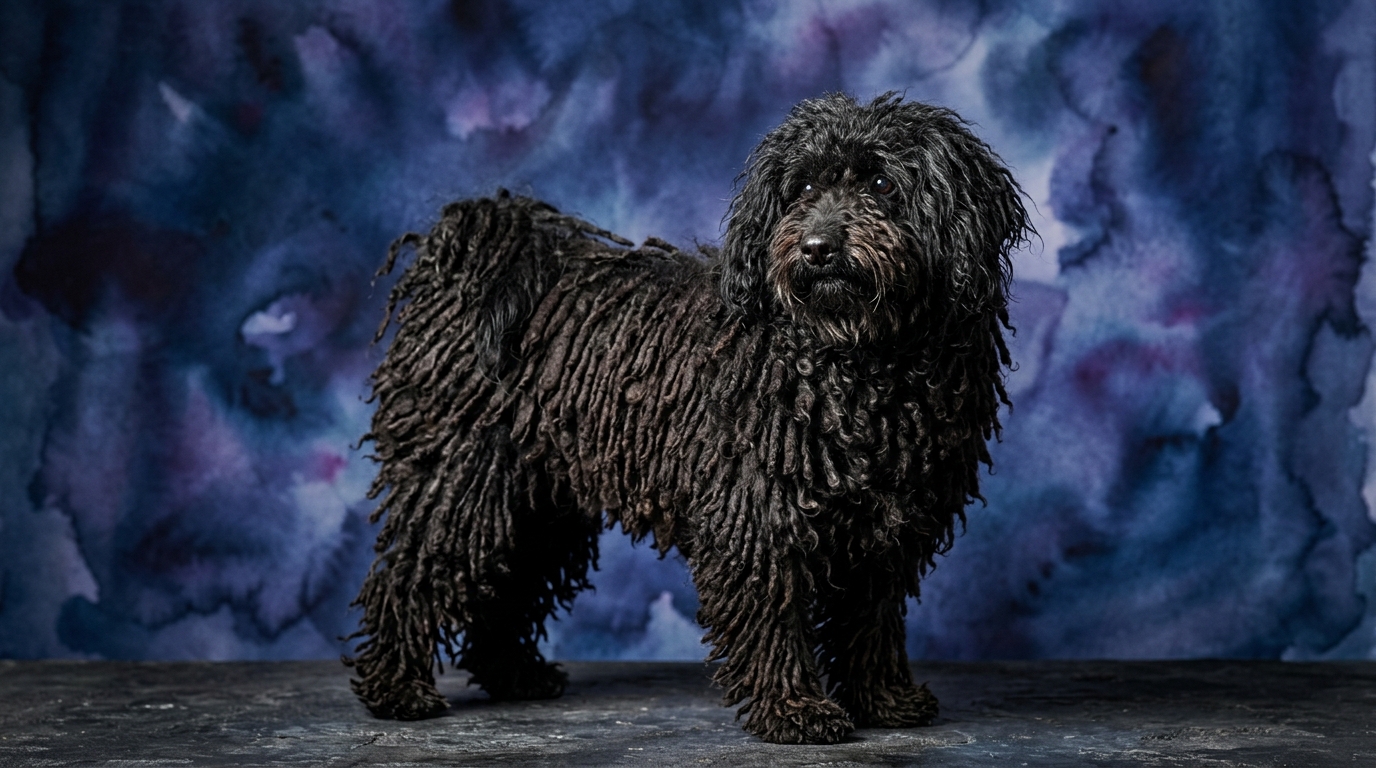
The Cosmic Pet Pet IQ Lab employs a multi-dimensional framework to assess canine intelligence, moving beyond simple obedience to encompass a broader spectrum of cognitive abilities. For the Puli, a Herding breed, its Coren rank of #25 places it among breeds that consistently demonstrate quick learning and command retention. Its cognitive profile shows exceptional aptitude: problem Solving at 4/5, indicating a strong capacity for devising solutions to novel situations; training Speed also at 4/5, suggesting it grasps new commands with relative ease and few repetitions; memory at 4/5, reflecting its ability to retain learned behaviors and experiences over time; social Intelligence at 3/5, meaning it forms strong bonds but may exhibit a degree of independence; and instinctive Drive at 3/5, representing its inherent herding instincts which are present but not overwhelmingly intense compared to some other herding breeds. This combination points to a dog adept at understanding and executing complex tasks with a high degree of cognitive flexibility.
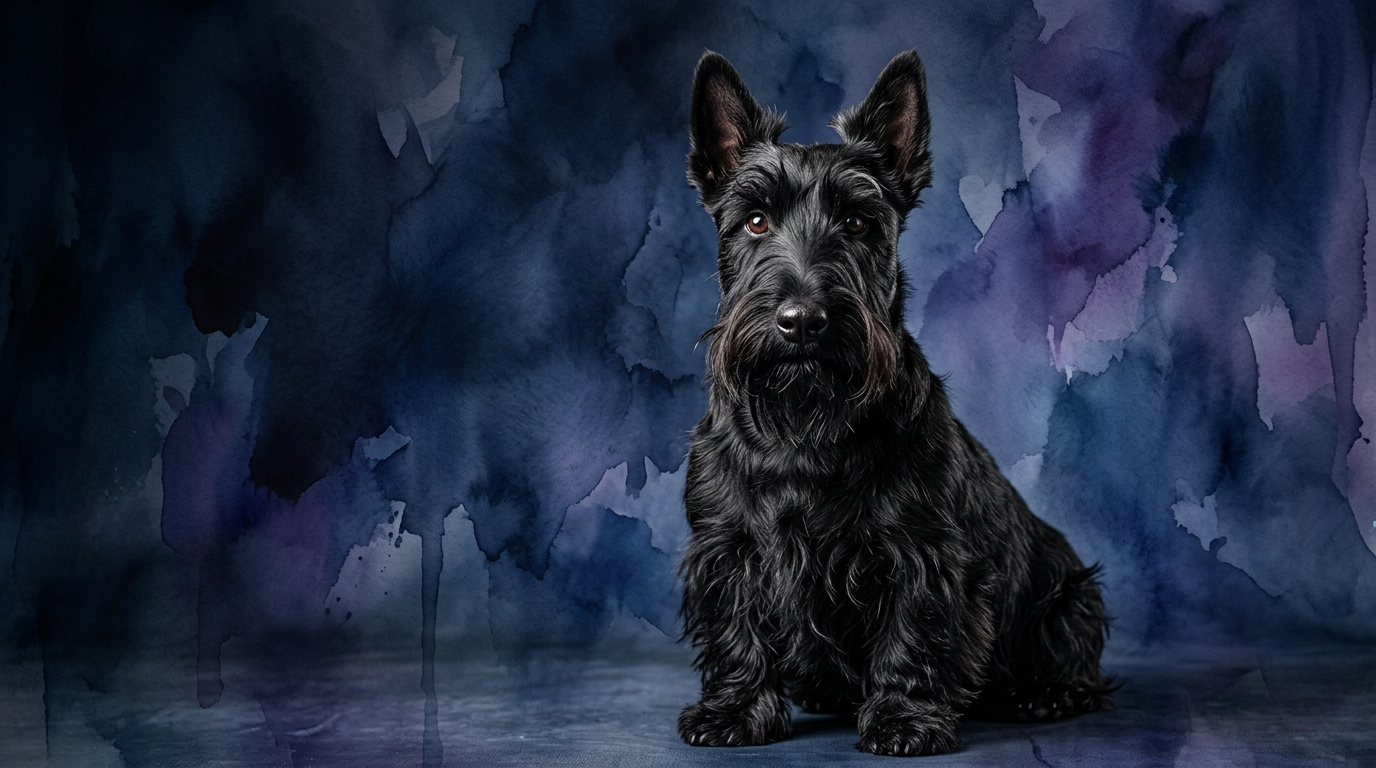
In contrast, the Scottish Terrier, a member of the Terrier group, holds a Coren rank of #65. This position indicates that while capable of learning, it generally requires more repetition to master new commands compared to breeds like the Puli. Its cognitive scores are consistently moderate across the board: problem Solving at 3/5, suggesting it can solve problems but often with a focus on its own objectives; training Speed at 3/5, meaning it learns at a steady pace but may require more consistent motivation and patience; social Intelligence at 3/5, indicating it forms close bonds with its family but can be reserved or discerning with strangers; instinctive Drive at 3/5, reflecting its inherent terrier traits like digging and chasing; and memory also at 3/5, showing it retains information relevant to its routines and personal interests. The Scottish Terrier's profile paints a picture of a dog with a robust, self-reliant intellect, often channeling its problem-solving and memory towards independent pursuits rather than solely human-directed tasks.
Where the Puli Wins Cognitively
The Puli's cognitive strengths shine particularly bright in areas demanding rapid comprehension, retention, and adaptive problem-solving. Its 4/5 rating in training Speed means it processes and internalizes new commands and sequences with remarkable efficiency, often requiring fewer repetitions than many other breeds. This quick uptake is a distinct advantage for owners keen on advanced obedience, agility, or canine sports. Furthermore, its 4/5 in problem Solving allows the Puli to not just follow instructions, but to critically assess situations and independently formulate effective solutions, a trait honed by centuries of managing livestock in dynamic environments. Imagine a Puli quickly figuring out how to navigate a complex obstacle course or devising a novel approach to gather stray sheep; this demonstrates a cognitive agility that sets it apart. The Puli's 4/5 memory further solidifies these wins, ensuring that once a lesson is learned or a solution discovered, it's firmly stored, allowing for consistent performance and building upon past experiences to tackle new challenges. This breed's Coren rank of #25 is a testament to its superior working intelligence, indicating a dog that actively seeks to understand and collaborate on tasks, making it a powerful cognitive partner for engaged owners.
Where the Scottish Terrier Wins Cognitively
While the Puli excels in collaborative, human-directed tasks, the Scottish Terrier's cognitive strengths lie in its self-sufficiency and tenacious focus, reflecting its historical role. Its 3/5 problem-solving isn't a deficiency in intellect, but rather a demonstration of resourceful, independent thinking, often applied to its own agenda rather than solely to human commands. For instance, a Scottie might methodically work out how to access a forbidden treat or persistently dig to unearth a hidden scent, showcasing a determined cognitive effort towards its personal goals. This breed's 3/5 memory means it retains information crucial to its personal pursuits and routines, rather than extensive obedience sequences, remembering key locations, preferred routes, or the best spots for a nap. The Scottie's moderate social intelligence (3/5) fosters a distinct autonomy, allowing it to make decisions and pursue tasks with a determined resolve, less swayed by external influences or the need for constant human validation. This blend of cognitive traits makes the Scottish Terrier exceptionally adept at sustained, self-directed efforts, a cognitive 'win' for owners who value a dog with a strong, independent mind and unwavering persistence in its chosen endeavors, particularly in situations requiring solitary determination or focused exploration.
Training Ease: Puli vs. Scottish Terrier
When it comes to ease of training, the Puli generally presents a more straightforward path for owners, largely due to its higher scores in training Speed (4/5) and problem Solving (4/5), coupled with its herding heritage. Pulis are bred to work closely with humans, interpreting complex signals and making quick decisions. This ingrained desire to collaborate means they are often eager to learn and respond positively to instruction, quickly forming associations between commands and actions. Their superior memory also ensures that once a lesson is grasped, it's retained with minimal refresher training. A Puli is more likely to engage with new training challenges as a puzzle to be solved with its handler, demonstrating a proactive approach to learning.
The Scottish Terrier, with its 3/5 ratings across all cognitive dimensions, presents a different training dynamic. While capable of learning, its training Speed is more moderate, meaning it may require more repetitions and a highly consistent approach to master commands. More significantly, the Scottie's strong independent streak, a hallmark of its terrier nature, means it often evaluates requests through the lens of 'what's in it for me?' or 'does this align with my current objective?' This isn't a lack of cognitive ability, but rather a self-directed cognitive style that can manifest as stubbornness if not approached with patience, positive reinforcement, and clear motivation. Training a Scottish Terrier often requires more creativity from the owner to make learning engaging and personally rewarding for the dog, acknowledging its inclination towards self-determination rather than immediate compliance.
Matching Breeds to Lifestyles: Active vs. Relaxed Owners
For owners with an active lifestyle and a desire for a highly engaged canine partner, the Puli is an excellent match. Its herding background and high cognitive scores (4/5 problem Solving, 4/5 training Speed, 4/5 memory) mean it thrives on mental stimulation and physical activity. Pulis require more than just a daily walk; they need jobs to do, whether that's advanced obedience, agility, herding trials, or complex puzzle toys. Owners who enjoy training, can commit to consistent mental challenges, and provide ample opportunities for their dog to think and move will find the Puli a deeply rewarding companion. This breed's cognitive profile makes it a partner in dynamic activities, eager to learn and excel alongside its human.
The Scottish Terrier, while not a couch potato, is generally better suited for owners who appreciate a dog with a more independent spirit and a moderately active lifestyle. Their 3/5 cognitive scores across the board mean they benefit from regular exercise, such as daily walks and opportunities to explore safely, but they don't typically demand the same intensity of structured mental work as a Puli. Owners who are looking for a loyal, self-possessed companion who enjoys their own company as much as yours, and who can appreciate a dog that might prefer to 'supervise' from a comfortable spot rather than constantly participate in high-octane activities, will find the Scottie a good fit. They need consistent, clear boundaries and training, but their need for constant 'work' is lower, making them suitable for owners who might describe themselves as relaxed but still dedicated to their dog's well-being and consistent engagement.
The Verdict
Choose the Puli if you seek a highly trainable, cognitively agile partner for advanced activities and desire a dog eager to collaborate on complex tasks and puzzles.
Opt for the Scottish Terrier if you appreciate an independent, tenacious companion with a self-reliant intellect, and you're prepared to engage with a dog that learns at its own pace and on its own terms.
🧠 Find Your Pet's IQ Score
Our Pet IQ Lab assessment covers 25+ tests across 5 cognitive dimensions — personalized to your breed.
Take the Full IQ Test →Frequently Asked Questions
Is the Puli genuinely smarter than the Scottish Terrier?
Based on the provided IQ dimensions, the Puli exhibits higher scores in problem-solving, training speed, and memory, suggesting a greater aptitude for human-directed cognitive tasks and quicker learning. The Scottish Terrier's intelligence is more self-directed and tenacious.
Do Scottish Terriers struggle with training due to their 3/5 training speed?
A 3/5 training speed means Scottish Terriers can learn, but they may require more repetition, patience, and highly motivating rewards compared to breeds with higher scores. Their independence often means they need a clear 'why' for compliance, rather than simply obeying.
Which breed is better for a first-time dog owner?
A Puli's eagerness to please and higher training speed might make it easier to train for a committed first-time owner willing to provide significant mental and physical stimulation. A Scottish Terrier's independence and moderate training speed could be more challenging for a novice without prior experience with self-willed breeds.