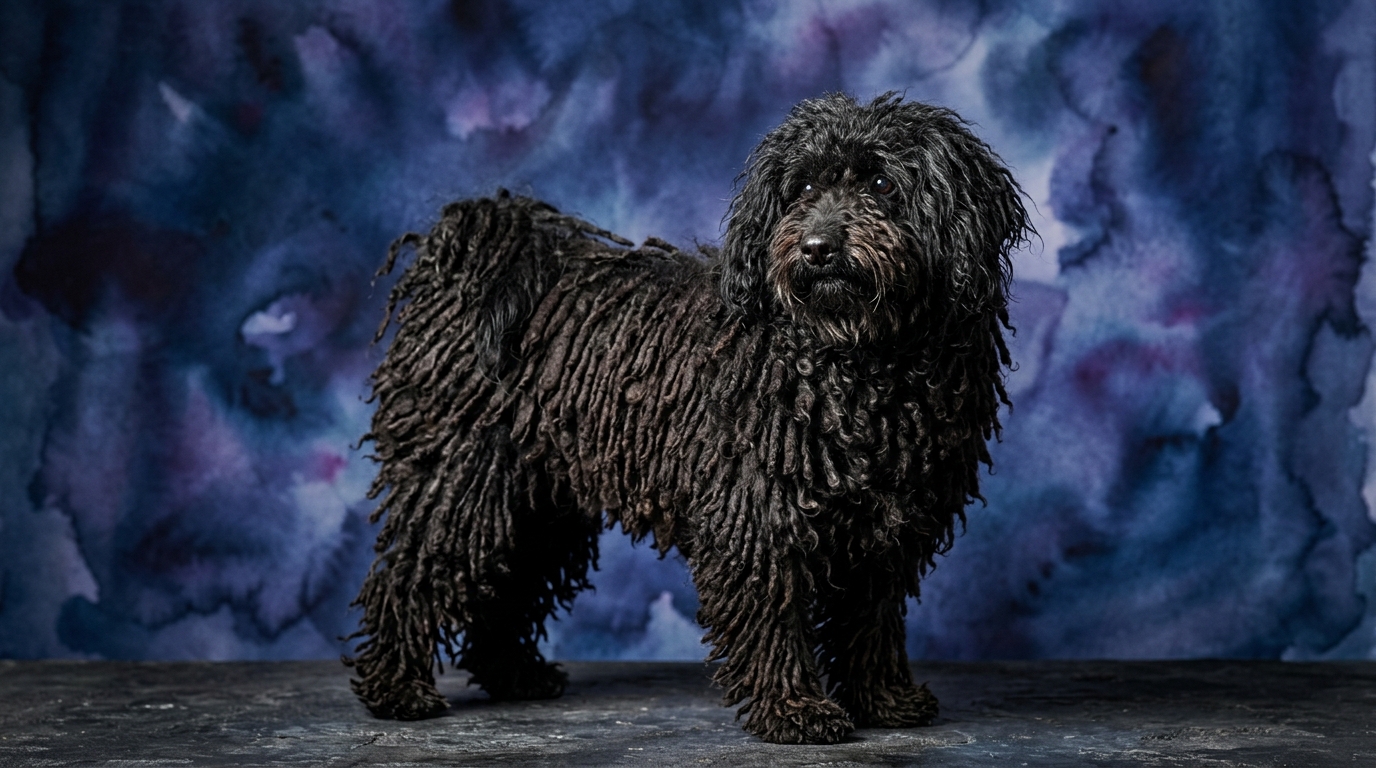
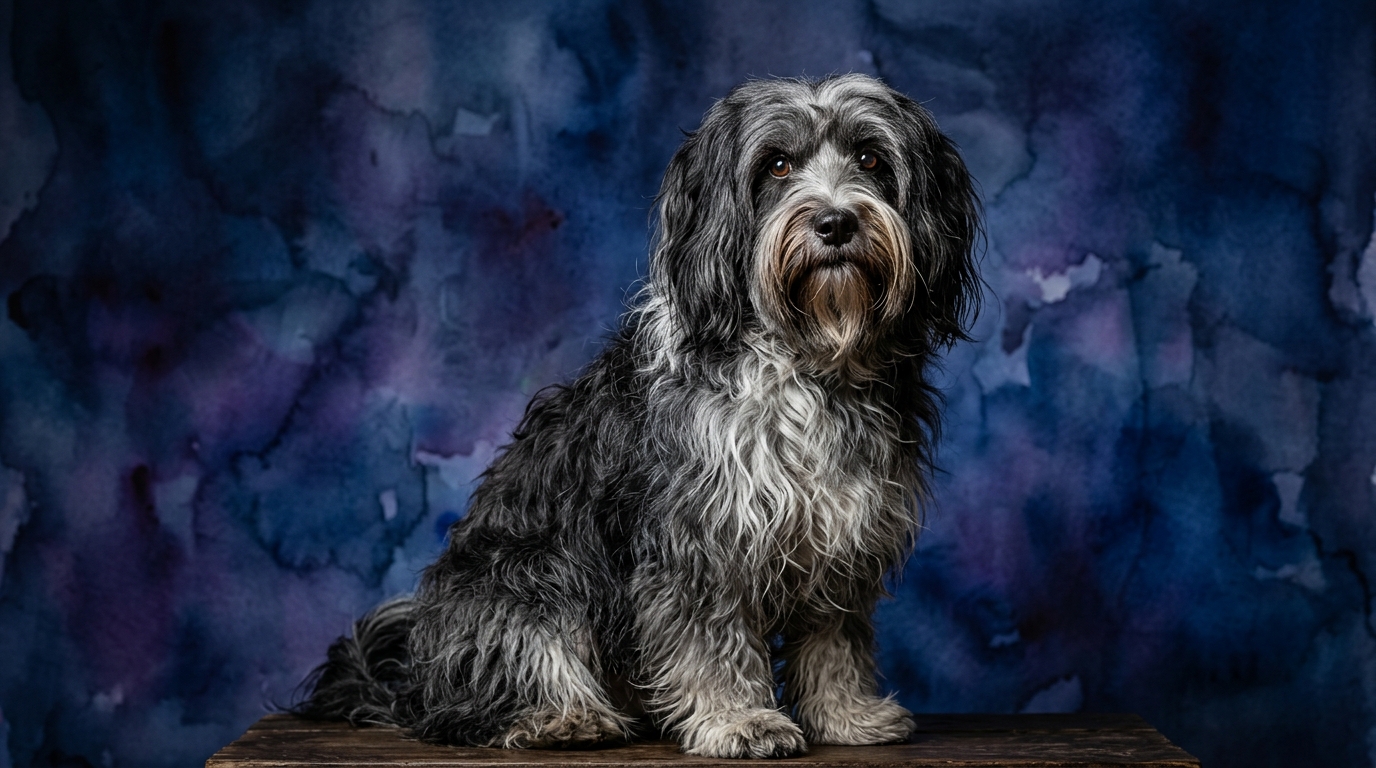
Side-by-Side IQ Profile: Puli vs. Tibetan Terrier
Understanding the cognitive blueprints of the Puli and Tibetan Terrier begins with their individual IQ profiles, as measured by The Cosmic Pet Pet IQ Lab. The Puli, ranked #25 by Coren, demonstrates a profile geared towards active engagement and rapid learning. Its Problem Solving score of 4/5 indicates a high capacity for independent thought and strategic action, essential for its herding role. Training Speed also scores 4/5, reflecting a quick grasp of commands and routines, making them responsive pupils. Social Intelligence is 3/5, suggesting deep bonds with family, though perhaps less broad social engagement. Instinctive Drive at 3/5 highlights their watchful nature and desire to keep their 'flock' close, while their Memory, a strong 4/5, underpins their reliability in learned behaviors and recall. This combination points to a dog that processes and retains information with notable efficiency.
In contrast, the Tibetan Terrier, with a Coren rank of #63, presents a more balanced and moderately paced cognitive profile. Their Problem Solving is 3/5, indicating a competent ability to navigate challenges with a blend of curiosity and persistence, though perhaps less immediate than the Puli. Training Speed also sits at 3/5; they learn steadily but may require more varied approaches to maintain engagement due to their independent streak. Social Intelligence is 3/5, showing an amiable nature with family and a sensitivity to their environment, while maintaining a degree of self-sufficiency. Their Instinctive Drive, also 3/5, manifests as a watchful, companionable nature rather than intense working drive. Memory is likewise 3/5, ensuring good recall for routines and commands, though it might not be as sharp as breeds with higher scores. The Tibetan Terrier's profile suggests a thoughtful, adaptable companion rather than a high-octane worker.
Where the Puli Wins Cognitively
The Puli's cognitive profile showcases several distinct advantages, particularly in areas demanding quick wit and structured learning. Their Problem Solving score of 4/5 means they are adept at navigating complex environments and figuring out solutions to novel challenges, whether it's opening a tricky gate or devising a new play strategy. This acumen stems directly from their historical role as independent herders, where split-second decisions were critical for managing livestock without constant human direction. Coupled with a Training Speed of 4/5, Pulis absorb new commands and routines with remarkable efficiency. They don't just learn; they process information and integrate it into their behavioral repertoire swiftly, making them excellent candidates for advanced obedience, agility, or even complex trick training. Their superior Memory (4/5) further solidifies this advantage, ensuring that once a lesson is learned, it tends to stick. This robust recall makes them exceptionally reliable in executing learned behaviors over time, requiring less frequent refreshers than dogs with more moderate memory capabilities. For owners looking for a canine partner capable of mastering intricate sequences or retaining a vast vocabulary of commands, the Puli's cognitive architecture provides a clear edge.
Where the Tibetan Terrier Wins Cognitively
While the Puli excels in rapid acquisition and problem-solving, the Tibetan Terrier's cognitive strengths lie in a different, equally valuable domain, emphasizing adaptability and a discerning social presence. Despite a 3/5 score across all dimensions, these dogs demonstrate a balanced and resilient intelligence. Their Problem Solving at 3/5, while not as lightning-fast as the Puli, reflects a thoughtful approach. They are capable of independent thought and can work through challenges, often with a charming persistence that allows them to eventually succeed, even if it takes more contemplation. Their Social Intelligence, also 3/5, is characterized by a nuanced understanding of their human family dynamics and a selective amiability. They aren't overtly demonstrative but are deeply attuned to their owner's emotions and household routines, offering a subtle yet profound companionship. This balanced cognitive profile means they are less prone to the intense focus or singular drive that can sometimes accompany higher scores in specific areas, offering a more adaptable and less demanding mental presence. Their 3/5 Instinctive Drive means they possess a natural watchfulness without the intense working drive that requires constant channeling, making them vigilant companions without the need for a specific 'job' to feel fulfilled. This blend of moderate cognitive attributes makes the Tibetan Terrier a remarkably versatile and stable companion, less likely to become frustrated by a lack of constant mental stimulation and more content with a varied daily rhythm.
Which is Easier to Train and Why
When considering ease of training, the Puli generally presents a more straightforward path for owners, primarily due to their higher scores in Training Speed (4/5) and Problem Solving (4/5). Pulis tend to grasp new concepts and commands quickly, often requiring fewer repetitions to solidify a behavior. Their herding background instills a natural inclination to work collaboratively and respond to direction, making them eager participants in training sessions. For instance, teaching a Puli a complex agility course or a multi-step trick might progress rapidly because they are wired to process sequences and act upon cues efficiently. They thrive on mental engagement and find satisfaction in mastering tasks, which translates into a dedicated training partner. In contrast, the Tibetan Terrier, with its 3/5 Training Speed and Problem Solving, requires a more patient and perhaps creative approach. Their historical role as companions and watchdogs, rather than active herders, fosters a more independent and sometimes discerning nature. A Tibetan Terrier might understand a command but choose not to execute it immediately if they perceive a better alternative or simply aren't in the mood. This isn't a lack of intelligence but rather a difference in motivation and temperament. Training a Tibetan Terrier often involves making it their idea or making the reward exceptionally enticing. While they are certainly trainable and capable of learning a wide array of commands, owners might encounter moments of charming stubbornness or a need for more varied reinforcement strategies to maintain their engagement. Therefore, for owners seeking a dog that picks up training quickly and consistently, the Puli offers a more direct route to success, while the Tibetan Terrier demands a more nuanced and persistent training philosophy.
Cognition and Lifestyle: Active vs. Relaxed Owners
The distinct cognitive profiles of the Puli and the Tibetan Terrier also guide their suitability for different owner lifestyles. The Puli, with its 4/5 Problem Solving, 4/5 Training Speed, and 3/5 Instinctive Drive rooted in herding, thrives with active owners who can provide ample mental and physical engagement. These dogs need a 'job' or consistent outlets for their sharp minds and moderate drive. This doesn't necessarily mean herding sheep daily, but it does imply a need for activities like agility, advanced obedience, scent work, or regular, challenging puzzle games. Owners who enjoy long, vigorous walks, hiking, or participating in dog sports will find the Puli an enthusiastic and capable partner. Their strong memory and quick learning mean they can excel in these demanding pursuits, but without sufficient mental stimulation, their cognitive energy can manifest as boredom or undesirable behaviors. Conversely, the Tibetan Terrier, with its balanced 3/5 scores across all dimensions, is generally better suited for owners who might be described as moderately active or even relaxed, provided their social and companionship needs are met. Their Instinctive Drive of 3/5 is more about watchful companionship than intense work, meaning they enjoy a good walk or play session but don't typically require the same level of rigorous mental challenge as a Puli. They are adaptable and can be content with a comfortable routine that includes daily walks, moderate playtime, and plenty of family interaction. While they appreciate mental enrichment, their cognitive makeup allows them to be more flexible regarding the intensity and frequency of these activities. A Tibetan Terrier will happily join you for a stroll around the neighborhood or cuddle on the couch, making them a wonderful fit for individuals or families seeking a devoted companion without the demanding cognitive exercise requirements of a traditional working breed.
The Verdict
Choose the Puli if you are an active owner seeking a highly trainable, quick-witted canine partner eager to engage in complex tasks, dog sports, or a variety of mental challenges. Their sharp problem-solving and memory ensure they will thrive with consistent, stimulating activities.
Opt for the Tibetan Terrier if you desire a balanced, adaptable companion who is affectionate and discerning, capable of learning at a steady pace and content with a more moderate level of daily activity and mental engagement. They offer resilient companionship without intense working demands.
🧠 Find Your Pet's IQ Score
Our Pet IQ Lab assessment covers 25+ tests across 5 cognitive dimensions — personalized to your breed.
Take the Full IQ Test →Frequently Asked Questions
Are Pulis difficult to groom given their corded coats?
Pulis do require specific grooming to maintain their distinctive corded coats, which naturally form mats if not properly cared for. While it's a unique process, it doesn't involve daily brushing; instead, it requires regular separation of the cords to prevent matting and ensure cleanliness.
Do Tibetan Terriers shed a lot?
Tibetan Terriers have a double coat that sheds minimally, making them a popular choice for individuals sensitive to dander. Regular brushing, typically a few times a week, is sufficient to remove loose hair and prevent tangles, keeping their coat healthy and tidy.
Which breed is better with children?
Both Pulis and Tibetan Terriers can be excellent with children when properly socialized and raised in a respectful environment. Pulis, with their herding instincts, might try to 'herd' children, while Tibetan Terriers are generally patient and playful, making them good family companions.