Side-by-Side IQ Profiles: Puli vs. Toy Poodle
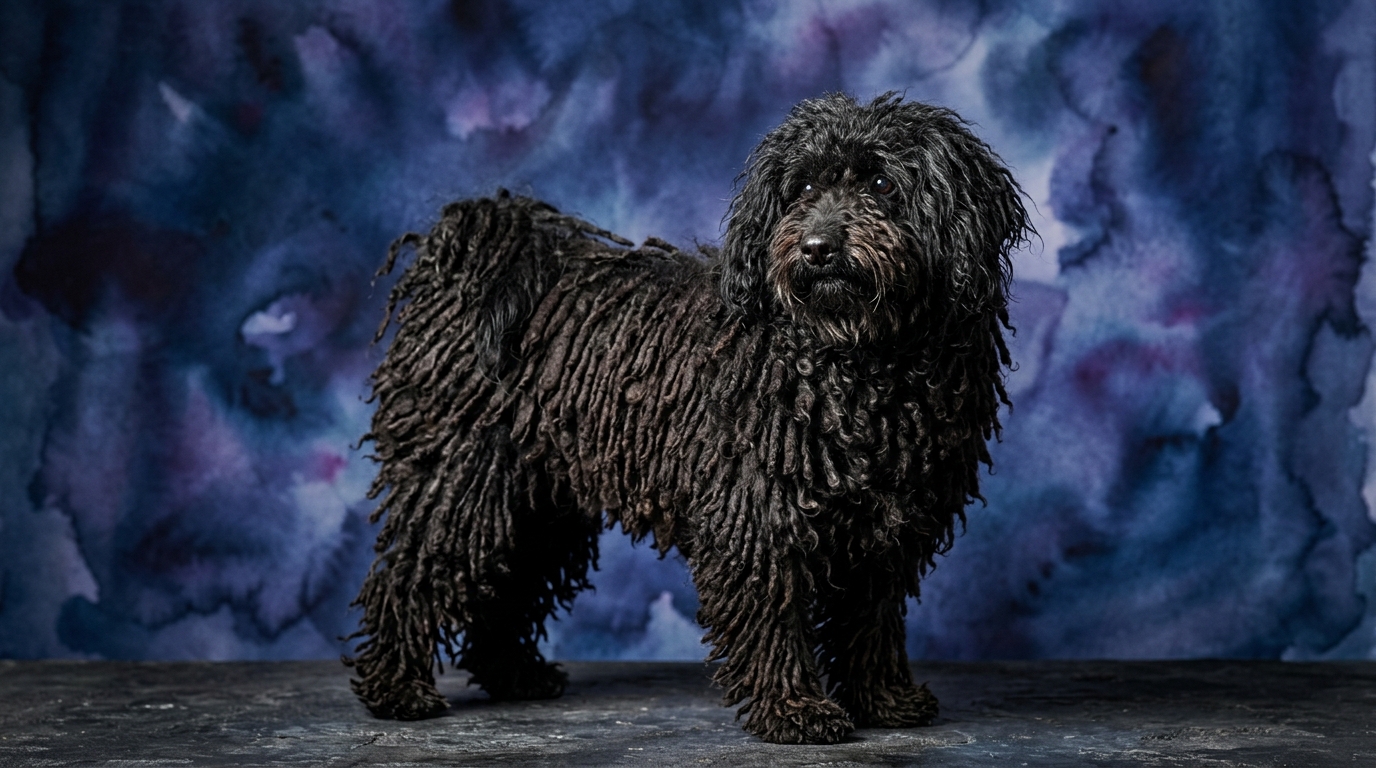
The Cosmic Pet Pet IQ Lab employs a five-dimensional framework to assess canine intelligence, offering a nuanced view beyond a single rank. For the Puli, a Herding breed, its Coren rank of #25 places it firmly within the above-average working intelligence category, reflecting its heritage of independent problem-solving.
The Puli exhibits a Problem Solving score of 4/5, indicating a strong capacity to strategize and overcome obstacles, often with a self-directed approach. Its Training Speed is also 4/5, suggesting it learns new commands and routines effectively, though perhaps with a touch more deliberation than some. Social Intelligence stands at 3/5, meaning the Puli forms deep bonds with its chosen family but can be reserved or wary with strangers, requiring time to trust. Instinctive Drive is 3/5, a moderate score that encompasses its inherent herding instincts and a balanced prey drive. Finally, its Memory is 4/5, showing a solid ability to recall learned behaviors and past experiences.
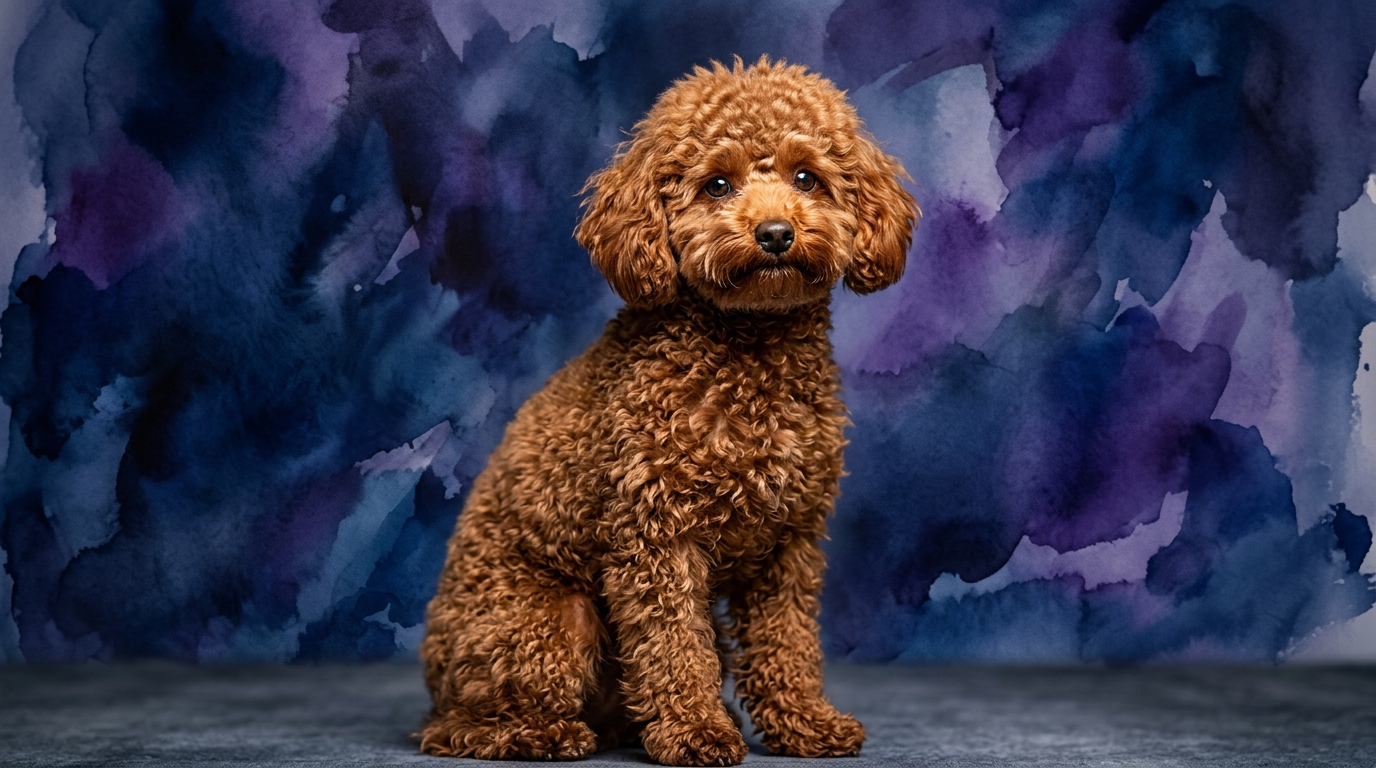
In contrast, the Toy Poodle, a member of the Toy group, boasts an impressive Coren rank of #2, placing it among the most consistently responsive and quick-witted breeds. This ranking is supported by its exceptional performance across several cognitive dimensions in our lab.
The Toy Poodle achieves a remarkable 5/5 in Problem Solving, demonstrating an exceptional aptitude for complex thought and adaptive solutions to novel situations. Its Training Speed is equally impressive at 5/5, signifying an outstanding ability to grasp and execute new commands with minimal repetition. Social Intelligence is 3/5, similar to the Puli, suggesting they are adaptable and bond well with family, yet can be discerning about new acquaintances. Instinctive Drive is 3/5, reflecting its historical roots as a water retriever adapted into a companion, possessing a moderate drive that can be channeled into play or structured activities. Its Memory is a perfect 5/5, indicating an enduring capacity to store and retrieve a vast repertoire of information and experiences.
Where the Puli Wins Cognitively
While the Toy Poodle often outscores the Puli in raw speed and efficiency, the Puli’s cognitive strengths lie in a particular flavor of independence and robust, practical application of its intellect. Its 4/5 problem-solving score, rooted in a herding lineage, speaks to a dog that can assess dynamic situations and make decisions without constant human direction. Imagine a Puli autonomously navigating a complex environment to locate a misplaced object or figuring out how to bypass a minor obstacle in its path – its solutions are often characterized by tenacity and a self-reliant logic.
Furthermore, the Puli's 3/5 social intelligence, while not as broadly outgoing as some breeds, fosters a deep, discerning bond. This isn't a deficit but a preference for quality over quantity in its social connections. A Puli processes social cues from its inner circle with a profound understanding, often anticipating family members' moods or needs through subtle observation. This translates into a companion that, once bonded, offers a nuanced and deeply loyal form of companionship, built on a foundation of mutual understanding rather than eager-to-please compliance. Their memory (4/5) reinforces this, allowing them to recall specific interactions and build a rich history with their trusted humans.
Where the Toy Poodle Wins Cognitively
The Toy Poodle's cognitive superiority is evident in its consistent top scores across problem-solving (5/5), training speed (5/5), and memory (5/5), highlighting a mind designed for rapid acquisition and retention of information. This breed doesn't just solve problems; it often does so with an almost elegant efficiency, quickly synthesizing new information and adapting its behavior. For instance, a Toy Poodle might effortlessly figure out how to open a child-proof gate after only a few attempts, or quickly master a new sequence of agility obstacles, demonstrating a fluid intellectual agility.
Their outstanding training speed (5/5) means they absorb new commands and behaviors with remarkable alacrity, often requiring fewer repetitions than many other breeds. This makes them exceptionally responsive to cues and incredibly versatile in learning complex tasks, from advanced obedience to performance sports. Coupled with their perfect memory (5/5), a Toy Poodle will retain an extensive vocabulary of commands and routines over long periods, making them incredibly consistent performers and adaptable companions in various living situations. This combination of quick learning and steadfast recall allows them to excel in environments that demand constant mental engagement and quick adjustments.
Which is Easier to Train and Why
Based on The Cosmic Pet Pet IQ Lab data, the Toy Poodle generally presents an easier and faster training experience. Its 5/5 training speed and 5/5 memory indicate an inherent capacity to grasp new commands and retain them with minimal effort. This breed typically exhibits a strong desire to please and a high motivation for engagement, which translates into rapid learning of cues, whether for basic obedience, complex tricks, or competitive sports. For example, a Toy Poodle can often learn a multi-step fetch routine in just a few sessions, consistently remembering the specific items to retrieve.
The Puli, while still scoring a respectable 4/5 in training speed and memory, requires a slightly different approach. Their independent herding mindset means they might need more compelling motivation and creative training methods to maintain engagement. While they learn quickly, they might not always offer the same eager-to-please enthusiasm as a Poodle, sometimes preferring to figure things out on their own terms. A Puli might learn a 'stay' command efficiently but might test the boundaries of that command if not consistently reinforced with clear expectations and engaging rewards, reflecting their self-reliant nature more than a lack of understanding.
Which Suits Active Owners vs. Relaxed Owners
For active owners seeking a dynamic partner for varied pursuits, both breeds offer unique advantages, but the Toy Poodle's adaptability makes it a strong contender for a wider range of activities. Its high problem-solving and training speed mean it excels in dog sports like agility, obedience, and rally, thriving on mental challenges and physical exercise. A Toy Poodle can be an enthusiastic hiking companion or a nimble partner for urban exploration, enjoying consistent engagement and diverse experiences. Their moderate instinctive drive means they can channel their energy effectively into structured play and training, making them versatile for owners who enjoy a mix of physical and mental activities.
The Puli, with its herding background, also suits active owners, particularly those who appreciate a working dog's mentality and can provide outlets for its natural drives. Owners who enjoy long walks, interactive puzzle games, or even exploring herding-related activities will find the Puli a rewarding companion. Their independent problem-solving skills mean they thrive when given tasks or opportunities to think for themselves. However, for more relaxed owners, the Toy Poodle might be a slightly better fit due to its smaller size and lower inherent physical intensity compared to a working Puli. A Toy Poodle can be content with consistent mental stimulation and moderate daily exercise, making it adaptable to apartment living provided its cognitive needs are met through training and interactive play. A relaxed owner with a Puli would need to be very intentional about providing consistent mental exercise to prevent boredom.
The Verdict: When to Choose Each Breed
Choosing between a Puli and a Toy Poodle comes down to aligning their distinct cognitive profiles with your lifestyle and expectations for a canine companion. Each offers a unique blend of intellect and temperament, making them suitable for different kinds of human-dog partnerships.
The Puli is the ideal choice for an owner who appreciates a discerning, independent thinker with a strong sense of purpose. If you are an active individual or family capable of providing consistent mental engagement that taps into a dog's natural problem-solving abilities and a deep, loyal bond that develops over time, the Puli will thrive. They are best for those who value a companion that thinks for itself and offers a profound, if reserved, connection.
Conversely, the Toy Poodle is an excellent fit for owners seeking an exceptionally adaptable, quick-witted, and consistently responsive companion. If you desire a dog that excels in rapid learning, remembers a vast array of commands, and can seamlessly integrate into various activities from competitive sports to quiet companionship, the Toy Poodle is your match. They are perfect for owners who enjoy consistent training and mental enrichment, finding joy in a dog that eagerly engages with their world.
The Verdict
Choose the Puli if you value an independent, robust thinker and are prepared to engage a working breed's intellect with specific challenges and a deep, earned bond. They thrive with owners who appreciate their self-reliant problem-solving and discerning loyalty.
Opt for the Toy Poodle if you seek an exceptionally quick learner with outstanding memory, eager to engage in diverse mental and physical activities. They are perfect for owners who enjoy consistent training and a highly adaptable, responsive companion.
🧠 Find Your Pet's IQ Score
Our Pet IQ Lab assessment covers 25+ tests across 5 cognitive dimensions — personalized to your breed.
Take the Full IQ Test →Frequently Asked Questions
Is the Puli difficult to train due to its independent nature?
The Puli is not difficult to train, scoring 4/5 in training speed, but requires consistent, engaging methods to motivate its independent spirit. They learn quickly but may test boundaries, so patient and creative training is key to success.
Do Toy Poodles require a lot of mental stimulation despite their small size?
Yes, Toy Poodles absolutely require significant mental stimulation, scoring 5/5 in problem-solving and memory. Their keen intellect means they can become bored and develop undesirable behaviors without regular puzzles, training, and interactive play.
How do their social intelligence scores of 3/5 impact their family life?
A social intelligence score of 3/5 for both breeds indicates they form strong, deep bonds with their immediate family, but may not be immediately outgoing with strangers. This means they are devoted companions within their trusted circle, though they might take time to warm up to new people or environments.