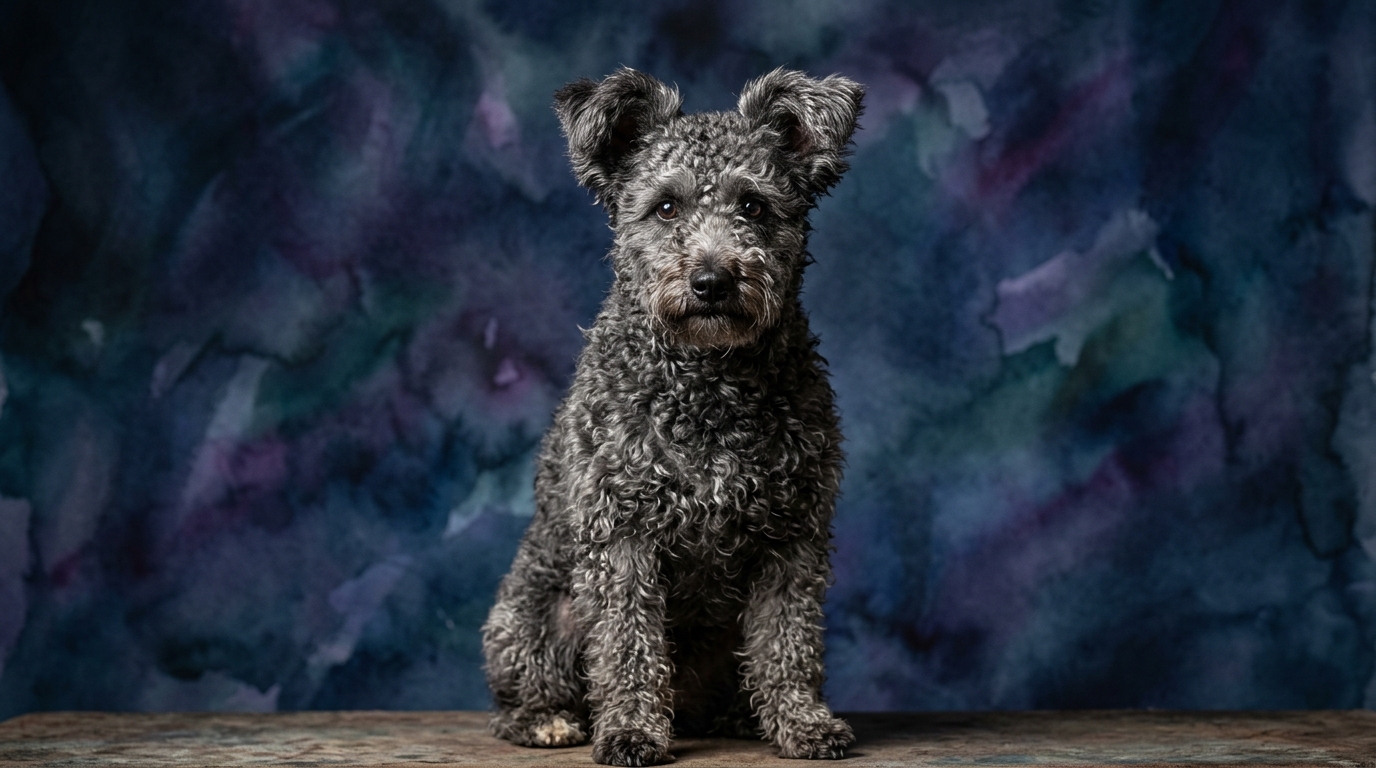
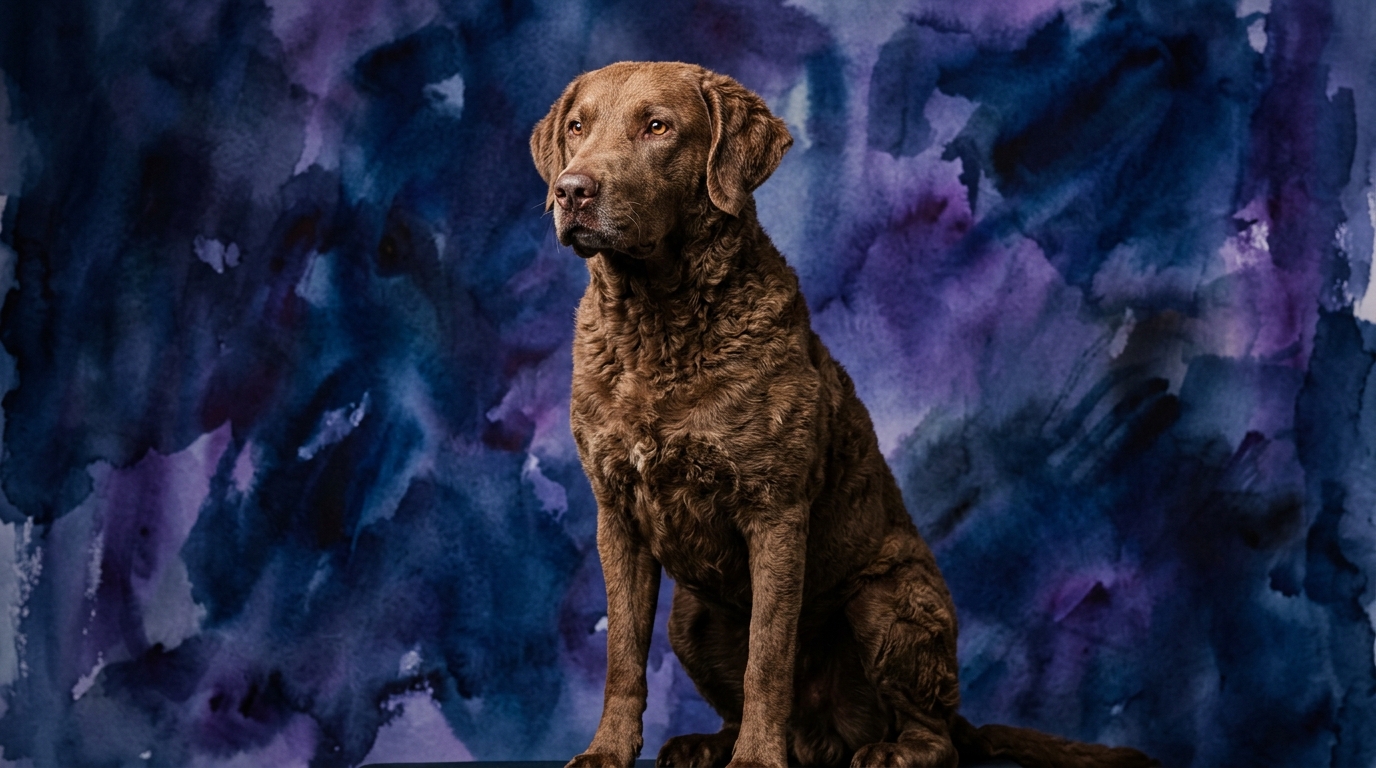
Side-by-side IQ Profile
**Problem Solving:** The Pumi (3/5) shows competency navigating complex herding scenarios, adapting to livestock movements, and making quick, independent decisions, reflecting practical intellect. The Chesapeake Bay Retriever (4/5) excels at intricate tasks like locating downed game in challenging terrain, remembering multiple fall locations, and overcoming obstacles to retrieve, often employing a deliberate, persistent approach.
**Training Speed:** The Pumi (3/5) learns new commands moderately, requiring consistent, engaging methods. Their herding background grants responsiveness but also independent thought. The Chesapeake Bay Retriever (4/5) grasps new concepts quicker, often needing fewer repetitions. This efficiency stems from its strong desire to work in partnership and its methodical approach.
**Social Intelligence:** Both breeds score 3/5 in social intelligence, indicating a balanced capacity for understanding and responding to social cues. The Pumi forms strong bonds with its family, displaying a watchful, protective demeanor, keenly aware of its human "flock's" emotions. The Chesapeake Bay Retriever is similarly devoted to its chosen people, discerning moods, but may be reserved with strangers, valuing loyalty and established relationships.
**Instinctive Drive:** Both breeds register 3/5 for instinctive drive. The Pumi's drive manifests as a persistent urge to gather, control, and move things, a powerful motivator for work. The Chesapeake Bay Retriever's drive is rooted in retrieving and water work, showcasing a powerful desire to search, retrieve, and swim, fueling its endurance.
**Memory:** The Pumi (3/5) possesses solid memory for routines, commands, and familiar faces, confidently navigating daily life and recalling learned behaviors. The Chesapeake Bay Retriever (4/5) demonstrates superior memory, crucial for remembering precise locations of multiple bird falls over vast distances and varied terrain, also aiding complex training.
Where Pumi Wins Cognitively
The Pumi's cognitive strengths shine in environments demanding agile, independent decision-making under dynamic conditions, a direct legacy of its herding origins. Its problem-solving, though rated 3/5, is characterized by quick, reactive shifts in strategy, essential for managing unpredictable livestock, contrasting with the CBR's methodical approach. The Pumi's social intelligence, also 3/5, is finely tuned to its immediate family, allowing it to anticipate needs and moods with a nuanced sensitivity that fosters deep, intuitive partnerships. This focused social awareness, combined with its instinctive drive to gather, makes it exceptionally responsive to a handler’s subtle cues, almost anticipating the next move. Its cognitive profile supports a dog that thinks *with* its handler in a fluid, improvisational manner, rather than solely executing sequential commands.
Where Chesapeake Bay Retriever Wins Cognitively
The Chesapeake Bay Retriever demonstrates a distinct cognitive advantage in tasks requiring sustained focus, methodical problem-solving, and precise memory over varied terrains and complex scenarios. Its 4/5 scores in Problem Solving, Training Speed, and Memory are clear indicators of a mind built for intricate, goal-oriented work. The CBR excels at breaking down multi-step challenges, such as navigating dense cover or icy water to retrieve multiple marks, remembering their exact locations. This superior memory (4/5) allows it to hold complex information for extended periods, making it highly dependable for advanced field work or competitive obedience. Its training speed (4/5) signifies rapid acquisition of new behaviors and strong retention, making it a prime candidate for intricate training protocols. This breed's cognitive architecture supports a dog that processes information efficiently, learns complex sequences quickly, and applies that learning consistently, often under pressure, making it a formidable partner.
Which is Easier to Train and Why
Based on the Pet IQ Lab scores, the Chesapeake Bay Retriever (Training Speed 4/5) is generally easier to train compared to the Pumi (Training Speed 3/5). The CBR's higher training speed indicates it grasps new commands and concepts more quickly, often needing fewer repetitions and demonstrating stronger intrinsic motivation to comply. This efficiency stems from its historical role as a dedicated retriever, where precision, obedience, and a strong desire to please were paramount. Their methodical approach translates directly into a more straightforward training experience. The Pumi, while certainly capable, requires a more engaging and varied approach. Its 3/5 training speed suggests a need for patience, consistency, and creative methods to keep its independent, often whimsical herding mind focused. While responsive, the Pumi's cognitive profile means it might offer its own interpretation of a command or get distracted, making initial training phases more challenging without a dedicated approach.
Which Suits Active Owners vs Relaxed Owners
Both the Pumi and the Chesapeake Bay Retriever are best suited for active owners, though their activity needs manifest differently. The Pumi, with its herding background, thrives on mental stimulation and physical outlets mimicking its original work. Owners enjoying dog sports like agility, herding trials, or flyball, providing consistent engagement for its quick, agile mind, will find a rewarding companion. Its dynamic problem-solving and focused social intelligence mean it needs a "job" to prevent boredom and potential mischievousness. A relaxed owner might struggle with the Pumi's inherent drive. The Chesapeake Bay Retriever, with its sporting heritage and powerful build, also demands significant physical exercise and mental challenges. Owners who are avid hikers, runners, hunters, or participate in water sports will find an ideal partner. Its superior memory and problem-solving excel in structured activities like obedience and field trials. A relaxed owner might find the CBR's stamina and drive overwhelming, as it requires consistent outlets and a purpose-driven life. Neither breed is truly suited for a sedentary lifestyle; both require owners committed to ample physical and mental enrichment.
The Verdict
Choose the Pumi if you seek an agile, intuitive partner for dynamic activities like herding or agility, valuing a dog that thinks with you and thrives on a deep, responsive bond.
Opt for the Chesapeake Bay Retriever if your lifestyle involves rigorous outdoor activities, advanced obedience, or demanding field work, where precise memory, methodical problem-solving, and a strong work ethic are paramount.
🧠 Find Your Pet's IQ Score
Our Pet IQ Lab assessment covers 25+ tests across 5 cognitive dimensions — personalized to your breed.
Take the Full IQ Test →Frequently Asked Questions
How does the Pumi's herding background influence its problem-solving?
The Pumi's 3/5 problem-solving score is shaped by its need to make rapid, independent decisions in dynamic herding scenarios. This involves quickly assessing livestock movement, anticipating changes, and adapting its strategy on the fly, demonstrating a practical, reactive form of intellect.
What makes the Chesapeake Bay Retriever's memory score of 4/5 particularly useful?
The CBR's superior memory is critical for its retrieving role, enabling it to accurately recall the precise locations of multiple downed birds over challenging and extensive terrain. This robust memory also aids significantly in retaining complex training sequences and long-term obedience, making it exceptionally reliable.
Are Pumis and Chesapeake Bay Retrievers good with children, given their social intelligence scores?
Both breeds score 3/5 in social intelligence, meaning they are typically devoted to their immediate family. With proper socialization and training, they can be excellent family companions, but their loyalty tends to be focused on their inner circle rather than being universally outgoing, suggesting supervision is always wise with children.