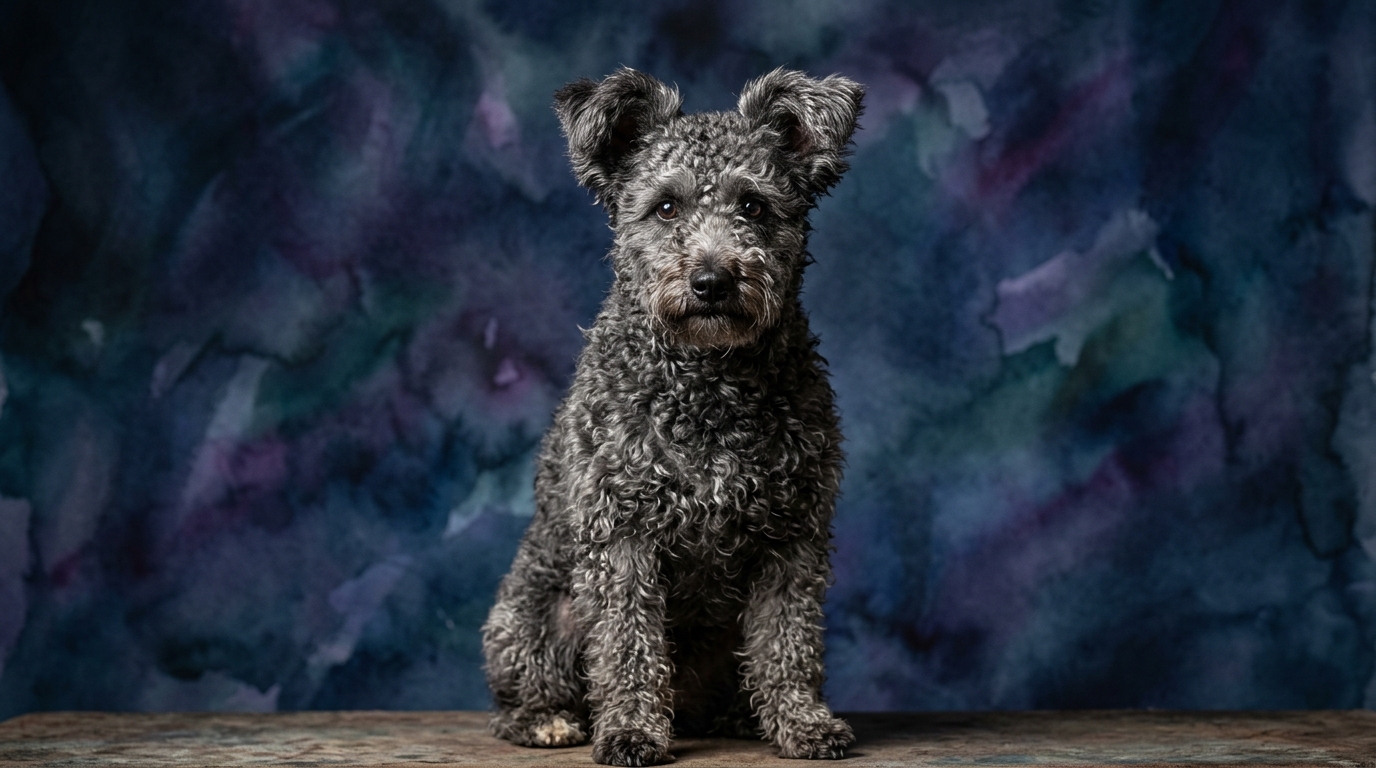
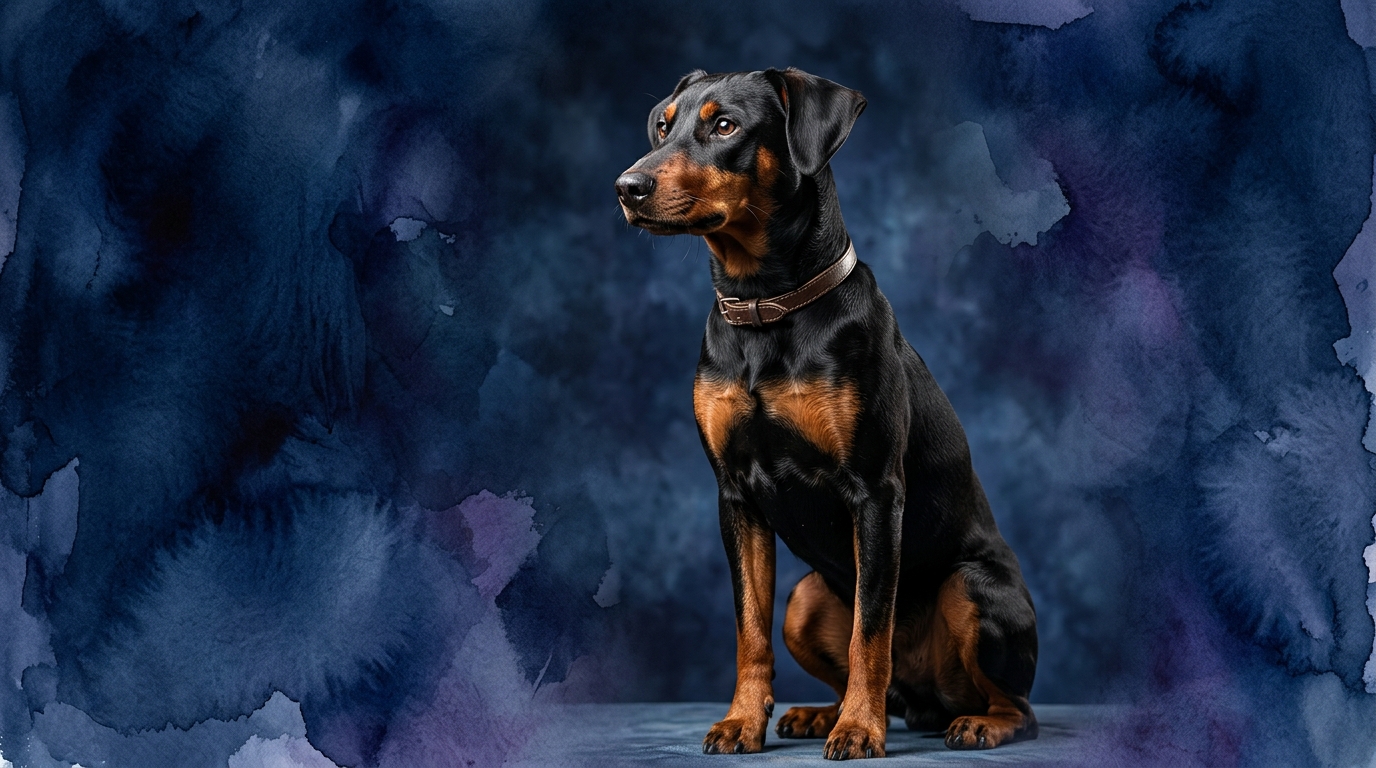
Side-by-Side IQ Profile: Pumi vs. German Pinscher
Both the Pumi and German Pinscher register a consistent 3 out of 5 across all five dimensions of intelligence measured by The Cosmic Pet Pet IQ Lab. This consistent score indicates that both breeds possess a robust, competent level of cognitive function, capable of learning, adapting, and interacting effectively with their environment and human companions, without being either overly complex or remarkably simple in their mental processes. A 3/5 suggests a balanced intellect that is neither prone to being easily overwhelmed nor requiring constant, intense mental gymnastics to prevent boredom. Instead, it points to a practical, functional intelligence.
For Problem Solving (3/5), both breeds demonstrate an ability to navigate challenges and figure out solutions. In the Pumi, this might manifest as creatively managing a flock, finding optimal routes, or devising strategies during herding tasks. For the German Pinscher, problem-solving could involve figuring out how to outsmart a persistent rodent, discerning a suspicious sound, or navigating complex environments to fulfill a task like guarding. Their competence here means they won't typically get stuck on simple puzzles but might not excel at highly abstract or multi-step, novel challenges without guidance.
Training Speed (3/5) for both breeds implies a moderate pace of learning new commands and routines. They are receptive and generally willing to engage, but they are not 'one-and-done' learners who grasp concepts instantly. Consistency and positive reinforcement are key, and while they won't frustrate an owner with extreme slowness, they also require dedication. Their attention spans are adequate for typical training sessions, and they retain information well with repetition.
Social Intelligence (3/5) suggests a good understanding of social cues and interactions. The Pumi's herding background means its social intelligence might be finely tuned to cooperative work with a handler, interpreting subtle body language and vocalizations to coordinate complex tasks. The German Pinscher's working origins, often involving guarding, might lead to its social intelligence focusing on discerning intentions, recognizing family members, and being alert to strangers. Both are capable of forming strong bonds and understanding household dynamics, but their expressions of this intelligence will differ based on their inherent drives.
Instinctive Drive (3/5) indicates a moderate level of inherent, hardwired behaviors. For the Pumi, this drive is strongly tied to its herding heritage – a persistent urge to gather, control, and move. This can translate into a focus on movement, a strong desire for a 'job,' and an alert nature. For the German Pinscher, the instinctive drive is rooted in its vermin hunting and guarding background, manifesting as a keen prey drive, territorial awareness, and a watchful demeanor. These drives are present and influential but generally manageable with appropriate outlets and training, not overwhelming forces.
Finally, Memory (3/5) for both breeds signifies a reliable capacity to recall commands, routines, and experiences. They will remember their training, where things are, and who belongs in their circle. This level of memory supports their training speed and problem-solving abilities, allowing them to build upon past successes and learn from mistakes. They are not prone to forgetting essential lessons but might not recall every minor detail with perfect accuracy.
Where the Pumi's Cognitive Profile Shines
Given identical IQ scores, the Pumi's cognitive strengths truly shine in scenarios demanding fluid, adaptive problem-solving within dynamic environments. Its herding legacy means its 3/5 in Problem Solving is often expressed through quick, on-the-fly decision-making when variables (like livestock movement or terrain changes) are constantly shifting. This isn't about brute force intelligence, but rather an agility of mind that allows it to adjust tactics rapidly, making it excel in activities such as agility, flyball, or advanced obedience where sequences are complex and require immediate response to handler cues and environmental changes. The Pumi's 3/5 Social Intelligence, for instance, is honed for cooperative partnership, making it particularly adept at interpreting subtle handler signals crucial for intricate herding patterns or competitive dog sports.
Furthermore, the Pumi's 3/5 Instinctive Drive, channeled towards gathering and controlling, means its Memory (3/5) is often optimized for recalling complex sequences of commands and positions within a larger, unfolding task. It remembers not just individual actions but the flow and purpose of a series of actions. This makes the Pumi particularly suited for owners who enjoy engaging in structured, interactive dog sports that mimic its herding work, where its ability to anticipate and react within a changing framework is a distinct advantage. Its cognitive profile allows it to thrive in roles where its human partner provides direction, but it also has the autonomy to make intelligent, moment-to-moment decisions.
Where the German Pinscher's Cognitive Profile Shines
The German Pinscher, with its working and guarding heritage, demonstrates its cognitive strengths in areas requiring focused vigilance, discernment, and persistent task execution. Its 3/5 in Problem Solving is often applied to more defined, goal-oriented challenges, such as strategizing how to clear a confined space of vermin or understanding the most effective way to alert its family to an unfamiliar presence. This isn't about herding a flock, but rather about assessing a situation, identifying a specific target or threat, and executing a plan with precision. The German Pinscher's Social Intelligence (3/5) often manifests as a keen ability to differentiate between familiar and unfamiliar, friend and potential foe, making it an excellent judge of character within its established social circle.
The German Pinscher's 3/5 Instinctive Drive, stemming from its background as a stable dog and guardian, means its Memory (3/5) is highly efficient for recalling boundaries, specific threats, and the routines of its territory. It remembers who belongs and who doesn't, and where its responsibilities lie. This breed excels when given a clear 'job' that leverages its natural protective instincts, such as guarding a home, tracking, or engaging in scent work where focused persistence is rewarded. Its cognitive profile makes it a superb companion for owners seeking a watchful, discerning partner capable of independent thought in protective or investigative capacities, thriving on tasks that require sustained attention to detail and a strong sense of purpose within a defined scope.
Training Dynamics: Pumi vs. German Pinscher
While both breeds score 3/5 in Training Speed, their underlying behavioral differences influence the training experience. The Pumi, with its herding background, often approaches training with an inherent desire to cooperate and work alongside its human. Its Social Intelligence (3/5) is geared towards partnership, meaning it can be highly responsive to positive reinforcement and clear, consistent direction from a trusted handler. However, its Instinctive Drive (3/5) for movement and control means it can be easily distracted by visual stimuli or the urge to 'herd' children, other pets, or even moving objects. Training needs to actively engage its mind and body, channeling that drive into constructive activities, otherwise, its problem-solving (3/5) might be applied to finding ways to entertain itself, which might not always align with owner expectations.
The German Pinscher, conversely, brings a different dynamic to training. Its working heritage often imbues it with a strong sense of independence and a discerning nature. While its Training Speed (3/5) is competent, its Social Intelligence (3/5) might mean it's more selective about who it listens to, requiring a consistent, confident leader who earns its respect. Its Instinctive Drive (3/5) towards guarding and prey drive can make it single-minded when focused on a 'target,' whether it's a squirrel or a perceived intruder. This requires an owner to be firm, fair, and consistent, demonstrating that compliance is rewarding. A German Pinscher's problem-solving (3/5) might lead it to test boundaries or try to find loopholes if training isn't clear and reinforced. While both are trainable, the Pumi might be 'easier' for owners seeking a highly cooperative partner for sports, whereas the German Pinscher might require an owner who understands and can effectively channel a more independent, protective mindset.
Matching Cognitive Profiles to Lifestyles
Neither the Pumi nor the German Pinscher are suited for owners seeking a truly 'relaxed' or low-maintenance companion, despite their moderate 3/5 IQ scores. Both breeds possess substantial mental and physical energy that demands constructive outlets. The Pumi, with its herding instincts, thrives with active owners who can provide consistent mental engagement through structured activities. Its Problem Solving and Instinctive Drive (both 3/5) mean it benefits immensely from dog sports like agility, flyball, or actual herding trials, where it can utilize its quick thinking and desire to work. An owner who enjoys teaching complex tricks or engaging in daily interactive play sessions will find the Pumi a willing and capable partner. Without sufficient mental and physical stimulation, a Pumi might become restless or channel its cognitive abilities into less desirable behaviors.
The German Pinscher also requires an active lifestyle, but the nature of that activity might differ. Its working and guarding background means it values purpose and vigilance. Owners who enjoy long, brisk walks, secure off-leash play in a fenced area, or activities like tracking or advanced obedience will find the German Pinscher's focused Problem Solving and Instinctive Drive (both 3/5) highly rewarding. Its Social Intelligence (3/5) and Memory (3/5) make it an excellent home guardian, but this also means it needs proper socialization and training to channel its protective instincts appropriately. This breed suits owners who appreciate a watchful, discerning companion and are prepared to engage its mind with consistent training and opportunities for 'work,' even if that work is simply patrolling the yard or solving food puzzles.
The Verdict
Choose the Pumi if you're an active owner seeking a highly cooperative, agile partner for dog sports or complex training, valuing its fluid problem-solving and responsive social intelligence in dynamic settings.
Opt for the German Pinscher if you prefer a watchful, discerning companion for a secure home, valuing its focused problem-solving and protective instincts for tasks like guarding or scent work, and are prepared for a more independent training dynamic.
🧠 Find Your Pet's IQ Score
Our Pet IQ Lab assessment covers 25+ tests across 5 cognitive dimensions — personalized to your breed.
Take the Full IQ Test →Frequently Asked Questions
Do Pumi and German Pinscher have similar exercise needs?
Yes, both breeds, with their consistent 3/5 IQ scores, require significant daily exercise and mental stimulation. While the type of activity might differ based on their breed drives, neither is a couch potato. Owners should plan for at least an hour of vigorous activity daily, combined with engaging mental tasks.
Are Pumis or German Pinschers better for first-time dog owners?
Neither breed is typically recommended for novice owners without prior research and commitment. Both require consistent training, early socialization, and an understanding of their specific breed drives. Their 3/5 Training Speed means they are trainable, but their Instinctive Drives (3/5) need experienced guidance to channel effectively.
How do their social intelligence scores (3/5) differ in practice?
While both score 3/5, the Pumi's social intelligence often manifests as eagerness to cooperate closely with its handler, interpreting subtle cues for joint tasks. The German Pinscher's social intelligence tends towards discernment, being watchful and assessing new people or situations, valuing its immediate family circle while being more reserved with strangers.