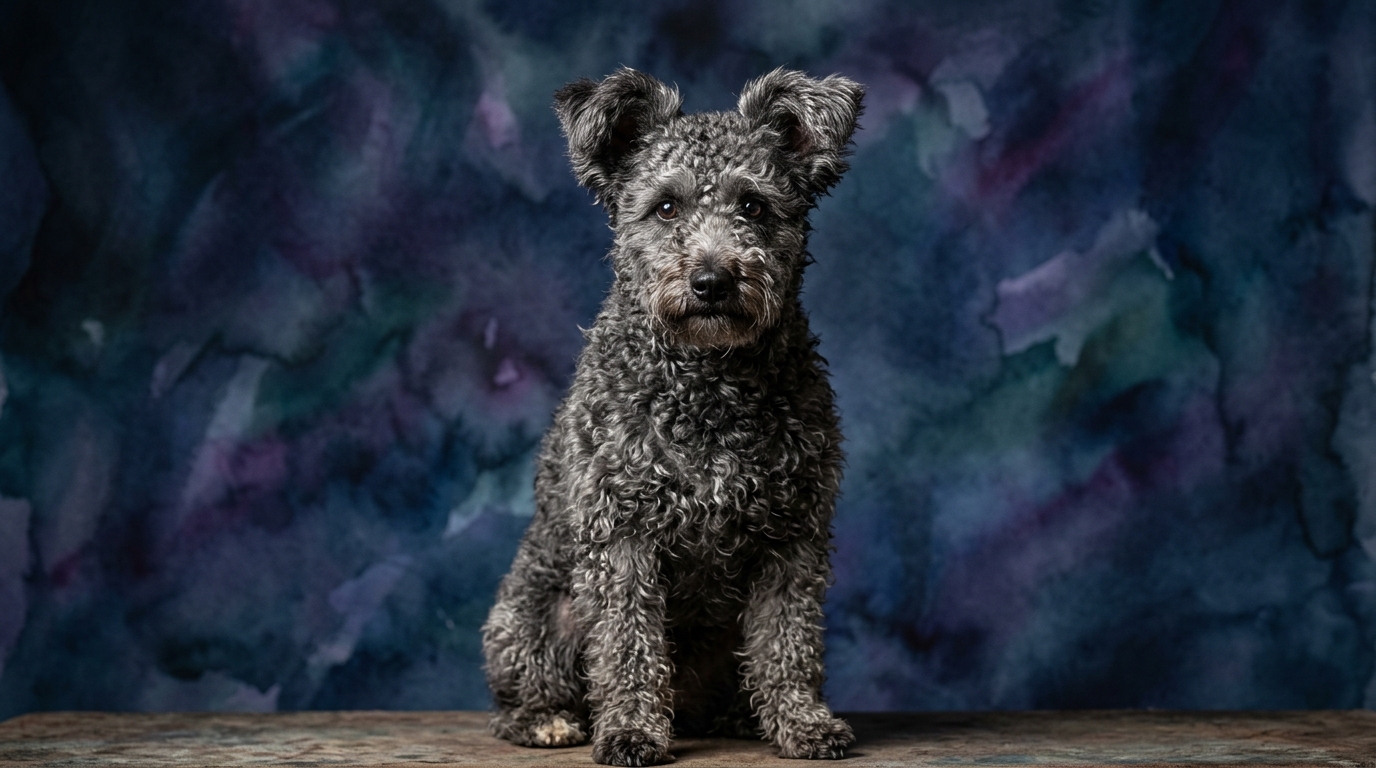

Side-by-Side Cognitive Profiles: The Pet IQ Lab Breakdown
The Pet IQ Lab assesses five key cognitive dimensions, providing a granular view of a breed's mental aptitudes. For both the Pumi and the Lhasa Apso, each dimension scores a 3 out of 5, indicating a solid, capable level of cognition. However, understanding what a '3/5' means in the context of their unique breed histories is crucial for a meaningful comparison.
For the **Pumi (Herding Group)**, a breed developed for active livestock management, these scores manifest as follows:
**Problem Solving (3/5):** This score reflects the Pumi’s capacity to independently assess and navigate dynamic situations, such as maneuvering livestock or overcoming obstacles in a field. Their problem-solving typically leans towards practical, dynamic challenges where quick, on-the-spot decisions are beneficial. This cognitive dimension allows them to adapt rapidly to changing environments, whether in a working role or navigating a complex home setting.
**Training Speed (3/5):** A Pumi's 3/5 in training speed indicates a ready willingness to learn and absorb new commands, especially when tasks align with their natural drive for purpose and activity. They often grasp concepts quickly, but their independent nature means consistent reinforcement and engaging methods are key to channeling their learning aptitude effectively. They respond well to training that feels like a shared task or a mental exercise.
**Social Intelligence (3/5):** This dimension for the Pumi signifies their ability to read and respond to human cues and even other animals' behaviors within a structured environment. They can form strong bonds with their primary handlers, understanding subtle body language and vocalizations. Their social awareness extends to gauging the mood of their surroundings, making them responsive companions who benefit from clear communication.
**Instinctive Drive (3/5):** Pumi's 3/5 in instinctive drive is a direct reflection of their heritage as herding dogs. This manifests as a strong inclination towards activity, a desire to gather or control, and a heightened awareness of their environment. This drive fuels their need for mental and physical engagement, often expressed through playful 'herding' of family members or toys, and a general zest for action.
**Memory (3/5):** The Pumi's memory score of 3/5 suggests a robust capacity to retain learned commands, routines, and experiences. They remember complex sequences of actions, familiar places, and the individuals they interact with regularly. This strong memory supports their training, allowing them to build upon past lessons and maintain consistency in their responses over time.
For the **Lhasa Apso (Non-Sporting Group)**, a breed historically serving as a sentinel in Tibetan monasteries, their scores take on a different flavor:
**Problem Solving (3/5):** For a Lhasa Apso, a 3/5 in problem-solving often translates to their ability to strategize within their home environment, such as finding the most comfortable spot, navigating furniture, or figuring out how to get attention. Their solutions might be more focused on their personal comfort or security rather than a collaborative task. This score reflects a cleverness in achieving their own objectives, sometimes requiring patience from their human companions.
**Training Speed (3/5):** A Lhasa Apso's 3/5 in training speed indicates they are certainly capable of learning commands and routines, but their independent and sometimes stubborn temperament means training requires consistency, positive reinforcement, and a deep understanding of their motivations. They will learn, but perhaps on their own terms or when they perceive a clear benefit. Patience is a virtue when teaching a Lhasa Apso.
**Social Intelligence (3/5):** This score for the Lhasa Apso points to their discerning nature regarding social interactions. They are adept at recognizing their family members and understanding household dynamics, often forming deep, loyal bonds. However, their social intelligence also includes a pronounced wariness of strangers, allowing them to differentiate between familiar and unfamiliar individuals, a trait rooted in their sentinel heritage.
**Instinctive Drive (3/5):** The Lhasa Apso's 3/5 in instinctive drive primarily relates to their historical role as watchdogs and companions. This manifests as a strong territorial instinct, an alert disposition, and a desire to remain close to their family unit. They possess a natural inclination to observe and protect their domain, expressing this through vigilance and sometimes vocal alerts to perceived threats.
**Memory (3/5):** A Lhasa Apso's memory score of 3/5 signifies their ability to recall people, places, and established routines with precision. They remember who belongs and who doesn't, their preferred spots, and the sequence of daily events. This strong memory contributes to their consistency in behavior and their ability to settle into a predictable home life.
Where the Pumi Excels Cognitively
While both breeds share identical Pet IQ Lab scores, the Pumi's cognitive strengths often manifest with a greater emphasis on active, dynamic engagement. Their problem-solving (3/5) is typically applied to tasks requiring quick, adaptive responses, such as navigating agility courses or understanding complex sequences in dog sports, showcasing a mind geared towards practical, physical challenges. Their instinctive drive (3/5), rooted in herding, translates into a higher intrinsic motivation for structured activities and collaborative work, making them particularly adept at learning and executing multi-step commands where a clear purpose is involved. This inherent drive often means their training speed (3/5) benefits from a handler who can channel their boundless energy into productive mental exercise, resulting in a more readily engaged learner for task-oriented activities.
Where the Lhasa Apso Excels Cognitively
Conversely, the Lhasa Apso's cognitive profile, while numerically identical, excels in areas of nuanced social discernment and independent situational assessment within their personal domain. Their problem-solving (3/5) often shines in subtle ways, such as finding creative solutions to gain attention or establishing optimal vantage points for observation, demonstrating a cleverness focused on their comfort and security. Their social intelligence (3/5) is particularly pronounced in their ability to distinguish between family and outsiders, displaying a keen understanding of social boundaries and perceived threats. This discerning nature, coupled with their instinctive drive (3/5) for vigilance, means they possess an acute awareness of their immediate environment, making them exceptional at noticing subtle changes and providing early alerts, a cognitive strength valuable in a companion.
Training Dynamics: Pumi vs. Lhasa Apso
Determining which breed is 'easier' to train hinges more on owner expectations and training methodology than on raw cognitive capacity, given their identical 3/5 training speed scores. The Pumi, with its herding background, often exhibits a higher eagerness to work alongside a handler, making them generally more responsive to command-based training. Their instinctive drive to participate and their desire for a 'job' mean they are often readily engaged by positive reinforcement and enjoy the mental stimulation of learning new behaviors. This often translates to a smoother training experience for owners who can provide consistent, engaging sessions that tap into their natural enthusiasm for activity.
In contrast, the Lhasa Apso's independent and sentinel nature means their 3/5 training speed requires a different approach. They will learn, but their motivation often stems from their own perceived benefit or comfort rather than a desire to please. Training a Lhasa Apso demands patience, consistency, and a deep understanding of their individual personality. While they are fully capable of mastering commands, their independent streak means they might choose when and if to comply, making them less inherently 'eager' to train in a traditional sense compared to the Pumi. Their training benefits most from short, fun sessions that respect their sometimes-stubborn disposition, focusing on building a strong, trusting relationship rather than strict obedience.
Lifestyle Match: Active vs. Relaxed Owners
For active owners seeking a dynamic companion, the Pumi is generally the more fitting choice. Their herding heritage imbues them with a substantial instinctive drive (3/5) for physical activity and mental engagement. They thrive on regular exercise, structured play, and opportunities to use their problem-solving (3/5) skills in varied environments, making them excellent partners for hiking, agility, or other dog sports. A Pumi benefits immensely from an owner who can provide consistent stimulation, channeling their energy into productive outlets, and who appreciates a companion that requires consistent mental and physical engagement.
Conversely, for owners who prefer a more relaxed pace, the Lhasa Apso typically aligns better. While they enjoy walks and playtime, their instinctive drive (3/5) is more oriented towards vigilance and companionship within the home. Their problem-solving (3/5) often revolves around optimizing their comfort and security in their immediate surroundings. They are content with a moderate amount of daily activity and appreciate a predictable routine, making them well-suited for individuals or families who prefer a calm, watchful presence rather than a constant partner for high-energy adventures. Their loyalty and discerning nature make them wonderful, albeit independent, indoor companions.
The Verdict
Choose a Pumi if you seek an active, engaged companion eager to participate in structured activities and outdoor adventures, thriving with a handler who provides consistent mental and physical challenges.
Opt for a Lhasa Apso if you desire a discerning, loyal companion who excels in home vigilance and thrives on a predictable, comfortable routine with moderate daily activity.
🧠 Find Your Pet's IQ Score
Our Pet IQ Lab assessment covers 25+ tests across 5 cognitive dimensions — personalized to your breed.
Take the Full IQ Test →Frequently Asked Questions
Do Pumi and Lhasa Apso learn commands at the same rate?
While both breeds score 3/5 in training speed, their motivations differ. Pumi often learn quickly when tasks align with their working drive, while Lhasa Apsos learn effectively but may require more patience and consistency due to their independent nature.
How does their social intelligence compare with identical scores?
Both have 3/5 social intelligence, but it manifests differently. Pumi's social intelligence often focuses on handler cues and group dynamics, whereas Lhasa Apso's is more about discerning family from strangers and understanding household boundaries.
Which breed needs more exercise despite similar instinctive drive scores?
The Pumi's 3/5 instinctive drive, rooted in herding, translates to a greater need for vigorous physical activity and mental stimulation. The Lhasa Apso's 3/5 drive is more about vigilance and companionship, requiring moderate exercise rather than intense exertion.