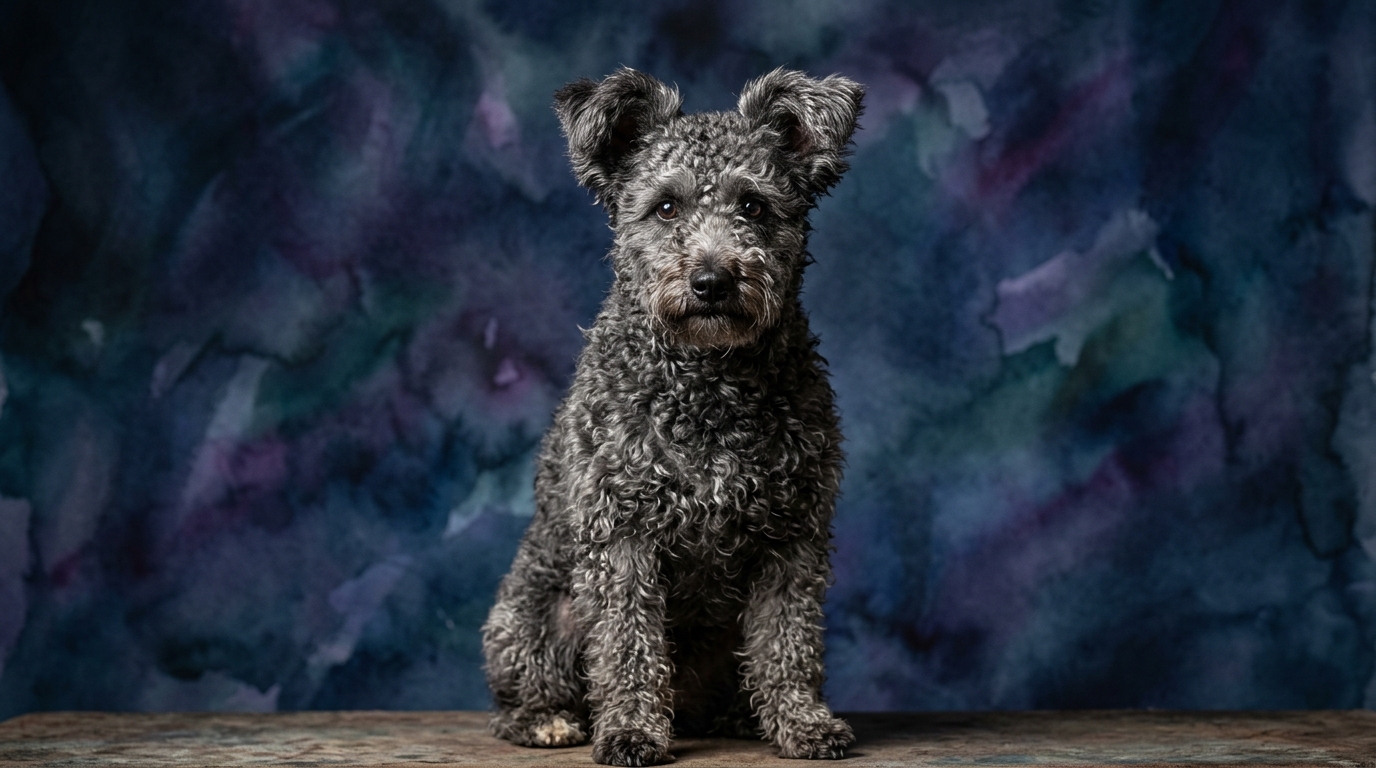
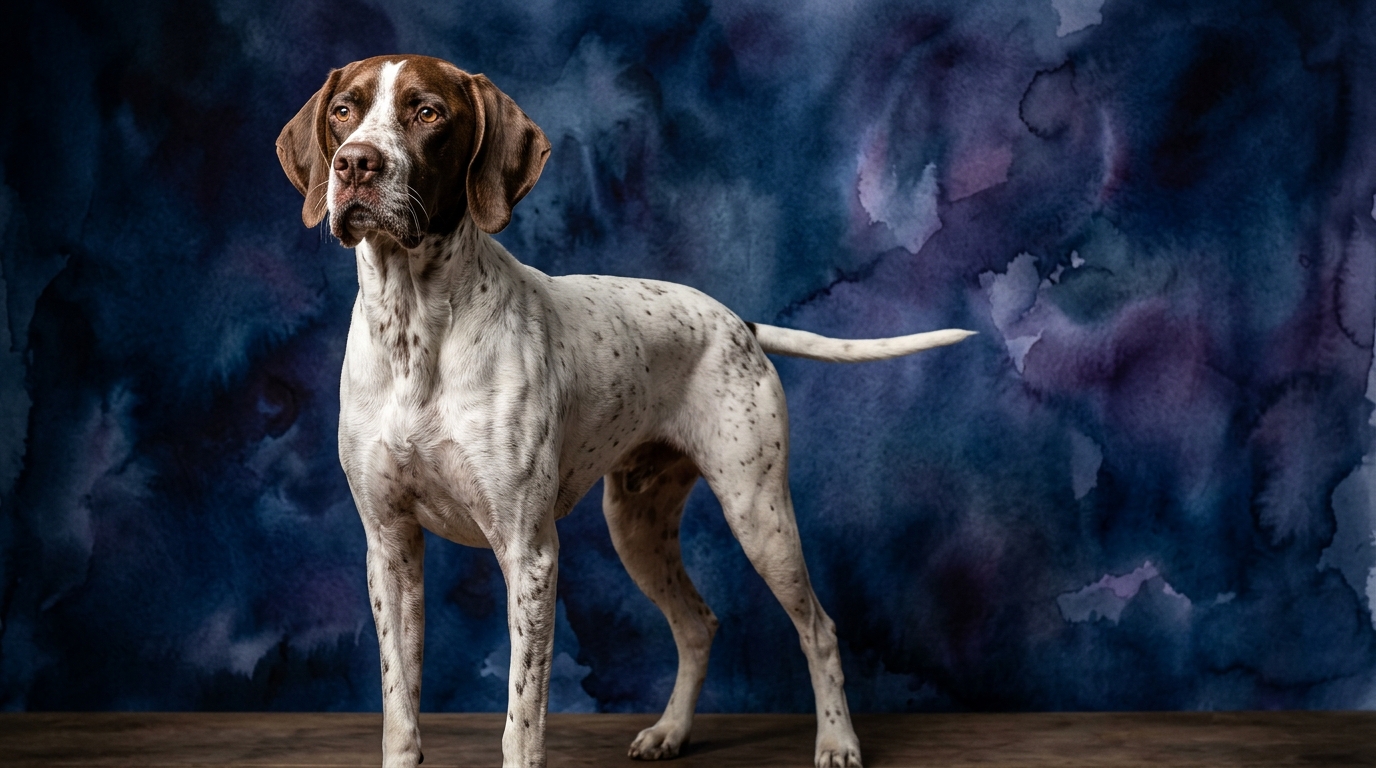
Side-by-Side Cognitive Profiles: Herding Acuity vs. Sporting Precision
Despite identical scores across The Cosmic Pet Pet IQ Lab's five dimensions, the Pumi and Pointer demonstrate how breed purpose profoundly shapes cognitive expression. For the Pumi, a Hungarian herding dog, its Problem Solving (3/5) is rooted in independently assessing and reacting to livestock movements, navigating complex, dynamic situations without constant human command. This manifests as a resourceful, adaptable mind, quick to find practical solutions for obstacles. Its Training Speed (3/5) reflects an ability to grasp concepts readily, though an independent spirit means they thrive with engaging, varied methods. Social Intelligence (3/5) is shaped by cooperative herding, requiring perceptiveness to human moods and effective communication, often with a discerning approach to strangers. The Pumi's Instinctive Drive (3/5) is a compelling urge to gather, control, and protect, translating into an energetic, watchful nature. A solid Memory (3/5) is crucial for retaining flock patterns and applying solutions to familiar problems, ensuring consistent performance.
The Pointer, a sporting dog bred for locating game, expresses its Problem Solving (3/5) through finely tuned navigation of scent trails, assessing wind direction, and strategizing efficient paths to quarry. This involves intricate spatial reasoning and environmental cue interpretation rather than direct manipulation of objects. Its Training Speed (3/5) indicates a responsive nature, absorbing lessons steadily, with an eagerness to please that makes them cooperative students, though intense focus on scent can be a distraction. Social Intelligence (3/5) is characterized by a deep connection with a human hunting partner, attuned to subtle signals and demonstrating a strong desire for companionship. The Pointer's Instinctive Drive (3/5) is powerfully geared towards scenting and pointing game, manifesting as unwavering focus and a methodical, purpose-driven search. Its Memory (3/5) is particularly adept at recalling locations of game, scent patterns, and successful hunting strategies, ensuring dependable performance in their field work.
Where the Pumi Excels Cognitively
The Pumi's cognitive strengths lean into dynamic, independent decision-making within complex, often fluid environments. Their herding background fosters a specific type of problem-solving that involves anticipating the movements of multiple entities, whether sheep or small children, and adjusting their strategy on the fly. This means they excel at tasks requiring quick, adaptive responses to changing variables, showing initiative in situations where a direct command might be delayed. Their social intelligence, while rated the same as the Pointer's, often translates into a more nuanced understanding of group dynamics and a readiness to manage or direct, making them adept at mediating play or gently guiding family members. They possess a mental agility that allows them to pivot between tasks or challenges with ease, a direct result of their need to control and maintain order within a flock. This breed thrives on variety and mental gymnastics.
Where the Pointer Excels Cognitively
The Pointer's cognitive superiority emerges in tasks requiring sustained focus, methodical pursuit, and acute sensory processing, particularly olfaction. Their problem-solving is exceptionally precise when it comes to navigating scent work and spatial awareness over large areas. A Pointer can mentally map a territory based on scent trails, wind direction, and topography, demonstrating a sophisticated form of environmental navigation that few breeds can match. Their memory is finely tuned to recall these complex sensory maps and the locations of previous finds, making them incredibly efficient at repetitive search tasks. While both breeds show 3/5 social intelligence, the Pointer's manifests as an unwavering, almost telepathic cooperation with a single handler during a shared objective, showcasing a deep, focused partnership rather than a broad management role. This breed's intellect shines in dedicated, task-oriented pursuits.
Training Dynamics: Independence vs. Cooperation
Both breeds are rated 3/5 for training speed, but the nature of their training experience differs significantly. The Pointer, driven by an inherent desire to work cooperatively with a handler on a specific task like scenting, often presents as more straightforward to train for obedience and task-oriented commands. Their intense focus on a goal, once engaged, makes them highly receptive to direction, especially when training taps into their natural pointing and retrieving instincts. They thrive on clear, consistent instructions that lead to a tangible reward, often linked to their prey drive, and generally aim to please their human partner.
Conversely, the Pumi, while learning quickly, brings a strong independent streak and a herding dog's inclination to 'think for itself.' This can manifest as a delightful resourcefulness but also as a challenge in training, as they might question commands or attempt to 'herd' their owners rather than simply comply. Training a Pumi requires more creativity, patience, and redirection to channel their energy and intelligence into desired behaviors. Owners must focus on engaging their minds with varied challenges and mental stimulation to prevent boredom and independent problem-solving that might not align with human expectations, emphasizing a partnership built on mutual respect and mental engagement.
Matching Lifestyles: Active Engagement for Both
Neither the Pumi nor the Pointer are suitable for truly relaxed owners seeking a sedentary companion; both demand substantial engagement due to their working backgrounds. However, they appeal to different types of active owners. The Pumi is an excellent fit for owners who thrive on dynamic interaction, enjoy diverse activities like agility, flyball, or advanced obedience, and are prepared for a dog that needs to be mentally challenged with puzzle toys and varied tasks. Their energy is often expressed in bursts of activity interspersed with vigilant observation, and they benefit from owners who can provide consistent mental stimulation alongside physical exercise, appreciating their quick wit and playful nature.
The Pointer, on the other hand, is ideal for owners whose active lifestyle involves extensive outdoor exploration, long runs, hiking, or field sports. Their stamina is impressive, and they require sustained physical exertion that allows them to range and follow their powerful scenting instincts. Owners who enjoy repetitive, goal-oriented outdoor activities will find a perfect match in the Pointer, as their contentment comes from fulfilling their ingrained drive to search and work. They are happiest when given a 'job' that utilizes their keen senses and boundless energy in open spaces.
The Verdict
To choose a Pumi means embracing a clever, agile mind that thrives on variety, independent thought, and dynamic interaction, perfect for owners seeking a versatile, engaging partner in diverse activities.
Opt for a Pointer if your lifestyle revolves around sustained outdoor activity, methodical exploration, and a deep, focused working partnership, appreciating a dog whose cognitive strengths lie in precision and unwavering dedication to a task.
🧠 Find Your Pet's IQ Score
Our Pet IQ Lab assessment covers 25+ tests across 5 cognitive dimensions — personalized to your breed.
Take the Full IQ Test →Frequently Asked Questions
Do Pumi and Pointers need similar amounts of exercise?
While both are active, their exercise needs differ in quality. Pumis require varied mental and physical challenges like agility and puzzle-solving, often in bursts, while Pointers need sustained, extensive physical activity like long runs or hikes that engage their powerful scenting drive. A Pointer will appreciate more mileage, whereas a Pumi thrives on diverse mental engagement alongside physical exertion.
Which breed is better for a family with small children?
The Pumi's herding instinct, while manageable, might lead them to 'herd' small children, requiring careful supervision and training to redirect this natural behavior. Pointers are generally amiable and patient, often forming strong bonds with family members, but their size and exuberance mean supervision is still key with very young children. A Pumi's vigilance might make it a more protective family member, but its herding tendencies need management.
Can a Pumi or Pointer adapt to apartment living?
Both breeds can adapt to apartment living if their significant exercise and mental stimulation needs are consistently met. This means daily, dedicated outings for physical activity and structured playtime or training sessions to engage their minds. Without ample opportunities to express their working drives, either breed could develop undesirable behaviors in a confined space.