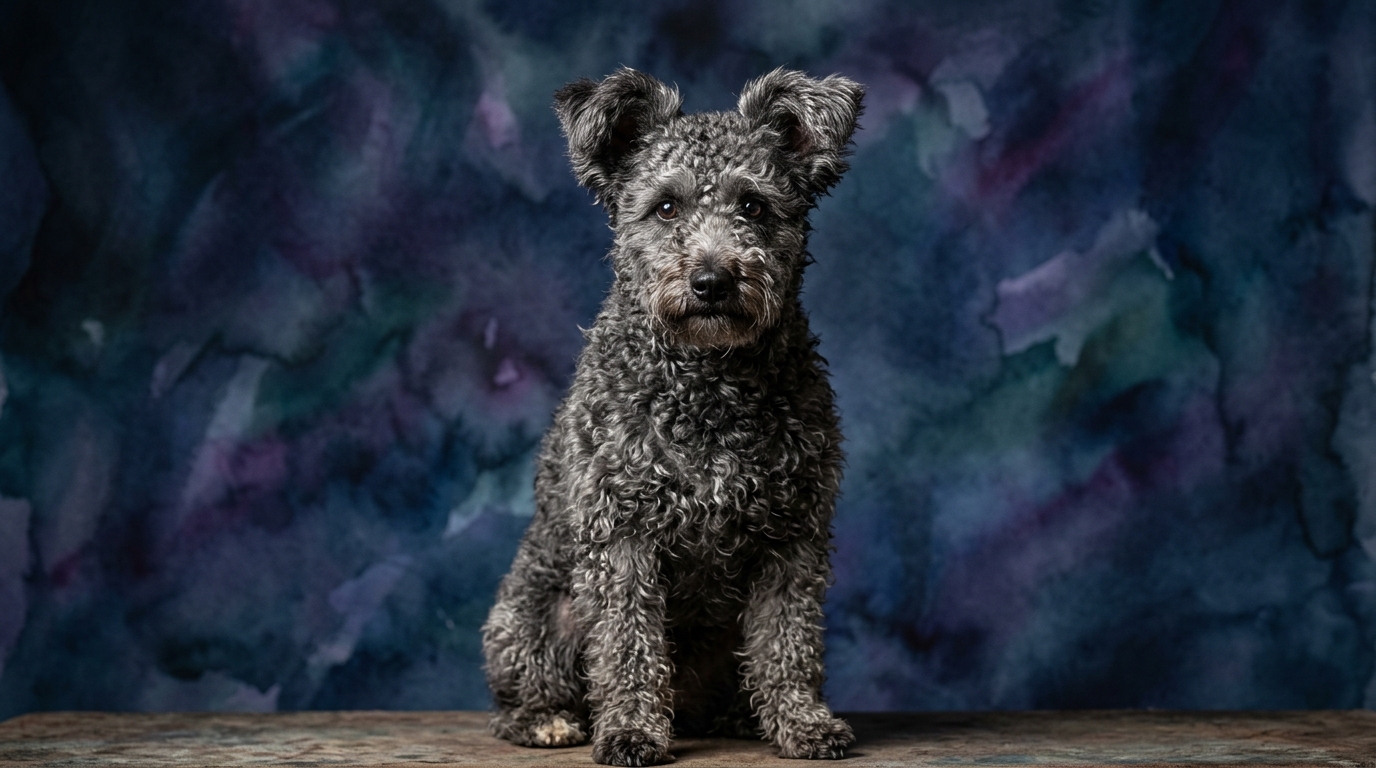
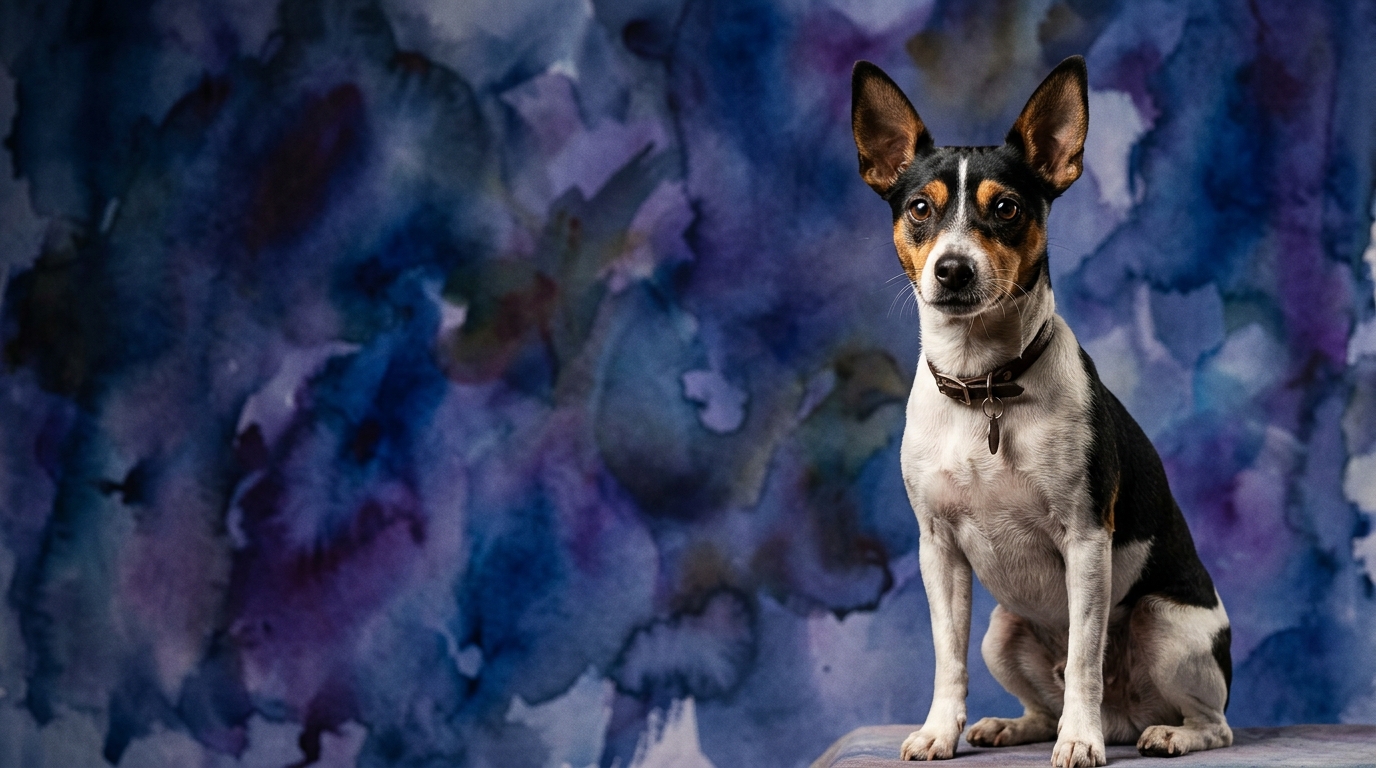
Side-by-Side Cognitive Profile: Pumi vs. Rat Terrier
Despite sharing a 3/5 rating across all five dimensions of intelligence by The Cosmic Pet Pet IQ Lab, the Pumi and Rat Terrier demonstrate these capacities through the unique lenses of their breed histories. Understanding these nuances reveals how their cognitive strengths are specialized.
For the **Pumi (Herding Group)**:
**Problem Solving (3/5):** The Pumi's problem-solving excels in dynamic herding environments. They strategically move and protect livestock, anticipating animal movements and adapting tactics. This involves spatial reasoning, understanding cause-and-effect in complex systems, and quick decision-making to maintain flock cohesion, demonstrating cognitive flexibility beyond static puzzles.
**Training Speed (3/5):** Pumi are generally responsive and eager to engage with handlers, quickly learning commands and tasks. Their herding background fosters a strong work ethic and desire for collaboration, making them receptive to consistent, positive training that channels their inherent drive and desire for partnership.
**Social Intelligence (3/5):** A Pumi's social intelligence includes acute awareness of livestock and human cues. They interpret subtle signals from animals, adjusting their approach, and are attuned to their handler's moods and intentions. This sophisticated ability to read body language and context makes them effective partners.
**Instinctive Drive (3/5):** The Pumi's drive is rooted in herding, manifesting as a desire to gather, control, and protect. This involves cognitive assessment of group dynamics and maintaining cohesion. They possess inherent alertness and protective instincts towards their perceived "flock," constantly aware of surroundings.
**Memory (3/5):** Pumi exhibit robust memory for commands, routines, and spatial layouts, especially for work-related tasks. A herding dog must recall pasture boundaries, flock patterns, and handler signals. This reliable memory allows them to build on experiences and perform complex action sequences.
For the **Rat Terrier (Terrier Group)**:
**Problem Solving (3/5):** The Rat Terrier's problem-solving is honed by their pest eradication history. They excel at independent tasks like locating hidden prey, navigating confined spaces, and accessing difficult areas. This involves tenacity, resourcefulness, and a trial-and-error approach, driven by intense prey instinct.
**Training Speed (3/5):** Rat Terriers learn quickly, especially when motivated by high-value rewards or challenges. However, their independent spirit and focus on environmental stimuli mean training speed can vary, requiring patient, consistent, and creative engagement to maintain their attention and commitment to the task.
**Social Intelligence (3/5):** A Rat Terrier's social intelligence is keenly directed towards understanding their environment and potential prey. They are observant, quickly assessing changes or opportunities. With humans, they form strong bonds but interpret social cues through their self-directed motivations, adept at reading intentions for play or activity.
**Instinctive Drive (3/5):** The Rat Terrier's drive is overwhelmingly centered on hunting and prey. This manifests as intense desire to chase, dig, and investigate with boundless energy. They are powerfully motivated by scent, sight, and sound, making them persistent and single-minded when on a "mission."
**Memory (3/5):** Rat Terriers possess strong, practical memory for prey locations, scent trails, and successful hunting strategies. They recall complex actions that led to rewards, whether finding a hidden toy or remembering a hunting ground layout. Their memory is tied to innate drives, refining problem-solving.
Where the Pumi Wins Cognitively
The Pumi's cognitive strengths lie in their ability to process and respond to complex, dynamic social systems, particularly those involving multiple moving entities like a flock. Their herding background has refined their capacity for strategic thinking in real-time, requiring them to anticipate movements, understand the flow of a group, and make rapid, calculated decisions to maintain order. This involves a nuanced understanding of spatial relationships and the ability to influence behavior without direct physical control, relying on presence and calculated movement. Their success hinges on being an active, collaborative partner, constantly interpreting and responding to their handler's directives within this intricate environment, demonstrating a sophisticated form of distributed cognition.
Where the Rat Terrier Wins Cognitively
The Rat Terrier's cognitive advantages are rooted in their independent, tenacious pursuit of specific goals, typically related to pest control. They excel at solitary problem-solving, employing a persistent and often creative approach to locate hidden prey or navigate challenging physical obstacles. Their cognitive strength is in their ability to focus intensely on a singular objective, filtering out distractions and demonstrating remarkable perseverance. This often involves intricate scent discrimination, memory of hiding spots, and the ingenuity to overcome barriers, showcasing a self-directed intelligence geared towards efficiency in a "hunt" rather than collaborative strategy.
Which is Easier to Train and Why
While both breeds are capable learners, the Pumi generally presents an easier training experience for the average owner due to their inherent desire to collaborate and please their handler. Their herding lineage instilled a strong work ethic and a responsiveness to direction, making them naturally inclined to pay attention and follow commands for structured tasks. They thrive on clear communication and consistent reinforcement, often viewing training as a shared activity aimed at a common goal. In contrast, the Rat Terrier, with its strong independent streak and overwhelming prey drive, can sometimes be more challenging to train. Their self-directed problem-solving and intense focus on environmental stimuli (scents, movements) mean they might require more creative and highly motivating methods to maintain their attention and override their natural instincts. Consistency is paramount for both, but the Pumi's default inclination is often towards partnership, while the Rat Terrier's is towards personal exploration.
Which Suits Active Owners vs. Relaxed Owners
Neither the Pumi nor the Rat Terrier is well-suited for a truly "relaxed" owner, as both possess significant energy and cognitive needs. However, the *type* of activity they thrive on differs. The Pumi flourishes with active owners who can provide structured mental and physical engagement, such as dog sports like agility, obedience, or even mock herding tasks. They need purpose and a "job" that channels their strategic herding mind. Owners who enjoy teaching complex sequences and engaging in collaborative activities will find a Pumi rewarding. The Rat Terrier also requires an active owner, but one who appreciates their independent spirit and strong prey drive. They excel in activities like earthdog trials, scent work, or vigorous games of fetch and chase. They need outlets for their investigative nature and can benefit from owners who incorporate puzzle toys and varied "hunting" games into their routine. While both need activity, the Pumi often seeks more directed partnership, while the Rat Terrier might prefer more self-directed exploration within an active framework.
The Verdict
Choose a Pumi if you seek a highly engaged, collaborative partner for structured activities and thrive on working together to achieve goals.
Opt for a Rat Terrier if you appreciate an independent, tenacious companion with a keen investigative mind and are prepared to channel their strong prey drive into engaging, self-directed pursuits.
🧠 Find Your Pet's IQ Score
Our Pet IQ Lab assessment covers 25+ tests across 5 cognitive dimensions — personalized to your breed.
Take the Full IQ Test →Frequently Asked Questions
Do Pumis and Rat Terriers need a lot of exercise?
Yes, both breeds are energetic and require significant daily exercise to remain happy and well-adjusted. The Pumi needs structured activities that engage their herding mind, while the Rat Terrier benefits from varied physical outlets that satisfy their strong prey drive and investigative nature.
Are Pumis or Rat Terriers better with children?
Both can be good with children when properly socialized and raised in a respectful environment. Pumis are often playful and protective, while Rat Terriers are typically sturdy and enjoy active play. Supervision is always recommended, and children should be taught how to interact appropriately with dogs.
Which breed is more prone to barking?
Both breeds can be vocal. Pumis are alert watchdogs, using their voice to signal perceived threats or to 'herd' their family members. Rat Terriers, with their keen senses and prey drive, may bark at perceived intruders or in excitement during play, and their vocalizations can be a part of their hunting instinct.