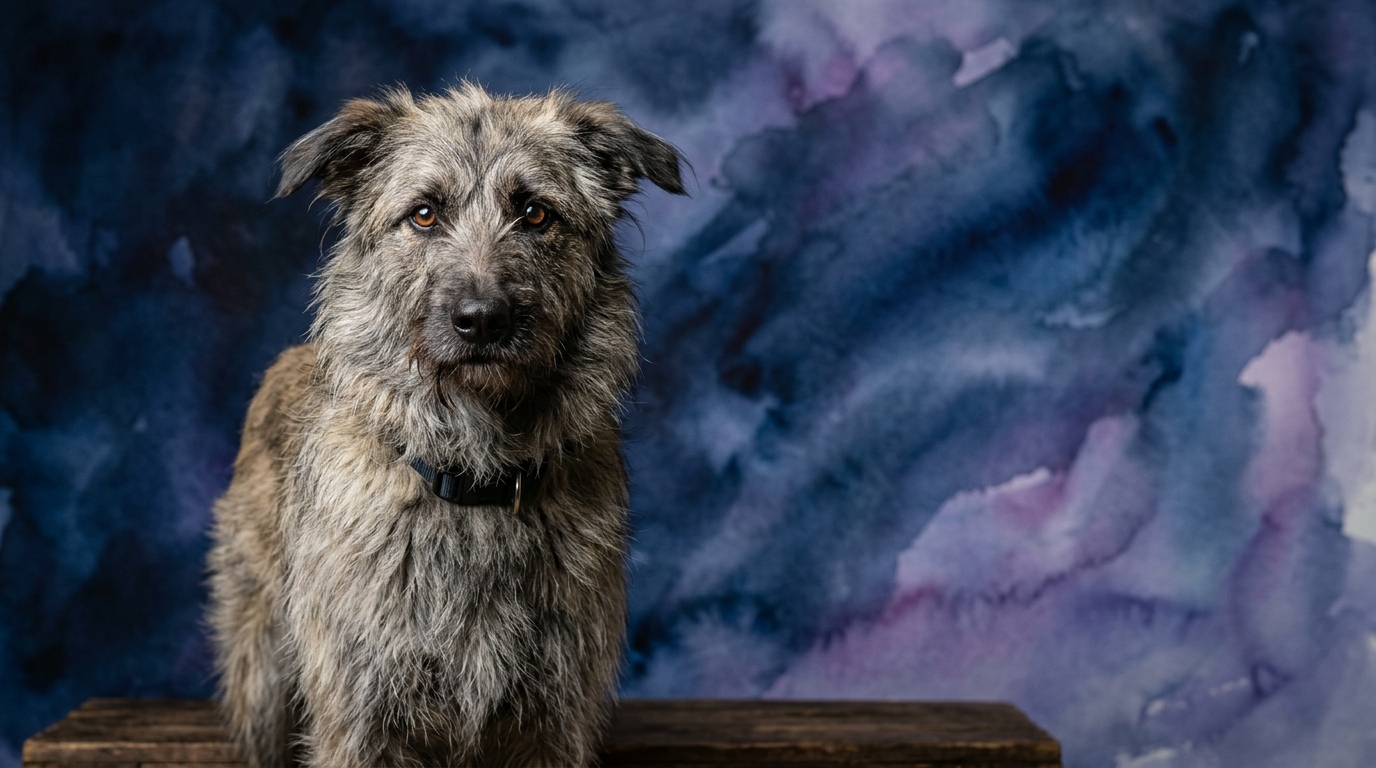
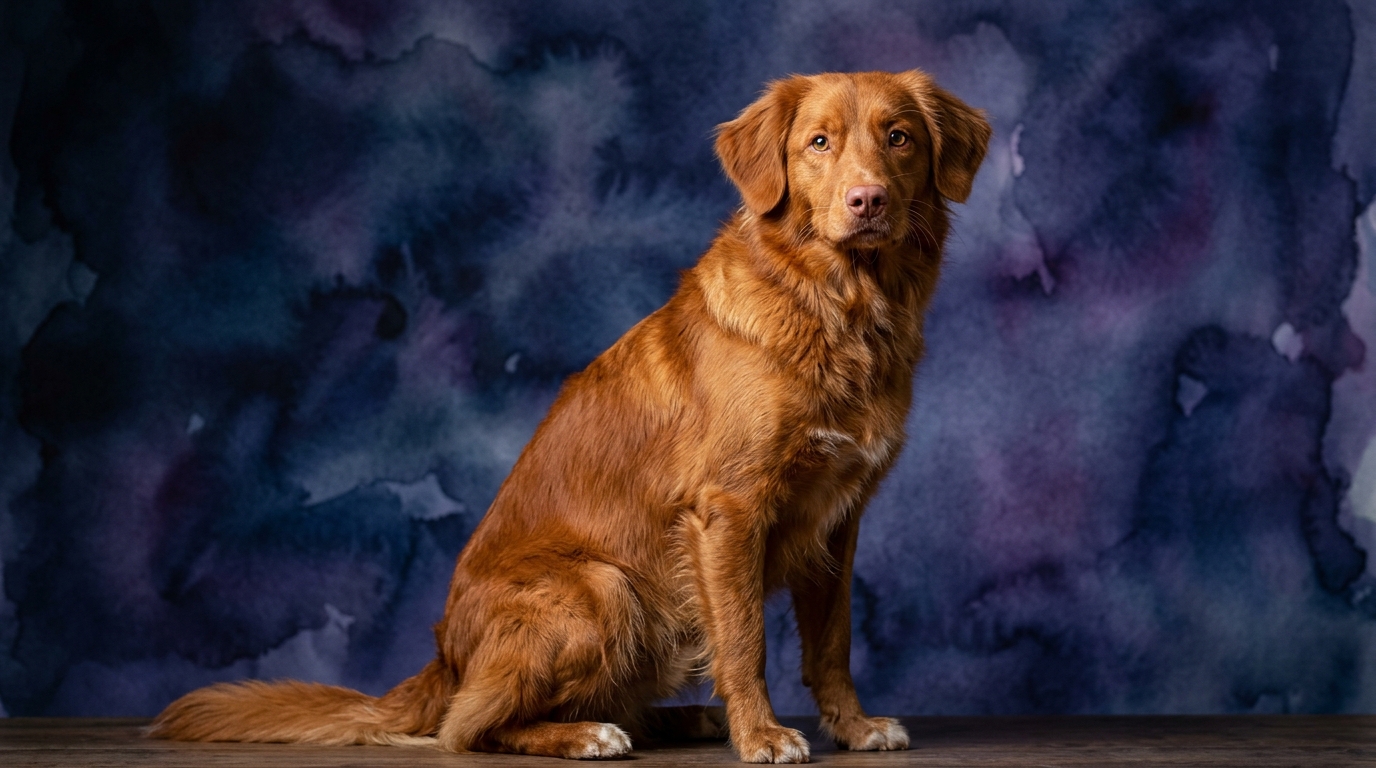
Side-by-Side Cognitive Profile: Pyrenean Shepherd vs. Nova Scotia Duck Tolling Retriever
In The Cosmic Pet Pet IQ Lab, both the Pyrenean Shepherd and the Nova Scotia Duck Tolling Retriever are rated with a 3/5 across all five cognitive dimensions, suggesting a solid baseline of mental capacity. However, these identical scores manifest uniquely within each breed's specialized context, shaped by generations of specific work.
For Problem Solving (3/5), the Pyrenean Shepherd demonstrates a practical, on-the-spot ability to navigate dynamic herding situations, figuring out how to move livestock or overcome obstacles in the field, often with self-directed decisions. The Nova Scotia Duck Tolling Retriever exhibits a focused problem-solving approach, often centered around retrieving tasks, which involves figuring out how to reach a downed bird in challenging terrain or remembering complex retrieve sequences, frequently in cooperation with a handler.
Regarding Training Speed (3/5), the Pyrenean Shepherd possesses a good capacity for learning new commands and routines, particularly when the training aligns with their natural herding instincts or provides a clear purpose; their independence means they learn quickly, but may also question commands. The Nova Scotia Duck Tolling Retriever shows a solid aptitude for absorbing new information and commands efficiently, driven by their desire to work alongside their human partners, responding well to consistent, positive reinforcement training.
In Social Intelligence (3/5), the Pyrenean Shepherd displays a keen awareness of their human companions and their environment, often forming strong, discerning bonds, reading situations well, though they can be reserved with strangers. The Nova Scotia Duck Tolling Retriever possesses a perceptive understanding of human emotions and intentions, making them highly responsive companions and effective hunting partners, adapting well to various family dynamics.
For Instinctive Drive (3/5), the Pyrenean Shepherd carries a strong, inherent drive to herd, which translates into a persistent work ethic and a natural inclination to organize and control movement, influencing their daily activities and focus. The Nova Scotia Duck Tolling Retriever exhibits a powerful, innate drive to retrieve and 'toll' (lure) waterfowl, manifesting as a tireless enthusiasm for fetching games and a focused intensity during training or actual work.
Finally, for Memory (3/5), the Pyrenean Shepherd retains learned commands, routines, and experiences effectively, crucial for managing livestock over long periods and remembering specific tasks and locations. The Nova Scotia Duck Tolling Retriever demonstrates a robust memory for training sequences, retrieving locations, and learned behaviors, essential for consistent performance in complex retrieving scenarios, remembering where multiple items have fallen and retrieving them systematically.
Where the Pyrenean Shepherd Excels Cognitively
Despite identical scores, the Pyrenean Shepherd's cognitive strengths lean into independent decision-making and adaptive problem-solving within dynamic, unstructured environments. Their '3/5 Problem Solving' often manifests as an ability to assess and react to unpredictable livestock movements without constant human direction, demonstrating a nuanced understanding of cause-and-effect in a fluid setting. This breed excels at reading subtle shifts in animal behavior and adjusting its strategy on the fly, a cognitive skill refined over generations of solitary herding work in challenging terrains.
Furthermore, their '3/5 Social Intelligence' is finely tuned to observe and interpret the collective behavior of a flock, anticipating movements and potential issues before they escalate. While they bond deeply with their family, their social acumen extends beyond direct human interaction to encompass a broader environmental awareness, allowing them to make autonomous judgments that benefit the entire group. This capacity for independent, context-aware action gives them an edge in situations demanding self-reliance and quick, adaptive thinking.
Where the Nova Scotia Duck Tolling Retriever Excels Cognitively
The Nova Scotia Duck Tolling Retriever, while also scoring a '3/5' in cognitive dimensions, showcases its particular brilliance in areas requiring focused cooperation, sequential learning, and sustained concentration on a specific task. Their '3/5 Problem Solving' is often demonstrated through their methodical approach to retrieving, where they might strategize the most efficient path to a downed bird, navigating obstacles with purpose and remembering multiple fall locations. This is a deliberate, goal-oriented problem-solving, deeply integrated with their handler's directives.
Their '3/5 Training Speed' is often amplified by their strong desire to please and their natural biddability, allowing them to quickly master complex multi-step commands and signal cues crucial for waterfowl hunting. This breed thrives on intricate training routines, absorbing new tasks with enthusiasm and precision. Coupled with their '3/5 Memory,' they can recall elaborate sequences of retrieves and handler instructions, making them exceptional partners in activities that demand a structured, cooperative cognitive effort and a high degree of precision.
Training Nuances: Pyrenean Shepherd vs. Toller
While both breeds score '3/5' in Training Speed, the Nova Scotia Duck Tolling Retriever is generally perceived as easier to train for the average owner due to its higher intrinsic biddability and strong desire to work cooperatively with a handler. Tollers are bred to be attentive partners in the field, eagerly awaiting commands and motivated by positive reinforcement and the opportunity to engage in retrieving tasks. Their focus on the handler makes them highly receptive to learning obedience cues and complex sequences, translating into a smoother training experience for those seeking a compliant and eager pupil.
The Pyrenean Shepherd, conversely, while equally capable of learning quickly, possesses an inherent independence and a strong sense of self-direction, stemming from its herding heritage where autonomous decision-making was paramount. This means they may question commands that don't align with their perceived purpose or logic, requiring a trainer to be more patient, creative, and consistent in demonstrating the value of each task. While they are highly trainable, their independent streak can make the process more challenging for novice owners who may misinterpret their thoughtful deliberation as stubbornness.
Lifestyle Match: Active Engagement is Key for Both
Neither the Pyrenean Shepherd nor the Nova Scotia Duck Tolling Retriever are suited for truly relaxed owners, as both breeds possess a robust '3/5 Instinctive Drive' and require significant mental and physical engagement. However, the type of activity they thrive on differs. The Pyrenean Shepherd is ideal for active owners who appreciate a partner for long hikes, agility, herding trials, or competitive obedience, particularly those who value a dog with a strong independent streak and a keen observational intelligence for navigating diverse environments. They require consistent, purposeful activity that engages both their body and their problem-solving mind, often preferring to be 'doing' something with their human.
The Nova Scotia Duck Tolling Retriever also demands active owners, but their activity often revolves around structured play, retrieving games, dog sports like dock diving or flyball, and any activity that involves working closely with their human. They excel with owners who can provide consistent training, engage them in interactive games, and channel their strong retrieving drive into productive outlets. They are less about independent exploration and more about focused, cooperative activities, making them a great fit for owners who enjoy hands-on training and shared athletic pursuits.
The Verdict
Choose the Pyrenean Shepherd if you're an experienced, active owner seeking an independent, observant partner for dynamic outdoor activities and appreciate a dog that thinks for itself.
Choose the Nova Scotia Duck Tolling Retriever if you're an active owner who values a highly cooperative, biddable companion for structured sports, retrieving games, and close partnership in training.
🧠 Find Your Pet's IQ Score
Our Pet IQ Lab assessment covers 25+ tests across 5 cognitive dimensions — personalized to your breed.
Take the Full IQ Test →Frequently Asked Questions
Do Pyrenean Shepherds and Nova Scotia Duck Tolling Retrievers have similar exercise needs?
Yes, both breeds require substantial daily exercise to thrive, reflecting their '3/5 Instinctive Drive' and working heritage. However, the Pyrenean Shepherd often benefits from more independent, exploratory activities, while the Toller excels in structured, handler-focused play and work.
Are Pyrenean Shepherds and Nova Scotia Duck Tolling Retrievers good with children?
Both breeds can be good with children, particularly if raised with them and properly socialized. The Pyrenean Shepherd's herding instincts might lead to nipping at heels if not managed, while the Toller's high energy and retrieving drive mean they need supervision to ensure gentle play.
Which breed is more vocal, the Pyrenean Shepherd or the Nova Scotia Duck Tolling Retriever?
The Pyrenean Shepherd can be quite vocal, using barks to communicate and alert, a trait rooted in their herding role. Tollers are also known for a distinctive 'Toller scream' or high-pitched bark when excited, but may not be as consistently vocal as a herding breed.