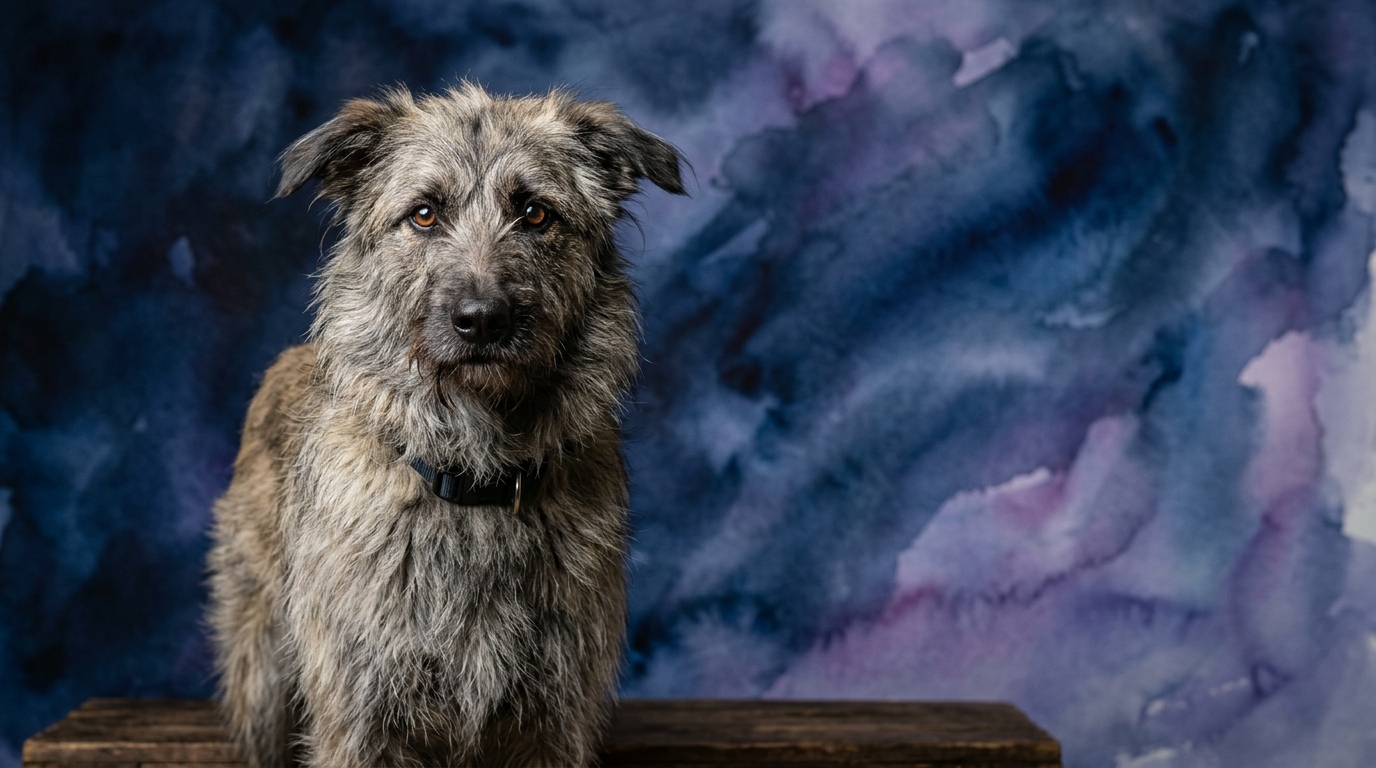
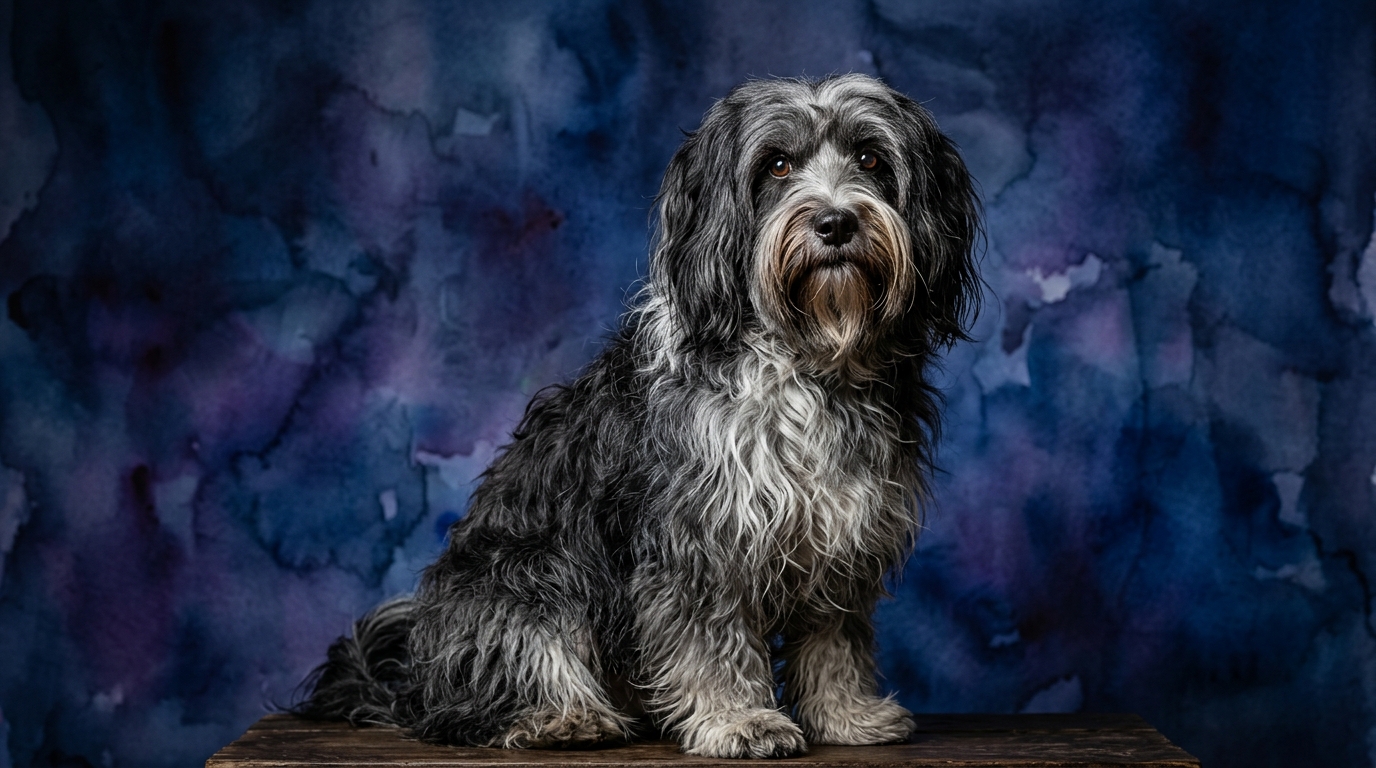
Side-by-Side IQ Profile: Pyrenean Shepherd and Tibetan Terrier
The Pyrenean Shepherd, a spirited herding dog, registers a 3/5 in Problem Solving, reflecting an ability to independently assess and react to complex, dynamic situations, such as managing a flock. Its Training Speed, also at 3/5, indicates a quick grasp of commands, though often paired with an independent streak that prioritizes its own judgment. Social Intelligence at 3/5 suggests a keen awareness of handler cues and flock dynamics, essential for its working role. An Instinctive Drive of 3/5 highlights its strong herding and protective instincts, while Memory, also 3/5, allows for excellent recall of tasks, routes, and learned behaviors crucial for its demanding work.
The Tibetan Terrier, a robust Non-Sporting breed, similarly scores 3/5 in Problem Solving, often demonstrating this by cleverly navigating domestic challenges or figuring out how to get what it wants through persistence. Its 3/5 Training Speed means it learns new tasks readily, yet its independent nature can sometimes lead to selective hearing if the motivation isn't compelling enough. Social Intelligence at 3/5 points to its adeptness at reading human emotions and adapting to various family members and social settings. The 3/5 Instinctive Drive manifests more as a watchful, companionable nature with a strong guarding instinct for its family, rather than herding, and its 3/5 Memory ensures it remembers routines, commands, and past experiences with remarkable accuracy.
Where the Pyrenean Shepherd Wins Cognitively
The Pyrenean Shepherd truly excels in cognitive tasks requiring rapid, independent decision-making within a fluid, often unpredictable environment. Its herding heritage has honed a mind that can process multiple variables simultaneously—the movement of livestock, the terrain, the handler's subtle signals, and potential threats—and formulate an immediate, effective response. This isn't just about speed; it’s about a proactive form of problem-solving where the dog anticipates changes and acts, rather than waiting for explicit instructions, making it particularly astute in agility or advanced obedience where initiative is rewarded. Their ability to maintain focus on a distant moving object for extended periods, assessing its trajectory and potential, is a testament to their sustained cognitive engagement.
This breed's cognitive strength also lies in its capacity for sustained mental and physical effort. A Pyrenean Shepherd can engage in complex tasks, like navigating a challenging obstacle course or learning a multi-step routine, for longer durations than many breeds. Their instinctive drive, when channeled, fuels a relentless pursuit of 'the job,' allowing them to continuously refine their strategies and remember intricate patterns of movement or commands, making them outstanding partners for demanding dog sports or working roles where endurance and mental fortitude are paramount.
Where the Tibetan Terrier Wins Cognitively
The Tibetan Terrier often demonstrates a cognitive edge in areas requiring social finesse and adaptable intelligence within a human-centric world. Their problem-solving, while rated similarly, frequently manifests as inventive strategies to achieve domestic goals, such as manipulating objects to get a desired treat or figuring out complex routes to a favorite sunbeam. This breed shows a particular aptitude for understanding human routines and anticipating events, often learning the subtle cues that precede a walk or mealtime. Their social intelligence allows them to integrate seamlessly into diverse family dynamics, often acting as a sensitive barometer for household moods and adjusting their behavior accordingly.
Furthermore, the Tibetan Terrier’s memory and social intelligence combine to create a dog that is exceptionally good at remembering specific people, their habits, and individual preferences. They might recall which family member is most likely to share food or which visitor offers the best belly rubs, tailoring their interactions accordingly. This nuanced understanding of their social environment, coupled with a knack for creative, self-motivated learning, gives them an advantage in adapting to varied lifestyles and roles, from a quiet companion to an enthusiastic participant in family activities.
Which is Easier to Train and Why
When considering ease of training, both breeds score 3/5 in Training Speed, indicating they learn at a moderate pace, but their underlying motivations and temperaments create distinct experiences. The Pyrenean Shepherd, with its intense focus and strong working drive, learns commands quickly when it understands the purpose and feels it's contributing to a 'job.' However, their independent nature means they might question commands if they perceive a more efficient solution, requiring a confident, consistent handler who can channel their drive and provide ample mental stimulation. Training a Pyr often involves harnessing their inherent desire to work and problem-solve, making them responsive to tasks that challenge their intellect and physical capabilities.
The Tibetan Terrier, while also learning swiftly, can present a different set of training challenges due to its cleverness and occasional stubbornness. They are not dogs that blindly follow; they often assess 'what's in it for me?' before complying. This means training needs to be engaging, positive-reinforcement based, and varied to keep their attention and prevent boredom. Their social intelligence makes them keen observers of human behavior, and they can sometimes 'train' their owners if not handled with consistent boundaries. While they absorb information quickly, maintaining their enthusiasm requires creativity and a strong bond, making them suitable for owners who enjoy interactive, reward-based methods rather than rote drills.
Which Suits Active Owners vs. Relaxed Owners
For active owners, the Pyrenean Shepherd is an ideal match. This breed thrives on consistent physical activity and, crucially, mental engagement. Their cognitive design necessitates a lifestyle that provides a 'job'—whether it's herding, advanced dog sports like agility or flyball, or long, challenging hikes that allow them to use their problem-solving and instinctive drives. Owners who can dedicate significant time to training, exercise, and providing outlets for their breed-specific intelligence will find an incredibly rewarding partnership. A Pyrenean Shepherd left without sufficient mental and physical stimulation can become bored and destructive, channeling its cognitive energy into less desirable behaviors.
The Tibetan Terrier offers greater versatility for owners who might be active some days and more relaxed on others, though 'relaxed' should not be mistaken for inactive. While they enjoy vigorous play, walks, and mental games, they are generally content to snuggle on the couch after their needs are met. Their social intelligence and adaptability make them excellent companions for a variety of households, from bustling families to individuals. Owners who appreciate a clever, sometimes mischievous companion who enjoys being at the center of family life, and are willing to provide daily walks and engaging indoor activities, will find the Tibetan Terrier a delightful fit. They do not demand the same intensity of 'work' as a Pyrenean Shepherd, but still require consistent mental stimulation to prevent boredom.
The Verdict
Choose the Pyrenean Shepherd if you are an experienced, active owner seeking a highly engaged working partner for demanding physical and mental activities.
Opt for the Tibetan Terrier if you desire a clever, adaptable companion who thrives on social interaction and enjoys varied activities, fitting a more flexible lifestyle.
🧠 Find Your Pet's IQ Score
Our Pet IQ Lab assessment covers 25+ tests across 5 cognitive dimensions — personalized to your breed.
Take the Full IQ Test →Frequently Asked Questions
Do Pyrenean Shepherds make good family pets?
Yes, Pyrenean Shepherds can be wonderful family pets, especially with active families who understand their need for mental and physical stimulation. They are loyal and protective but require consistent training and socialization from a young age to channel their strong instincts appropriately.
Are Tibetan Terriers prone to excessive barking?
Tibetan Terriers can be vocal, often using their bark to alert their owners to new sights or sounds, a trait stemming from their watchdog heritage. With consistent training and early socialization, this tendency can be managed, but they will likely always be good at announcing visitors.
How much exercise does a Pyrenean Shepherd need daily?
A Pyrenean Shepherd typically requires at least 60-90 minutes of vigorous exercise daily, ideally incorporating activities that engage both their body and mind. This could include long runs, challenging hikes, agility training, or herding practice to satisfy their energetic and cognitive needs.