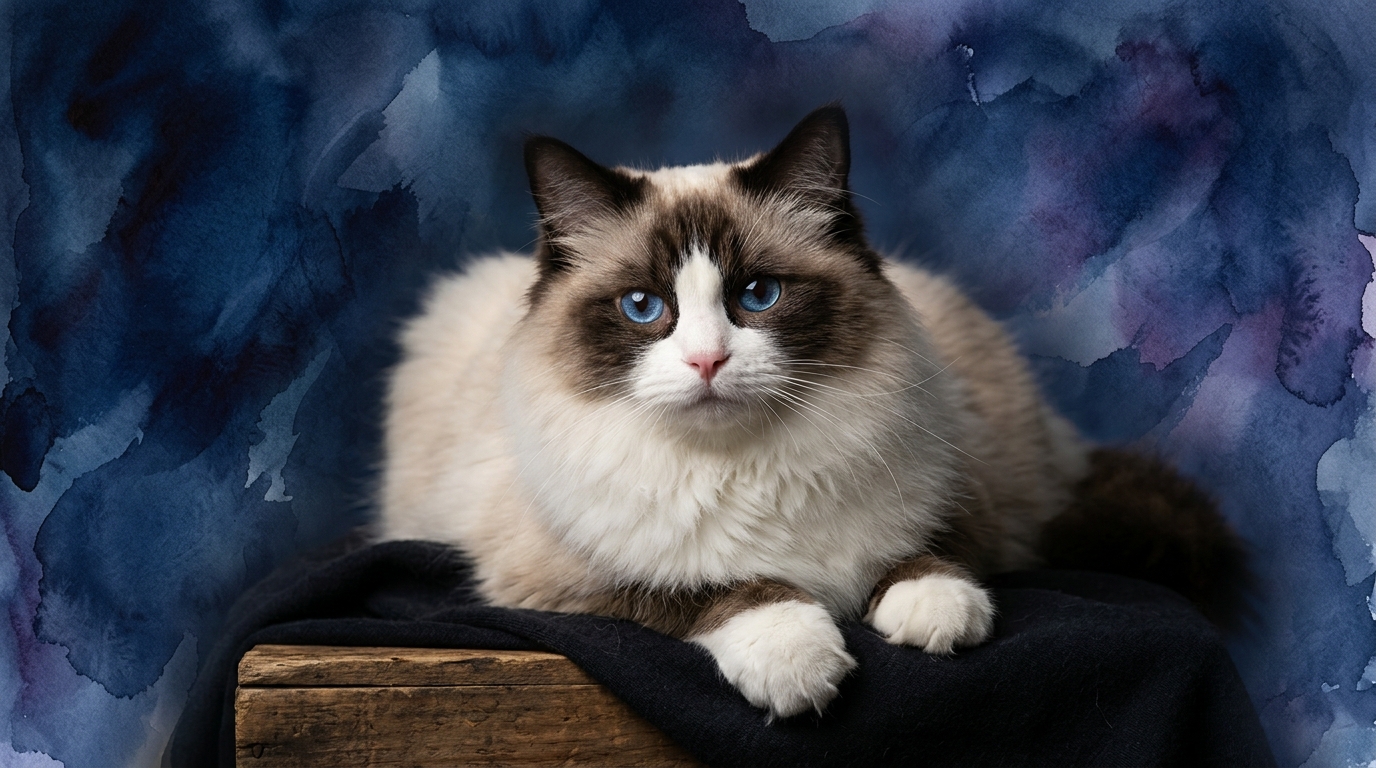
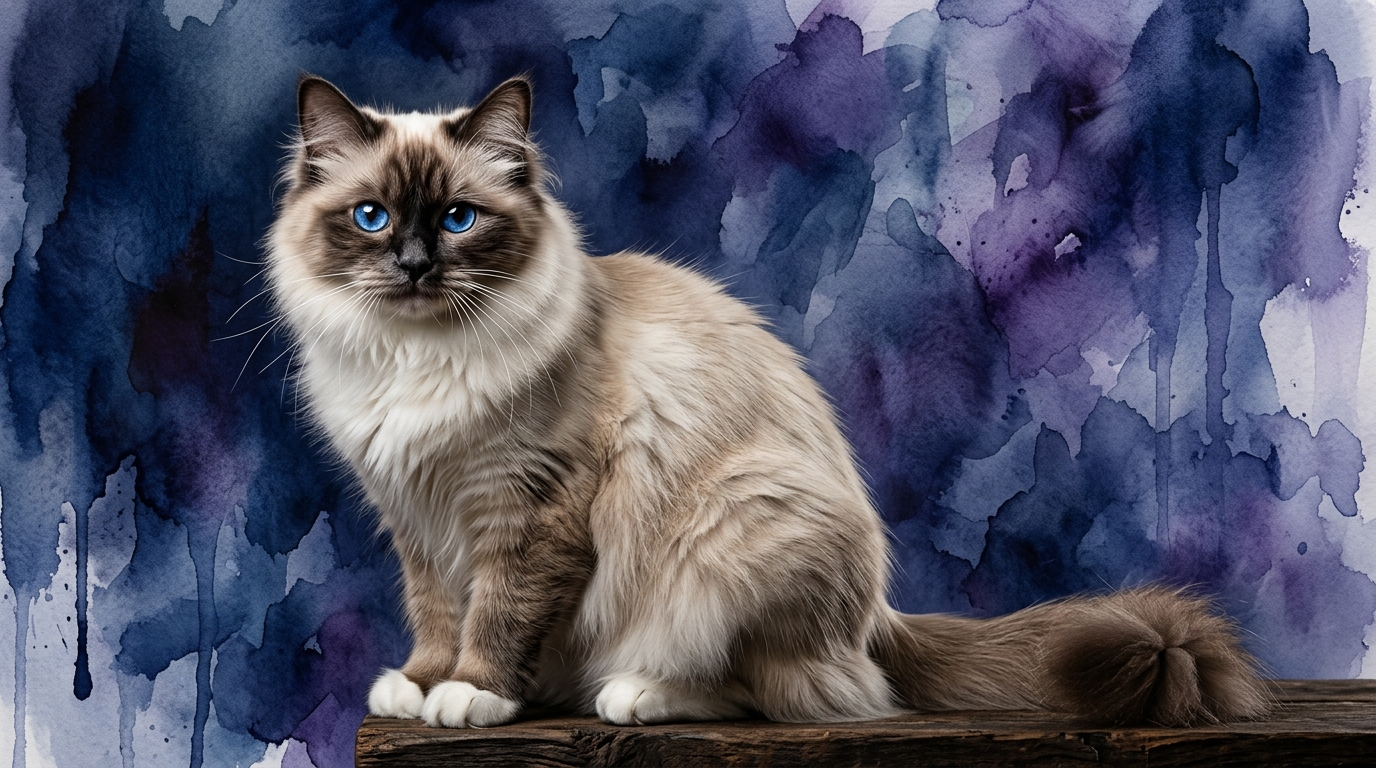
Side-by-Side Cognitive Profiles: Ragdoll vs. Birman
The Cosmic Pet Pet IQ Lab employs a detailed five-dimensional framework to assess feline intelligence, moving beyond simplistic labels to offer a nuanced understanding of each breed's cognitive strengths. For the Ragdoll and Birman, while sharing some commonalities, distinct differences emerge in their social and instinctive faculties.
**Problem Solving (Ragdoll: 3/5; Birman: 3/5):** Both Ragdolls and Birmans exhibit a moderate capacity for problem-solving. This means they can generally figure out how to access preferred toys, navigate around simple household obstacles, or understand basic cause-and-effect relationships in their immediate environment. They won't typically invent complex strategies to open child-proof cabinets, but they can learn routines and anticipate events, like the sound of a treat bag opening or the schedule of their feeding time. Their cognitive approach leans more towards adapting to known scenarios rather than innovating novel solutions.
**Training Speed (Ragdoll: 3/5; Birman: 3/5):** When it comes to learning new behaviors or commands, both breeds demonstrate a comparable pace. A 3/5 score indicates they are receptive to training, particularly with consistent, positive reinforcement methods. Owners can successfully teach them basic commands such as 'sit,' 'stay,' or 'come,' and even leash training is achievable. They require patience and repetition, but their willingness to engage in the learning process is present. Neither breed is exceptionally quick to grasp complex trick sequences, but they are far from being difficult to teach.
**Social Intelligence (Ragdoll: 5/5; Birman: 3/5):** Here lies a significant cognitive divergence. Ragdolls excel with a perfect 5/5 score, indicating an exceptional capacity to understand and respond to human emotions and social cues. They are deeply attuned to their family members' moods, often seeking to offer comfort or companionship when sensed. This high social intelligence makes them highly adaptable to various household dynamics, including living with children and other pets, and they actively seek out interaction. Birmans, scoring 3/5, are affectionate and enjoy human company, but their social interactions are often more on their own terms. While they form strong bonds, they may not display the same level of intuitive empathy or consistent desire for close, interactive engagement as a Ragdoll.
**Instinctive Drive (Ragdoll: 2/5; Birman: 3/5):** This dimension highlights another key difference. Ragdolls, with a 2/5, possess a relatively low instinctive drive. Their natural urges for hunting, exploring, and territorial marking are less pronounced, contributing to their generally placid and indoor-oriented nature. They are less prone to scaling curtains or exhibiting intense prey drive. Birmans, at 3/5, have a slightly more developed instinctive drive. This means they might show a greater interest in chasing toys that mimic prey, exploring new spaces, or engaging in independent play that satisfies their natural curiosity. While still generally gentle, their drive to investigate their surroundings is a bit more pronounced than the Ragdoll's.
**Memory (Ragdoll: 3/5; Birman: 3/5):** Both breeds share a solid 3/5 in memory. They are adept at remembering routines, such as meal times or play sessions, and recall specific people, places, and experiences. They will remember where their favorite napping spot is, who their primary caregiver is, and even specific training cues they've learned. This consistent memory contributes to their ability to thrive in structured home environments and maintain learned behaviors over time.
Where the Ragdoll Excels Cognitively
The Ragdoll's standout cognitive strength lies squarely in its exceptional social intelligence. With a perfect 5/5, they demonstrate a profound capacity for emotional understanding and interpersonal bonding that is genuinely remarkable among felines. This isn't just about being affectionate; it's about a sophisticated ability to read subtle human cues, such as tone of voice, body language, and even facial expressions, and to respond appropriately. A Ragdoll might intuitively offer comfort when an owner is distressed or subtly invite play when they sense an owner is receptive. This cognitive empathy allows them to integrate seamlessly into diverse family structures, making them exceptionally adaptable companions who thrive on deep, reciprocal social connections. Their low instinctive drive further enhances this, as their mental energy is less consumed by primal urges and more available for social engagement and attachment.
Where the Birman Shows its Unique Cognitive Strengths
The Birman's unique cognitive edge emerges from its slightly higher instinctive drive, rated 3/5 compared to the Ragdoll's 2/5. While both are gentle breeds, the Birman exhibits a more pronounced curiosity about its environment and a greater inclination towards independent exploration and play. This cognitive trait means a Birman might be more engaged by puzzle toys that require a bit of manipulation to retrieve a treat, or more inclined to stalk and pounce on a feather wand with focused intent. Their minds are geared towards a bit more active engagement with their surroundings, enjoying the mental stimulation of figuring out how things work or satisfying a moderate prey drive through interactive games. This subtle difference makes them slightly more self-sufficient in entertaining themselves and more likely to initiate their own investigations of new objects or areas within their home.
Training Ease: Social Connection vs. Independent Engagement
While both Ragdolls and Birmans share an identical 3/5 Training Speed score, the *experience* of training them can differ due to their other cognitive attributes. The Ragdoll's superior social intelligence makes them highly motivated by human approval and connection. They often view training as an opportunity for interaction and bonding, making them eager participants who respond well to praise and affection. Their desire to please and their attentiveness to human cues can make the training process feel smoother and more rewarding for the owner, even if the actual speed of learning a new trick is comparable. For example, a Ragdoll might be more consistently focused on the human during a training session, less distracted by environmental stimuli.
The Birman, with its 3/5 social intelligence and slightly higher instinctive drive, might be more motivated by play-based rewards or the satisfaction of a 'hunt' during training. While they are still receptive and affectionate, their engagement might be more task-oriented or driven by the inherent fun of the activity rather than purely by pleasing their human. An owner training a Birman might find more success by incorporating feather wands or chase games into their reward system, appealing to their moderate instinctive drive. They may also be more easily distracted by a fluttering curtain or a distant sound, requiring the trainer to maintain focus through engaging methods.
Matching Breeds to Lifestyles: Active vs. Relaxed Owners
For owners leading a more relaxed, companionship-focused lifestyle, the Ragdoll is an ideal cognitive match. Their exceptional social intelligence means they thrive on close human interaction, often content to simply be near their family members, following them from room to room or enjoying long petting sessions. Their low instinctive drive means they are less demanding of vigorous play or extensive environmental enrichment, finding ample satisfaction in social bonding. They are the quintessential 'lap cat' who brings a calm, comforting presence to the home, making them perfect for individuals or families who cherish quiet companionship and gentle interaction.
Conversely, the Birman, with its slightly higher instinctive drive, might better suit owners who enjoy a bit more interactive play and providing moderate environmental stimulation. While still affectionate, a Birman appreciates opportunities to engage their curiosity through varied toys, climbing structures, or even short, supervised outdoor excursions in a secure enclosure. They enjoy a balance of cuddles and mentally stimulating play, making them a good fit for owners who are willing to initiate regular play sessions that tap into their natural instincts for exploration and 'hunting.' They bring a gentle energy that is both comforting and playfully engaging.
The Verdict
Choose the Ragdoll if you seek a deeply empathetic companion whose primary joy comes from close social interaction and a calm, consistently present temperament.
Opt for the Birman if you appreciate a loving cat with a gentle curiosity and a bit more inclination for independent, interactive play, balancing affection with a touch of investigative spirit.
🧠 Find Your Pet's IQ Score
Our Pet IQ Lab assessment covers 25+ tests across 5 cognitive dimensions — personalized to your breed.
Take the Full IQ Test →Frequently Asked Questions
Do Ragdolls understand human emotions better than Birmans?
Based on their 5/5 social intelligence score, Ragdolls demonstrate a superior capacity to understand and respond to human emotions compared to Birmans (3/5). They are notably attuned to subtle cues, often providing comfort or seeking interaction based on their perception of human moods.
Which cat is more likely to play with puzzle toys, Ragdoll or Birman?
While both breeds have a 3/5 problem-solving score, the Birman's slightly higher instinctive drive (3/5 vs. Ragdoll's 2/5) suggests they might be more naturally inclined to engage with puzzle toys. Their inherent curiosity and desire for exploration can make these types of toys more appealing.
Are Ragdolls and Birmans equally easy to train in terms of learning speed?
Yes, both Ragdolls and Birmans share a 3/5 training speed score, indicating they learn new behaviors at a comparable pace with consistent positive reinforcement. However, the Ragdoll's higher social intelligence might make them more eager to participate in training sessions as a form of bonding.