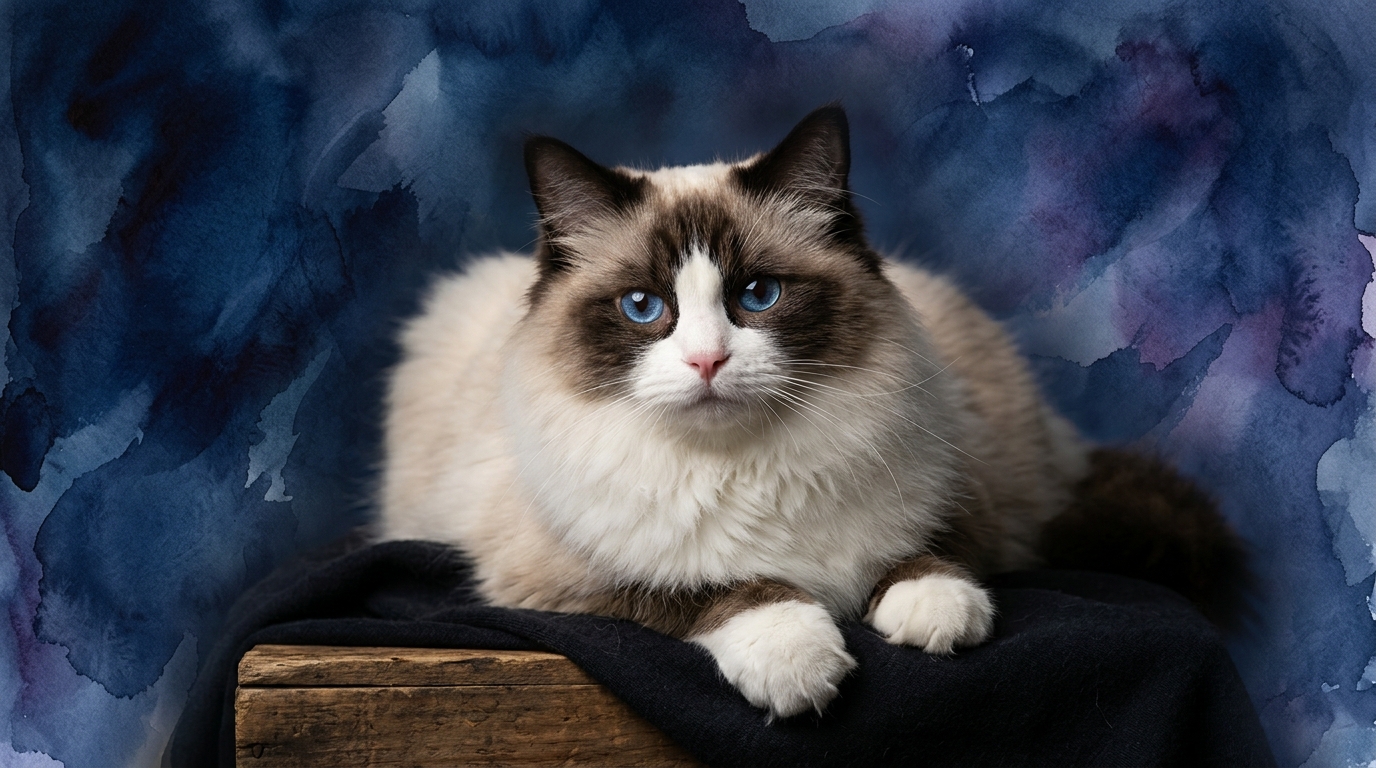
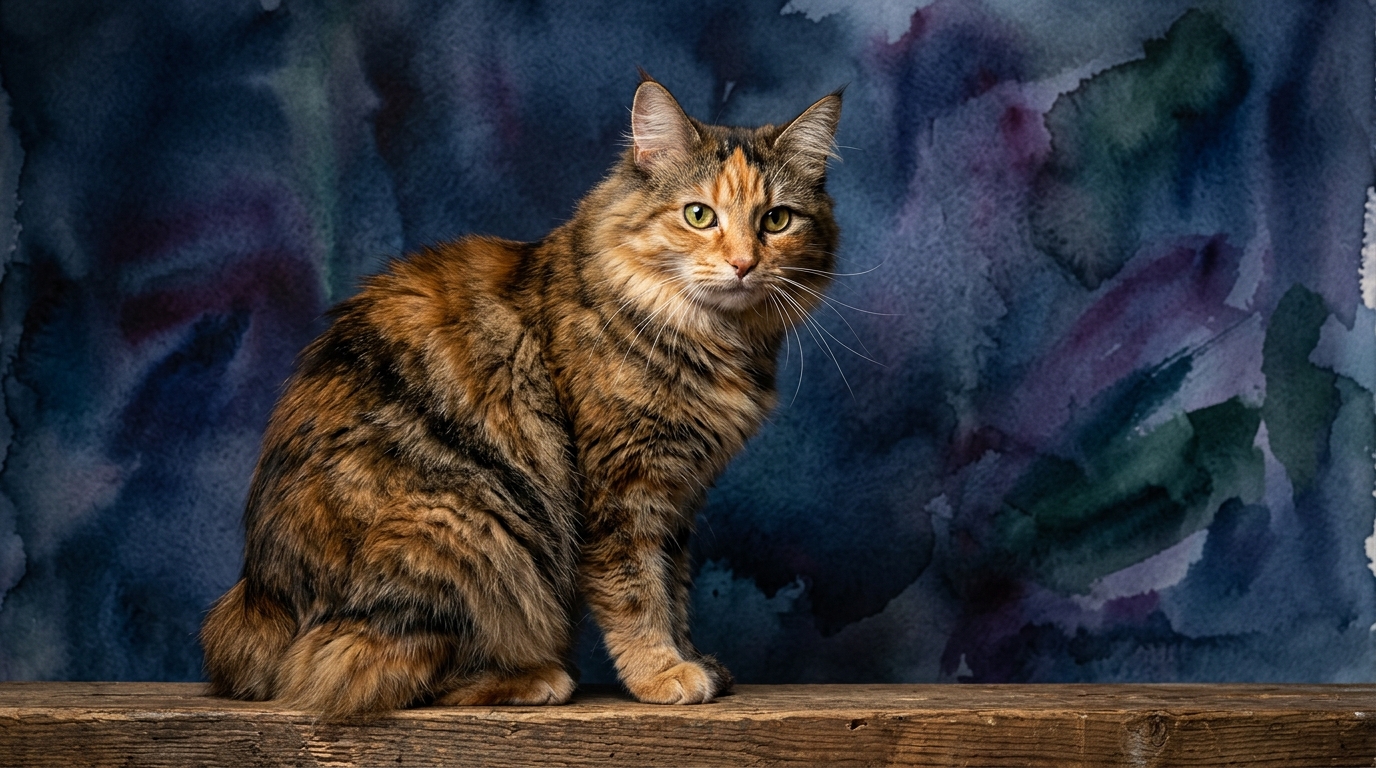
Side-by-Side IQ Profile: Ragdoll vs. Cymric
The Cosmic Pet Pet IQ Lab employs a multi-dimensional approach to assess feline intelligence, moving beyond simple 'smart' labels to reveal a nuanced profile for each breed. For the Ragdoll, our metrics show a balanced aptitude in some areas, but a clear specialization in others. They register a 3/5 for Problem Solving, indicating a moderate capacity to figure out puzzles or new situations, and a 3/5 for Training Speed, suggesting they learn new commands or routines at an average pace. Their standout trait is Social Intelligence, scoring an impressive 5/5, reflecting a deep understanding of human cues and a strong desire for interaction. Instinctive Drive is lower at 2/5, pointing to a less intense urge for hunting or extensive exploration, while Memory holds steady at 3/5.
In contrast, the Cymric presents a profile that, while sharing some common ground with the Ragdoll, diverges notably in key areas. Like the Ragdoll, the Cymric achieves a 3/5 in Problem Solving and a 3/5 in Training Speed, suggesting similar baseline cognitive processing and learning rates. However, their Social Intelligence is rated at 3/5, indicating a sociable but perhaps less intensely people-oriented demeanor compared to the Ragdoll. Where the Cymric truly differentiates itself is in Instinctive Drive, scoring a 3/5, which signifies a more pronounced natural curiosity and a greater inclination towards play and exploration. Their Memory, like the Ragdoll's, is assessed at a solid 3/5.
Where the Ragdoll Shines Cognitively
The Ragdoll's unparalleled strength lies in its Social Intelligence, scoring a perfect 5/5. This isn't merely about being friendly; it reflects a profound capacity to interpret human emotions, body language, and vocal tones. A Ragdoll often seems to anticipate its owner's mood, offering comfort or seeking interaction precisely when it's most welcome. This high social acumen translates into a cat that thrives on companionship, often following family members from room to room, participating in household activities, and readily accepting affection from a wide range of people. They exhibit remarkable adaptability to new social situations, often remaining calm and approachable even when faced with unfamiliar guests or changes in the household dynamic, a direct result of their advanced understanding of social cues and their inherent trust in their human companions.
This superior social intelligence also contributes to a Ragdoll's generally docile and relaxed temperament. They are less prone to anxiety in social settings because they possess an inherent ability to 'read the room' and respond appropriately. For instance, a Ragdoll might instinctively know when a gentle purr and a soft head-nuzzle are appropriate to soothe a stressed owner, or when to simply sit quietly nearby. This deep empathetic connection and their readiness to engage on human terms are truly what set their cognitive profile apart, making them exceptionally attuned companions who seek and reciprocate emotional bonds with remarkable clarity.
Where the Cymric Demonstrates Cognitive Strengths
The Cymric's distinctive edge in the cognitive arena is primarily seen in its Instinctive Drive, rated at 3/5, which is higher than the Ragdoll's 2/5. This isn't about aggression, but rather a more pronounced natural curiosity and a stronger urge to engage with their environment through play and exploration. A Cymric is more likely to be found investigating new spaces, batting at dangling toys with vigor, or engaging in more elaborate chase games. Their higher drive means they often display a greater interest in interactive toys and puzzles that mimic hunting scenarios, demonstrating a focused determination to 'capture' their prey, even if it's just a laser pointer dot or a feathered wand. This enhanced drive fuels their physical and mental engagement, making them more proactive participants in their surroundings.
This elevated instinctive drive also influences their problem-solving approach. While both breeds share a 3/5 in Problem Solving, the Cymric's drive often provides a stronger internal motivation to persist with a challenge, such as figuring out how to open a cupboard or retrieve a toy from a tight spot. They possess a persistent curiosity that encourages them to experiment more with their environment, learning through trial and error. This translates into a cat that is often more engaged with its surroundings, seeking out stimuli and opportunities for mental and physical exertion. Their cognitive strength here lies in their sustained interest and intrinsic motivation to interact with the world around them, making them adept at self-entertainment and discovery.
Training Aptitude: Nuances Beyond Speed
Both the Ragdoll and the Cymric share a 3/5 rating in Training Speed, suggesting they learn new commands or routines at a moderate pace. However, the *approach* to training and the *types* of behaviors they are most receptive to can differ significantly due to their other cognitive dimensions. For the Ragdoll, their exceptional Social Intelligence (5/5) is a powerful asset in training. They are highly motivated by praise, positive reinforcement, and the desire to please their human companions. Training a Ragdoll often feels like a cooperative effort; they respond well to gentle guidance and thrive on the positive emotional connection fostered during training sessions. They are quick to understand what elicits a favorable reaction from their owner, making them amenable to learning tricks, leash walking, or even complex routines, primarily because they value the social reward and interaction.
Conversely, while the Cymric also learns at a 3/5 speed, their higher Instinctive Drive (3/5) plays a more significant role in their training. They are often more motivated by play-based rewards, food puzzles, or activities that tap into their natural hunting instincts. Training a Cymric might involve more active engagement, using toys as motivators or incorporating elements of chase and retrieve into lessons. While they are sociable (3/5), the social reward might not be as overwhelmingly powerful as it is for a Ragdoll. For example, teaching a Cymric to fetch might be more successful if the 'reward' is a vigorous game of tug or a treat hidden within a puzzle toy they enjoy manipulating. Understanding these underlying motivational differences is key to effective and enjoyable training for both breeds, despite their identical speed scores.
Matching Personalities: Active vs. Relaxed Owners
When considering which breed aligns best with an owner's lifestyle, their cognitive profiles offer clear guidance. The Ragdoll, with its high Social Intelligence (5/5) and lower Instinctive Drive (2/5), is an ideal companion for relaxed owners who cherish a deeply affectionate and relatively low-maintenance feline presence. These cats thrive in quiet, stable environments where they can be central to family life, often preferring to lounge nearby or engage in gentle play rather than embarking on extensive explorations. They are content with ample lap time and consistent, loving interaction, making them perfect for individuals or families seeking a calm, devoted 'velcro cat' who genuinely enjoys being part of every quiet moment. Their adaptability due to high social intelligence means they adjust well to changes in routine, as long as their human companions provide reassurance and attention.
The Cymric, with its balanced Social Intelligence (3/5) and higher Instinctive Drive (3/5), better suits active owners who enjoy engaging with their pets through interactive play and providing environmental enrichment. These cats appreciate opportunities to explore, 'hunt' with toys, and solve puzzles. While affectionate, a Cymric might initiate play more frequently and require more structured playtime to satisfy their natural drives. Owners who enjoy teaching tricks, using puzzle feeders, or engaging in regular, stimulating play sessions will find the Cymric's cognitive strengths a rewarding match. They are still sociable, but their need for mental and physical stimulation is more pronounced, making them a great fit for a household that can provide consistent opportunities for them to express their inherent curiosity and drive.
The Verdict
Choose the Ragdoll if you prioritize a deeply empathetic, highly sociable companion who thrives on close interaction and offers a tranquil, devoted presence in a relaxed home environment.
Opt for the Cymric if you seek a curious, interactive feline friend who enjoys active play and mental challenges, and you are prepared to provide consistent engagement to satisfy their natural exploratory drives.
🧠 Find Your Pet's IQ Score
Our Pet IQ Lab assessment covers 25+ tests across 5 cognitive dimensions — personalized to your breed.
Take the Full IQ Test →Frequently Asked Questions
Are Ragdolls good with children and other pets?
Yes, Ragdolls generally excel with children and other pets due to their high Social Intelligence (5/5). Their calm demeanor and adaptability allow them to integrate smoothly into multi-pet households and tolerate gentle interactions from respectful children, often forming strong bonds with all family members.
Do Cymrics need a lot of space to be happy?
Cymrics benefit from a stimulating environment that allows them to express their higher Instinctive Drive (3/5). While not necessarily needing vast physical space, they thrive with vertical climbing options, interactive toys, and opportunities for exploratory play, making a dynamic indoor setup more important than sheer square footage.
Can Ragdolls be trained to walk on a leash?
Absolutely. Ragdolls' high Social Intelligence and desire to please their owners make them quite amenable to leash training. With patience, positive reinforcement, and early introduction, many Ragdolls can comfortably learn to walk on a leash, enjoying supervised outdoor excursions with their human companions.