
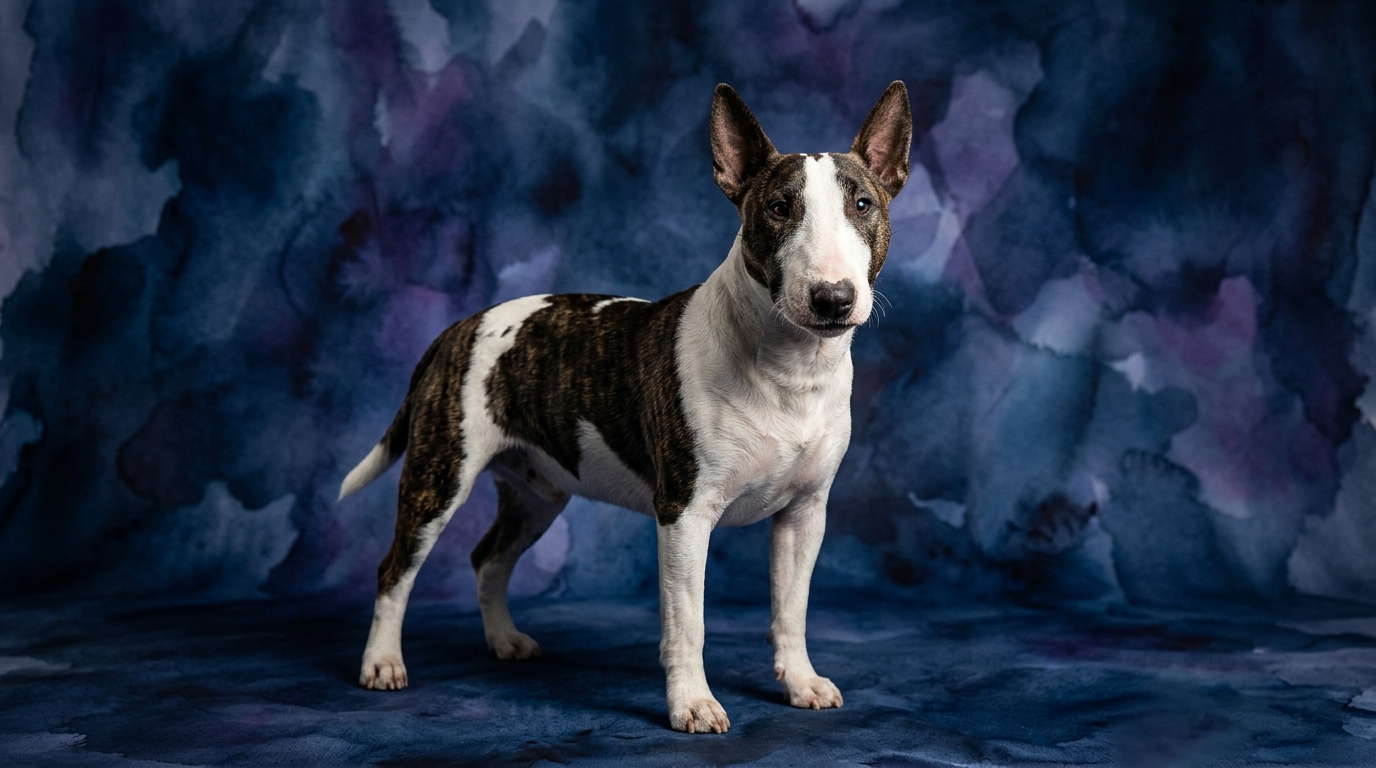
Side-by-Side IQ Profile: Rat Terrier vs. Miniature Bull Terrier
Despite both breeds scoring a 3/5 across all five cognitive dimensions, their expressions of these traits are uniquely colored by their breed histories and temperaments. Understanding these nuances is key to appreciating their distinct intellectual styles.
Problem Solving (3/5): The Rat Terrier displays practical, task-oriented problem-solving, excelling at figuring out how to outsmart a persistent rodent or efficiently navigating a complex environment to reach a specific point. Their resourcefulness often centers on achieving tangible, practical goals. In contrast, the Miniature Bull Terrier's problem-solving often leans into creative persistence; a Mini Bull Terrier might meticulously devise strategies to open a cabinet for a treat or to gain attention, showcasing a tenacious and sometimes mischievous approach to challenges.
Training Speed (3/5): Rat Terriers are generally responsive and eager to engage in structured learning, particularly when tasks align with their natural drives. They pick up new commands at a moderate pace, thriving on consistency and positive reinforcement that makes learning a collaborative effort. For Miniature Bull Terriers, while capable learners, their training speed is often tempered by a strong independent streak and a tendency to question commands if they don't immediately see the value. Progress is steady with patient, engaging methods that account for their sometimes-stubborn nature.
Social Intelligence (3/5): The Rat Terrier possesses a keen awareness of their human companions' moods and routines, often forming strong, perceptive bonds. They can be reserved with strangers, indicating a discerning social intelligence that prioritizes their inner circle's emotional landscape. The Miniature Bull Terrier exhibits robust social awareness, often highly attuned to family dynamics and seeking to be an integral, if sometimes boisterous, part of it. Their interactions are characterized by an almost clownish desire to entertain and engage, though they may also test boundaries.
Instinctive Drive (3/5): The Rat Terrier's moderate instinctive drive is clearly rooted in their historical purpose, manifesting as a pronounced prey drive, an inclination to dig, and vigilant alertness to their surroundings. This drive is often channeled into focused, purposeful activity. The Miniature Bull Terrier's instinctive drive, while also moderate, often presents as a generalized terrier tenacity. This can include a strong desire to chase, engage in robust play, and sometimes a persistent focus on a particular object or activity, reflecting their heritage of determination.
Memory (3/5): Rat Terriers demonstrate a solid capacity for retaining learned commands, routines, and environmental layouts. They remember specific places where interesting smells were found or where they successfully completed a task, aiding their efficiency and adaptability. Miniature Bull Terriers possess a good memory for positive and negative experiences, remembering people, places, and the outcomes of past actions. This memory contributes to their learning curve and their ability to adapt behavior based on previous interactions, even if they sometimes challenge boundaries.
Where the Rat Terrier Wins Cognitively
The Rat Terrier often displays a more focused and efficient application of their problem-solving skills, particularly in tasks requiring precision and sustained attention to detail. Their historical role demanded quick, decisive action against pests, fostering a cognitive style that prioritizes effectiveness and independence in specific, task-oriented scenarios. They excel at deciphering nuanced environmental cues and adapting tactics on the fly, making them adept at navigating complex physical challenges with minimal human intervention. This translates into a dog that can often "figure things out" practically, from opening a gate to finding a hidden toy, with a methodical approach.
Their social intelligence, while rated similarly, often manifests as a more subtle attunement to their handler's specific needs and intentions, allowing for a highly synchronized working partnership. This perceptive quality means they can often anticipate commands or moods, making them feel remarkably intuitive to their primary caregiver. Their memory is particularly strong for sequences of actions and locations, a trait crucial for their original hunting duties, enabling them to remember complex routes or the specific hiding spots of targets over time.
Where the Miniature Bull Terrier Wins Cognitively
The Miniature Bull Terrier, despite similar numerical scores, often shines in cognitive areas requiring sheer determination and creative persistence. Their problem-solving isn't always about efficiency but about an unwavering resolve to achieve a desired outcome, often employing a playful yet relentless approach. They might devise elaborate, multi-step plans to get what they want, showcasing a unique blend of tenacity and resourcefulness that can be both endearing and challenging. This breed's robust physical and mental resilience allows them to tackle cognitive puzzles with a "never give up" attitude, even when faced with initial setbacks.
Their social intelligence often features a more overt, expressive engagement with their human family, demonstrating a profound understanding of how to elicit reactions and attention. They are masters of the dramatic gesture or the comical antic, leveraging their social awareness to become the center of their household's universe. This extroverted social cognition means they are often highly skilled at engaging people, even if it's through a bit of playful stubbornness. Their memory is particularly strong for social interactions and routines, remembering who gives the best cuddles or which family member is most likely to bend the rules, which they then leverage for their own benefit.
Which is Easier to Train, and Why?
While both breeds score 3/5 in training speed, the Rat Terrier generally presents as the more straightforward student. Their inherent eagerness to please, coupled with their task-oriented cognitive style, means they often find satisfaction in performing commands and engaging in structured learning. They respond well to clear instructions and positive reinforcement, quickly connecting actions with rewards. Their focus tends to be on the task at hand, making them receptive to consistent training sessions and less prone to deliberate defiance. This biddability simplifies the training process, allowing owners to build a solid foundation of obedience with relative ease, especially when training taps into their natural drives like scent work or agility.
The Miniature Bull Terrier, however, typically requires a more nuanced and patient approach. Their strong-willed nature and independent streak mean they often need to be convinced that a command is worth their effort or is more interesting than their current internal agenda. Training a Mini Bull Terrier often feels less like giving instructions and more like a negotiation or an engaging game. Owners must be creative, consistent, and maintain a sense of humor, turning lessons into fun challenges to hold their attention. While they are capable learners, their "what's in it for me?" attitude and occasional stubbornness mean that "easier" is subjective; they demand a more dedicated and inventive trainer to unlock their full potential.
Which Suits Active Owners vs. Relaxed Owners?
The Rat Terrier is an excellent match for active owners who relish engaging their dog in various physical and mental pursuits. Their energetic nature and sharp minds thrive on activities like agility, obedience trials, earthdog events, or even just long, exploratory hikes. These dogs require consistent mental stimulation to prevent boredom, which can manifest as undesirable behaviors. Owners who appreciate a canine partner eager for adventure and capable of focused work will find the Rat Terrier a rewarding companion, as their cognitive engagement is deeply tied to their physical activity and desire for purpose.
The Miniature Bull Terrier also requires active engagement, but their energy can be more sporadic and intense, interspersed with periods of profound relaxation or mischievous exploration. They suit owners who are active and enjoy robust play sessions but also appreciate a dog that can transition to being a devoted, if sometimes demanding, couch potato. These owners need to be prepared for the breed's distinct personality, which combines boundless energy with a strong will and a need for consistent boundaries. A "relaxed owner" might struggle with the Mini Bull Terrier's occasional bursts of stubbornness or their tendency to create their own fun if not adequately stimulated, making them a better fit for owners who are active in mind and body, and perhaps a bit more experienced with strong-willed terrier types.
The Verdict
Choose the Rat Terrier if you seek a perceptive, biddable companion eager for structured tasks and a more straightforward training journey, thriving on consistent engagement and purpose-driven activities.
Opt for the Miniature Bull Terrier if you're prepared for a tenacious, creatively persistent, and often comical companion, valuing a dog that will challenge and entertain with its unique blend of stubbornness and affection.
🧠 Find Your Pet's IQ Score
Our Pet IQ Lab assessment covers 25+ tests across 5 cognitive dimensions — personalized to your breed.
Take the Full IQ Test →Frequently Asked Questions
Do Rat Terriers and Miniature Bull Terriers learn tricks at the same rate?
While both score 3/5 for training speed, Rat Terriers might appear to learn tricks faster due to their biddable nature and eagerness to please. Miniature Bull Terriers can learn just as well but often require more engaging, game-like training sessions to overcome their independent streak and maintain focus.
Which breed is better at adapting to new environments?
Both breeds show moderate problem-solving and memory, suggesting good adaptability. Rat Terriers tend to be observant and practical, quickly assessing new surroundings for opportunities or threats. Miniature Bull Terriers adapt with a tenacious curiosity, often exploring new spaces with robust enthusiasm, though their strong will might require more guidance to settle into new routines.
How does their social intelligence impact their family life?
Both possess moderate social intelligence, making them attuned to family dynamics. Rat Terriers often display a more subtle, perceptive connection, being sensitive to their owner's moods. Miniature Bull Terriers, conversely, might express their social intelligence through more overt attempts at engagement, often seeking to be the playful, boisterous center of attention.