
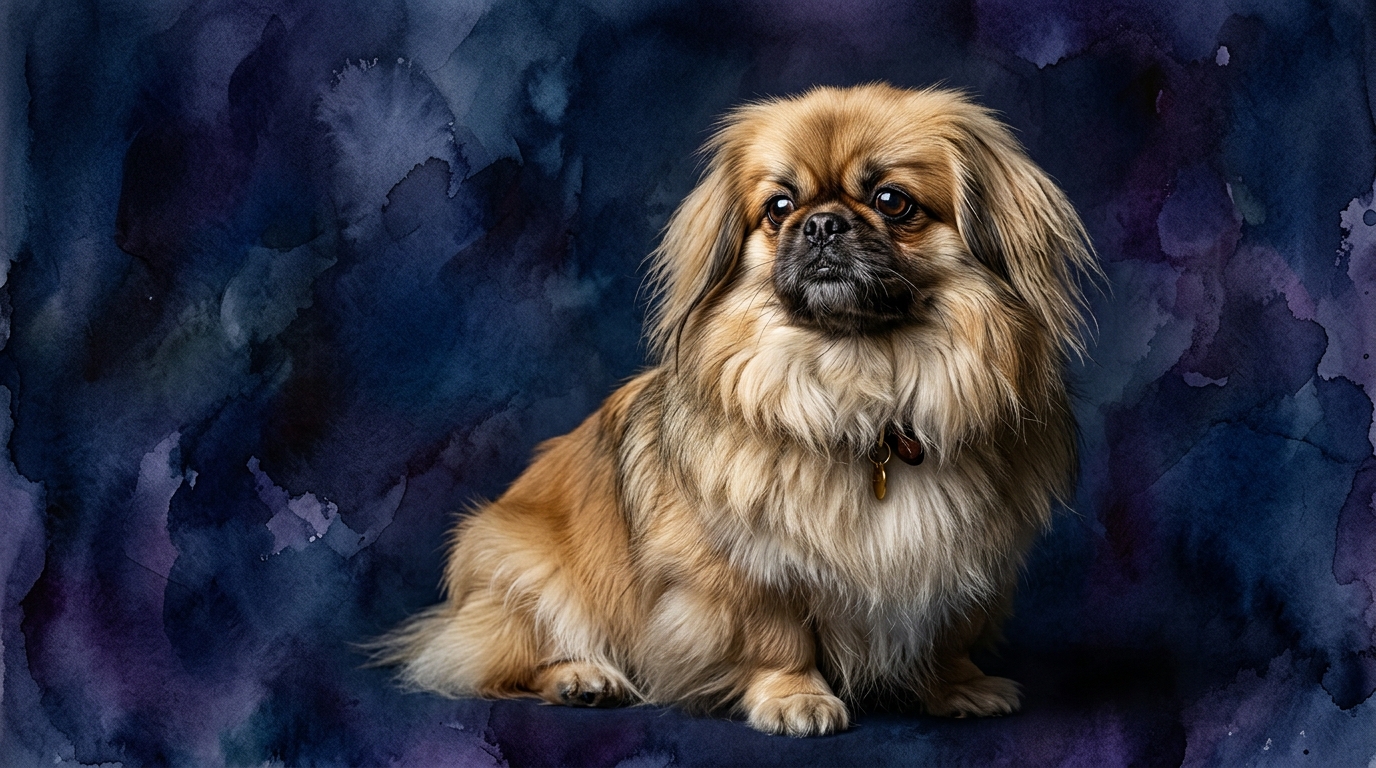
Side-by-Side Cognitive Profiles: Decoding Identical Scores
The Cosmic Pet Pet IQ Lab employs a five-dimensional framework to assess canine intelligence, rating each on a 1-to-5 scale. Both the Rat Terrier and the Pekingese remarkably achieve a consistent 3 out of 5 in every category, suggesting a foundational cognitive capability that, while numerically equal, translates into vastly different expressions of intelligence shaped by their breed histories.
A '3/5 Problem Solving' score for the Rat Terrier indicates an aptitude for moderate challenges, often tied to their vermin control origins. This manifests as practical intelligence, like strategizing to locate hidden objects or navigating a simple agility course. Similarly, the Pekingese's '3/5 Problem Solving' is evident in its cleverness at securing comfort, gaining attention, or manipulating situations to its advantage within a domestic context.
Their '3/5 Training Speed' implies both breeds are receptive to learning with consistent, engaging methods. For the Rat Terrier, this often means thriving on tasks that leverage its natural drives, while for the Pekingese, it requires patience and high-value rewards to overcome its independent streak.
'3/5 Social Intelligence' means both are capable of reading human cues. The Rat Terrier typically interprets cues in a working context, understanding handler intentions for tasks. The Pekingese, conversely, excels at discerning nuances of human emotion and household dynamics, using this for deep companion bonds.
The '3/5 Instinctive Drive' in a Rat Terrier is clearly seen in its prey drive and alertness to small movements. For a Pekingese, this drive manifests as territoriality and a strong desire for comfort and routine. Finally, a '3/5 Memory' ensures both breeds retain learned behaviors, routines, and the specific daily patterns that bring them desired outcomes or joy, allowing them to adapt and refine their interactions over time.
Where the Rat Terrier's Cognition Shines
Despite identical numerical scores, the Rat Terrier's cognitive strengths are distinctly colored by its terrier heritage, particularly in the application of its problem-solving and instinctive drive. Their '3/5 Problem Solving' is often a hands-on, active intelligence, focused on the physical environment. A Rat Terrier might excel at figuring out how to get into a secure area to retrieve a "pest" (toy) or quickly master an agility course by identifying the most efficient path. This isn't just about following commands; it's about independent thought applied to a task, often with a burst of energy and determination.
Their '3/5 Instinctive Drive' fuels this problem-solving, making them persistent and focused when engaged in activities that tap into their natural inclinations. Whether it's tracking a scent, digging for a perceived treasure, or engaging in a complex puzzle toy, their cognitive processes are tightly integrated with their physical drive to explore and accomplish. This means they are often more self-directed in their intellectual pursuits, needing less direct human instruction to initiate a cognitive task once their interest is piqued by an environmental trigger. Their memory of effective strategies for these tasks is robust, allowing them to refine their approach with practice.
Where the Pekingese's Cognition Excels
The Pekingese, with its distinct history as a revered companion, showcases its '3/5' cognitive abilities in a more nuanced, socially oriented manner. While a Rat Terrier's problem-solving might be about conquering an external challenge, a Pekingese's '3/5 Problem Solving' is often directed internally, focusing on human interaction and comfort. They are masters at subtly communicating their desires, whether it's by strategically placing themselves for a belly rub, using a specific whine to indicate a need, or "training" their owners to adhere to their preferred schedule. This requires a sophisticated understanding of cause and effect within a social context.
Their '3/5 Social Intelligence' is particularly acute, allowing them to read the emotional states of their human companions with remarkable accuracy. They can distinguish between different tones of voice, expressions, and body language, and often respond in ways that reinforce their bond or secure their comfort. This isn't just about simple obedience; it's about an intricate, reciprocal understanding that forms the bedrock of their companionship. Their memory contributes to this, allowing them to recall which actions elicit specific reactions from their owners, building a repertoire of effective social strategies over time. Their instinctive drive, while not about hunting, is keenly focused on guarding their territory and ensuring their own well-being within their domestic realm.
Training Dynamics: Rat Terrier vs. Pekingese
Both breeds score '3/5' in training speed, implying they are capable learners but require consistent, clear instruction. However, the approach to training differs significantly due to their behavioral predispositions. The Rat Terrier, with its active mind and working background, can be highly responsive to training that is engaging, varied, and taps into its natural drives. They thrive on positive reinforcement and enjoy the mental stimulation of learning new tricks or commands, especially if it feels like a "job" or a game with a clear objective. The challenge often lies in managing their independent streak and ensuring their prey drive doesn't override their focus during training sessions. Consistency and making training fun are key to harnessing their 3/5 training speed effectively.
The Pekingese, while equally capable of learning, often presents a different training challenge rooted in its strong-willed and independent nature. Their '3/5 Training Speed' can be overshadowed by their preference for comfort and their selective hearing if they don't perceive a compelling reason to comply. Training a Pekingese requires immense patience, creativity, and finding extremely high-value motivators. They are not typically driven by a desire to please in the same way a working breed might be; instead, they weigh the personal benefit of compliance. Therefore, success comes from making training feel like their idea or linking it directly to something they deeply desire, leveraging their social intelligence to build a relationship of mutual respect rather than strict obedience.
Matching Breeds to Lifestyles: Active vs. Relaxed Owners
The Rat Terrier is a breed that thrives with active owners who can meet its significant needs for both physical exertion and mental engagement. Their '3/5 Instinctive Drive' and problem-solving capabilities mean they are not content to simply lounge; they require outlets for their energy and curiosity. Owners who enjoy activities like long hikes, agility training, scent work, or even engaging puzzle games will find a Rat Terrier to be an enthusiastic and capable companion. They do best in environments where they have space to explore and opportunities for structured play, which helps channel their mental acuity and physical prowess constructively. A Rat Terrier is a superb choice for someone seeking a canine partner for adventures and intellectual challenges.
In contrast, the Pekingese is ideally suited for owners who prefer a more relaxed and indoor-centric lifestyle. While they enjoy short, leisurely strolls and gentle play, their exercise needs are modest. Their '3/5 Social Intelligence' and problem-solving often revolve around the domestic sphere, making them excellent companions for those who value quiet companionship and a dog that is content to be a cherished lap warmer. They appreciate comfortable surroundings and a predictable routine. An owner who enjoys spending quality time at home, providing affection and a calm environment, will find the Pekingese a loyal and devoted friend. They excel in households where their unique personality and preference for comfort are understood and indulged.
The Verdict
Choose the Rat Terrier if you are an active individual or family seeking a mentally sharp, energetic companion for outdoor adventures, dog sports, and engaging problem-solving activities.
Opt for the Pekingese if you desire a devoted, intelligent companion for a relaxed indoor lifestyle, valuing a dog adept at social interaction and comfortable domestic routines.
🧠 Find Your Pet's IQ Score
Our Pet IQ Lab assessment covers 25+ tests across 5 cognitive dimensions — personalized to your breed.
Take the Full IQ Test →Frequently Asked Questions
Do identical IQ scores mean Rat Terriers and Pekingese learn the same way?
No, identical IQ scores of 3/5 across dimensions indicate similar capacity, but how that capacity manifests and how they are best motivated to learn differs significantly due to their distinct breed histories and inherent drives. Rat Terriers respond well to task-oriented training, while Pekingese require more patience and high-value rewards tailored to their independent nature.
Which breed is better with children, given their similar social intelligence scores?
Both breeds can be good with children, but their interaction styles differ. Rat Terriers (3/5 social intelligence) are often more tolerant of active play and can engage in games, while Pekingese (3/5 social intelligence) prefer gentle, respectful interactions and may be less tolerant of roughhousing, making supervision crucial for both.
How does their '3/5 Instinctive Drive' differ in daily life?
The Rat Terrier's 3/5 instinctive drive typically manifests as a strong prey drive, leading to an interest in chasing small animals or digging, requiring active management. The Pekingese's 3/5 instinctive drive is more often expressed as territoriality, alertness to strangers, and a strong preference for comfort and routine within their home environment.