
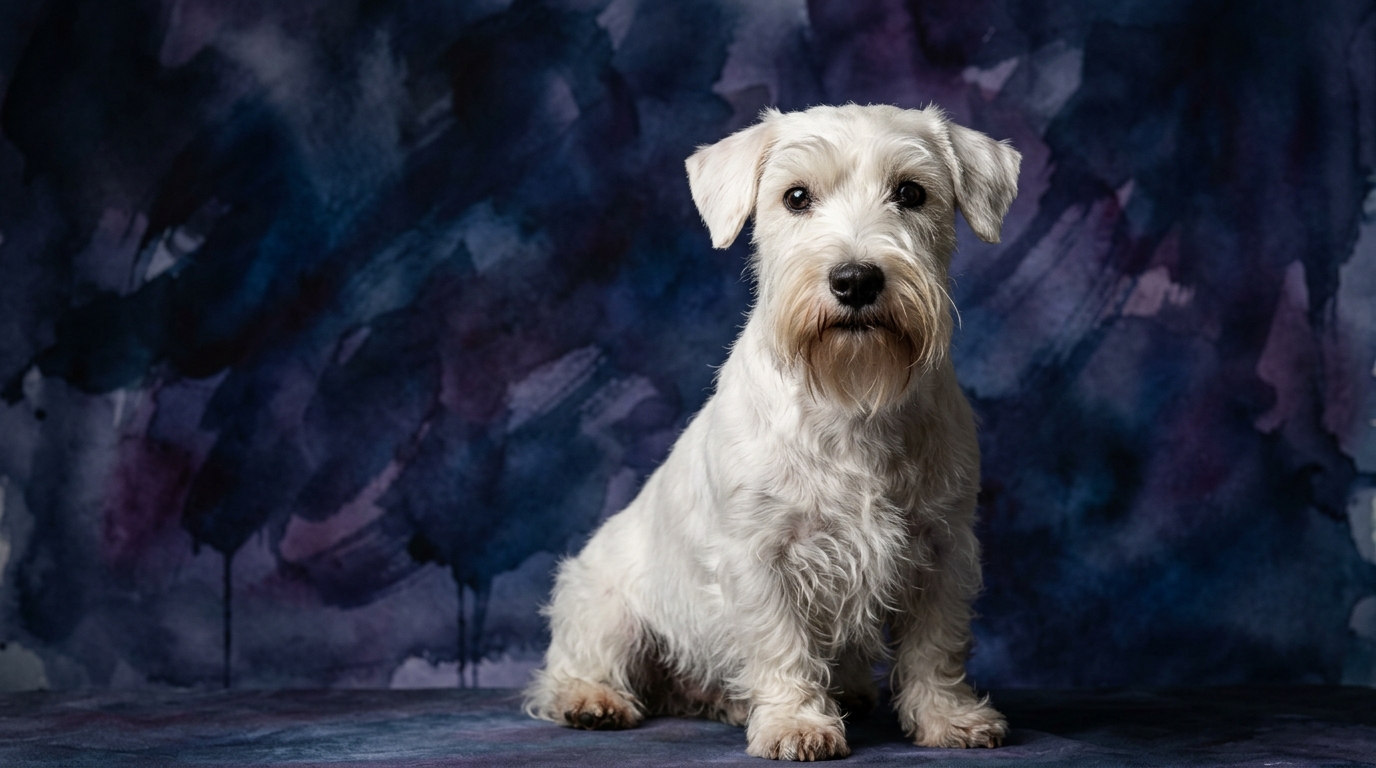
Side-by-Side Cognitive Profiles
The Cosmic Pet Pet IQ Lab assesses five crucial dimensions of canine intelligence, providing a structured framework for understanding each breed's cognitive strengths. Both the Rat Terrier and the Sealyham Terrier register a consistent 3/5 across all five categories, indicating a balanced and capable intellect rather than a specialized one. This parity in scores necessitates a closer look at how these capacities express themselves in daily life.
For the Rat Terrier, a problem-solving score of 3/5 reflects their aptitude for quickly assessing and navigating dynamic environments, often seen in their swift adaptation to new challenges or pursuit of fast-moving targets. Their training speed, also 3/5, suggests a willingness to learn and retain commands, provided the training is engaging and consistent. Social intelligence at 3/5 means they are generally adept at interpreting human cues and adapting to various household dynamics. Their instinctive drive, 3/5, is strongly geared towards vigilance and the pursuit of small prey, a hallmark of their vermin-control heritage. Finally, a memory score of 3/5 points to a reliable recall for routines, learned behaviors, and significant past experiences.
The Sealyham Terrier, with an identical 3/5 in problem solving, demonstrates this capacity through tenacious focus, particularly when faced with physical obstacles or intricate tasks requiring persistence. Their training speed of 3/5 indicates a steady learning curve, though it often requires a patient and consistent approach to harness their independent spirit. Social intelligence, also 3/5, manifests as a discerning nature, forming deep bonds with their immediate family while being more reserved with unfamiliar individuals. An instinctive drive of 3/5 highlights their powerful urge to hunt and dig, rooted in their historical role as badger and fox hunters. Their memory, rated 3/5, ensures they retain complex information about their environment, people, and past interactions, which informs their behavior over time.
Where the Rat Terrier Excels Cognitively
The Rat Terrier's cognitive strengths lean towards agility and quick adaptability, particularly in open or changing environments. Their 3/5 problem-solving manifests as an ability to rapidly analyze a situation and find the most efficient path forward, making them particularly adept at navigating complex obstacle courses or tracking elusive prey across varied terrains. This quick-thinking nature allows them to pivot strategies effectively when an initial approach doesn't yield immediate results.
Their social intelligence, while rated the same as the Sealyham, often presents as a more overt receptiveness to a broader range of human interactions and household activities. A Rat Terrier frequently demonstrates a keen awareness of shifting family dynamics, easily integrating into diverse social settings and responding well to varied human temperaments. This makes them highly adaptable companions who can thrive in bustling households or join their owners on varied outings with relative ease.
Where the Sealyham Terrier Shines Cognitively
The Sealyham Terrier's cognitive prowess is best observed in its unwavering tenacity and deep-seated focus, particularly when engaged in tasks that require sustained effort. Their 3/5 problem-solving score translates into a remarkable persistence, where they will methodically work through a challenge, often employing their strong jaws and digging instincts to achieve an objective. This makes them excellent at tasks requiring dedication, such as scent work or disentangling complex puzzle toys.
Their social intelligence, while equally rated, often results in a profound, almost intuitive understanding of their primary caregivers. Sealyhams tend to form exceptionally strong, discerning bonds, reading the subtle emotional cues of their family members with precision. This deep connection means they can be remarkably attuned to their preferred humans, offering comfort or companionship precisely when needed, even if they appear more aloof with strangers. Their memory supports this, as they retain a detailed mental map of their family's habits and preferences.
Ease of Training: Behavioral Nuances
Given their identical 3/5 training speed scores, the perceived ease of training between these two breeds stems from their inherent behavioral differences rather than a disparity in learning capacity. Rat Terriers generally approach training with an eager-to-please attitude and a desire for engagement. Their agility and quick reflexes mean they can pick up physical commands rapidly, and their social intelligence allows them to respond well to varied motivational techniques, though they can become bored with excessive repetition. Training a Rat Terrier often feels like a partnership, where their responsiveness is a significant asset.
Conversely, the Sealyham Terrier's training experience is shaped by its powerful independent streak and tenacious nature. While they learn consistently and retain information well (3/5 memory), their strong instinctive drive and self-assured temperament mean they require a patient, consistent, and firm approach. They are not as overtly eager to please as some breeds and may test boundaries more frequently. Success with a Sealyham relies on establishing clear expectations and using positive reinforcement to channel their persistence, ensuring they understand the 'why' behind a command rather than just the 'what.' Their training often requires more creative problem-solving from the handler to maintain engagement and compliance.
Matching Breeds to Lifestyles: Active vs. Relaxed Owners
For active owners seeking a dynamic companion, the Rat Terrier often presents a more natural fit. Their inherent agility, quick problem-solving, and moderate energy levels make them excellent partners for activities such as dog sports, hiking, or even just exploring new environments. Their social intelligence allows them to adapt readily to changing schedules and varied social outings, making them versatile companions for those with an on-the-go lifestyle. They thrive on mental and physical stimulation, enjoying diverse activities that challenge their quick wit.
Owners who prefer a more relaxed yet still engaged companion might find the Sealyham Terrier to be a better match. While they possess a robust energy reserve and tenacious drive, their preference for deeply bonded family interactions and focused, purposeful activities can align well with a less frenetic pace. They enjoy structured walks, dedicated playtime in a secure yard, and puzzle-solving within the home. Their deep social intelligence means they are content to be close companions, observing and participating in family life, often enjoying quiet companionship after their exercise needs are met. Their independent streak means they are not constantly demanding attention, suiting an owner who appreciates a self-possessed canine presence.
The Verdict
Choose the Rat Terrier if you value a highly adaptable, agile companion eager for varied activities and quick to learn new skills in a dynamic setting.
Opt for the Sealyham Terrier if you appreciate a tenacious, deeply loyal companion who thrives on focused engagement and forms profound bonds within a stable home environment.
🧠 Find Your Pet's IQ Score
Our Pet IQ Lab assessment covers 25+ tests across 5 cognitive dimensions — personalized to your breed.
Take the Full IQ Test →Frequently Asked Questions
Do Rat Terriers and Sealyham Terriers have similar energy levels?
While both breeds are terriers with significant energy, Rat Terriers tend to have a more sustained, adaptable energy suitable for varied activities. Sealyhams possess powerful bursts of energy, often channeled into focused tasks or vigorous play, but can be more content with periods of rest.
Are these breeds good with children?
Both breeds can be good with children, particularly if raised with them and properly socialized. Rat Terriers are often playful and tolerant, adapting well to family dynamics. Sealyham Terriers bond deeply with their family and can be very protective, though their independent nature means interactions should always be supervised, especially with very young children.
Which breed is more prone to digging?
Both breeds possess a strong instinctive drive to dig, a common terrier trait. However, the Sealyham Terrier, originally bred for 'going to ground' after burrowing prey like badgers, often exhibits a more intense and persistent digging tendency, making a secure yard essential for them.