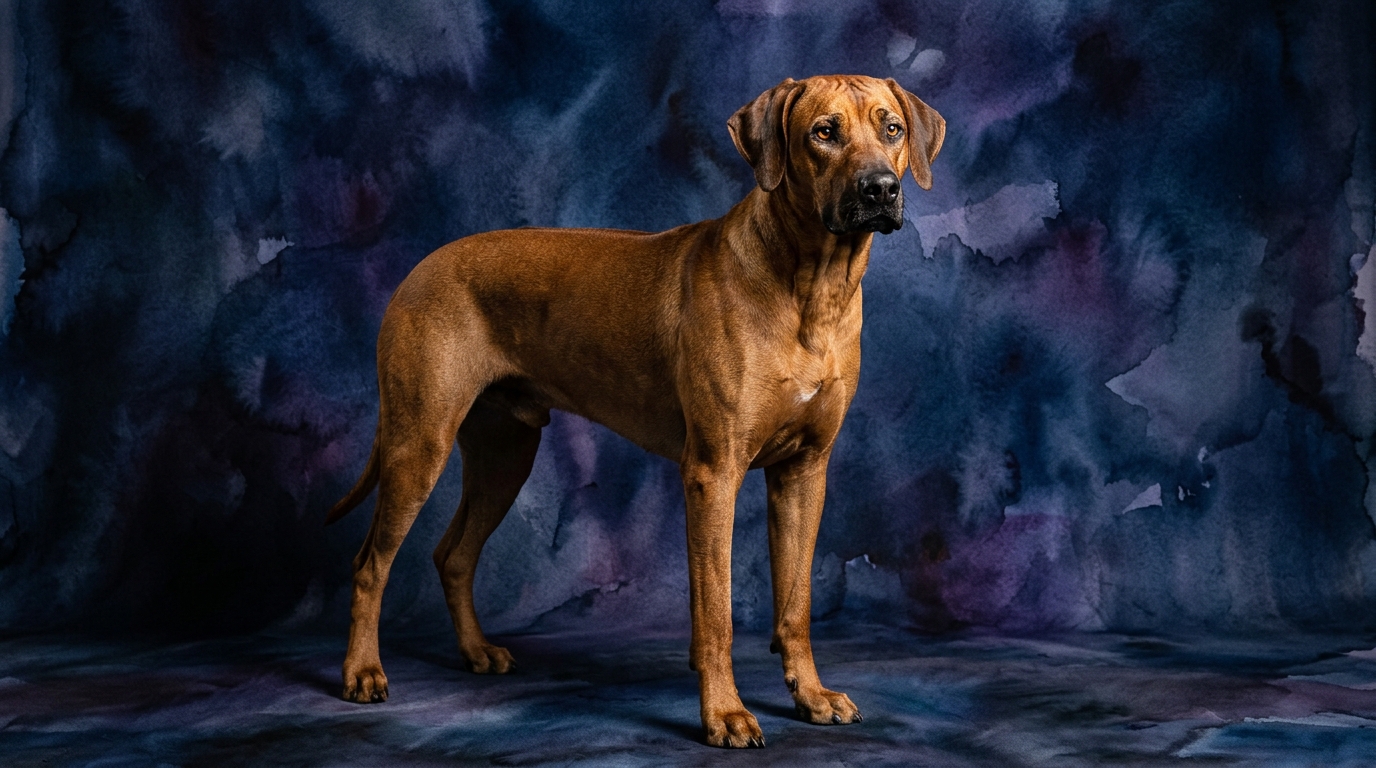
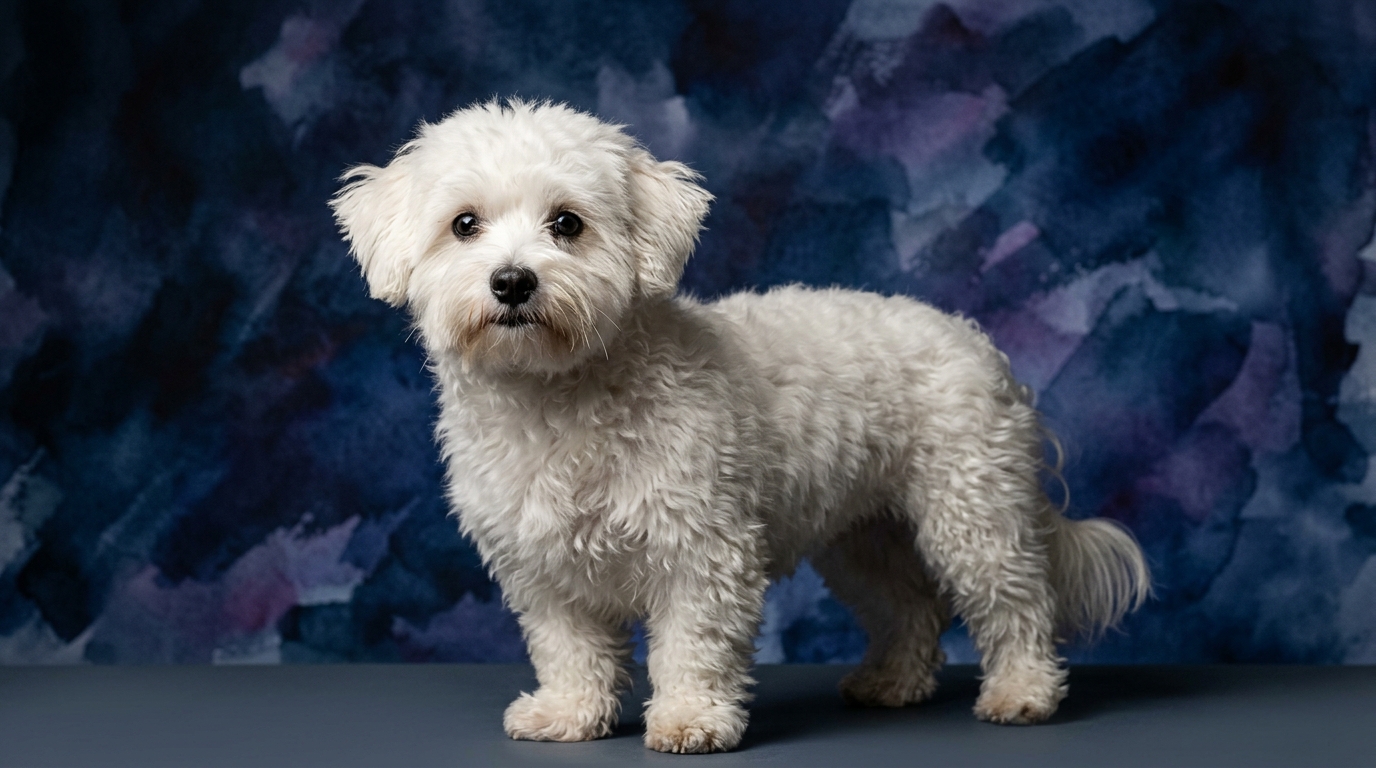
Side-by-Side IQ Profiles: The Independent Strategist vs. The Engaging Companion
Despite their vastly different appearances and historical roles, both the Rhodesian Ridgeback and the Coton de Tuléar share identical scores across our five cognitive dimensions. However, how these capacities manifest and are applied in their daily lives reveals fascinating distinctions.
The Rhodesian Ridgeback, a breed forged in the demanding landscapes of Africa, embodies the 'Independent Strategist.' Their cognitive framework is geared towards self-reliance and purposeful action.
**Problem Solving (3/5):** The Rhodesian Ridgeback exhibits a steady capacity for figuring things out, particularly when the challenge involves navigating complex environments or assessing situations independently. This isn't about instant comprehension, but rather a methodical approach to obstacles, often relying on their keen senses and physical prowess to achieve a goal, such as finding a hidden object or bypassing a barrier.
**Training Speed (3/5):** New commands are absorbed at a moderate pace. Ridgebacks are capable learners, but their independent spirit means training requires consistency, clear communication, and often a demonstration of purpose. They might not always comply instantly if a command seems arbitrary, preferring to understand the 'why' before committing.
**Social Intelligence (3/5):** These dogs possess a solid understanding of social dynamics within their family unit, forming deep, protective bonds. While they can read human cues, their interaction with strangers is typically reserved, reflecting a discerning nature rather than an inability to comprehend social signals. They observe and process before engaging fully.
**Instinctive Drive (3/5):** The Ridgeback's heritage as a hunter means a pronounced, focused drive for tracking, guarding, and sometimes prey pursuit. This 3/5 score indicates a powerful, sustained inner motivation that, while manageable with proper outlets, is a significant aspect of their cognitive makeup, influencing their alertness and engagement with their surroundings.
**Memory (3/5):** Their recall abilities are dependable. Ridgebacks remember routines, learned commands, and past experiences with clarity. This allows them to retain complex scent patterns for tracking over time or to recall specific locations and the associated outcomes of their actions.
In contrast, the Coton de Tuléar, a charming companion from Madagascar, represents the 'Engaging Companion.' Their intelligence is finely tuned for interaction and thriving within a human family structure.
**Problem Solving (3/5):** The Coton de Tuléar also scores a 3/5 in problem-solving, but their application often leans towards navigating their domestic world and achieving social goals. This might involve cleverly figuring out how to get attention, open a cabinet door for a treat, or manipulate toys to extract hidden rewards. Their approach is often characterized by charming persistence.
**Training Speed (3/5):** Cotons learn new tasks and commands at a moderate, steady rate. They are generally eager to please their human companions, making them responsive to positive reinforcement and praise. Their motivation often stems from a desire for interaction and approval, which facilitates a cooperative learning environment.
**Social Intelligence (3/5):** With a 3/5 in social intelligence, the Coton excels at tuning into the emotional states of their family members. They are adept at reading subtle human cues, often adjusting their behavior to match the mood of the room. This makes them highly empathetic and engaging companions, though they can also be discerning about who they fully trust.
**Instinctive Drive (3/5):** The Coton's instinctive drive primarily manifests as a strong desire for companionship, playful interaction, and alertness to their immediate environment. While they lack the intense prey drive of a hound, their 3/5 score reflects a robust inner motivation for social engagement, gentle play, and a keen awareness of household goings-on, often alerting to visitors with a cheerful bark.
**Memory (3/5):** Cotons possess a reliable memory, effectively retaining household routines, the names of family members, and the location of favorite toys. They can remember specific rules and boundaries, and their ability to recall past interactions helps them build strong, lasting relationships with their human family.
Where the Rhodesian Ridgeback Wins Cognitively
The Rhodesian Ridgeback’s cognitive strengths shine particularly in areas demanding independent judgment and sustained focus in challenging environments. Their 3/5 problem-solving ability, for instance, translates into a superior capacity for spatial reasoning and environmental assessment. A Ridgeback can methodically navigate complex outdoor terrain, track subtle scent trails over long distances, and assess potential threats with a nuanced understanding of their surroundings, a skill honed by their historical role in pursuit. This isn't merely about following a path; it’s about making strategic choices based on sensory input and prior experience. Furthermore, their instinctive drive, also rated 3/5, is channeled into a powerful, enduring tenacity for specific tasks like scent work or guarding. This isn't just a general energy level, but a deep-seated motivation to process and act upon cues related to their original purpose, enabling them to sustain concentration on a task far longer than many other breeds. Their memory, while rated equally, often manifests as an exceptional ability to recall complex scent patterns and the precise locations of perceived 'quarry' or critical points in a tracking exercise, crucial for their working heritage.
Where the Coton de Tuléar Wins Cognitively
Conversely, the Coton de Tuléar demonstrates distinct cognitive advantages in areas emphasizing social finesse and adaptability within a domestic setting. Their 3/5 social intelligence score allows them to achieve a remarkable attunement to human emotional states. They are adept at interpreting subtle shifts in tone of voice, body language, and facial expressions, often responding with comforting gestures or initiating play to uplift spirits. This makes them exceptionally intuitive companions, capable of adapting their behavior to harmonize with their family's mood. Their problem-solving at 3/5 often manifests as creative strategies for interaction and comfort. A Coton might cleverly figure out how to nudge a hand for petting, or use a specific vocalization to communicate a desire for a game, employing charm and persistence to achieve their goals within a human-centric world. While both breeds score 3/5 in training speed, the Coton's motivation, rooted in a strong desire for human approval and interaction, often makes them appear more enthusiastically responsive to positive reinforcement, particularly in activities like trick training or agility where a close human partnership is paramount. Their eagerness to engage makes the learning process feel more fluid and collaborative for many owners.
Training Dynamics: Independence vs. Eagerness to Please
Despite both breeds scoring a 3/5 in training speed, the Coton de Tuléar generally presents as an easier dog to train for the average owner due to fundamental behavioral differences. The Coton's strong desire for companionship and inherent eagerness to please makes them highly receptive to positive reinforcement methods, praise, and treats. They genuinely enjoy the interaction and mental stimulation that training provides, often viewing it as a fun collaborative game with their human. Their smaller size also makes them physically easier to manage during training sessions, reducing potential challenges for novice trainers. In contrast, the Rhodesian Ridgeback, with its independent hound heritage, requires a more confident, consistent, and patient trainer. While capable learners (3/5), Ridgebacks can be discerning and might not always comply instantly if a command doesn't align with their strong will or if they don't perceive a clear purpose. Their training often involves proving the value of a command and establishing clear leadership, rather than solely relying on an eagerness to please. Without consistent guidance, their independence can manifest as stubbornness. Therefore, while both are capable, the Coton’s temperament and intrinsic motivations often lead to a smoother, more straightforward training experience for a broader range of owners.
Lifestyle Match: Active Adventures vs. Relaxed Companionship
When considering lifestyle compatibility, the divergence between these two breeds becomes quite clear. The Rhodesian Ridgeback is unequivocally suited for active owners. Their robust physique and pronounced instinctive drive (3/5) necessitate significant daily physical exercise, such as long runs, hikes, or vigorous play sessions. This isn't just about burning off energy; it's about providing outlets for their innate drive to explore, track, and engage with their environment. Without sufficient activity, a Ridgeback can become bored and potentially destructive. They thrive when given a 'job' or purpose, whether it's scent work, agility, or simply accompanying their owner on challenging outdoor adventures. Conversely, the Coton de Tuléar is an ideal match for more relaxed owners. While they certainly enjoy daily walks and engaging playtime, their exercise requirements are moderate and easily met with indoor games or shorter strolls around the neighborhood. Their primary need stems from their strong social intelligence (3/5) and desire for constant companionship. A Coton is content to cuddle on the couch, follow their owner from room to room, and participate in gentle family activities. They adapt well to various living situations, including apartments, as long as they receive ample human interaction and affection.
The Verdict
Opt for a Rhodesian Ridgeback if you are an experienced, active owner seeking a courageous, independent companion for demanding outdoor pursuits, scent work, or a protective presence, and can commit to consistent, firm training and substantial daily physical and mental engagement.
Select a Coton de Tuléar if you desire an adaptable, cheerful, and highly social companion who thrives on close companionship and moderate activity, fitting seamlessly into various home environments with their charming, engaging personality.
🧠 Find Your Pet's IQ Score
Our Pet IQ Lab assessment covers 25+ tests across 5 cognitive dimensions — personalized to your breed.
Take the Full IQ Test →Frequently Asked Questions
Do Rhodesian Ridgebacks always need a specific 'job' to do?
While 'job' might imply a formal working role, Rhodesian Ridgebacks certainly benefit from purposeful activities that engage their keen senses and independent problem-solving. This could include scent games, advanced obedience, or regular long hikes where they can explore and make decisions, satisfying their innate drives.
Are Coton de Tuléars prone to 'small dog syndrome' or excessive barking?
Coton de Tuléars are generally cheerful and adaptable, but like any small dog, they can develop 'small dog syndrome' if not properly socialized and given consistent boundaries. Their tendency to alert bark (part of their 3/5 instinctive drive) can become excessive if not managed with early training and positive reinforcement.
How does the Coton de Tuléar's intelligence compare without a Coren rank?
While the Coton de Tuléar lacks a Coren ranking, our IQ framework provides a direct comparison. Both breeds score 3/5 across all five cognitive dimensions, indicating they possess similar underlying capacities for learning and problem-solving, even if their application of these skills differs based on breed purpose and temperament.