
Side-by-Side IQ Profile: Rhodesian Ridgeback vs. Keeshond
At The Cosmic Pet Pet IQ Lab, we evaluate canine intelligence across five critical dimensions. The Rhodesian Ridgeback, ranked #52 by Coren, and the Keeshond, a higher-ranking #16, offer a compelling contrast in their cognitive strengths and approaches to the world.
The Rhodesian Ridgeback's IQ Profile:
Problem Solving (3/5): Ridgebacks show moderate aptitude for figuring out novel situations independently. Their problem-solving often leans towards practical, physical solutions rather than intricate cognitive puzzles, reflecting their history of tracking and cornering game. They excel when the solution involves navigating complex outdoor environments or overcoming physical barriers, rather than abstract reasoning, meaning they might quickly find a way around a fence but ponder longer over a complex treat puzzle.
Training Speed (3/5): They learn new commands at a moderate pace. While capable, their independent spirit and strong prey drive mean they require consistent, patient, and engaging training methods to maintain focus and compliance. Repetition is often necessary, and trainers must be creative in making sessions rewarding to overcome their natural inclination to follow their own instincts, particularly when scents or movement distract them.
Social Intelligence (3/5): Ridgebacks possess moderate social acumen, understanding human cues and intentions to a reasonable degree. They form deep bonds with their families but can be reserved, even aloof, with strangers, indicating a selective social awareness focused on their immediate pack. They are adept at reading their family's moods and reacting to household routines, demonstrating an understanding of their social environment.
Instinctive Drive (3/5): Their instinctive drive is well-developed, particularly in scenting, pursuit, and guarding. This score reflects their heritage as hunting dogs, where innate behaviors like tracking large game and protecting their territory were crucial. While powerful, this drive is often channeled and controlled, not an overwhelming force, allowing them to integrate well into family life provided their needs are met.
Memory (3/5): Their memory is solid but not exceptional. They recall learned commands and routines adequately, and remember past experiences, but might not retain complex sequences or less frequently reinforced information with the same precision as breeds with higher scores. Consistent reinforcement is key to solidifying their recall of commands over time.
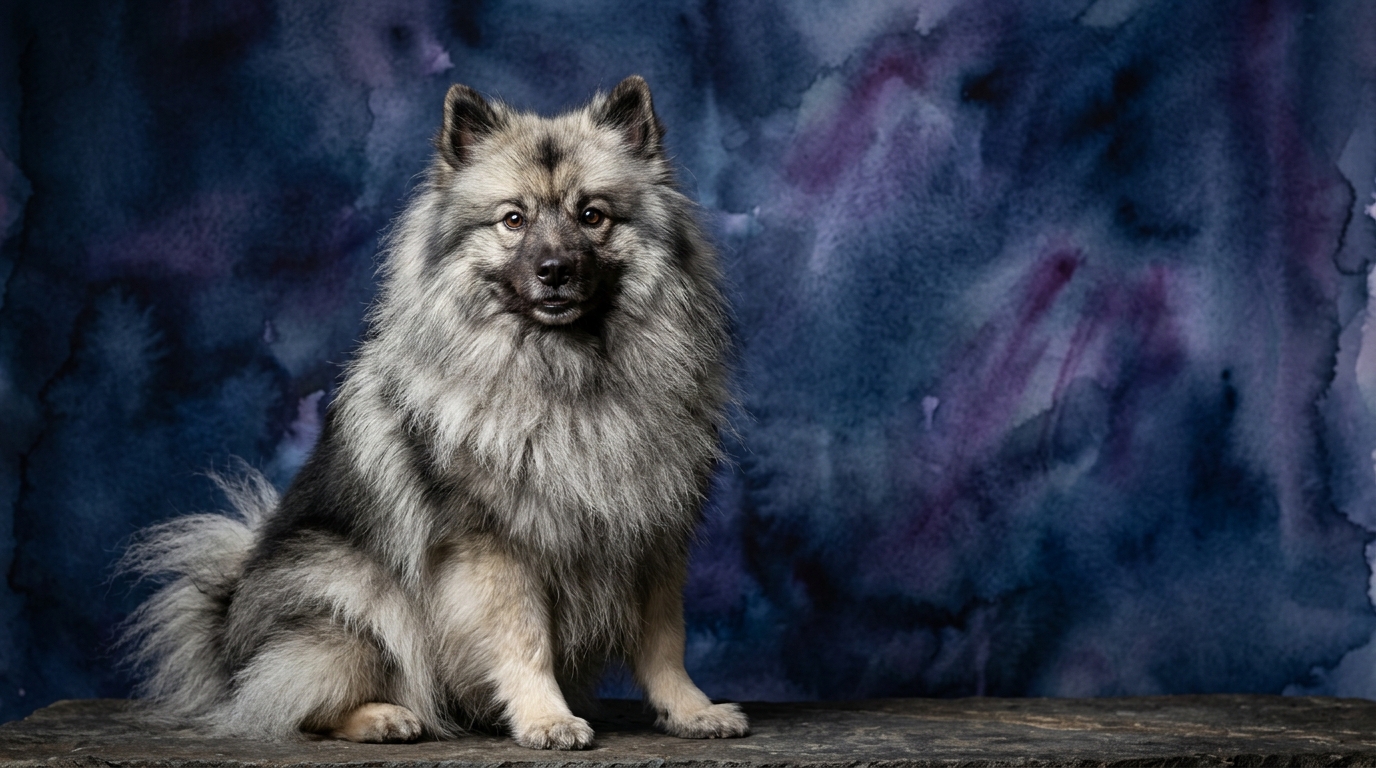
The Keeshond's IQ Profile:
Problem Solving (4/5): Keeshonden exhibit good problem-solving abilities, capable of navigating new challenges with cleverness. They can often devise solutions to access desired items or overcome obstacles, demonstrating a flexible and inventive mind. This might manifest as figuring out how to open a cupboard or manipulate a toy to get a treat, showcasing a more abstract and manipulative approach to problem-solving.
Training Speed (4/5): These dogs pick up new commands quickly, eager to please their handlers. Their responsiveness and desire for interaction make them generally rapid learners in obedience and trick training, often grasping new concepts with just a few repetitions. Their enthusiasm for learning makes them highly receptive to positive reinforcement methods.
Social Intelligence (3/5): Keeshonden also show moderate social intelligence, adept at reading human emotions and intentions. They are typically outgoing and enjoy being part of family activities, indicating a good grasp of social dynamics within their pack. Their inclination to be involved and their sensitivity to human moods allow them to integrate seamlessly into a household, often acting as furry shadows.
Instinctive Drive (3/5): Their instinctive drive, while present, is more geared towards companionship, vigilance, and alarm-barking than physical tasks. This score reflects their historical role as watchdogs and family companions, where innate alertness and vocal communication were key. While they enjoy play and interaction, their drives are less about hunting and more about keeping their human family safe and entertained.
Memory (5/5): Keeshonden possess exceptional memory. They retain a vast array of commands, routines, and experiences over long periods, making them particularly consistent in their learned behaviors and adept at recalling past interactions. This superior recall means they rarely forget a command, even if not practiced frequently, and can often anticipate routines, demonstrating a deep understanding of their world.
Where the Rhodesian Ridgeback Wins Cognitively
While not outscoring the Keeshond in raw metrics, the Rhodesian Ridgeback's cognitive strengths lie in the practical application of their instincts within complex, real-world contexts, particularly in scenarios requiring sustained focus on a physical task. Their problem-solving, though moderate, is often directed towards navigating challenging terrain or outmaneuvering game, a very different form of cognitive engagement than solving a puzzle for a treat. This involves a unique blend of observation, physical prowess, and decision-making under pressure. Their moderate social intelligence, combined with their protective instincts, means they excel at discerning genuine threats and responding appropriately, demonstrating a nuanced understanding of their environment and the potential dangers within it. This isn't about learning tricks quickly, but about making sound, independent judgments in dynamic, often high-stakes, situations, reflecting their heritage as independent hunters and guardians.
Where the Keeshond Wins Cognitively
The Keeshond's cognitive strengths are evident in their superior capacity for learning and retention, coupled with a more inventive approach to novel situations. Their problem-solving score of 4/5 indicates a breed capable of independently figuring out how to manipulate objects or open containers, showcasing a flexible and curious mind that enjoys mental challenges. The exceptional memory score of 5/5 means they not only grasp new concepts swiftly but also retain them with remarkable longevity, making them highly consistent in their responses to commands even after long breaks. This combination makes them particularly adept at tasks requiring sequential learning and precise recall, such as advanced obedience, complex trick training, or even canine freestyle, where remembering intricate routines is paramount. Their quick wit and eagerness to engage make them highly trainable for a variety of cognitive exercises.
Which is Easier to Train and Why
Based on our Pet IQ Lab scores, the Keeshond is generally easier to train due to their faster training speed (4/5) and exceptional memory (5/5). They are eager to engage with their handlers and retain information with remarkable precision, meaning they can learn new commands and routines with fewer repetitions and recall them consistently over time. This breed's intrinsic motivation to participate in family activities and please their people translates into a more cooperative and enthusiastic attitude during training sessions. In contrast, the Rhodesian Ridgeback, with a moderate training speed (3/5) and a more independent nature, requires a different approach. Their strong instinctive drive and self-reliant character mean they might question commands or prioritize their own impulses over compliance, necessitating patient, consistent, and highly reinforcing methods to maintain engagement and ensure reliable responses. While capable of learning, their independence means training often requires more effort and creativity from the handler to keep them focused and motivated.
Which Suits Active Owners vs. Relaxed Owners
The Rhodesian Ridgeback, with its heritage as a hunter of large game, inherently suits active owners. Their moderate instinctive drive points to a need for consistent physical and mental outlets that engage their natural tracking and pursuit behaviors. Owners who enjoy long hikes, running, or dog sports that challenge their endurance and problem-solving skills will find a Ridgeback a fulfilling companion. A more relaxed owner might struggle to meet their exercise requirements, potentially leading to boredom and unwanted behaviors if their innate drives are not sufficiently channeled. The Keeshond, while playful and requiring regular exercise, is more adaptable to varying activity levels. Their role as a companion and watchdog means they thrive on being included in family life and generally do well with daily walks, interactive play, and mental enrichment activities. While they appreciate activity, their needs are less intensely physical than a Ridgeback's, making them a better fit for owners who enjoy a balanced lifestyle that includes both activity and quieter companionship, as long as their mental stimulation needs are met.
The Verdict
Choose a Rhodesian Ridgeback if you are an active individual seeking a resilient, self-reliant companion for outdoor adventures and who appreciates a dog with a discerning, protective nature.
Opt for a Keeshond if you desire a quick-witted, highly trainable, and affectionate family member who excels in learning and recall, thriving on companionship and mental engagement within a balanced lifestyle.
🧠 Find Your Pet's IQ Score
Our Pet IQ Lab assessment covers 25+ tests across 5 cognitive dimensions — personalized to your breed.
Take the Full IQ Test →Frequently Asked Questions
Are Rhodesian Ridgebacks stubborn?
Ridgebacks can exhibit independence, which might be perceived as stubbornness, especially if training isn't consistently engaging or sufficiently reinforcing. Their moderate training speed means they benefit from patient and creative methods to foster cooperation, rather than forceful ones.
Do Keeshonden bark a lot?
Keeshonden were historically watchdogs, and their instinctive drive includes alerting their families to perceived intruders or unusual occurrences. They can be vocal, but this behavior can often be managed with consistent training, redirection, and early socialization from a young age to teach appropriate vocalization.
Which breed is better for first-time dog owners?
The Keeshond's quicker training speed and eager-to-please nature generally make them a more forgiving and adaptable choice for first-time dog owners. Rhodesian Ridgebacks, with their independent streak and strong drives, often benefit from experienced handlers who understand their unique needs for leadership and consistent training.