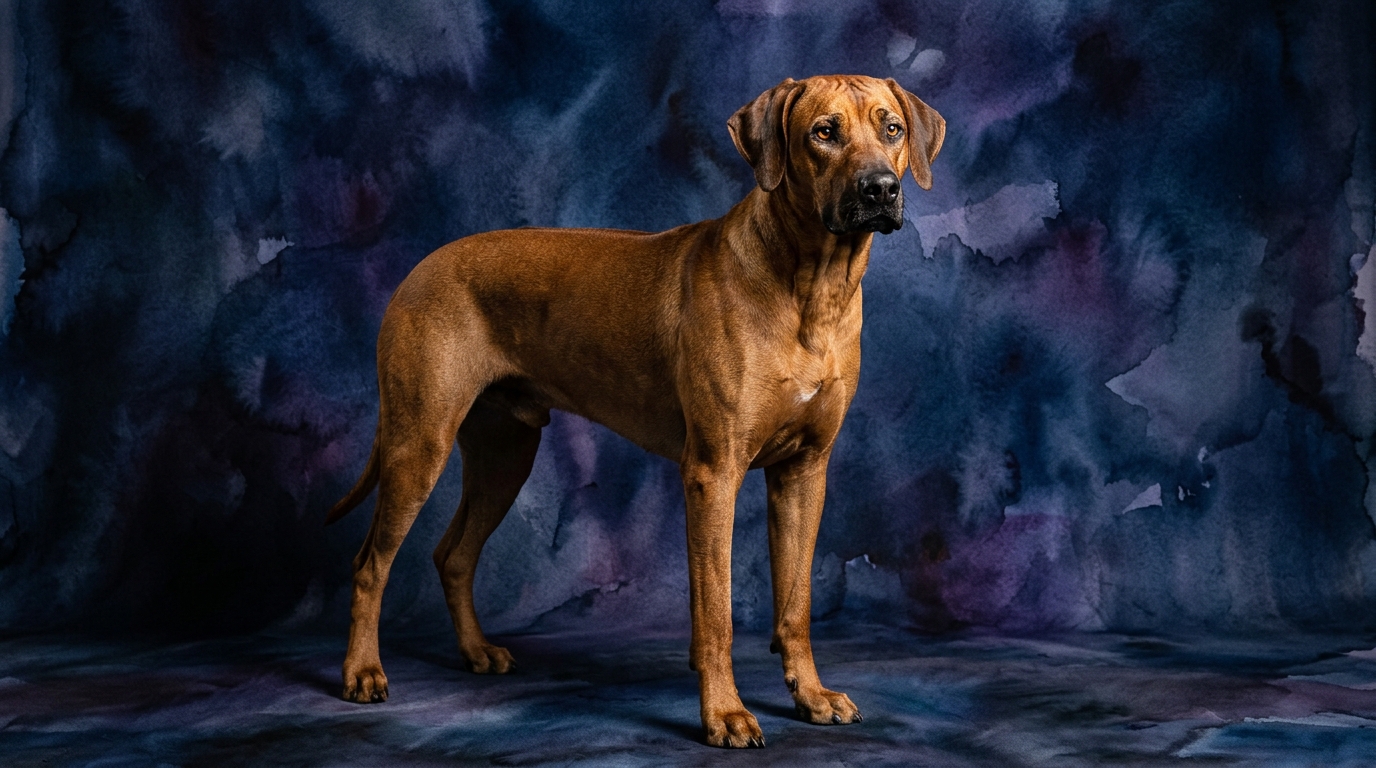
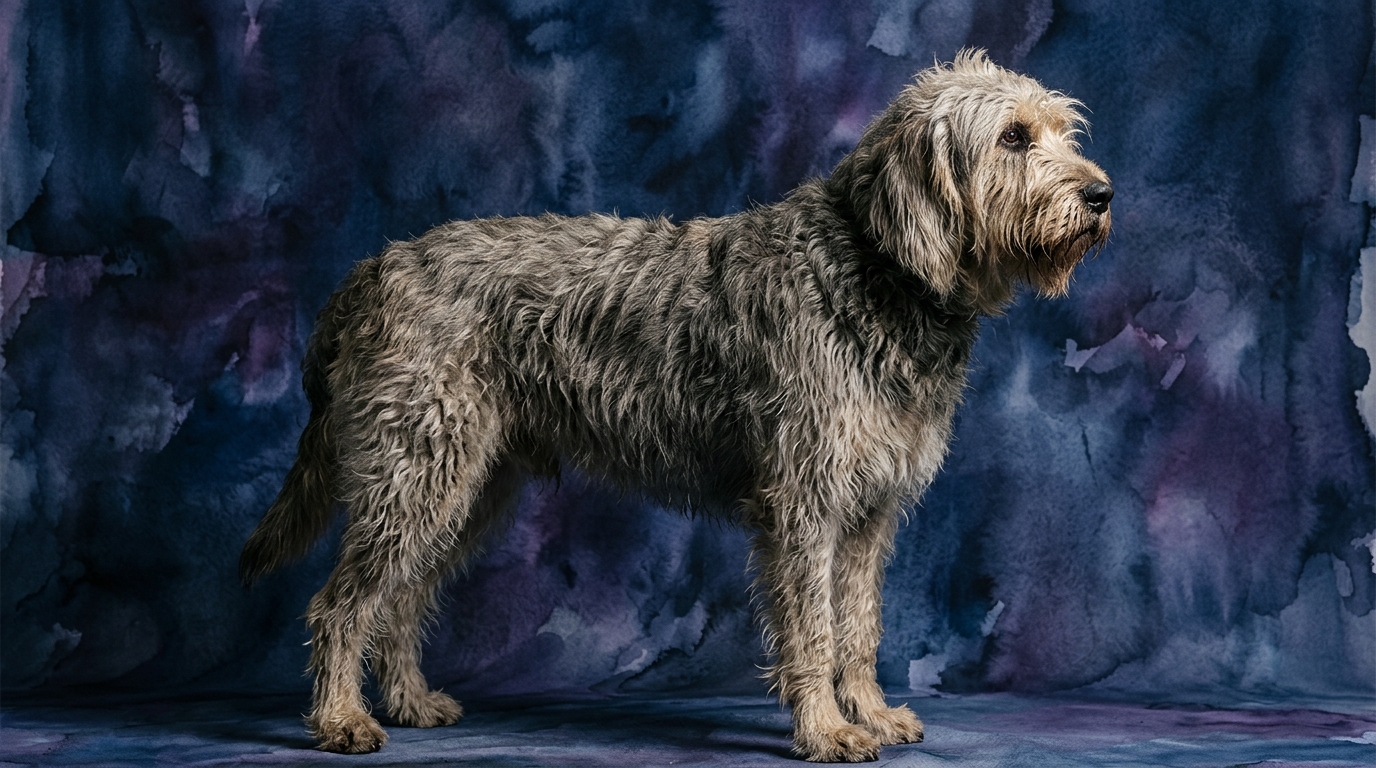
Side-by-Side IQ Profile
The Cosmic Pet Pet IQ Lab assesses canine intelligence across five key dimensions, providing a granular view of each breed’s cognitive strengths. While both the Rhodesian Ridgeback and the Otterhound register a consistent 3/5 across all categories, their historical roles and inherent temperaments dictate how these scores translate into everyday behavior.
For the Rhodesian Ridgeback (Coren rank #52), a 3/5 in Problem Solving reflects their capacity for independent thought in challenging situations, such as navigating complex terrain to track and corner large game without direct human command. Their problem-solving often involves assessing threats and making quick decisions in high-stakes environments. Their Training Speed at 3/5 indicates they possess a discerning nature, learning quickly when motivated but can be selective in applying that learning if they don't see the value or if the training isn't consistent. They are capable learners but often require a clear 'why' from their human partners. Social Intelligence at 3/5 highlights their strong understanding within their established family unit, exhibiting loyalty and protective instincts, adept at reading their human companions' moods but often reserved with strangers. An Instinctive Drive of 3/5 underscores their powerful prey drive, historically directed at tracking and holding large quarry, coupled with strong protective instincts towards their family and territory. Finally, a Memory score of 3/5 demonstrates robust retention of training commands, routines, and experiences over long periods, contributing to their consistency in behavior and learning.
The Otterhound (Not Coren-ranked) also presents a 3/5 across all cognitive dimensions, yet with distinct manifestations. Their Problem Solving (3/5) excels at persistent, independent problem-solving related to scent work, involving methodically unraveling complex scent trails, overcoming environmental obstacles, and maintaining focus for extended periods. Training Speed at 3/5 indicates that while capable of learning, their progress is often influenced by their strong, independent scenting drive; they grasp concepts but can be easily distracted by compelling odors. Social Intelligence (3/5) shows them as generally affable and good-natured, displaying a friendly disposition towards both family and often strangers, with their social intelligence leaning towards boisterous interaction and a desire for companionship. Their Instinctive Drive (3/5) is dominated by an unparalleled desire to follow a scent, particularly water-borne trails, a powerful drive that can override other directives. Their Memory (3/5) is excellent, especially for scent patterns and locations where interesting odors were found, remembering routines and people well, though recall can be selectively applied when an enticing scent is present.
Where Rhodesian Ridgeback Wins Cognitively
Despite similar numerical scores, the Rhodesian Ridgeback often demonstrates a cognitive edge in scenarios requiring rapid, independent decision-making under pressure. Their historical role demanded not just tracking, but also the strategic assessment of danger and the ability to hold formidable prey at bay, often without direct human supervision. This translates to a refined spatial awareness and a capacity for assessing complex social dynamics, particularly in distinguishing friend from perceived threat. A Ridgeback might excel at navigating an unfamiliar, obstacle-rich environment to reach a specific goal, or in quickly understanding a novel household routine, leveraging their observational skills and memory for patterns.
Where Otterhound Wins Cognitively
The Otterhound's cognitive strengths shine brightest in tasks demanding sustained, single-minded focus on a primary objective, particularly when that objective is scent-driven. Their problem-solving in this realm is unparalleled, involving the intricate unraveling of an aged or complex scent trail across varied terrains, including water. While the Ridgeback might solve a puzzle quickly, the Otterhound will relentlessly pursue a scent, demonstrating exceptional cognitive stamina and an ability to filter out all but the most relevant sensory information. This profound olfactory intelligence allows them to construct detailed 'scent maps' in their mind, remembering specific odors and their locations with remarkable precision.
Which is Easier to Train and Why
Both breeds share a 3/5 training speed score, yet the practical experience of training them diverges significantly due to their inherent drives. The Rhodesian Ridgeback, while capable of quick learning, often exhibits an independent streak. They are not inherently eager to please in the way some working breeds are; instead, they require a trainer who understands their thoughtful nature and can provide consistent, fair, and engaging motivation. They learn best with positive reinforcement and can become resistant if training is harsh or repetitive. Their 'stubbornness' often stems from a decision not to comply, rather than an inability to understand. In contrast, the Otterhound's training challenges primarily revolve around managing their overwhelming instinctive drive for scent. While they understand commands, their nose often dictates their actions. A compelling scent can instantly override learned behaviors, making recall or focus exercises particularly demanding. Training an Otterhound requires immense patience, creativity to incorporate scent work into training, and an unwavering commitment to consistency to help them generalize commands beyond distraction. Therefore, while both learn at a moderate pace, the Otterhound's intense focus on scent makes them generally more challenging to train for obedience in varied environments, demanding a higher level of owner dedication to manage their natural predispositions.
Which Suits Active Owners vs Relaxed Owners
For active owners, both breeds offer robust companionship, but with different demands. The Rhodesian Ridgeback, with its athletic build and historical stamina, thrives on regular, vigorous exercise like long runs, hikes, or structured dog sports. They require mental engagement as much as physical, benefiting from activities that challenge their problem-solving and social intelligence, like advanced obedience or tracking. They can adapt to a more relaxed pace indoors but still need significant outdoor activity. Conversely, the Otterhound, while also requiring considerable exercise, often prefers activities centered around their nose. Long, meandering walks where they can explore scents are more fulfilling than high-speed sprints. Their physical stamina is immense, but their exercise needs are often about duration and mental engagement through scent, rather than intense bursts. A relaxed owner might find both breeds too demanding in their need for engagement. However, an owner who enjoys long, exploratory walks and is tolerant of a boisterous, often muddy companion might find the Otterhound a better fit for their 'active, but not necessarily high-speed' lifestyle, while the Ridgeback suits an owner seeking a more intense, structured exercise partner.
The Verdict
Choose the Rhodesian Ridgeback if you seek an independent yet loyal companion who excels at discerning situations, offers protective instincts, and thrives on structured physical and mental challenges.
Opt for the Otterhound if you are captivated by a dog with an unparalleled scenting ability, a boisterous and amiable nature, and are prepared to embrace an active lifestyle centered around their profound olfactory explorations.
🧠 Find Your Pet's IQ Score
Our Pet IQ Lab assessment covers 25+ tests across 5 cognitive dimensions — personalized to your breed.
Take the Full IQ Test →Frequently Asked Questions
Do Rhodesian Ridgebacks and Otterhounds have similar energy levels?
While both are active hounds, their energy expression differs. Rhodesian Ridgebacks typically require structured, intense exercise to satisfy their athletic build and mental needs, enjoying activities like running or agility. Otterhounds possess incredible stamina for scent work and long, exploratory walks, but might be less inclined towards high-speed bursts of activity.
Are these breeds good with children and other pets?
Rhodesian Ridgebacks are generally good with children they are raised with, being protective and tolerant, but their size and independence require supervision. They can coexist with other pets if socialized early. Otterhounds are known for their amiable and boisterous nature, often good with children and other dogs, but their size and exuberance mean careful introductions are always wise.
Which breed is more prone to destructive behavior if not exercised enough?
Both breeds can become destructive if their physical and mental needs are not met. Rhodesian Ridgebacks might resort to chewing or becoming restless due to boredom and pent-up energy. Otterhounds, driven by their powerful nose, might engage in excessive digging or 'counter-surfing' if not given enough outlets for their instinctive drives and exploration.