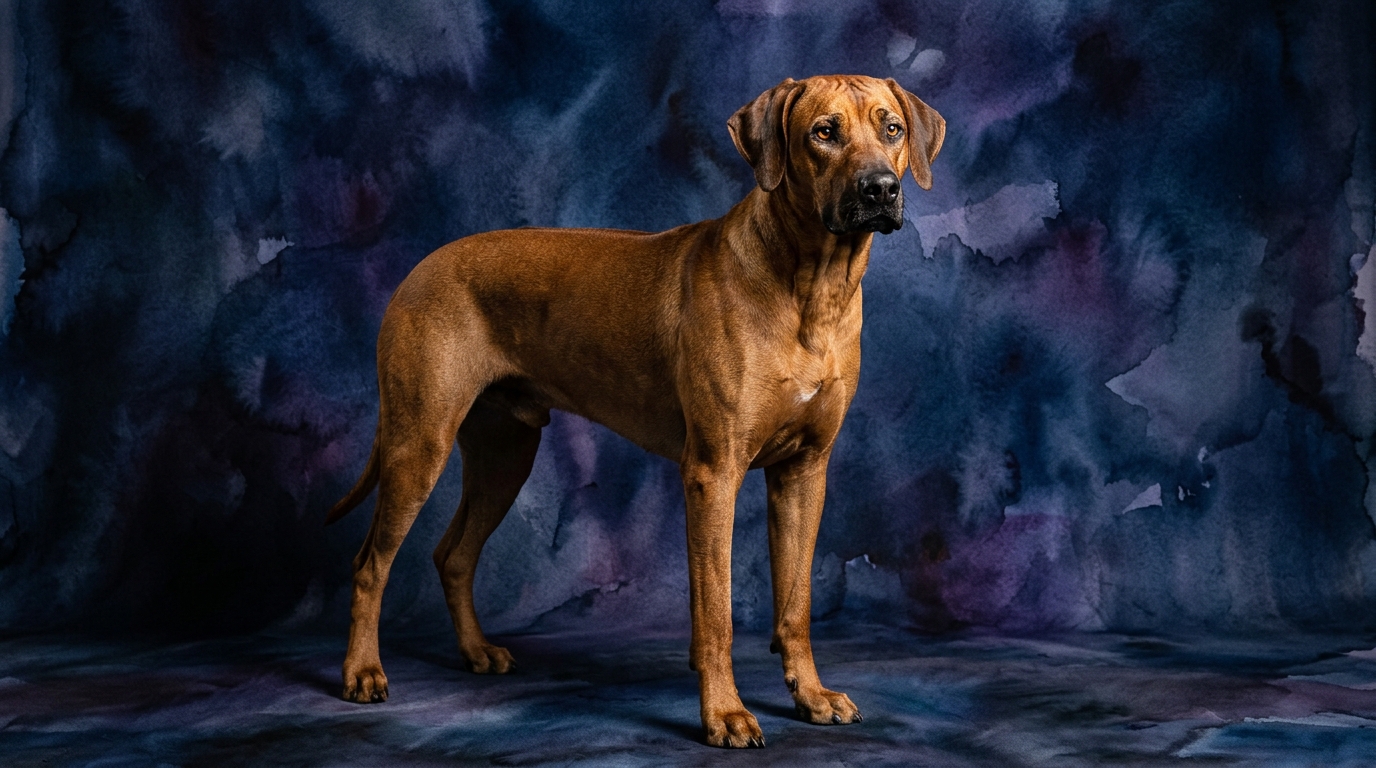
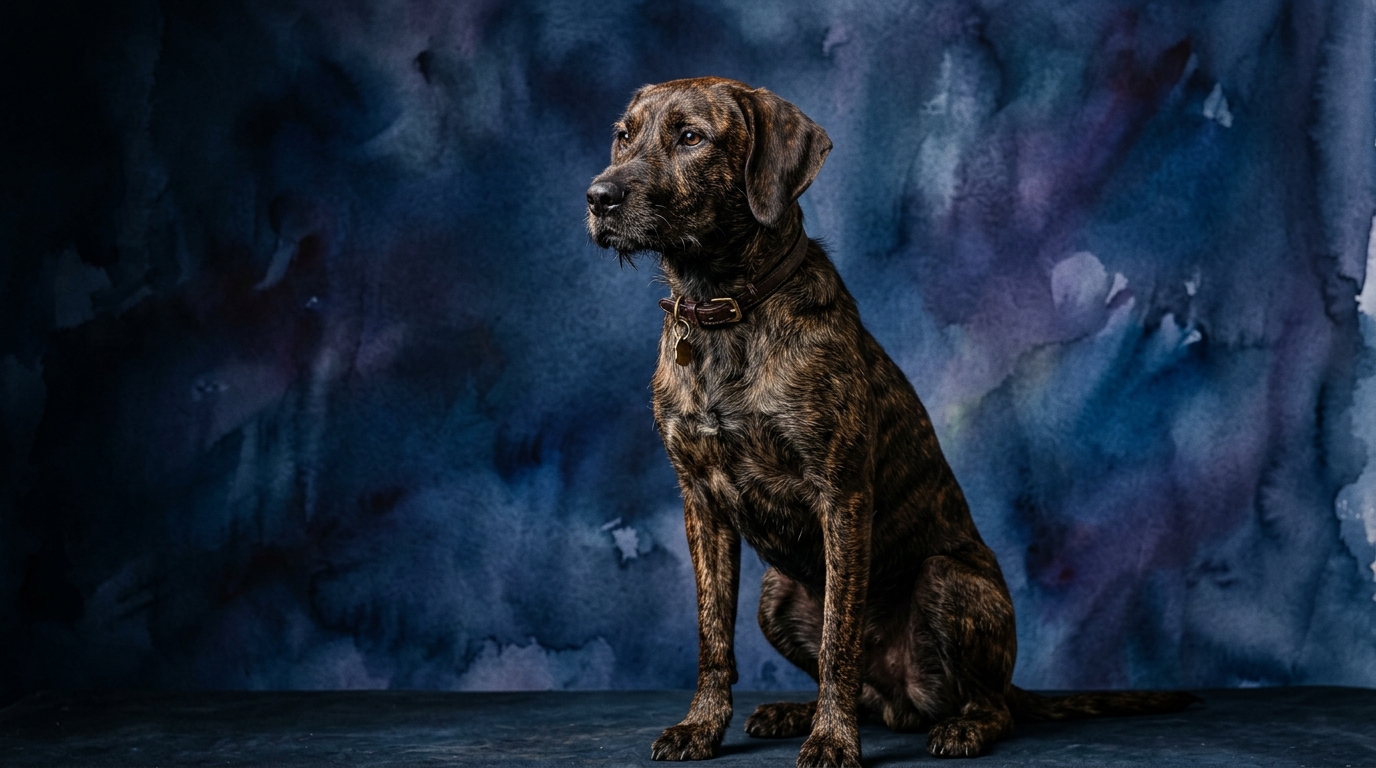
Side-by-Side IQ Profile: Rhodesian Ridgeback vs. Plott Hound
At The Cosmic Pet Pet IQ Lab, we assess canine intelligence across five key dimensions. Interestingly, both the Rhodesian Ridgeback (Coren rank #52) and the Plott Hound (not Coren-ranked) share identical scores across these metrics, each registering a '3/5' for Problem Solving, Training Speed, Social Intelligence, Instinctive Drive, and Memory. However, these identical scores belie distinct expressions of these cognitive traits, shaped by their unique breed histories.
For the Rhodesian Ridgeback, a '3/5' in Problem Solving reflects their legacy of tracking and baying dangerous game, demanding independent thought and strategic decision-making in high-stakes environments rather than simple puzzle-solving. Their '3/5' Training Speed stems from this independence; they learn steadily but often need to understand the 'why' behind a command, requiring consistent, engaging methods. Their '3/5' Social Intelligence is more about discerning friend from foe and understanding pack dynamics within their immediate family, often exhibiting reservation with strangers. An Instinctive Drive of '3/5' highlights their strong predatory and protective urges, requiring careful management. Finally, their '3/5' Memory is evident in their reliable recall of routes, scent trails, and learned commands, especially those integral to their duties and routines.
The Plott Hound's identical '3/5' in Problem Solving manifests as exceptional aptitude for unraveling complex scent trails over varied terrain, adapting to environmental changes while relentlessly pursuing bear or wild boar. Their '3/5' Training Speed is influenced by this intense scent focus; they learn at a steady pace but can become singularly engrossed in a trail, making recall a significant training focus. A '3/5' Social Intelligence score indicates deep devotion to their families and generally amiable interactions once introduced, though their primary focus during work is on their handler and the hunt. Their '3/5' Instinctive Drive is overwhelmingly scent-driven and pursuit-oriented, a defining characteristic that includes their distinctive baying vocalization. The '3/5' Memory of a Plott Hound is remarkable for its capacity to recall intricate scent patterns and specific hunting locations, crucial for their highly specialized work.
Where the Rhodesian Ridgeback Wins Cognitively
While both breeds exhibit robust cognitive abilities, the Rhodesian Ridgeback, with its Coren ranking of #52, suggests a slightly broader, more generalized working intelligence. Their historical role demanded not just tracking prowess but also a strategic assessment of dangerous prey, fostering a unique blend of independent thought and calculated risk-taking. This translates into a more nuanced problem-solving approach in domestic settings, where they might exhibit a greater capacity for understanding complex household routines or anticipating human needs, perhaps even demonstrating a subtle, protective foresight that extends beyond pure instinct. Their social intelligence, while reserved, often allows for a deeper, more integrated understanding of human family dynamics as a protector and companion, rather than solely a working partner.
Where the Plott Hound Wins Cognitively
The Plott Hound, though unranked by Coren, demonstrates a formidable cognitive specialization rooted in its relentless pursuit of game. Their cognitive strength lies in the absolute mastery of scent discrimination and trail following, a domain where their problem-solving and memory functions operate at an exceptionally focused level. This specialization means they can unravel incredibly complex scent puzzles, displaying an almost obsessive dedication to the task. Furthermore, their distinctive baying isn't merely noise; it's a sophisticated communication system, a cognitive tool that allows them to convey precise information about their progress and location to their human partners, showcasing a unique form of social intelligence geared towards cooperative hunting.
Which is Easier to Train, and Why?
Given both breeds share a '3/5' training speed, neither the Rhodesian Ridgeback nor the Plott Hound can be labeled as 'easy' to train; both require consistent, patient, and engaging methods. The Rhodesian Ridgeback's independent nature, a legacy of making solo decisions against dangerous game, means they often require a trainer to convince them of the value of a command. They are not inherently eager to please and may test boundaries, demanding clear leadership and positive reinforcement that makes training a collaborative effort. Their training success often hinges on building a strong, respectful bond and ensuring they understand the 'why' behind the commands.
In contrast, the Plott Hound's primary challenge in training stems from its overwhelming instinctive drive for scent. While equally capable of learning commands, a Plott Hound on a scent trail can become singularly focused, rendering them temporarily 'deaf' to calls. This intense focus, while valuable in the field, necessitates rigorous recall training and management of their environment to prevent them from following their nose into trouble, making their training more about managing a powerful, innate urge. Their persistence, while a virtue in hunting, can translate into stubbornness when their nose leads them astray.
Which Suits Active Owners vs. Relaxed Owners?
Neither the Rhodesian Ridgeback nor the Plott Hound is suitable for truly relaxed owners, as both possess a robust '3/5' instinctive drive and require substantial physical and mental engagement. The Rhodesian Ridgeback thrives with owners who can provide consistent exercise like running, hiking, or participation in dog sports, coupled with mental challenges to satisfy their problem-solving aptitude. While capable of being calm and dignified indoors once their needs are met, they are not content to be couch potatoes. Their protective instincts also necessitate owners who are prepared for diligent socialization and consistent leadership.
The Plott Hound, on the other hand, demands an even more intense level of vigorous activity, ideally involving scent work or extensive outdoor exploration. Their relentless energy and singular focus on scent mean they require owners dedicated to long, strenuous runs or engaging in activities like tracking and agility. A Plott Hound deprived of sufficient outlets for its powerful drive will likely become restless, vocal, and potentially destructive, making them a poor fit for anyone seeking a low-maintenance companion. Their baying can also be a significant consideration for owners in close-knit neighborhoods.
The Verdict
For owners seeking a dignified, protective companion capable of independent thought and a broader range of problem-solving in a family setting, the Rhodesian Ridgeback offers a rewarding partnership, provided their need for consistent exercise and mental engagement is met.
The Plott Hound is an ideal choice for highly active individuals or families passionate about outdoor adventures, especially those interested in scent-based activities or with a secure, rural environment that can accommodate their powerful hunting drive and vocal nature.
🧠 Find Your Pet's IQ Score
Our Pet IQ Lab assessment covers 25+ tests across 5 cognitive dimensions — personalized to your breed.
Take the Full IQ Test →Frequently Asked Questions
Are Rhodesian Ridgebacks stubborn?
Yes, their independence stemming from their original purpose can manifest as stubbornness. They require clear, positive reinforcement and a trainer who understands their need to 'buy into' commands, rather than simply obeying.
Do Plott Hounds bark a lot?
Plott Hounds are known for their distinctive baying, a vocalization used during hunting to alert their handler. While not constant barking, their strong instinctive drive means they can be quite vocal, especially if under-exercised or stimulated by scents.
Which breed is better with children?
Both breeds can be good with children when properly socialized and raised together with supervision. The Plott Hound is often described as devoted and tolerant within its family, while the Rhodesian Ridgeback can be protective and reserved, requiring careful introduction and training to ensure positive interactions.