Side-by-Side IQ Profile: Rhodesian Ridgeback vs. Schipperke
The Cosmic Pet Pet IQ Lab employs a five-dimensional framework to assess canine intelligence, offering a granular view beyond simple rankings. Let's dissect the cognitive landscape of the Rhodesian Ridgeback and the Schipperke.
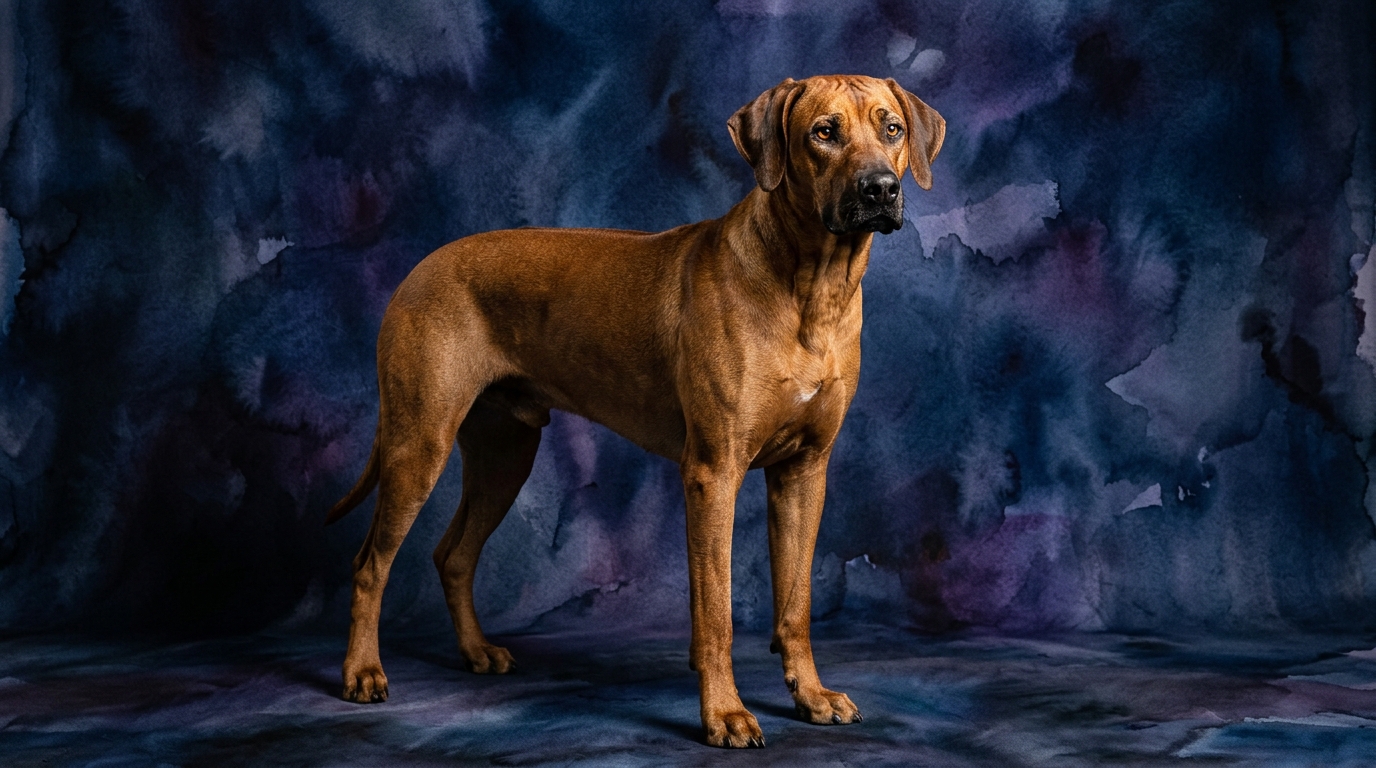
For the Rhodesian Ridgeback (Coren rank #52), each dimension is rated 3 out of 5. Their Problem Solving (3/5) reflects a deliberate, often independent approach to challenges, where they might assess situations thoroughly before acting, relying on their own judgment. Training Speed (3/5) indicates they learn commands and routines with consistency, but their self-reliant nature means they require patience and motivation tailored to their desire, rather than instant absorption. Social Intelligence (3/5) manifests as a discerning acumen; they form deep bonds with family but are typically reserved with strangers, reading cues with a thoughtful, self-possessed demeanor. Instinctive Drive (3/5) centers on their heritage as lion hunters, a blend of tracking, endurance, and protective instincts that, while not constantly 'on,' can emerge as strong prey drive or territoriality. Memory (3/5) is solid for routines, people, and places, contributing to their consistent temperament and understanding of their environment, retaining learned behaviors without rapid precision.
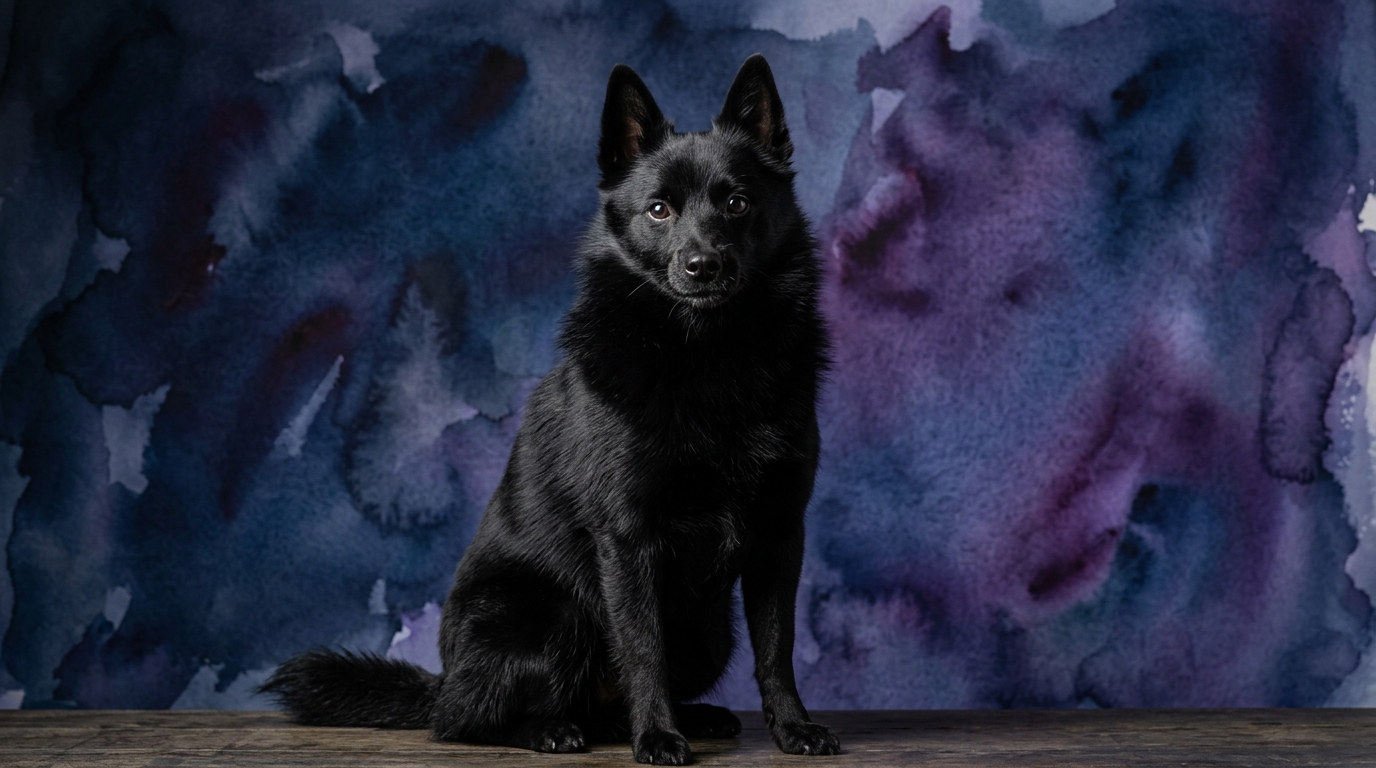
The Schipperke (Coren rank #15), in contrast, presents a different cognitive blueprint. Their Problem Solving (5/5) is exceptional; this breed quickly analyzes situations and devises solutions, adept at figuring out puzzles, navigating complex environments, and even outsmarting companions. Training Speed (5/5) is remarkably high, as Schipperkes are quick learners eager to grasp new commands and concepts with enthusiasm, often picking up tasks in just a few repetitions. Social Intelligence (3/5) is keen but selective; they are highly attuned to their family's moods, acting as vigilant companions, but can be reserved or wary with outsiders. Instinctive Drive (3/5) is rooted in their history as barge dogs and ratters, manifesting as persistent curiosity, a strong prey drive for small vermin, and a profound sense of territoriality that fuels their watchfulness. Memory (5/5) is outstanding, retaining information with impressive longevity, making them consistent in learned behaviors and quick to recall past training, even after long breaks.
Where the Rhodesian Ridgeback Wins Cognitively
The Rhodesian Ridgeback's cognitive strengths lie in its independent thought and robust endurance, qualities often overlooked in pure speed comparisons. While its problem-solving isn't lightning-fast (3/5), it's often more deliberate and self-directed. A Ridgeback might take longer to assess a novel situation, but its solution could be more thoroughly planned or executed without constant human intervention, reflecting its historical role in tracking and holding large game. Their social intelligence, also rated 3/5, manifests as a profound, discerning loyalty; they form deep, stable bonds and are adept at reading their trusted humans, offering a quiet, steadfast companionship that values consistency and mutual respect over overt displays. This nuanced social understanding, combined with their ability to work through challenges at their own pace and their solid memory (3/5), gives them an advantage in situations requiring sustained focus and a degree of self-sufficiency, making them astute observers of their environment.
Where the Schipperke Wins Cognitively
The Schipperke truly shines in rapid cognitive processing, demonstrating an impressive mental agility across several domains. With a perfect 5/5 in Problem Solving, Training Speed, and Memory, this breed is a quick-witted dynamo. They process new information with remarkable speed, making connections and formulating solutions almost instantaneously, a trait invaluable for their historical roles as alert watchdogs and efficient vermin hunters. Their ability to learn and recall commands with such efficiency means they can master complex routines quickly, often enjoying the mental challenge itself. This breed's exceptional memory (5/5) ensures that once a lesson is learned, it is retained for the long term, making re-training or reinforcing behaviors a straightforward process. For tasks requiring swift comprehension, intricate manipulation, and immediate action, the Schipperke consistently outperforms, demonstrating a sparkling intellectual curiosity and capacity for complex learning.
Which is Easier to Train and Why?
When it comes to ease of training, the Schipperke holds a distinct advantage due to its exceptional Training Speed (5/5) and Problem Solving (5/5) scores. A Schipperke typically grasps new commands and concepts with remarkable swiftness, requiring fewer repetitions and exhibiting enthusiastic eagerness. Their quick mental processing means they connect actions with consequences rapidly, making positive reinforcement highly effective for rapid behavior acquisition. This breed often thrives on the mental engagement of training, viewing it as an enjoyable challenge and readily offering behaviors in anticipation of rewards, leading to a generally faster and more fluid training experience for owners.
The Rhodesian Ridgeback, with a Training Speed and Problem Solving of 3/5, requires a different approach. Their independent spirit means they often need more patience, consistency, and a solid understanding of 'what's in it for them.' Ridgebacks are discerning; they may question a command's utility or prefer to solve problems their own way, requiring an owner to demonstrate value and build a strong partnership. Training a Ridgeback involves building trust and demonstrating cooperation's value, often through positive reinforcement and clear, consistent boundaries, rather than just rote memorization. While both breeds are capable of learning, the Schipperke's inherent mental agility and eagerness to please make its training journey generally faster and more straightforward for the average owner.
Which Suits Active Owners vs. Relaxed Owners?
For active owners thriving on mental stimulation, the Schipperke is an ideal match. Its high problem-solving and training speed, coupled with its instinctive drive (3/5) for vigilance, demand consistent mental challenges beyond physical exercise. This breed needs to be mentally engaged to prevent boredom, which can lead to inventive, often mischievous, problem-solving. Owners who enjoy teaching tricks, participating in dog sports like agility or obedience, or providing complex puzzle toys will find the Schipperke an enthusiastic partner, keeping its sharp mind content and preventing it from creating its own 'fun' in less desirable ways.
The Rhodesian Ridgeback, with its strong instinctive drive (3/5) and endurance hunter background, also suits active owners, but with a different focus. While needing significant physical exercise to satisfy their powerful physique and maintain mental well-being, their cognitive profile (3/5 across the board) suggests they appreciate a more deliberate pace. They excel as companions for hiking, jogging, or long walks, covering long distances with ease, but may not demand the constant, intricate mental engagement of a Schipperke. Owners appreciating a dog with robust physical capacity and a calm, self-assured presence, rather than incessant mental demands, might find the Ridgeback a better fit, offering companionship for adventure without requiring constant intellectual games or elaborate mental puzzles every day.
The Verdict
Opt for a Rhodesian Ridgeback if you seek a self-possessed, physically enduring companion for outdoor adventures and appreciate a dog that thinks independently and forms deep, discerning bonds.
Select a Schipperke if you desire a quick-witted, mentally agile companion eager for constant engagement, excelling in rapid learning and problem-solving, and thriving on consistent mental challenges.
🧠 Find Your Pet's IQ Score
Our Pet IQ Lab assessment covers 25+ tests across 5 cognitive dimensions — personalized to your breed.
Take the Full IQ Test →Frequently Asked Questions
Do Rhodesian Ridgebacks require a lot of mental stimulation?
While not as demanding as a Schipperke in terms of rapid mental puzzles, Rhodesian Ridgebacks do benefit from mental stimulation that taps into their problem-solving (3/5) and instinctive drive (3/5). Activities like scent work, structured training sessions, and opportunities to explore new environments satisfy their thoughtful, independent minds and prevent boredom.
Are Schipperkes good for first-time dog owners?
Schipperkes can be suitable for first-time dog owners who are prepared for their significant mental agility and high energy. Their quick training speed (5/5) is a plus, but their problem-solving (5/5) and strong instinctive drive (3/5) mean they require consistent, engaging training and socialization from an early age to prevent boredom and potential mischievousness, making them a commitment.
How do their social intelligence scores (3/5 for both) compare in practice?
While both breeds score 3/5, their social intelligence manifests differently due to their core temperaments. The Ridgeback's is often a discerning loyalty, reserved with strangers but deeply bonded and perceptive with family. The Schipperke's is a vigilant attentiveness to its family, coupled with a more assertive and wary approach to outsiders, reflecting its historical watchdog nature and smaller size.