Side-by-Side IQ Profile: Hound vs. Companion
The Cosmic Pet Pet IQ Lab assesses canine intelligence across five key dimensions, providing a granular view beyond general rankings. For both the Rhodesian Ridgeback and the Tibetan Terrier, these scores uniformly stand at 3/5, suggesting a balanced and competent cognitive framework, yet the application of these strengths differs significantly due to their ancestral roles.
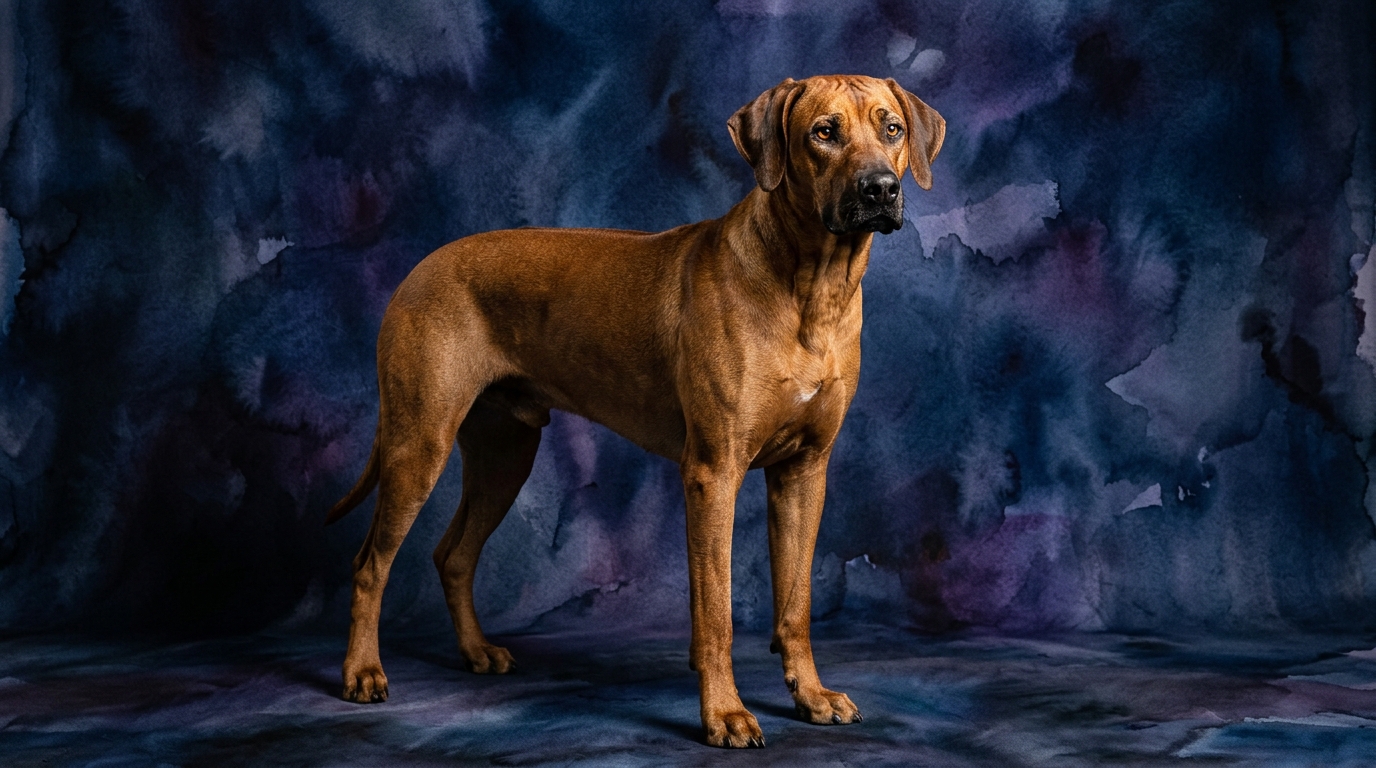
The Rhodesian Ridgeback, a member of the Hound group, holds a Coren rank of #52. Their Problem Solving score of 3/5 reflects an ability to strategize in pursuit or navigation, often independently. Training Speed at 3/5 indicates they can learn commands at a moderate pace, but their strong will may require consistent, engaging methods. Social Intelligence at 3/5 suggests an awareness of pack dynamics and human cues, though often balanced with an independent streak. An Instinctive Drive of 3/5 highlights their inherent desire to track and chase, a powerful motivator. Memory at 3/5 supports their ability to recall routes, commands, and experiences.
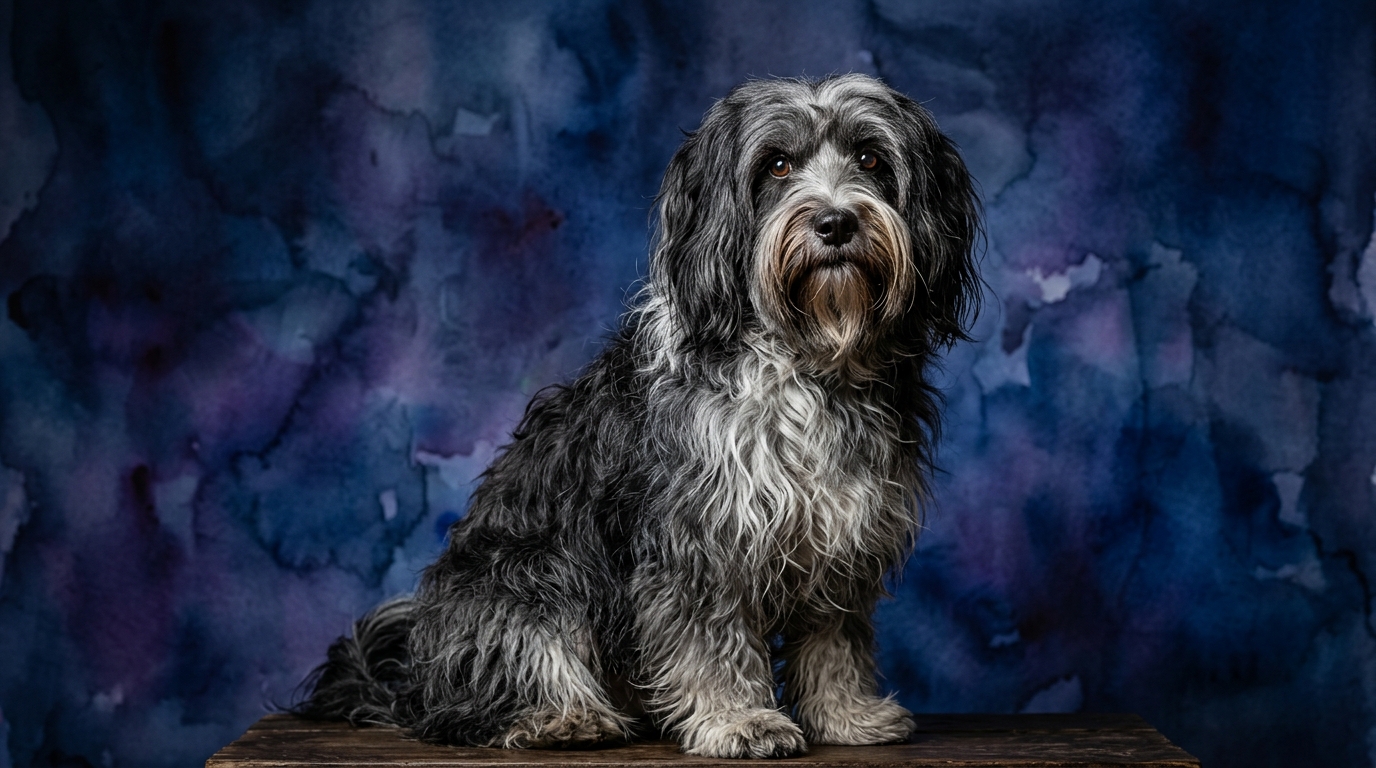
The Tibetan Terrier, categorized in the Non-Sporting group, ranks at #63 on the Coren scale. Their Problem Solving at 3/5 manifests in clever ways to engage with their human companions or navigate domestic challenges. Training Speed also at 3/5 means they are receptive to learning, often motivated by positive interaction, though they can exhibit a charmingly stubborn side. Social Intelligence at 3/5 is a hallmark of this companion breed, enabling them to form deep bonds and understand complex household dynamics. Their Instinctive Drive at 3/5 leans more towards watchfulness and playful engagement rather than predatory pursuits. Memory at 3/5 allows them to retain routines, learned behaviors, and social interactions effectively.
Where the Rhodesian Ridgeback Wins Cognitively
The Rhodesian Ridgeback's cognitive strengths are particularly evident in scenarios demanding sustained focus on a singular objective and independent decision-making in vast environments. Their Problem Solving, while rated 3/5, is geared towards practical, often physically demanding tasks, such as tracking a scent over long distances or figuring out how to outmaneuver prey. This is a form of applied intelligence honed by generations of hunting.
Their Instinctive Drive, also 3/5, provides an unparalleled internal motor for tasks requiring endurance and determination, setting them apart from breeds whose drives are primarily social or play-oriented. This drive fuels their ability to ignore distractions and persist until a goal is achieved, whether that's finding a hidden toy or patrolling their territory. Their memory is adept at recalling complex spatial information, like the layout of a large property or the location of a specific scent trail, which is crucial for their original purpose.
Where the Tibetan Terrier Wins Cognitively
The Tibetan Terrier excels in the realm of social and environmental adaptability, showcasing a different facet of their 3/5 Problem Solving capacity. Their intelligence is finely tuned to human households, manifesting in subtle ways like understanding complex routines, manipulating objects to achieve a desired outcome (e.g., opening cabinets), or figuring out the best way to solicit attention from their family members. This adaptability makes them particularly adept at integrating into diverse living situations.
Their Social Intelligence, also 3/5, is a significant cognitive asset, allowing them to read human emotions and intentions with remarkable accuracy. They often anticipate needs and react appropriately to varying social cues, making them exceptional companions. This social acumen, combined with their 3/5 Memory, allows them to build a rich tapestry of social understanding, remembering who is friendly, who offers treats, and the specific quirks of each family member, fostering deep and nuanced relationships.
Training Dynamics: Independence vs. Engagement
While both breeds share a 3/5 rating for Training Speed, their approaches to learning and cooperation diverge based on their historical roles. The Rhodesian Ridgeback, with its independent hound heritage, often requires a trainer who understands their inherent drive to make their own decisions. They learn effectively when tasks are framed as collaborative hunts or challenges that tap into their instinctive drives, but repetitive, unstimulating drills may encounter resistance. Their problem-solving mind might seek alternative solutions if a command isn't immediately clear or rewarding.
The Tibetan Terrier, though also possessing a spirited independence, often responds well to positive reinforcement and training methods that emphasize engagement and fun. Their desire for companionship and social interaction can be a powerful motivator, making them eager to please when the training process is enjoyable and builds their bond with their owner. However, their cleverness means they can quickly learn to 'train' their owners if boundaries aren't consistently maintained, testing limits with a charming persistence.
Lifestyle Match: Active Exploration vs. Engaged Companionship
Considering their cognitive profiles, the Rhodesian Ridgeback aligns best with active owners who enjoy outdoor adventures and can provide structured mental and physical challenges. Their 3/5 Instinctive Drive requires outlets that go beyond a simple walk, benefiting from activities like scent work, hiking, or even structured agility training that allows them to use their bodies and minds. Owners who appreciate a dog with a strong will and the capacity for independent thought will find a rewarding partnership.
The Tibetan Terrier, conversely, thrives with owners who can offer consistent companionship and engage them in varied, stimulating indoor and outdoor activities. While they enjoy walks and playtime, their social intelligence and problem-solving skills make them equally content with interactive puzzle toys, training sessions that teach new tricks, or simply being an integral part of family life. They suit owners who appreciate a dog that is alert, social, and a clever participant in daily routines, preferring mental engagement over strenuous, prolonged physical exertion.
The Verdict
Choose the Rhodesian Ridgeback if you seek a resilient, independent companion for active, outdoor-oriented pursuits, valuing a dog that thinks for itself and possesses strong natural drives. They thrive with consistent, experienced guidance and ample opportunities for exploration.
Opt for the Tibetan Terrier if you desire a clever, adaptable companion who excels in social interactions and thrives on being an engaged family member, enjoying a blend of mental games and moderate physical activity. They flourish in homes where their social intelligence and problem-solving skills are appreciated and nurtured.
🧠 Find Your Pet's IQ Score
Our Pet IQ Lab assessment covers 25+ tests across 5 cognitive dimensions — personalized to your breed.
Take the Full IQ Test →Frequently Asked Questions
Are Rhodesian Ridgebacks difficult to train?
Rhodesian Ridgebacks are capable learners with a 3/5 Training Speed, but their independent nature and strong instinctive drives mean they respond best to consistent, positive reinforcement from an owner who understands their breed-specific motivations. They are not inherently 'difficult' but require thoughtful, engaging training methods.
Do Tibetan Terriers need a lot of exercise?
Tibetan Terriers require regular exercise to stay healthy and mentally stimulated, but typically less than a high-energy working breed. Daily walks, playtime, and interactive games are usually sufficient to meet their needs, benefiting their 3/5 Problem Solving and Social Intelligence.
Which breed is better with children?
Both breeds can be excellent with children when properly socialized and raised in a respectful environment. The Tibetan Terrier's 3/5 Social Intelligence often makes them naturally attuned to family dynamics, while the Rhodesian Ridgeback's patient nature, when mature, can make them good companions, though their size requires supervision with very young children.