
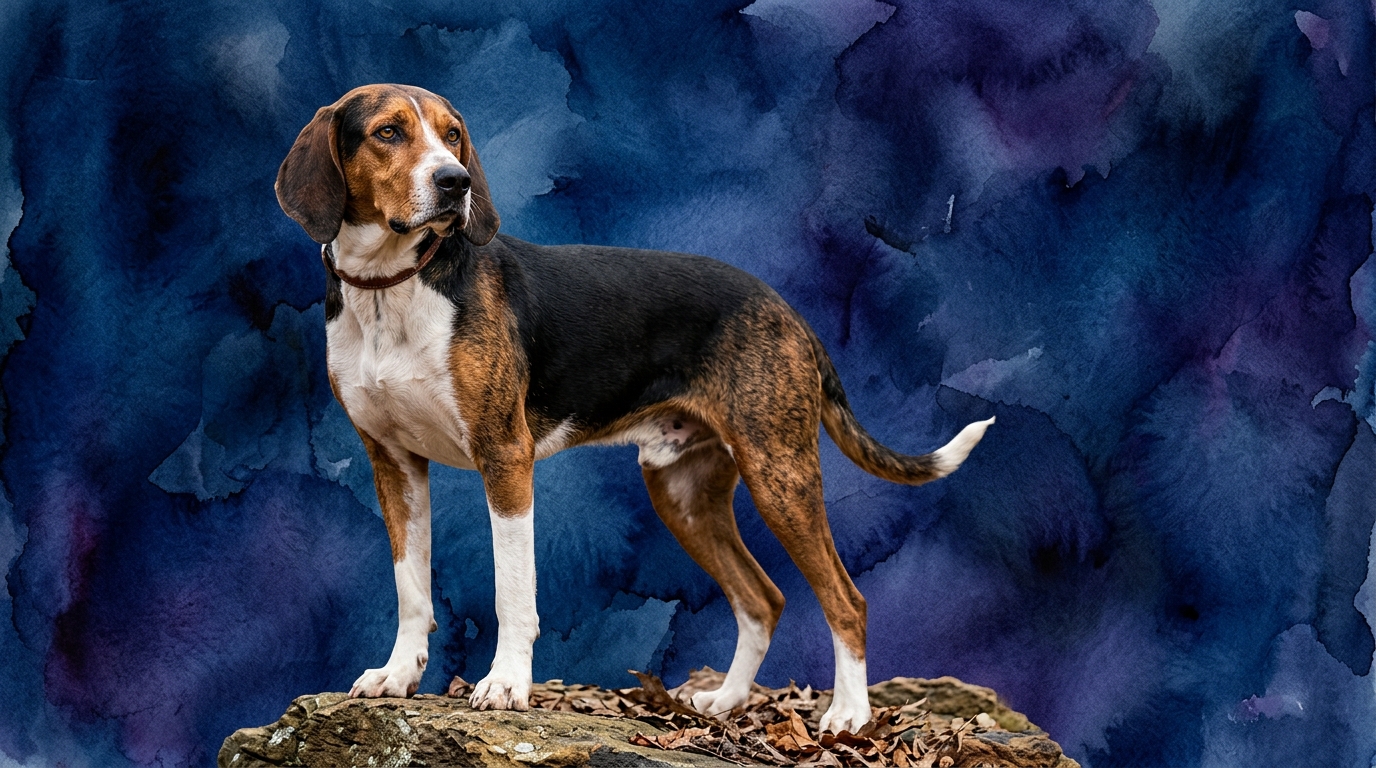
Side-by-Side Cognitive Profile: Deciphering the 3/5 Scores
At The Cosmic Pet Pet IQ Lab, we evaluate canine cognition across several dimensions, and both the Rhodesian Ridgeback (Coren rank #52) and the Treeing Walker Coonhound share a consistent 3/5 rating in each. This moderate score indicates a capable intellect that is neither exceptionally fast-learning nor particularly slow, but rather possesses a balanced and adaptable set of cognitive tools. Understanding what a 3/5 means for each breed requires examining their historical roles and inherent temperaments.
For **Problem Solving (3/5)**, the Rhodesian Ridgeback demonstrates an independent, strategic approach, honed by its historical role in tracking and baying large game. Their problem-solving often involves assessing situations, navigating complex terrains, and making autonomous decisions to manage threats without direct human command. The Treeing Walker Coonhound, with the same 3/5 score, applies its problem-solving acumen to intricate scent puzzles; this involves meticulously following trails, discerning false leads, and strategizing to corner prey in trees, requiring sustained mental focus and spatial awareness over long distances.
In **Training Speed (3/5)**, both breeds learn at a moderate pace, but the nature of the challenge differs. The Rhodesian Ridgeback's independence means they require consistent, clear, and positive reinforcement, often needing to understand the 'purpose' behind a command to fully engage. Their willfulness can sometimes be mistaken for slowness, but it's more about thoughtful compliance. The Treeing Walker Coonhound's 3/5 training speed is influenced by its intense prey drive; their single-minded focus on scent can make redirection challenging, demanding patient and creative methods to maintain attention amidst environmental distractions.
**Social Intelligence (3/5)** in the Rhodesian Ridgeback manifests as deep loyalty and a discerning nature. They form strong bonds with their family but can be reserved or aloof with strangers, indicating a selective social acumen focused on their core pack. The Treeing Walker Coonhound, also at 3/5, typically exhibits a more generally amiable and outgoing social style, often enjoying interaction with a wider circle and demonstrating a strong pack mentality, sometimes expressed through their characteristic vocalizations.
The **Instinctive Drive (3/5)** for the Rhodesian Ridgeback centers on a powerful prey drive, combined with a protective instinct towards their family and territory. This drive is a complex interplay of pursuit, endurance, and judgment, crucial for their original purpose. The Treeing Walker Coonhound's 3/5 instinctive drive is almost exclusively channeled into an unwavering, relentless pursuit of scent. This drive is all-encompassing, defining much of their behavior and requiring significant outlets.
Finally, **Memory (3/5)** for both breeds indicates a solid capacity for recalling learned behaviors, routines, and environmental cues. The Rhodesian Ridgeback remembers boundaries, commands, and the faces of those they trust, aiding in their role as a guardian. The Treeing Walker Coonhound's memory is exceptional when it comes to scent trails and patterns, allowing them to recall specific routes and the location of past successful hunts, crucial for their tracking prowess.
Where the Rhodesian Ridgeback Excels Cognitively
Despite identical scores, the Rhodesian Ridgeback's cognitive strengths lean towards independent decision-making and nuanced social discernment. Their problem-solving, while rated 3/5, uniquely involves assessing dynamic situations and making autonomous judgments, a legacy of confronting dangerous game. This translates into a dog capable of weighing options and acting with a degree of self-sufficiency, rather than merely reacting. Their social intelligence, also 3/5, is particularly adept at identifying and protecting their immediate family unit, displaying a sophisticated understanding of 'us vs. them' in their social interactions.
Furthermore, their memory (3/5) appears particularly strong in retaining complex routines and boundaries, allowing them to adapt well to structured home environments and recall specific training cues even after long periods. This combination of independent thought and discerning social engagement provides the Ridgeback with a distinctive cognitive edge in roles requiring both loyalty and self-reliant action.
Where the Treeing Walker Coonhound Excels Cognitively
The Treeing Walker Coonhound, while sharing the same 3/5 cognitive ratings, truly shines in its specialized application of these capacities, particularly in sustained, focused problem-solving related to scent. Their 3/5 problem-solving isn't about confronting a lion, but about untangling an invisible tapestry of olfactory information, a task requiring extraordinary concentration, pattern recognition, and persistence over vast distances and varied terrain. This singular focus on scent is a testament to their refined cognitive specialization.
Their instinctive drive (3/5) is perhaps their most potent cognitive asset, manifesting as an almost unstoppable dedication to a task once a scent is engaged. This drive fuels an incredible mental stamina and an unwavering commitment to their objective, distinguishing their cognitive profile as one of relentless pursuit and unyielding determination, making them masters of their specific hunting craft.
Training Dynamics: Ease and Challenges
Both breeds hold a 3/5 in Training Speed, indicating a moderate learning curve, but the *nature* of that curve is distinct. The Rhodesian Ridgeback's training often requires a confident and consistent leader who can appeal to their independent and thoughtful nature. They respond best to positive reinforcement and methods that make them feel like a partner, rather than just a subordinate. Challenges arise from their strong will and discerning nature; they may question commands if they don't perceive a clear benefit or if the handler isn't consistent, leading to perceived stubbornness.
The Treeing Walker Coonhound's training, while also 3/5 in speed, is profoundly influenced by their powerful scent drive. They can learn commands quickly in a distraction-free environment, but maintaining focus when a compelling scent is present becomes the primary hurdle. Recall training is paramount and often exceptionally challenging, as their instinct to pursue a trail can override all other commands. Owners must employ high-value rewards and make training feel like an extension of their natural drive, perhaps incorporating scent games to engage their primary motivator, while also managing their characteristic baying vocalizations.
Lifestyle Match: Active vs. Relaxed Owners
Neither the Rhodesian Ridgeback nor the Treeing Walker Coonhound is suited for a truly 'relaxed' owner, as both are robust, active hounds with significant exercise requirements. However, the *type* of activity they thrive on differs. The Rhodesian Ridgeback suits active owners who enjoy varied outdoor pursuits like hiking, running, or structured dog sports such as agility or lure coursing. They need ample physical exercise to be calm and well-behaved indoors, but they also appreciate mental challenges and quality companionship, making them adaptable to a range of active lifestyles.
The Treeing Walker Coonhound, on the other hand, demands an owner whose life revolves around sustained, vigorous outdoor activity, ideally involving scent work or extensive exploration. Their boundless energy and relentless drive mean they are not content with short walks; they require long runs, secure off-leash areas for sniffing and tracking, or participation in actual hunting or competitive scent trials. Their persistent energy and vocal nature make them a less suitable choice for owners seeking a quiet, low-maintenance companion or those with a truly relaxed, sedentary lifestyle.
The Verdict
Choose the Rhodesian Ridgeback if you seek a discerning, protective companion who thrives on varied activities, appreciates a strong bond, and requires an owner capable of guiding an independent spirit with consistent, positive leadership.
Choose the Treeing Walker Coonhound if you are an owner passionate about scent work, long outdoor adventures, and are prepared to embrace a vocal, persistent, and highly driven tracking partner with an insatiable appetite for exploration.
🧠 Find Your Pet's IQ Score
Our Pet IQ Lab assessment covers 25+ tests across 5 cognitive dimensions — personalized to your breed.
Take the Full IQ Test →Frequently Asked Questions
Are Rhodesian Ridgebacks good family dogs?
Yes, Rhodesian Ridgebacks generally form deep bonds with their families, displaying loyalty and a protective instinct. Their 3/5 social intelligence means they are discerning, often reserved with strangers but devoted to their immediate human pack.
How much exercise does a Treeing Walker Coonhound need?
Treeing Walker Coonhounds require substantial daily exercise, far beyond a simple walk. Their 3/5 instinctive drive demands vigorous activities like long runs, extensive scent work, or participation in hunting or competitive dog sports to satisfy their boundless energy and mental stimulation needs.
Can a Treeing Walker Coonhound live in an apartment?
Living in an apartment is generally challenging for a Treeing Walker Coonhound due to their high energy levels, strong vocalizations (baying), and profound need for expansive outdoor activities. While possible with an exceptionally dedicated owner providing multiple hours of vigorous outdoor engagement daily, it's not ideal for their well-being.