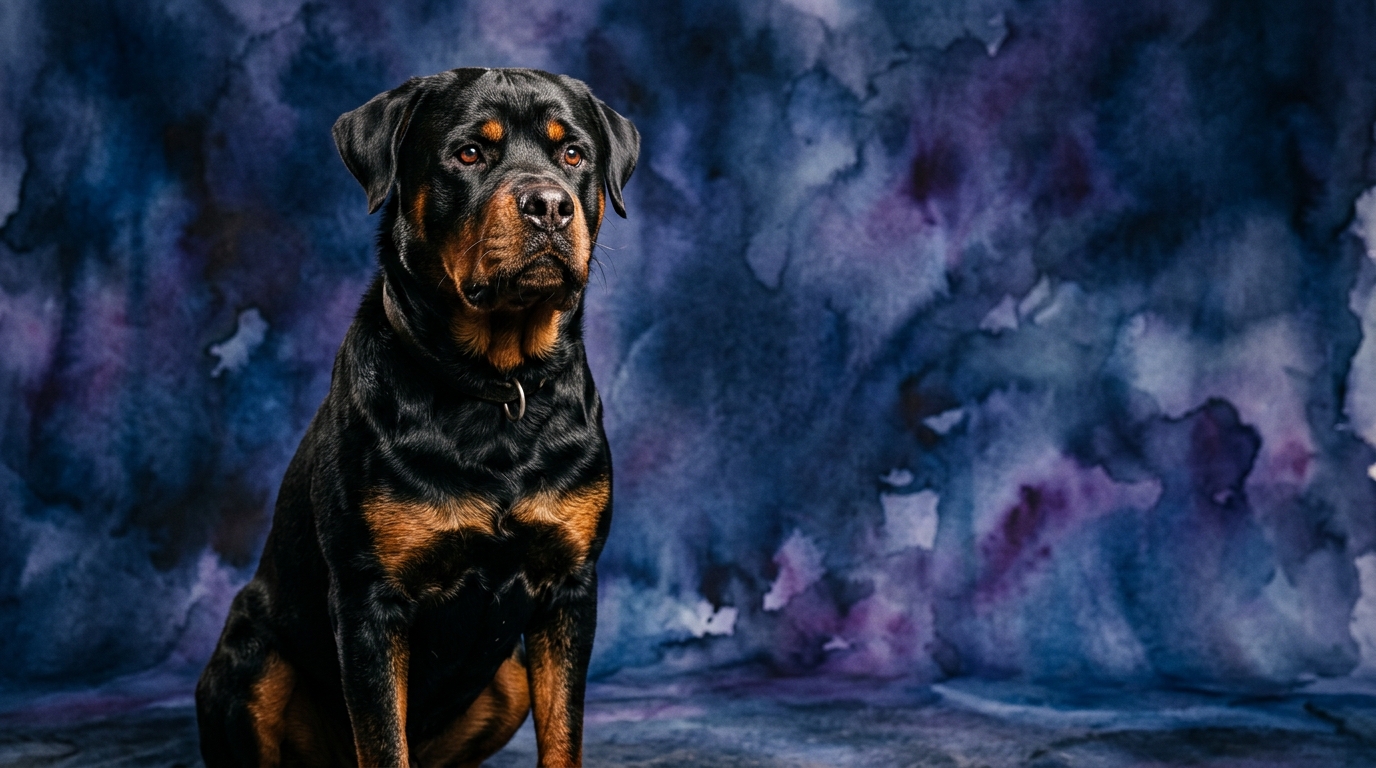
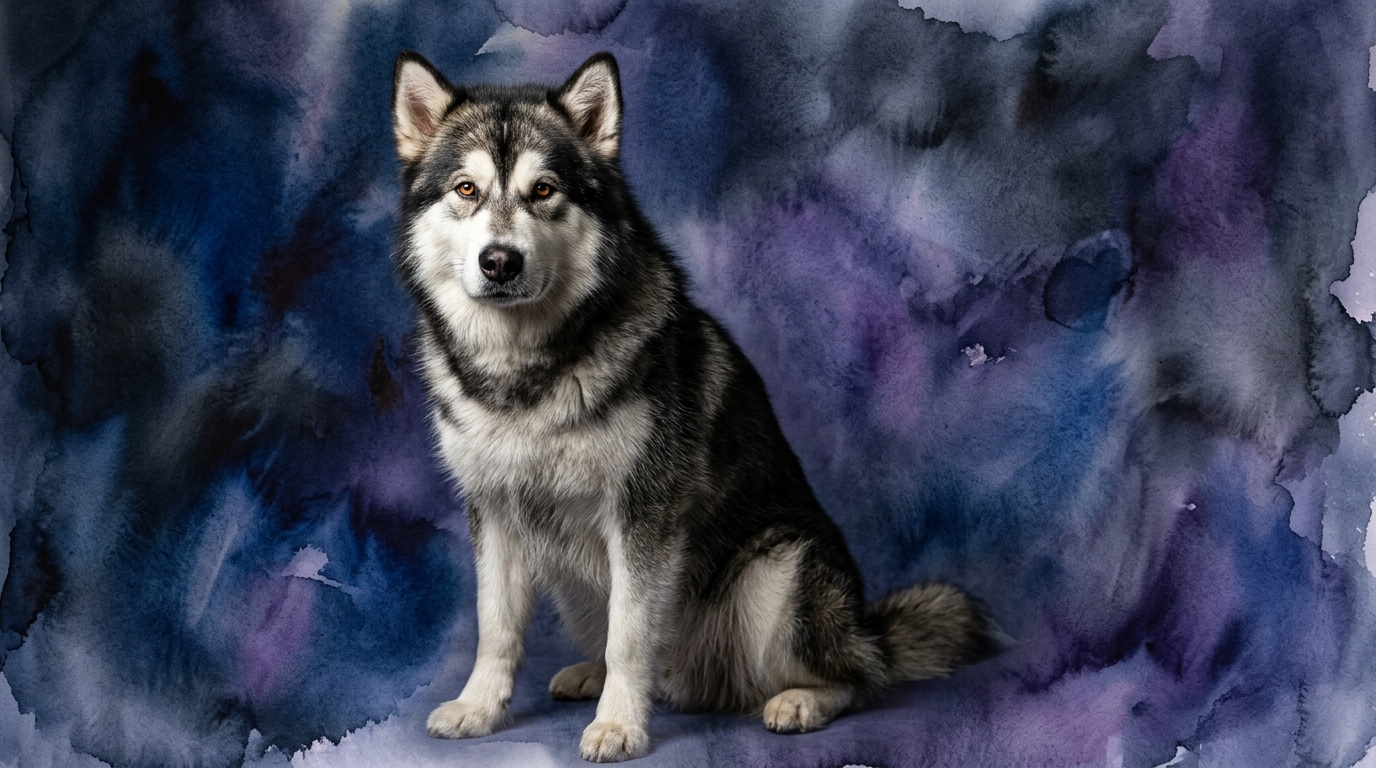
Side-by-Side IQ Profile: Rottweiler vs. Alaskan Malamute
The Cosmic Pet Pet IQ Lab assesses canine intelligence across five critical dimensions, revealing nuanced differences even among breeds sharing a "Working" group designation. The Rottweiler, with a formidable Coren rank of #9, exhibits superior cognitive prowess across the board. Its Problem Solving is rated 5/5, indicating an exceptional capacity to navigate complex situations and devise solutions independently. Training Speed stands at 4/5, suggesting a quick grasp of new commands and routines, while Social Intelligence, at 4/5, reflects a strong understanding of human cues and social structures. Its Instinctive Drive is a perfect 5/5, channeling innate behaviors into purposeful action, and Memory is also 5/5, allowing for excellent retention of learned behaviors and experiences.
In contrast, the Alaskan Malamute, ranking #50 on the Coren scale, presents a different cognitive blueprint. Its Problem Solving is a respectable 4/5, demonstrating solid aptitude for navigating challenges, albeit with perhaps less ingenuity than the Rottweiler. Training Speed is 2/5, pointing to a more deliberate and independent learning pace. Social Intelligence is 3/5, suggesting a self-reliant nature, less inclined to constant human direction. However, its Instinctive Drive matches the Rottweiler at 5/5, reflecting its powerful heritage as a sled dog, while Memory is 4/5, indicating good, though not exceptional, recall. This side-by-side view highlights a divergence in cognitive strengths, with the Rottweiler generally demonstrating a more adaptable and biddable intellect, while the Malamute leans towards robust, independent thought driven by strong primal instincts.
Where the Rottweiler Wins Cognitively
The Rottweiler's cognitive profile positions it as a highly capable and versatile learner, excelling in several key areas. Its perfect 5/5 Problem Solving score means it doesn't merely follow commands; it actively processes its environment to overcome obstacles, a trait invaluable in protection work or competitive dog sports where dynamic decision-making is essential. This is coupled with a 5/5 Memory, ensuring that once a solution or command sequence is learned, it is deeply ingrained and readily recalled, making for reliable performance.
Furthermore, the Rottweiler's 4/5 Training Speed allows it to absorb new information and behaviors rapidly, translating into efficient instruction periods and the ability to master a wide array of tasks from basic obedience to complex multi-stage commands. Its 4/5 Social Intelligence contributes significantly here, meaning it is adept at reading its handler's intentions and emotional state, fostering a strong working partnership based on mutual understanding. The Rottweiler's 5/5 Instinctive Drive, when properly channeled, empowers it with intense focus and determination to complete tasks, whether it's herding, guarding, or excelling in scent work. These combined attributes make the Rottweiler exceptionally adept at structured learning and purpose-driven activities where precision and responsiveness are paramount.
Where the Alaskan Malamute Wins Cognitively
While the Rottweiler often shines in biddability, the Alaskan Malamute possesses a distinct set of cognitive strengths rooted in its heritage as a powerful sled dog operating in harsh, independent environments. Its 5/5 Instinctive Drive is a clear cognitive triumph, manifesting as an unparalleled endurance and an innate understanding of sustained effort, crucial for pulling heavy loads over long distances. This drive isn't just physical; it's a mental fortitude that allows the Malamute to persist through challenges that might deter other breeds, emphasizing resilience and unwavering determination.
The Malamute's 4/5 Problem Solving, though not a perfect score, reflects a robust capacity for independent thought and resourcefulness. In its historical role, it often had to make decisions on its own, navigating complex terrain or finding solutions without direct human instruction, fostering a self-reliant intelligence focused on survival and task completion. Its 4/5 Memory ensures that lessons learned from experience, particularly those related to navigation, resource acquisition, or social dynamics within its pack, are retained effectively. Although its Social Intelligence is rated 3/5, this can be interpreted not as a deficit, but as a preference for a more egalitarian social structure, where it contributes as a partner rather than solely as a subordinate, requiring communication based on respect and clear expectations. These cognitive traits make the Malamute a formidable and self-sufficient thinker, particularly in contexts demanding stamina, independent decision-making, and an unwavering drive to achieve a goal.
Training Ease: Rottweiler vs. Alaskan Malamute
Comparing the training ease of the Rottweiler and the Alaskan Malamute reveals significant differences primarily driven by their respective Training Speed and Social Intelligence scores. The Rottweiler, with a 4/5 Training Speed, demonstrates a quicker uptake of new commands and a stronger desire to please its handler, making it generally easier to train. Its 4/5 Social Intelligence means it is more attuned to human instruction, body language, and vocal cues, readily forming a cooperative partnership. Rottweilers often thrive on having a purpose and receiving clear directives, channeling their powerful 5/5 Instinctive Drive into focused work. This eagerness to learn and comply translates into faster progress in obedience, advanced training, and competitive sports.
In contrast, the Alaskan Malamute's 2/5 Training Speed indicates a more independent and often stubborn learning style. While capable of learning, Malamutes require more patience, repetition, and highly motivating rewards. Their 3/5 Social Intelligence means they are less inclined to automatically defer to human authority and may question the utility of a command, often operating on a "what's in it for me?" principle. Their strong 5/5 Instinctive Drive is geared towards sustained, independent effort rather than immediate biddability, meaning training must be engaging and tap into their natural inclinations for pulling or exploring. Consequently, while both breeds are trainable, the Rottweiler is typically a more straightforward and responsive student, whereas the Malamute demands a more creative, persistent, and understanding approach from its trainer.
Owner Lifestyle Suitability: Active vs. Relaxed
Both the Rottweiler and the Alaskan Malamute are working breeds requiring substantial physical and mental engagement, making neither truly suited for a relaxed, sedentary lifestyle. However, their specific needs cater to different types of active owners. The Rottweiler, with its high Problem Solving (5/5), Instinctive Drive (5/5), and Memory (5/5), thrives on having a job and consistent mental stimulation. Owners who enjoy structured activities like obedience, Schutzhund, agility, or advanced training will find the Rottweiler a willing and capable partner. Its need for purpose means an active owner is one who provides consistent training, challenging puzzles, and opportunities to use its cognitive strengths, beyond just physical exercise. A Rottweiler can be content with less extreme physical exertion than a Malamute, provided its mind is engaged.
The Alaskan Malamute, however, demands a lifestyle centered around strenuous physical activity and independent exploration, driven by its 5/5 Instinctive Drive for endurance work. Owners must be prepared for long hikes, sledding, skijoring, or sustained running. While it also benefits from mental engagement (4/5 Problem Solving), its less biddable nature (2/5 Training Speed) means that mental "work" often involves navigating environments or solving practical challenges on its own terms, rather than strictly following complex commands. A truly active owner for a Malamute is one who embraces outdoor adventures and can manage a dog with a strong prey drive and a propensity for independent roaming. Neither breed is suitable for a truly "relaxed" owner who cannot commit to significant daily engagement, but the type of engagement differs significantly.
The Verdict
Choose a Rottweiler when an owner seeks a highly biddable, purpose-driven companion capable of complex learning and requiring consistent mental engagement for fulfillment.
Choose an Alaskan Malamute when an owner values an independent, resilient partner for adventurous outdoor pursuits, understanding that training will require patience and creative motivation.
🧠 Find Your Pet's IQ Score
Our Pet IQ Lab assessment covers 25+ tests across 5 cognitive dimensions — personalized to your breed.
Take the Full IQ Test →Frequently Asked Questions
Is a Rottweiler harder to manage than a Malamute due to its drive?
While a Rottweiler possesses a formidable instinctive drive, its higher trainability and desire to work with its owner often make it more manageable in a structured environment compared to the Malamute's independent spirit. The Rottweiler’s drive is more readily channeled into directed tasks.
Can an Alaskan Malamute excel in obedience?
An Alaskan Malamute can certainly learn obedience commands, but its lower training speed and independent nature mean it will require more consistent, patient, and reward-based methods, often performing best when it sees a direct benefit. Success relies heavily on the trainer's ability to make learning engaging and personally rewarding for the Malamute.
How does social intelligence differ between these two breeds?
The Rottweiler's 4/5 social intelligence suggests a greater aptitude for understanding human cues and social hierarchies, making it more attuned to its family's dynamics and eager to work in partnership. In contrast, the Malamute's 3/5 points to a more self-reliant approach to social interactions, less reliant on constant human direction and often preferring a more egalitarian relationship.