
Side-by-Side IQ Profile: Dissecting Canine Minds
The Cosmic Pet Pet IQ Lab assesses canine intelligence across five critical dimensions, offering a nuanced view beyond simple rankings. For the Rottweiler, a breed consistently ranked high in Coren's intelligence list at #9, its cognitive profile is robust across the board. Its Problem Solving ability scores a perfect 5/5, indicating a profound capacity to analyze situations, learn complex sequences, and adapt strategies to achieve desired outcomes. Training Speed is rated 4/5, reflecting a quick uptake of new commands and routines, often eager to please and to engage in structured learning. Social Intelligence, at 4/5, highlights their strong understanding of human cues, family dynamics, and their role within a social structure. An Instinctive Drive of 5/5 underscores their inherent protective, guarding, and working predispositions, which are deeply ingrained. Finally, their Memory is exceptional at 5/5, allowing them to retain vast amounts of information, including commands, routines, and experiences over significant periods.
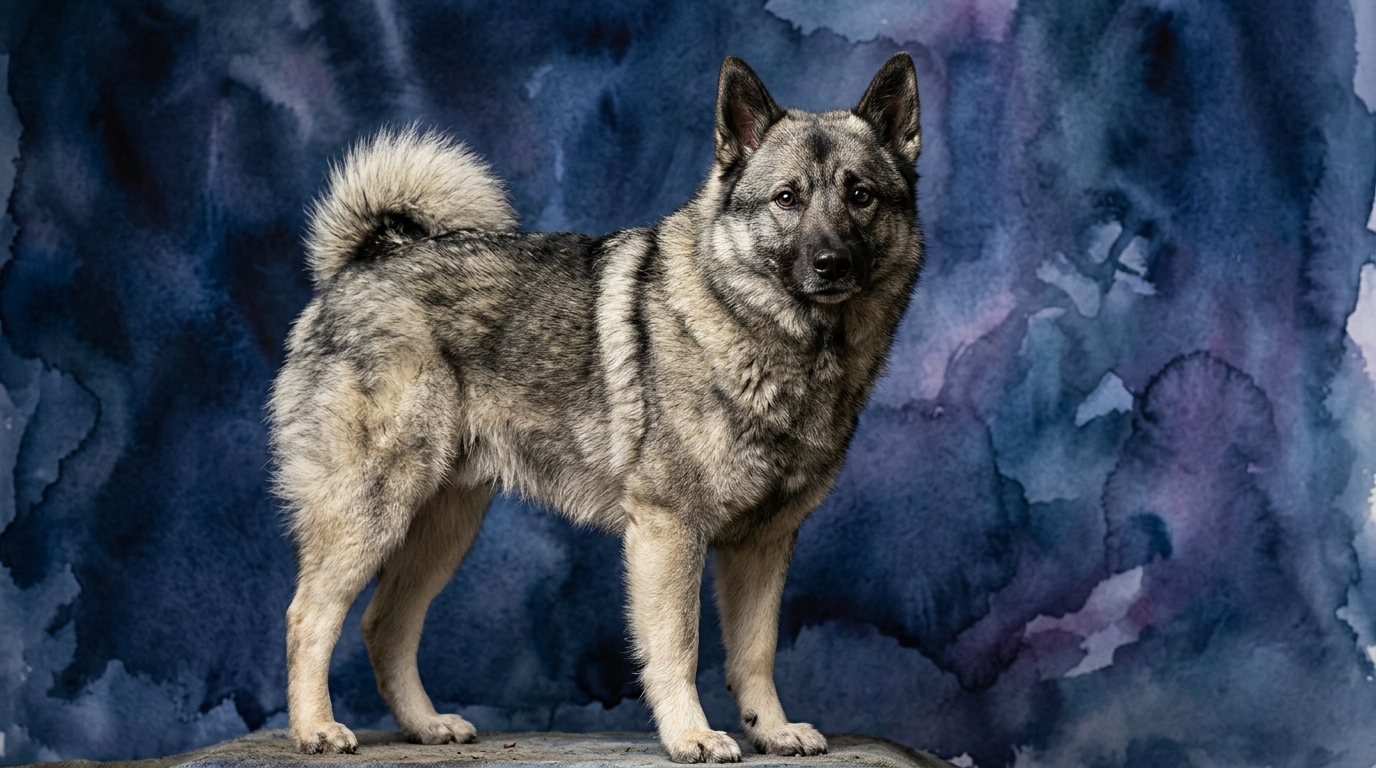
In contrast, the Norwegian Elkhound, positioned at Coren rank #36, presents a different, yet equally specialized, cognitive makeup tailored to its heritage as a hardy hunting companion. Its Problem Solving score of 4/5 points to an astute ability to independently navigate complex environments, track subtle scents, and overcome obstacles in pursuit of game, often relying on its own judgment rather than constant human direction. Training Speed matches the Rottweiler at 4/5, suggesting they learn new tasks efficiently, though their motivation might be more internally driven. Social Intelligence stands at 3/5, indicating a more independent disposition; while they form strong bonds, they may exhibit less overt eagerness to conform to human social hierarchies compared to some working breeds. Their Instinctive Drive, at 3/5, is primarily channeled into tracking, endurance, and vocalizing during the hunt, rather than protection or herding. Memory, rated 4/5, reflects their excellent recall of scents, routes, and learned hunting strategies, crucial for their specialized tasks.
Where the Rottweiler Excels Cognitively
The Rottweiler’s cognitive strengths are particularly evident in its capacity for human-directed tasks and complex social integration. Its perfect 5/5 score in Problem Solving means it can master intricate obedience routines, excel in competitive dog sports like schutzhund, and even perform service work that requires understanding multi-step commands and adapting to novel situations. This isn't just about following orders; it's about processing information and making decisions within a human framework. Their superior Social Intelligence (4/5) allows them to keenly interpret human body language, tone, and emotions, fostering a deep, cooperative bond that is invaluable for tasks requiring close partnership. They are adept at understanding their place within a family unit and can anticipate human needs or intentions, making them exceptional companions and working partners. Furthermore, the Rottweiler’s profound Instinctive Drive (5/5), often directed towards protection and loyalty, combined with their 5/5 Memory, means they reliably apply learned behaviors and protective instincts, remembering who belongs and who doesn't, and recalling training even after long breaks. This cognitive profile makes them highly effective in roles demanding consistent, precise responses and a strong understanding of their human handler.
Where the Norwegian Elkhound Shines Cognitively
While the Rottweiler excels in cooperative tasks, the Norwegian Elkhound's cognitive brilliance lies in its independent problem-solving and tenacity in natural, challenging environments. Its 4/5 Problem Solving score reflects a profound ability to work autonomously, navigating dense forests, rugged terrain, and adverse weather conditions to track game over long distances. This isn't about solving puzzles for a treat; it's about critical thinking in the wild, making decisions on scent trails and optimal routes without constant human instruction. The Elkhound's Instinctive Drive (3/5), though lower than the Rottweiler's, is acutely specialized for hunting, particularly big game like moose. This drive manifests as relentless tracking, stamina, and the distinctive 'barking at bay' behavior, all requiring a specific cognitive focus on scent discrimination and sustained effort. Their 4/5 Memory is vital for recalling complex scent patterns, remembering successful hunting grounds, and navigating back to their handler, even after long periods of independent pursuit. This breed's cognitive architecture is optimized for self-reliance and environmental mastery, making them exceptional at tasks where human interference is minimal and independent judgment is paramount.
Which is Easier to Train and Why
Based on their cognitive profiles, the Rottweiler generally proves easier to train for obedience and cooperative tasks. Their higher Social Intelligence (4/5) means they are more attuned to human commands and desires, often eager to please and work alongside their handlers. Their strong Instinctive Drive (5/5) for working and protection can be readily channeled into structured training, providing a powerful motivational force for learning and compliance. A Rottweiler thrives on clear direction and consistent reinforcement, quickly grasping new concepts due to their 4/5 Training Speed and consolidating them with their 5/5 Memory. In contrast, while the Norwegian Elkhound also possesses a 4/5 Training Speed, its lower Social Intelligence (3/5) and strong independent hunting drive mean it can be more challenging to motivate for conventional obedience. Elkhounds often prefer to make their own decisions, especially when a compelling scent distracts them. Training an Elkhound requires patience, creativity, and understanding of their hound nature, focusing on positive reinforcement and making training feel like a partnership rather than strict command-and-control, as their independent spirit can sometimes be mistaken for stubbornness.
Suitability for Active vs. Relaxed Owners
For active owners seeking a highly engaged, cooperative partner who thrives on mental and physical challenges, the Rottweiler is an excellent match. Their high Problem Solving, Social Intelligence, and Instinctive Drive mean they require consistent mental stimulation through training, puzzles, and structured activities, alongside significant physical exercise. They are not content to be couch potatoes and need an owner committed to harnessing their considerable cognitive and physical abilities through consistent work or sport. Owners who enjoy competitive obedience, protection sports, or extensive training will find a Rottweiler incredibly rewarding.
Conversely, the Norwegian Elkhound is better suited for active, outdoors-oriented owners who appreciate an independent spirit and are prepared to engage with their dog's primal instincts. While they can be calm indoors, Elkhounds require substantial physical activity, ideally in varied outdoor environments where their tracking instincts can be satisfied through long hikes, scent work, or even participation in activities like canicross. They thrive with owners who understand their need for freedom and exploration, and who can provide outlets for their independent problem-solving and scent-driven pursuits without expecting constant, rigid obedience. They are a wonderful fit for adventurous individuals or families who embrace outdoor living.
The Verdict
Choose a Rottweiler if you desire a highly trainable, deeply cooperative companion eager to work alongside you, excelling in structured tasks and social integration.
Opt for a Norwegian Elkhound if you value an independent, resilient partner for outdoor adventures, one whose cognitive strengths lie in autonomous problem-solving and scent-driven exploration.
🧠 Find Your Pet's IQ Score
Our Pet IQ Lab assessment covers 25+ tests across 5 cognitive dimensions — personalized to your breed.
Take the Full IQ Test →Frequently Asked Questions
Are Rottweilers good family dogs?
Yes, Rottweilers can be exceptional family dogs due to their high Social Intelligence (4/5) and strong instinctive drive for protection (5/5). They form deep bonds with their families, often acting as devoted guardians, provided they receive proper socialization and consistent training from a young age.
Do Norwegian Elkhounds require a lot of exercise?
Absolutely. Norwegian Elkhounds possess an Instinctive Drive of 3/5, primarily geared towards endurance and tracking, reflecting their hunting heritage. They need significant daily exercise, including long walks, runs, or hikes, to satisfy their physical and mental demands and prevent boredom.
Which breed is better for first-time dog owners?
Neither breed is typically recommended for inexperienced first-time owners without significant commitment to training and understanding breed-specific needs. Rottweilers require confident leadership and consistent training, while Elkhounds demand patience with their independence and outlets for their strong prey drive, making both better suited for owners with some prior dog experience.