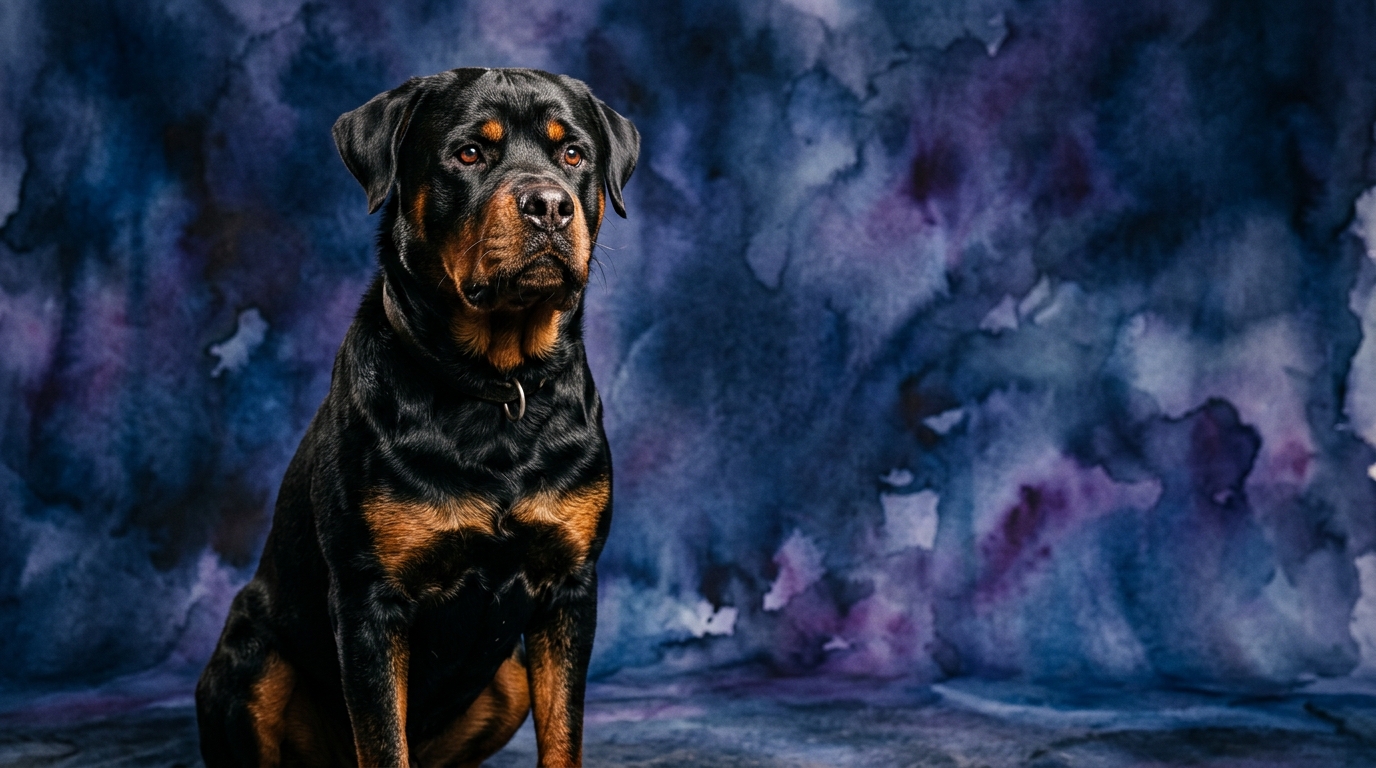
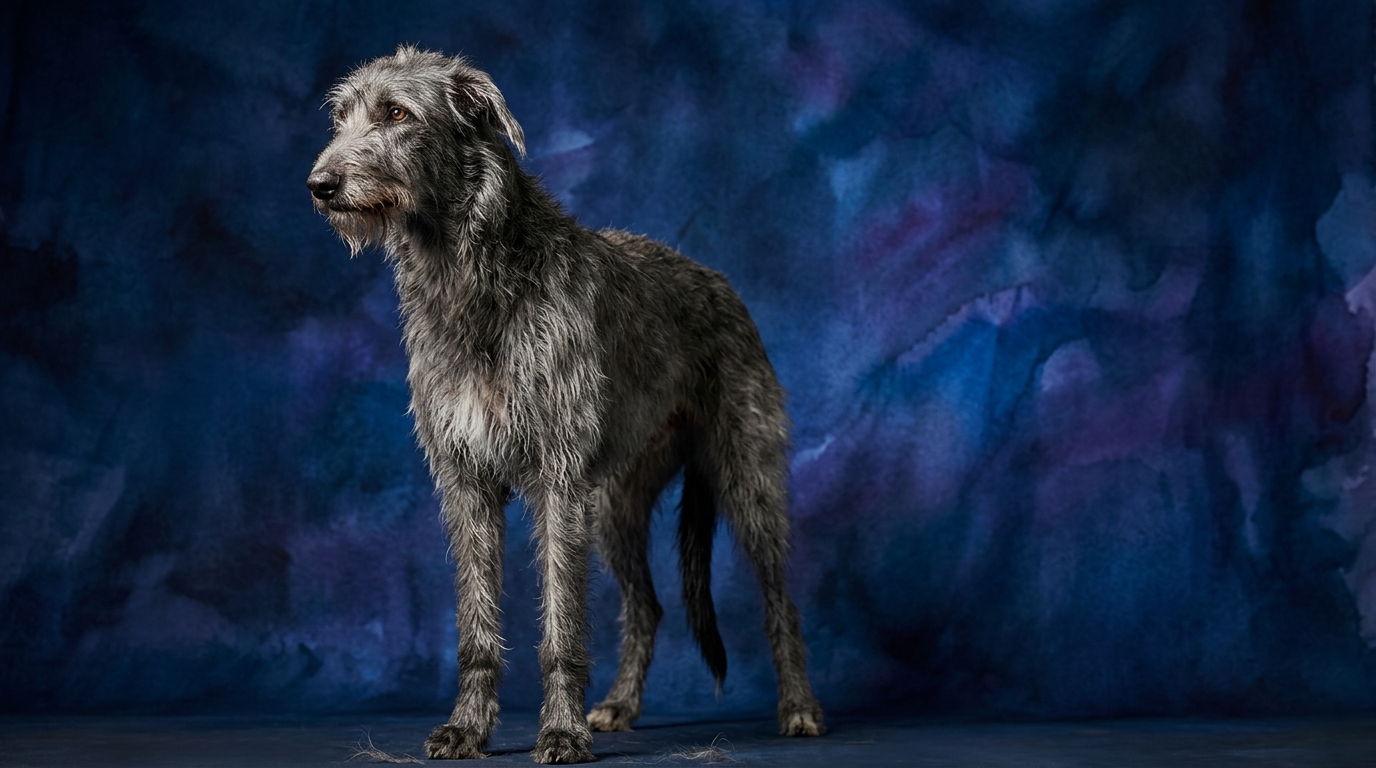
Side-by-Side Cognitive Profiles: Rottweiler vs. Scottish Deerhound
The Cosmic Pet Pet IQ Lab employs a five-dimensional framework to assess canine intelligence, offering a nuanced view beyond simple obedience. For the Rottweiler, a Coren rank #9 Working breed, its profile reflects a powerful, task-oriented mind. Its Problem Solving is rated 5/5, indicating a robust capacity for understanding complex sequences and adapting strategies to achieve goals, often involving multiple steps or obstacles. They excel at figuring out how to open gates, retrieve specific items, or navigate intricate environments. Training Speed is 4/5, meaning they learn new commands and routines with impressive efficiency, often grasping concepts after only a few repetitions; their eagerness to engage and strong focus contribute to this rapid assimilation. Social Intelligence stands at 4/5, demonstrating a nuanced understanding of human cues and social hierarchies within their family unit, interpreting moods, anticipating intentions, and responding appropriately. An Instinctive Drive of 5/5 highlights powerful innate impulses for guarding, herding, and protection, channeling these into purposeful tasks and vigilance. Finally, Memory is 5/5, indicating retention of learned information, commands, and experiences over extended periods with remarkable accuracy, contributing to consistency and reliability.
The Scottish Deerhound, a majestic Hound breed not Coren-ranked, presents a different set of cognitive strengths, reflective of its independent hunting heritage. Its Problem Solving is 3/5, approaching challenges with a more direct, often instinct-driven method. While capable of solving problems related to their environment or obtaining desired objects, their solutions tend to be less intricate or multi-staged than breeds bred for complex tasks, often relying on speed and agility. Training Speed is 3/5, learning at a moderate pace and sometimes requiring more repetition and patience due to their independent nature; they may not always be as driven to perform for human approval. Social Intelligence is 3/5, displaying a sensitive and gentle social nature, forming deep bonds with their immediate family, but their interactions can be more reserved or independent, not constantly seeking to interpret every human nuance. Their Instinctive Drive is 3/5, primarily driven by sighthound instincts for pursuit and independent hunting, manifesting as a strong urge to chase moving objects, a focused, singular drive rather than a broad, task-oriented set. Memory is 3/5, possessing a functional memory for routines and familiar people, but perhaps not retaining complex command sequences or intricate learned behaviors with the same precision or longevity as breeds with higher scores, focusing on essential environmental navigation and family recognition.
Where the Rottweiler Excels Cognitively
The Rottweiler's cognitive strengths are deeply rooted in its heritage as a working dog, requiring both physical and mental fortitude. Their superior problem-solving ability (5/5) means they don't just follow commands; they understand the objective and can strategize to overcome obstacles, whether it's navigating a complex obedience course or figuring out how to retrieve a dropped item from a difficult spot. This strategic thinking is paired with an impressive memory (5/5), allowing them to recall extensive repertoires of commands, remember specific people and places, and learn from past experiences with lasting retention. Owners often observe their Rottweilers remembering complex routines or specific training exercises months after they were last practiced, a testament to their robust recall. Furthermore, their instinctive drive (5/5) is highly adaptable and can be channeled into diverse working roles, from protection and herding to therapy and search and rescue. This drive isn't just raw energy; it's a cognitive engine that fuels their dedication and focus on tasks, making them relentless in their pursuit of goals set by their human partners. This blend of strong memory, strategic problem-solving, and directed drive positions the Rottweiler as a breed that thrives on mental engagement and purposeful activity.
Where the Scottish Deerhound Excels Cognitively
While the Scottish Deerhound’s cognitive profile differs from the Rottweiler’s, their strengths are uniquely tailored to their original purpose: the pursuit of deer across vast, open landscapes. Their problem-solving (3/5), while not focused on intricate human-directed tasks, excels in real-time, independent decision-making during a chase. A Deerhound can assess terrain, anticipate prey movement, and adjust its course in milliseconds, a sophisticated form of situational intelligence that doesn't require human input. Their instinctive drive (3/5) is a highly specialized form of intelligence; it's the singular, powerful urge to spot and pursue, which demands incredible focus and sensory processing over long distances. This isn't a drive to please, but a drive to hunt, requiring independent judgment and rapid response to visual stimuli. Their social intelligence (3/5), though not outwardly effusive, is characterized by a quiet sensitivity and a deep, often reserved, connection to their family. They are known for their gentle nature and their ability to pick up on subtle emotional cues within their immediate circle, often displaying a calm, empathetic presence rather than an active, task-oriented social engagement. This form of understanding emphasizes quiet companionship and a discerning approach to social interaction, valuing depth over broad social outreach.
Training Ease and Behavioral Differences
When it comes to ease of training, the Rottweiler generally presents a more straightforward path. Their high training speed (4/5) means they grasp new commands quickly, often with just a few repetitions. This is bolstered by their strong social intelligence (4/5), which makes them attentive to human directives and eager to engage in collaborative tasks. Their powerful instinctive drive (5/5) for work and protection, when properly channeled, translates into a desire to perform and please their handler, making them highly responsive to consistent, positive reinforcement. Real behavioral differences include the Rottweiler's natural inclination to look to their human for guidance and their capacity for sustained focus on a given task. In contrast, the Scottish Deerhound’s training speed (3/5) is moderate, and their independent nature means they may require more patience and creative motivation. Their primary instinctive drive (3/5) is pursuit, not necessarily human-directed cooperation. This can manifest as a tendency to follow their nose or eyes rather than a command, especially in stimulating environments. While they are affectionate, their social intelligence (3/5) is often expressed through quiet companionship rather than an overt eagerness to obey every instruction. This means a Deerhound might understand a command but choose to evaluate its personal relevance before complying, requiring an owner who appreciates their independent spirit and employs engaging, reward-based methods to keep them interested.
Suited for Active vs. Relaxed Owners
The cognitive makeup of these two breeds dictates vastly different ideal living situations and owner personalities. The Rottweiler, with its high problem-solving (5/5), strong instinctive drive (5/5), and robust memory (5/5), thrives with active owners who provide consistent mental and physical engagement. These dogs require structured training, regular opportunities to use their problem-solving skills in activities like obedience, scent work, or protection sports, and ample physical exercise. An owner who is prepared to be a consistent leader, provide clear boundaries, and channel their Rottweiler's immense drive into purposeful activities will find a dedicated and fulfilled companion. Without sufficient mental stimulation and a job to do, a Rottweiler can become bored and potentially channel their considerable intelligence and energy into undesirable behaviors. Conversely, the Scottish Deerhound, while appearing stately and calm indoors, requires owners who understand their unique needs for intense, albeit often sporadic, bursts of activity. Their primary instinctive drive (3/5) for pursuit means they need safe, expansive areas where they can gallop freely and express their sighthound nature. While they may seem relaxed indoors, this 'relaxation' is often a conservation of energy for when their chase drive is triggered. Relaxed owners in terms of constant command-and-response training might find the Deerhound more aligned with their style, provided they can offer the necessary outlets for independent running and are comfortable with a dog that values its own counsel in certain situations. They are not dogs that require constant 'work' in the traditional sense, but they do demand specific outlets for their inherent athleticism and independent spirit.
The Verdict
Opt for a Rottweiler if you seek a highly trainable, dedicated working companion eager for structured mental challenges and a clear leadership role. They excel with owners prepared to invest significantly in consistent training, purposeful activities, and robust socialisation.
A Scottish Deerhound is better suited for owners who appreciate an independent, gentle companion and can provide access to large, secure areas for exhilarating off-leash runs, valuing quiet companionship over constant task-oriented engagement.
🧠 Find Your Pet's IQ Score
Our Pet IQ Lab assessment covers 25+ tests across 5 cognitive dimensions — personalized to your breed.
Take the Full IQ Test →Frequently Asked Questions
Is a Rottweiler difficult to manage due to its strong drives?
A Rottweiler's powerful instinctive drive (5/5) and problem-solving ability (5/5) mean they require consistent, firm, and positive training from an early age. When properly channeled, these traits make them dedicated and reliable companions, but without guidance, they can become challenging.
Do Scottish Deerhounds require a lot of exercise despite their calm indoor demeanor?
Yes, despite their relaxed indoor presence, Scottish Deerhounds need regular opportunities for intense, free running to satisfy their instinctive drive (3/5) for pursuit. They are built for speed and require safe, expansive outdoor spaces to truly thrive.
How do these breeds typically interact with strangers or other animals?
Rottweilers (social intelligence 4/5) are typically reserved with strangers and can be protective, requiring careful socialization. Scottish Deerhounds (social intelligence 3/5) are generally gentle and polite, but their sighthound instincts may lead them to chase smaller animals if not properly managed.