
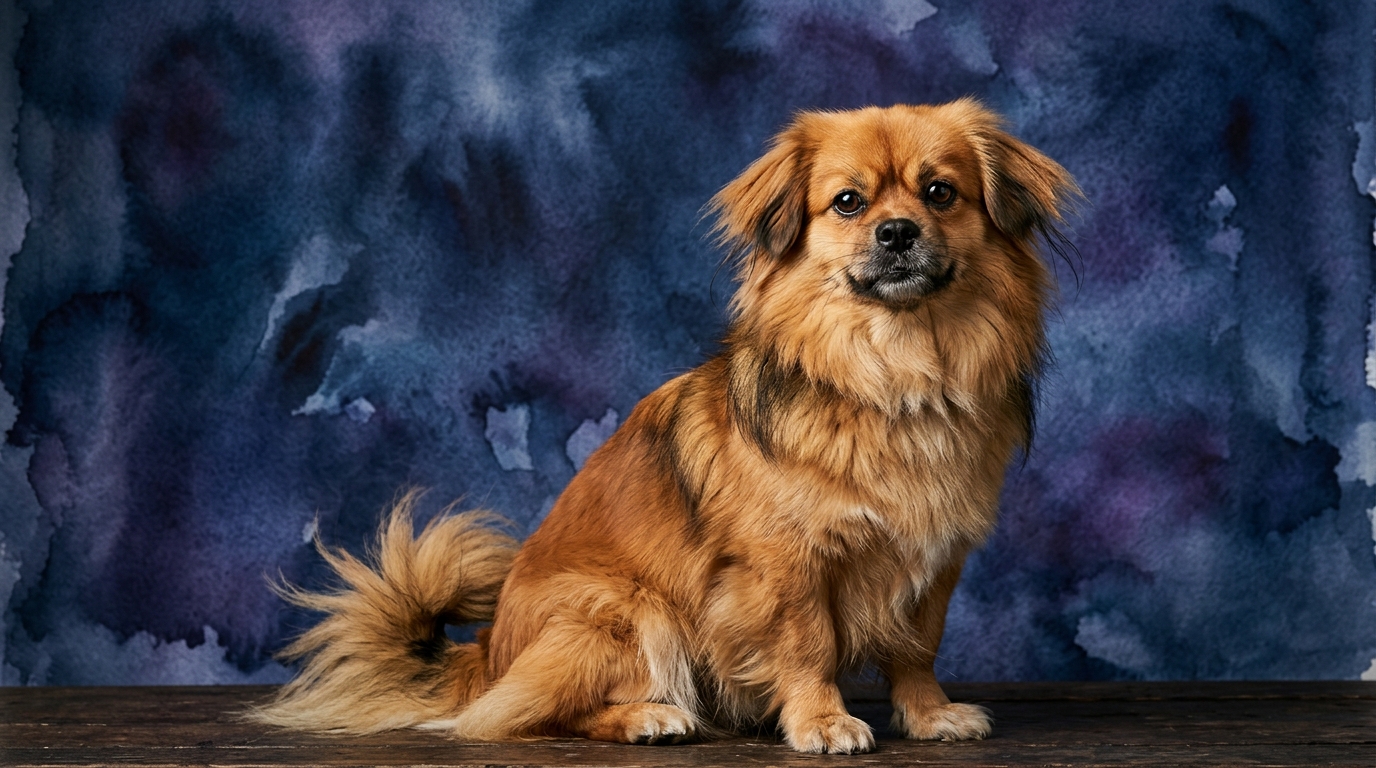
Side-by-Side Cognitive Profiles: Rottweiler vs. Tibetan Spaniel
The Cosmic Pet Pet IQ Lab provides a structured framework for understanding canine cognitive dimensions. For the Rottweiler, classified as a Working breed and holding a Coren rank of #9, their profile indicates exceptional aptitudes. They score 5/5 in Problem Solving, reflecting a profound capacity for navigating complex situations and deciphering novel challenges. Their Training Speed is rated 4/5, signifying a rapid uptake of commands and the ability to link actions to consequences efficiently. Social Intelligence at 4/5 points to a strong awareness of human emotional states and group dynamics, enabling nuanced interactions. An Instinctive Drive of 5/5 highlights their deep-seated motivation for purpose-driven activities, often involving protection or task completion. Finally, their Memory at 5/5 demonstrates an outstanding ability to retain learned behaviors, routines, and experiences over extended periods.
In contrast, the Tibetan Spaniel, a Non-Sporting companion breed without a specific Coren ranking, presents a different cognitive blueprint. They register 3/5 in Problem Solving, suggesting competence in managing everyday situations and simpler environmental puzzles, but a lesser inclination for intricate, multi-step solutions. Their Training Speed is also 3/5, indicating a steady learning pace that benefits from consistent, positive reinforcement rather than rapid assimilation. Social Intelligence at 3/5 implies they are attentive to their human companions but often possess a more independent and discerning social approach, valuing personal space alongside affection. An Instinctive Drive of 3/5 signifies a moderate inherent motivation, typically focused on companionship, alertness, and exploring their immediate surroundings. Their Memory, rated 3/5, means they adequately retain information for daily routines and established behaviors, though perhaps not with the same depth or immediate recall as breeds with higher scores.
Where the Rottweiler Excels Cognitively
The Rottweiler's cognitive strengths are evident across multiple domains, largely stemming from their working heritage. Their 5/5 Problem Solving score means they are adept at analytical thinking, capable of devising strategies to overcome obstacles or complete intricate tasks. This manifests in their ability to learn complex sequences of actions, understand abstract concepts like 'stay' across varying contexts, and even distinguish between different intruders or threats. Their exceptional Memory (5/5) underpins this, allowing them to recall vast repertoires of commands, associate specific cues with actions, and remember individuals or locations with precision over time.
Furthermore, the Rottweiler's 5/5 Instinctive Drive fuels their engagement with training and tasks, providing a powerful internal motivation to learn and perform. This drive, combined with their 4/5 Training Speed, allows them to master new skills with fewer repetitions compared to many other breeds. For owners seeking a dog capable of advanced obedience, protection work, or complex service roles, the Rottweiler's cognitive profile makes them highly responsive to structured learning environments and mentally stimulating challenges. Their social intelligence also allows them to interpret human intentions and respond appropriately within a working partnership.
Where the Tibetan Spaniel Shines Cognitively
While the Tibetan Spaniel's cognitive scores are generally moderate, their strengths lie in their nuanced approach to companionship and environmental awareness. Their 3/5 Social Intelligence, for example, translates into a discerning and often subtle understanding of their human family. They are not overtly demonstrative but are keenly observant, often anticipating household routines or responding to slight shifts in mood, making them excellent, intuitive companions. This allows them to integrate smoothly into family life, adapting to various social situations with a quiet confidence.
The Tibetan Spaniel's moderate Instinctive Drive (3/5) is also a distinct advantage for certain lifestyles. Unlike breeds with intense working drives, Tibetan Spaniels are generally content with less demanding physical and mental stimulation, making them highly adaptable to apartment living or a more relaxed pace. Their problem-solving (3/5) often manifests in clever ways to secure comfort or attention within their home environment, rather than solving complex puzzles. They excel at being alert and attentive watchdogs, using their keen senses to detect unusual sounds or sights, and their memory (3/5) ensures they reliably recall who belongs and who doesn't, making them effective sentinels for their size.
Training Aptitude: Which is Easier and Why?
When considering ease of training, the Rottweiler generally presents a more straightforward path for experienced owners due to their higher cognitive scores. Their 4/5 Training Speed means they assimilate new commands quickly, often requiring fewer repetitions and responding well to consistent, structured methods. Coupled with their 5/5 Problem Solving and Instinctive Drive, Rottweilers actively seek to understand and engage with their training, thriving on purpose and clear direction. They are motivated by the opportunity to work alongside their human, making them highly receptive to positive reinforcement and command-based learning.
The Tibetan Spaniel, with a 3/5 Training Speed, requires a different approach. While capable of learning, they may take more time to grasp concepts and might display a more independent streak, occasionally choosing whether or not to comply. Their moderate Instinctive Drive means they might not possess the same inherent desire to 'work' or please in a traditional sense. Successful training with a Tibetan Spaniel hinges on patience, highly engaging positive reinforcement, and keeping sessions short and fun to maintain their interest. Understanding their companion-oriented yet somewhat independent nature is key; they respond best when training feels like a positive interaction rather than a demanding task.
Lifestyle Match: Active Owners vs. Relaxed Owners
The Rottweiler's robust cognitive and physical profile makes them an ideal match for active, engaged owners who are prepared to invest significantly in their dog's mental and physical well-being. Their high Instinctive Drive (5/5) and Problem Solving (5/5) mean they require consistent mental stimulation through advanced training, puzzle toys, and engaging activities to prevent boredom and destructive behaviors. Physically, they thrive on regular, vigorous exercise, whether it's long walks, jogging, or dog sports. Owners who enjoy an active lifestyle and are committed to providing a clear leadership role and consistent training will find the Rottweiler to be a rewarding and loyal companion.
Conversely, the Tibetan Spaniel is better suited for owners seeking a more relaxed pace of life, though they still require daily engagement. Their moderate Instinctive Drive (3/5) means they are content with regular, but not necessarily intense, walks and indoor play. While they enjoy mental stimulation, it doesn't need to be as rigorous or constant as with a Rottweiler. Owners who appreciate a devoted, alert companion that enjoys cuddling on the couch as much as a stroll around the block will find a Tibetan Spaniel to be an excellent fit. They thrive on companionship and consistent, gentle interaction, making them superb partners for individuals or families with less demanding schedules.
The Verdict
Choose a Rottweiler if you are an experienced, active owner seeking a highly trainable, purpose-driven canine partner capable of complex tasks and committed protection. Be prepared to dedicate significant time to their mental and physical enrichment.
Choose a Tibetan Spaniel if you desire an alert, independent yet affectionate companion for a more relaxed lifestyle, appreciating their discerning social nature and moderate exercise needs. They thrive with patient, consistent positive reinforcement.
🧠 Find Your Pet's IQ Score
Our Pet IQ Lab assessment covers 25+ tests across 5 cognitive dimensions — personalized to your breed.
Take the Full IQ Test →Frequently Asked Questions
Do Rottweilers require extensive mental exercise?
Yes, Rottweilers, with their 5/5 Problem Solving and Instinctive Drive, thrive on extensive mental stimulation. Without challenging tasks, puzzle toys, and consistent training, they can become bored and develop undesirable behaviors, reflecting their inherent need for purpose.
Are Tibetan Spaniels difficult to train due to their independence?
Tibetan Spaniels are not inherently difficult, but their 3/5 Training Speed and moderate drive mean they respond best to patient, positive reinforcement and shorter, engaging sessions. Their independent nature requires understanding and motivation through reward rather than force, making consistency key.
Which breed is better for first-time dog owners?
For first-time dog owners, the Tibetan Spaniel's more moderate needs in terms of exercise and training intensity often make them a more manageable choice. The Rottweiler's powerful drives and cognitive demands typically require an owner with prior experience in canine training and behavior.