
Side-by-Side Cognitive Profiles: Decoding Canine Minds
The Cosmic Pet Pet IQ Lab employs a five-dimensional framework to assess canine intelligence, providing a granular view of each breed’s mental landscape. For the Rottweiler, a Working dog with a Coren rank of #9, its profile reveals a robust cognitive architecture: Problem Solving 5/5, Training Speed 4/5, Social Intelligence 4/5, Instinctive Drive 5/5, and Memory 5/5. This suggests a dog with a profound capacity for independent thought, rapid learning, strong social acumen, powerful innate motivations, and exceptional recall.
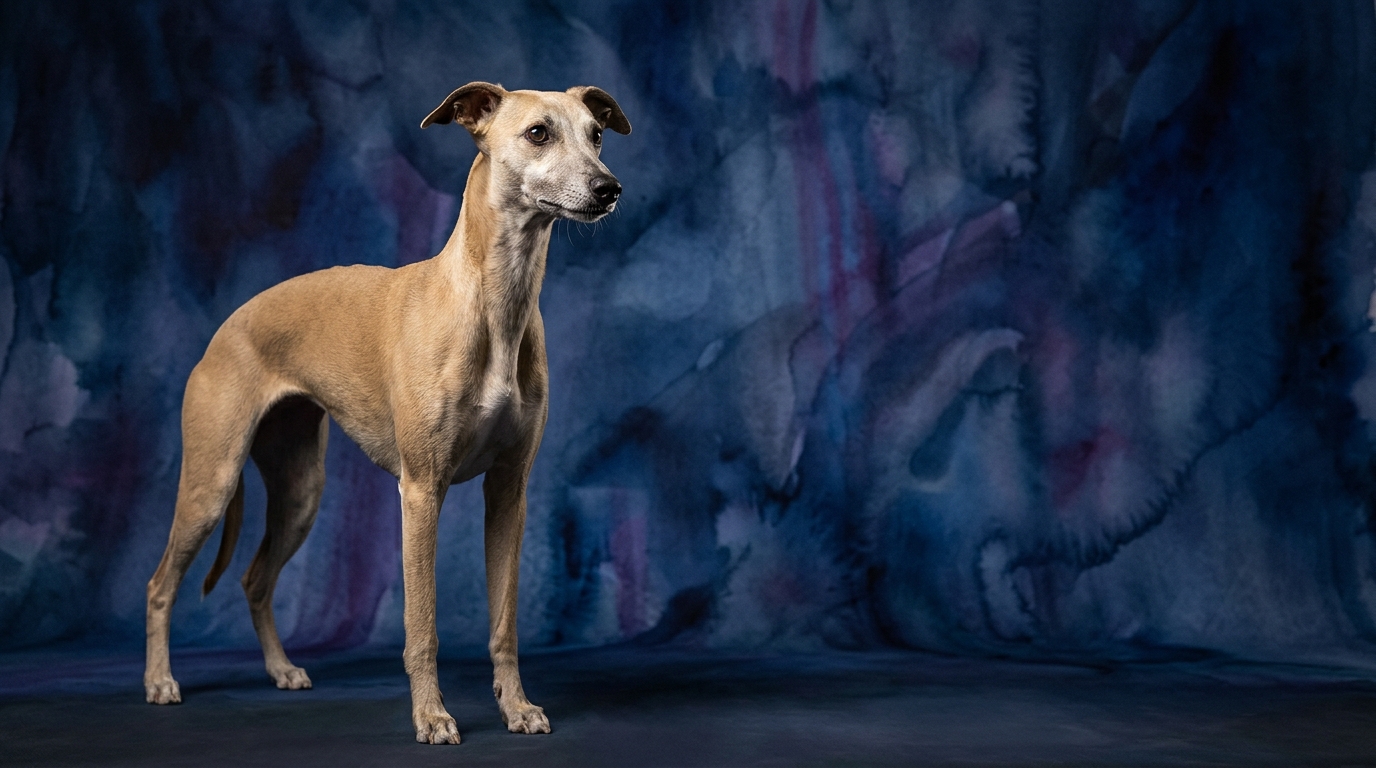
In contrast, the Whippet, a Hound breed holding Coren rank #51, presents a different cognitive blueprint: Problem Solving 3/5, Training Speed 2/5, Social Intelligence 4/5, Instinctive Drive 5/5, and Memory 3/5. This indicates a dog that approaches new challenges with moderate independence, learns at a more measured pace, possesses a similar level of social understanding, an equally strong but differently expressed instinctive drive, and a moderate capacity for long-term retention. These distinct profiles underscore how breed-specific roles have influenced cognitive development over generations.
Where the Rottweiler's Cognition Excels
The Rottweiler's cognitive strengths are particularly evident in its superior problem-solving abilities and memory. Scoring a perfect 5/5 in both, this breed demonstrates a remarkable capacity for independent thought and retention. When confronted with a novel obstacle, a Rottweiler is more likely to assess the situation, strategize, and execute a solution rather than relying solely on instinct or human direction. For instance, if a gate is partially ajar, a Rottweiler might quickly figure out how to push it open, whereas a Whippet might wait for assistance or explore simpler alternatives.
Their exceptional memory allows them to recall complex sequences of commands, past training sessions, and even subtle environmental cues, making them adept at tasks requiring sustained focus and intricate understanding. This robust cognitive architecture, combined with a 5/5 instinctive drive, means they are not just capable of learning but are also driven to apply that learning in practical scenarios, often involving protection or service. Their strong working heritage translates directly into a mind that thrives on purposeful activity and mental engagement, seeking out intellectual challenges rather than shying away. This makes them particularly suited for roles demanding high levels of discernment and consistent application of learned skills over time.
The Whippet's Unique Cognitive Strengths
While the Whippet may not match the Rottweiler in raw problem-solving or memory scores, its cognitive profile shines in different, equally valuable ways, particularly within social intelligence and instinctive drive. With a 4/5 in social intelligence, the Whippet exhibits an acute sensitivity to human emotions and social dynamics, making them incredibly empathetic companions. They are often quick to pick up on a change in mood, offering comfort or space as needed, demonstrating a nuanced understanding of their human family's internal states.
This social acumen, combined with a profound 5/5 instinctive drive, primarily oriented towards their sighthound heritage, means they excel in activities that tap into this innate motivation, such as lure coursing or fast-paced games. Their drive is less about complex task completion and more about the exhilarating pursuit and the simple joy of movement. Furthermore, their moderate problem-solving (3/5) and training speed (2/5) scores don't indicate an inability to learn, but rather a preference for efficiency and a strong self-preservation instinct that prioritizes comfort and immediate gratification. They are masters of conserving energy, often choosing the path of least resistance, which in a home environment translates to an adaptable and generally low-maintenance companion once their exercise needs are met. Their strength lies in their intuitive social connection and their highly specialized physical and mental attributes for bursts of speed and observation.
Ease of Training: A Tale of Two Temperaments
When comparing ease of training, the Rottweiler generally presents a more straightforward experience due to its higher scores in both problem-solving (5/5) and training speed (4/5). A Rottweiler’s capacity for understanding complex commands and its inherent desire to work and please its handler mean it often grasps new concepts quickly, requiring fewer repetitions. For example, teaching a multi-step obedience routine or a specific protective task will likely see a Rottweiler making rapid progress, internalizing the sequence and purpose with relative ease. Their strong memory (5/5) ensures that once a command is learned, it is retained effectively, leading to reliable performance, even under distracting conditions.
In contrast, the Whippet’s training speed (2/5) suggests a different approach is needed. While certainly capable of learning, a Whippet often requires more patience, consistency, and positive reinforcement to embed new behaviors. Their moderate problem-solving (3/5) means they might not always connect the dots as quickly in complex scenarios, and their strong instinctive drive (5/5) is often geared towards chasing or comfort rather than intricate obedience. For instance, recall in a high-distraction environment might be more challenging for a Whippet, as its sighthound instincts could override a learned command if a compelling visual stimulus appears. Whippets are not stubborn, but rather self-directed and efficient, often questioning the necessity of a command if it doesn't align with their immediate comfort or natural inclinations. Success with a Whippet hinges on making training fun, rewarding, and relevant to their natural drives, rather than expecting rote compliance.
Active vs. Relaxed Owners: Matching Minds and Lifestyles
For owners seeking an active partnership steeped in mental and physical engagement, the Rottweiler is often the more suitable choice. Their 5/5 instinctive drive and 5/5 problem-solving capabilities mean they thrive when given a “job” or a consistent intellectual challenge. These dogs require regular, structured activities that tap into their robust cognitive architecture, such as advanced obedience, protection work, tracking, or even complex puzzle toys. A Rottweiler needs an owner who can commit to daily mental stimulation and consistent training to channel their formidable drive and intellectual capacity productively. Without sufficient outlets for their mental energy, a Rottweiler can become bored or destructive, manifesting their powerful problem-solving skills in ways unintended by their owner. They excel with individuals who appreciate a canine companion that is an active participant in their shared life, one that is always ready for the next lesson or adventure.
Conversely, the Whippet typically aligns better with owners who appreciate a more relaxed, yet still active, lifestyle. While possessing a 5/5 instinctive drive, this is often expressed in bursts of intense physical activity followed by long periods of rest and comfort. A Whippet enjoys a good sprint in a secure area or a quick game of fetch, but then they are usually content to curl up on a soft bed for hours. Their moderate problem-solving (3/5) and memory (3/5) scores indicate they don't demand the same level of constant intellectual challenge as a Rottweiler. Owners who enjoy brisk walks, occasional off-leash runs, and then appreciate a calm, affectionate presence indoors will find a Whippet a delightful fit. They are excellent companions for those who value quiet companionship and a dog that is generally low-maintenance in terms of mental stimulation, provided their physical needs are met with appropriate outlets for their sighthound instincts.
The Verdict
Choose a Rottweiler if you are an experienced owner seeking a mentally robust partner for complex tasks, protection, or advanced canine sports, and are committed to consistent mental and physical engagement.
Choose a Whippet if you appreciate an affectionate, generally laid-back companion who enjoys short bursts of intense exercise and then happily settles for long periods of quiet comfort indoors.
🧠 Find Your Pet's IQ Score
Our Pet IQ Lab assessment covers 25+ tests across 5 cognitive dimensions — personalized to your breed.
Take the Full IQ Test →Frequently Asked Questions
Do Rottweilers require more mental stimulation than Whippets?
Yes, Rottweilers, with their 5/5 problem-solving and memory, thrive on consistent mental challenges and purposeful activities. Whippets, while needing physical outlets for their drive, are generally content with less structured intellectual engagement.
Is a Whippet difficult to train due to its lower training speed score?
Not necessarily difficult, but a Whippet requires a different training approach focusing on positive reinforcement, patience, and making learning enjoyable and relevant to their natural instincts. They may take longer to master commands than a Rottweiler.
How does social intelligence differ between these two breeds?
Both breeds score 4/5 in social intelligence, indicating a strong ability to connect with humans and understand social cues. However, a Rottweiler's social understanding often ties into its protective instincts, while a Whippet's is more geared towards empathetic companionship and comfort.