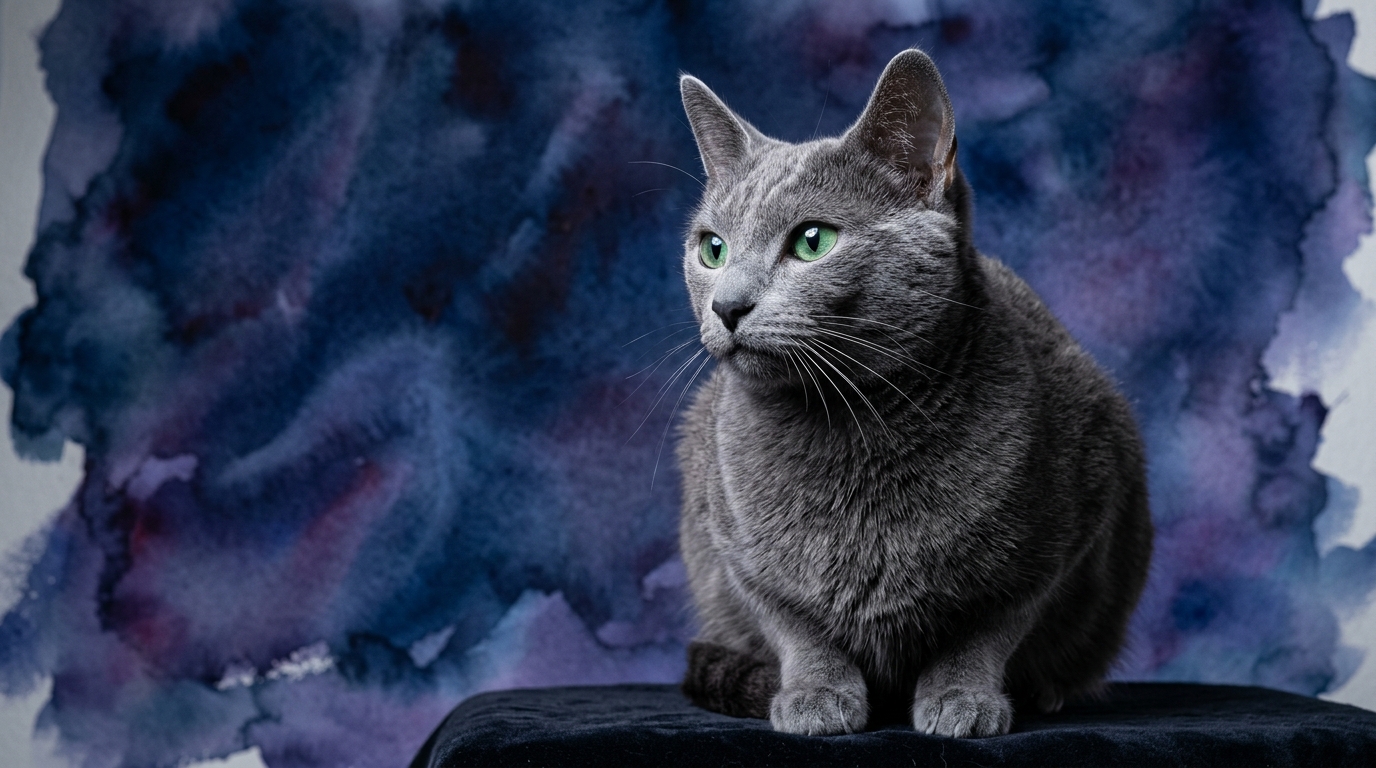
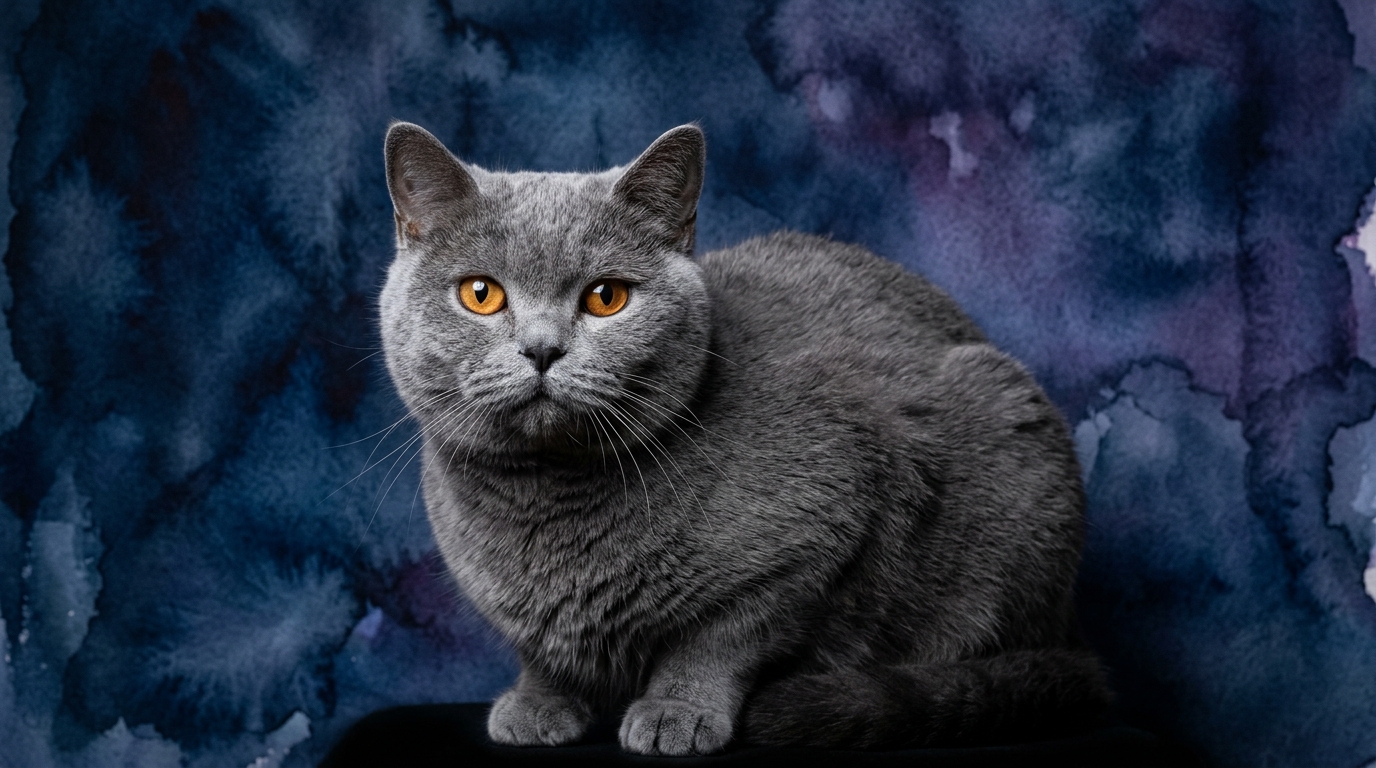
Side-by-Side Cognitive Profiles: Russian Blue vs. British Shorthair
At The Cosmic Pet Pet IQ Lab, we detail the Russian Blue's cognitive profile across five dimensions. They exhibit a problem-solving aptitude of 4/5, adept at understanding cause-and-effect and navigating complex scenarios. Their training speed stands at a balanced 3/5, indicating a moderate yet consistent grasp of new commands. Social intelligence shines at 4/5, reflecting a keen awareness of human emotions and household dynamics. An instinctive drive of 3/5 signifies a healthy, playful hunting instinct, not overly obsessive. Most notably, their memory scores an exceptional 5/5, highlighting an outstanding ability to recall experiences, routines, and intricate details over extended periods.
The British Shorthair offers a distinct cognitive signature. Their problem-solving registers at 3/5, meaning they capably navigate challenges but typically prefer straightforward solutions. Training speed is also 3/5, indicating a moderate learning curve that thrives on consistent, positive reinforcement. Social intelligence stands at 3/5, demonstrating an affectionate nature that appreciates companionship without intense emotional mirroring. Their instinctive drive, also 3/5, signifies a playful yet calm and less intensely driven disposition. Finally, their memory scores 3/5, allowing reliable recall of daily routines and familiar faces, though without the vivid detail or long-term retention of a Russian Blue.
Where the Russian Blue's Mind Takes the Lead
The Russian Blue demonstrates clear cognitive advantages in several areas. Their superior problem-solving (4/5) manifests in an innate curiosity and persistent drive to understand their environment. They often figure out how to open cabinets, manipulate door handles, or master complex puzzle feeders with ease, showcasing an active, analytical mind. This reflects their ability to quickly connect actions to consequences and formulate successful strategies, thriving on intellectual challenge.
Their elevated social intelligence (4/5) allows Russian Blues to forge remarkably deep, nuanced connections. They often 'read' the room, adjusting behavior based on household mood or an owner's emotional state, offering comfort or initiating play thoughtfully. This sensitivity to social cues makes them highly integrated family members. Furthermore, their exceptional memory (5/5) is a standout. They recall specific routines, past events, and locations with remarkable accuracy. This strong memory enables them to learn complex action sequences, understand long-term patterns, and recall past interactions influencing future behavior.
Where the British Shorthair's Cognitive Profile Shines
While the British Shorthair's cognitive profile doesn't lead in every metric, it forms a desirable intellectual demeanor. Their moderate problem-solving (3/5) means they navigate their world effectively but are less inclined to actively deconstruct household mysteries. This results in a calmer, less 'interfering' presence; they are content with routines and less prone to exploratory mischief like opening cupboards. For many owners, this translates to a more placid and predictable companion, reducing potential behavioral challenges.
The British Shorthair's balanced social intelligence (3/5) fosters a blend of affection and independence. They form strong bonds and appreciate companionship, recognizing familiar faces and responding to affection. However, their cognitive independence means they are less demanding of constant interaction or emotional validation, thriving on quiet presence. This makes them ideal for owners valuing warmth without intense engagement, integrating smoothly with a calming energy. Their well-calibrated instinctive drive (3/5) also contributes; play occurs in short, enthusiastic bursts, ensuring a serene household atmosphere.
Training Aptitude: Deciphering Ease and Approach
Sharing a 3/5 training speed, both Russian Blues and British Shorthairs require consistency and positive reinforcement. However, the Russian Blue’s higher problem-solving (4/5), social intelligence (4/5), and exceptional memory (5/5) provide a distinct advantage for learning complex tasks. They more readily connect actions to outcomes, understanding abstract concepts beyond rote memorization, and retain lessons longer due to strong recall. Their social attunement also makes them highly responsive to trainer cues, often eager for the intellectual challenge of learning.
The British Shorthair, with 3/5 scores across most cognitive dimensions, is trainable for basic commands and litter box etiquette, responding well to patience and rewards. However, their learning process often requires more repetition to solidify new behaviors, as their 3/5 memory is functional but not exceptional for intricate recall. Their social intelligence (3/5) means they are less driven by social approval in training, necessitating consistent tangible motivators like treats. Owners should focus on clear, simple commands, appreciating their relaxed approach to learning.
Ideal Companions: Active Hearts vs. Relaxed Homes
The cognitive profiles align these breeds with different lifestyles. For active owners who thrive on engagement and mental stimulation, the Russian Blue is an exceptional match. Their superior problem-solving (4/5) drives enthusiastic engagement with puzzle toys, interactive games, and trick learning. High social intelligence (4/5) ensures deep involvement in family life, initiating interaction and forming profound, communicative bonds. These cats thrive where their sharp minds are challenged and social needs met, actively participating in the household, remembering routines and play due to their exceptional 5/5 memory.
Conversely, the British Shorthair suits relaxed owners seeking a calm, independent, yet affectionate presence. Their moderate problem-solving (3/5) means they are less prone to mischief, preferring a predictable environment. Balanced social intelligence (3/5) allows them to be wonderful companions who appreciate quiet presence and gentle petting without demanding constant attention, content with naps or solo play. For owners desiring tranquility, the British Shorthair's cognitive makeup, including its 3/5 memory and placid demeanor, provides a content, undemanding companion seamlessly integrating into a peaceful pace of life.
The Verdict
Choose the Russian Blue if you seek an intellectually curious companion who thrives on complex interactions, remembers every detail, and forms deeply communicative bonds within an active, engaging household.
Opt for the British Shorthair if your desire is a placid, self-sufficient, and gently affectionate feline companion who embodies tranquility and prefers a more relaxed, predictable home environment.
🧠 Find Your Pet's IQ Score
Our Pet IQ Lab assessment covers 25+ tests across 5 cognitive dimensions — personalized to your breed.
Take the Full IQ Test →Frequently Asked Questions
Are Russian Blues prone to mischief due to their problem-solving ability?
Yes, their advanced problem-solving (4/5) can lead Russian Blues to explore boundaries like opening cabinets or figuring out tricky closures. Owners might need to engage their minds positively with puzzle toys to prevent them from creating their own mental challenges.
How does the British Shorthair's social intelligence manifest in a family setting?
British Shorthairs, with their 3/5 social intelligence, are affectionate and enjoy being near their families, recognizing routines and individuals. They offer companionship with a gentle independence, appreciating quiet presence over constant, intense interaction, making them ideal for harmonious living.
What kind of mental enrichment is best for a Russian Blue given its memory?
Russian Blues benefit greatly from puzzle feeders, interactive toys that challenge their 4/5 problem-solving, and consistent clicker training. Their exceptional 5/5 memory helps them retain learned behaviors and enjoy mastering complex routines, fostering continued engagement.