
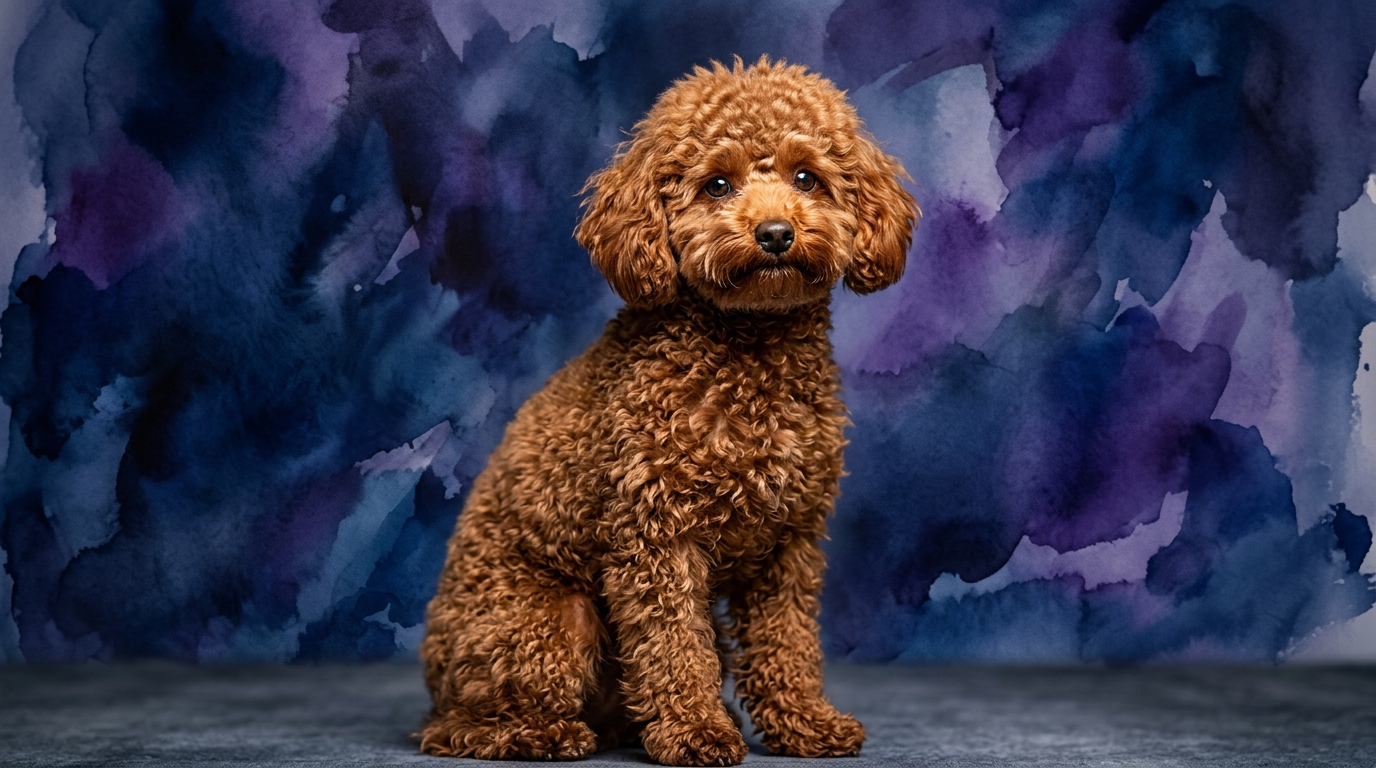
Side-by-Side IQ Profile: Russian Toy vs. Toy Poodle
To understand the cognitive landscape of these two charming toy breeds, The Cosmic Pet Pet IQ Lab employs a five-dimensional framework, offering a detailed look at their individual strengths.
The **Russian Toy** displays a balanced, moderate cognitive profile across the board. In Problem Solving, they score 3/5, indicating a capacity to learn and navigate basic challenges, though they may require more direct guidance for complex tasks. Their Training Speed is also 3/5, meaning they respond well to consistent, positive reinforcement, gradually acquiring new commands. Social Intelligence rates at 3/5; they are attuned to their family's dynamics and emotions, forming strong bonds, but might be reserved with strangers. Instinctive Drive, at 3/5, suggests they possess natural dog behaviors like curiosity and a moderate prey drive, which are typically manageable. Finally, their Memory is 3/5, allowing them to retain learned behaviors and experiences reasonably, though occasional refreshers help solidify less practiced skills.
The **Toy Poodle**, in contrast, presents a profile marked by exceptional cognitive prowess in several key areas. They achieve a remarkable 5/5 in Problem Solving, demonstrating an outstanding ability to analyze novel situations and devise clever solutions, often with surprising ingenuity. Their Training Speed is equally impressive at 5/5, allowing them to absorb new commands and routines with astonishing rapidity, often after just a few repetitions. Social Intelligence scores 3/5, indicating an empathetic nature and a good understanding of human cues, similar to the Russian Toy. Instinctive Drive is also 3/5, reflecting a balanced level of natural instincts that are present but generally channeled through play and engagement rather than intense working urges. However, their Memory truly shines with a 5/5, signifying an extraordinary capacity to recall learned information and experiences with enduring accuracy, making forgotten commands a rarity.
Where the Russian Toy Excels Cognitively
While the Russian Toy's scores are consistently moderate, this profile offers distinct advantages for specific owners and lifestyles. Their 3/5 in Problem Solving means they are less likely to ingeniously dismantle household items or bypass security measures, offering a more predictable and less challenging home environment. Owners seeking a companion who is less prone to outsmarting them in daily routines might find this an appealing trait. Furthermore, the Russian Toy's 3/5 for Instinctive Drive suggests a balanced dog whose natural urges, such as chasing or exploring, are present but generally manageable without requiring extensive redirection. This translates into a calmer daily rhythm and less propensity for developing obsessive behaviors if their mental needs aren't met with constant, complex tasks, making them adaptable companions in homes where varied stimulation is provided but not necessarily intense.
Where the Toy Poodle Demonstrates Cognitive Strengths
The Toy Poodle's cognitive superiority is evident in several key areas. Their remarkable 5/5 score in Problem Solving means they can quickly assess novel situations, strategize, and execute solutions, whether it's figuring out a new puzzle toy in minutes or understanding complex sequences of events. This makes them highly adaptable and capable of learning intricate tasks. Coupled with a 5/5 in Training Speed, the Toy Poodle absorbs new commands and routines with incredible efficiency, often requiring only a few repetitions to solidify a behavior. This rapid learning curve translates into a dog that can master a vast repertoire of tricks, obedience commands, and even specialized tasks with relative ease. Finally, their 5/5 Memory ensures that once a skill is acquired, it is retained with exceptional fidelity, meaning less need for constant refreshers and a consistent performance of learned behaviors over time.
Training Ease: Real Behavioral Differences
When it comes to ease of training, the Toy Poodle undeniably holds an advantage due to its exceptional 5/5 scores in both Training Speed and Memory. A Toy Poodle will typically grasp a new command, like “sit” or “stay,” within a handful of repetitions, often showing understanding after just one or two successful attempts. Their eagerness to engage and quick cognitive processing means they respond swiftly to cues and actively try to figure out what is being asked of them. This makes them exceptionally responsive to positive reinforcement and capable of excelling in advanced obedience or dog sports.
This is a stark contrast to the Russian Toy, which, with its 3/5 Training Speed, will require more consistent and patient repetition to ingrain new behaviors. While the Russian Toy is certainly trainable and capable of learning, the pace will be slower, and the trainer will need to be prepared for a more gradual progression, focusing on clarity and repetition. The Toy Poodle's superior memory further cements its training ease, as once a behavior is learned, it is rarely forgotten, allowing for a broad and lasting behavioral repertoire without much review. The Russian Toy, with its 3/5 memory, might need occasional refreshers to keep less frequently practiced commands sharp, meaning a more sustained effort over the dog's lifetime to maintain a high level of obedience and trick proficiency.
Matching Breeds to Lifestyles: Active vs. Relaxed Owners
The choice between a Russian Toy and a Toy Poodle often comes down to the owner's lifestyle and how much cognitive engagement they wish to provide. For active owners who thrive on mental challenges and enjoy teaching complex tasks, the Toy Poodle is an ideal match. Its 5/5 Problem Solving and Training Speed mean it requires and flourishes with consistent mental stimulation, such as advanced obedience, agility, trick training, or engaging puzzle games that genuinely test their mental faculties. An under-stimulated Toy Poodle might invent its own "problems" to solve, potentially leading to undesirable behaviors out of boredom or a desire for engagement.
Conversely, for relaxed owners seeking a companion whose cognitive needs are met with a more moderate level of engagement, the Russian Toy is an excellent fit. Its 3/5 scores across most cognitive dimensions mean it is content with regular, but not necessarily intense, mental enrichment. While still benefiting from training and play, the Russian Toy is less likely to become restless or destructive if not constantly challenged with complex intellectual tasks, making it a wonderful companion for those who appreciate a calmer, more predictable intellectual presence in their home and enjoy a more straightforward training journey.
The Verdict
Choose the Russian Toy if you appreciate a charming companion with moderate intellectual curiosity, content with consistent but not overly complex training, and less prone to outsmarting household rules.
Opt for the Toy Poodle if you are an owner eager to engage a dog with exceptional learning speed and memory, ready to provide ample mental challenges and diverse training opportunities.
🧠 Find Your Pet's IQ Score
Our Pet IQ Lab assessment covers 25+ tests across 5 cognitive dimensions — personalized to your breed.
Take the Full IQ Test →Frequently Asked Questions
Do Russian Toys get bored easily if not constantly challenged?
With a 3/5 in problem solving and instinctive drive, Russian Toys are less prone to extreme boredom than breeds with higher cognitive scores. They appreciate regular engagement and training but don't typically demand the intense, constant mental stimulation that some other breeds might require to prevent restlessness.
Is a Toy Poodle's sharp mind a potential downside for first-time dog owners?
A Toy Poodle's 5/5 problem-solving and training speed can be both a blessing and a challenge. While they learn quickly, their sharp minds also mean they can learn undesirable behaviors just as fast if not guided consistently, potentially requiring a dedicated and proactive approach from first-time owners to shape appropriate conduct.
How do their social intelligence scores impact their interactions with family and strangers?
Both breeds score 3/5 in social intelligence, meaning they are generally adept at reading human cues and forming bonds. They are likely to be attuned to their family's emotions but may exhibit a moderate level of reserve or caution with strangers, requiring proper introductions and socialization to new people and environments.