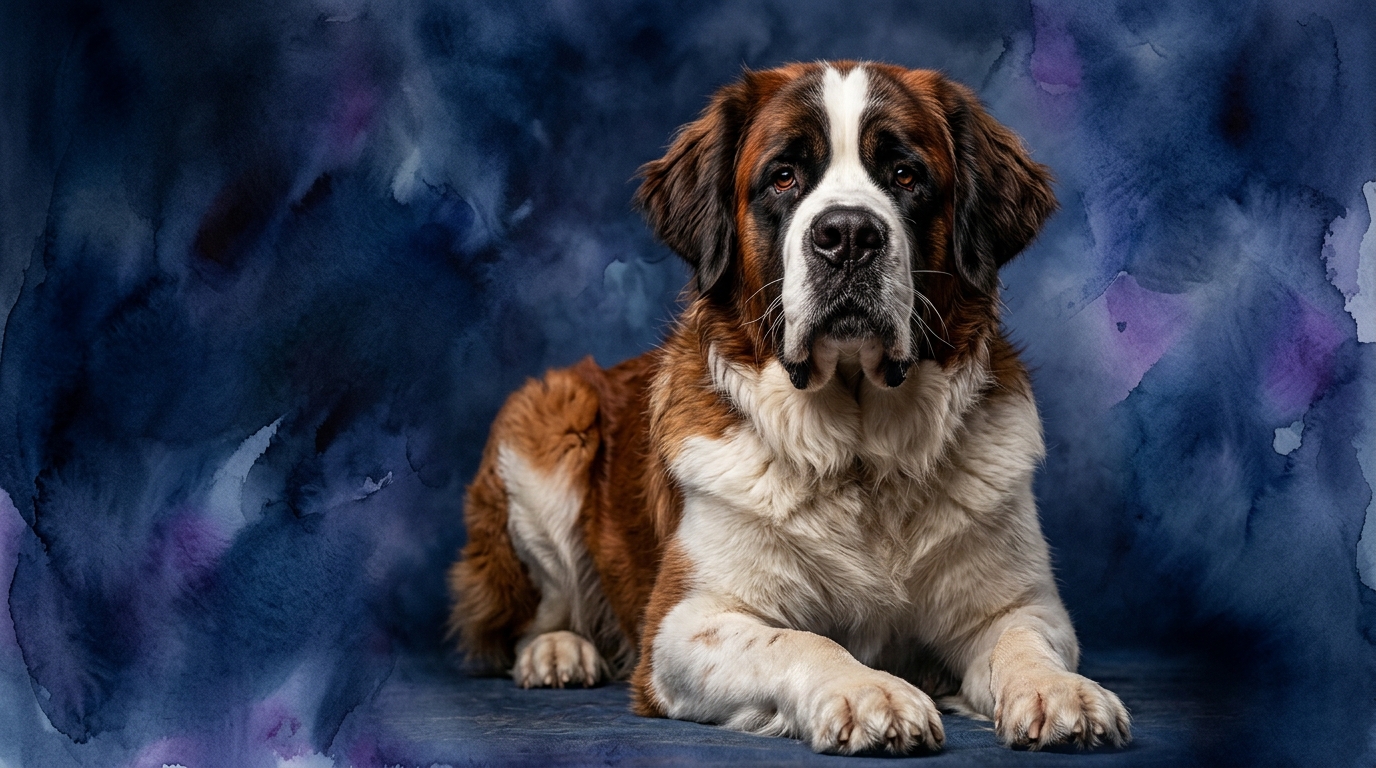
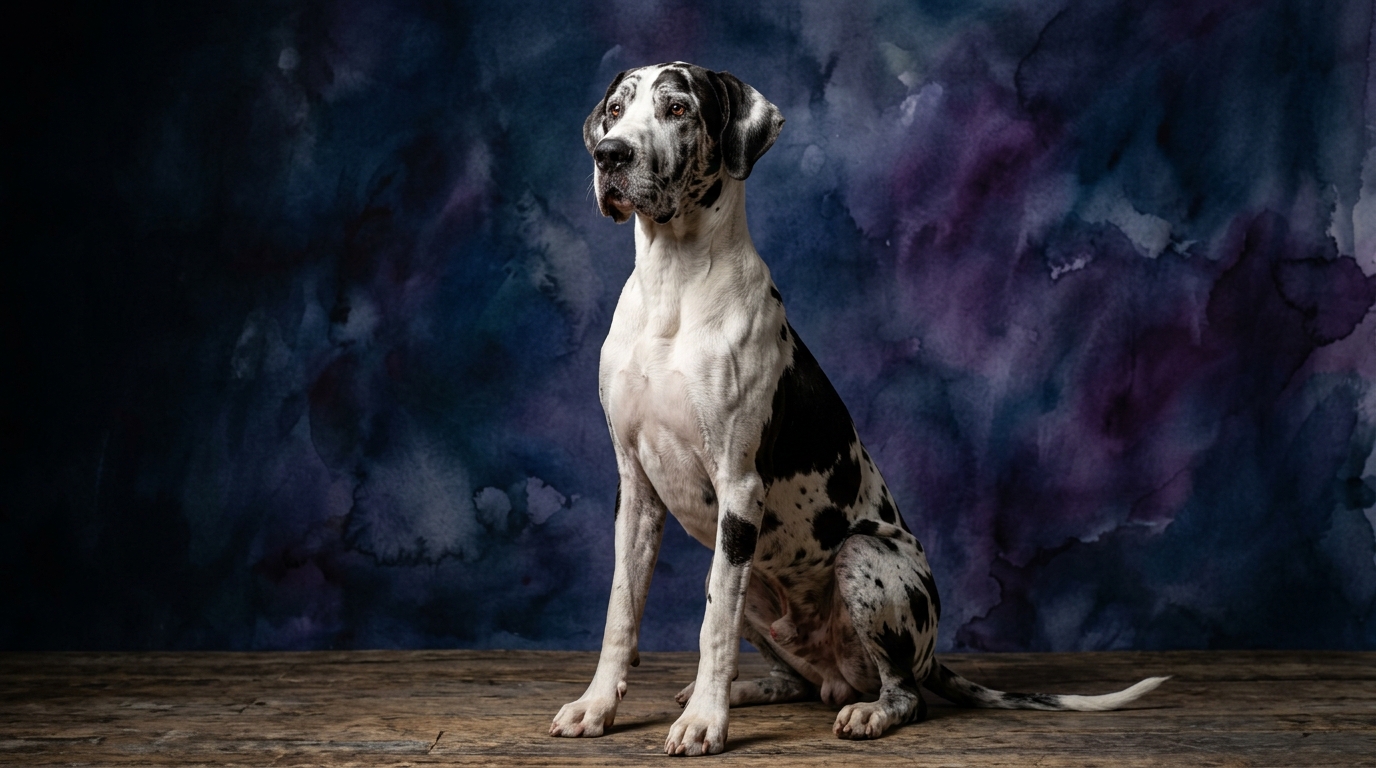
Side-by-Side IQ Profile
The Coren ranking system positions the Great Dane at #48, indicating they grasp new commands with moderately fewer repetitions than the Saint Bernard, who ranks #65. This Coren ranking directly correlates with their Training Speed scores, where the Great Dane receives a 3 out of 5, suggesting a more efficient learning process for structured commands. The Saint Bernard, with a Training Speed of 2 out of 5, typically requires greater consistency and patience during training sessions, necessitating more repetitions to solidify new behaviors.
When assessing Problem Solving abilities, both breeds are rated identically at 3 out of 5. This signifies a comparable capacity for independently navigating minor obstacles, figuring out simple puzzles, or adapting to novel, unstructured situations. Neither breed demonstrates an exceptional flair for complex abstract reasoning, but both possess a practical intelligence sufficient for everyday challenges.
In the realm of Social Intelligence, both the Saint Bernard and the Great Dane excel, each earning a robust 4 out of 5. This high score indicates a profound ability to understand human emotions, interpret social cues, and integrate seamlessly into family dynamics. They are highly attuned to their human companions' moods and interactions, fostering deep, empathetic bonds.
A significant divergence appears in their Instinctive Drive scores. The Saint Bernard boasts an impressive 5 out of 5, reflecting a very strong intrinsic motivation rooted in their historical roles, such as their renowned rescue work. This deep-seated drive manifests as a powerful natural inclination for specific behaviors or tasks, often requiring less external prompting. In contrast, the Great Dane scores a moderate 3 out of 5 in Instinctive Drive, indicating a less intense, more balanced set of innate motivations.
Finally, Memory is a shared cognitive trait, with both breeds scoring 3 out of 5. This suggests an average capacity for retaining learned commands, associating experiences with outcomes, and remembering familiar routines or individuals over time. Neither breed stands out for exceptional recall or particularly short-term memory challenges, positioning them squarely in the middle for this cognitive dimension.
Where Saint Bernard Wins Cognitively
The Saint Bernard's most distinctive cognitive advantage lies in its exceptionally high Instinctive Drive, rated a perfect 5 out of 5. This profound intrinsic motivation is not merely a behavioral trait but a cognitive engine that allows them to perform certain tasks with remarkable self-initiation and perseverance. Historically bred for mountain rescue, this drive manifests as an innate desire to assist, bond, and maintain vigilance, often without explicit command.
This intense instinctive drive means a Saint Bernard can be deeply motivated by purposeful activities that resonate with their inherent inclinations, such as companionship and watchful guardianship. While their problem-solving (3/5) and social intelligence (4/5) scores are shared with the Great Dane, the sheer force of their instinctive nature can sometimes translate into a more robust and sustained engagement in tasks they perceive as meaningful. For instance, a Saint Bernard might exhibit greater persistence in comforting a distressed family member, driven by this strong innate impulse, even if the Great Dane also shares high social intelligence. This strong drive also suggests a dog that is less reliant on constant external rewards for certain actions, finding satisfaction in the act itself when aligned with their nature.
Where Great Dane Wins Cognitively
The Great Dane holds a discernible cognitive edge primarily in its Training Speed and its Coren Rank. With a Coren rank of #48 compared to the Saint Bernard's #65, the Great Dane generally requires fewer repetitions to grasp new commands and concepts. This faster acquisition is further underscored by its Training Speed score of 3 out of 5, surpassing the Saint Bernard's 2 out of 5. This means that a Great Dane typically moves from understanding a new command to executing it reliably in fewer training sessions.
This quicker learning curve allows for a more efficient and potentially broader range of learned behaviors within a given timeframe. Owners might find it easier to teach a Great Dane a wider variety of advanced commands, or integrate them into complex routines, due to their slightly greater cognitive efficiency in processing and retaining instruction. While both breeds share similar problem-solving (3/5) and social intelligence (4/5) capacities, the Great Dane's superior training speed makes them cognitively more adaptable to human instruction and potentially easier to integrate into diverse, structured environments requiring specific trained responses. This cognitive agility in learning new commands can make initial obedience training a smoother, less time-intensive process.
Which is Easier to Train and Why
Based on their cognitive profiles, the Great Dane generally presents as the easier breed to train. Their Coren rank of #48 and a Training Speed of 3 out of 5 indicate a more efficient learning process, meaning they typically require fewer repetitions to understand and consistently execute new commands. This translates into quicker foundational obedience, smoother integration of house rules, and a generally less demanding initial training period. A Great Dane's moderate instinctive drive (3/5) means they are often receptive to human instruction without being overly distracted by powerful internal motivations, allowing trainers to establish a clear reward system more directly.
Conversely, the Saint Bernard, with a Coren rank of #65 and a Training Speed of 2 out of 5, demands a significantly higher level of patience and consistency during training. They require more repetitions to solidify new behaviors and may progress at a slower pace through obedience lessons. Their exceptionally high Instinctive Drive (5/5), while valuable in specific contexts, can sometimes mean they are more inclined to follow their own internal compass rather than an arbitrary command, especially if the command doesn't align with their strong intrinsic motivations. Effective training for a Saint Bernard often involves understanding and leveraging these deep-seated drives, making training less about raw speed and more about building a strong bond and finding meaningful motivators.
Which Makes a Better Family Pet for Active Owners vs Relaxed Owners
Neither the Saint Bernard nor the Great Dane are considered high-octane breeds suitable for owners seeking an extreme sport companion. However, their cognitive profiles influence their fit for different activity levels.
For owners with a more relaxed lifestyle, the Saint Bernard often aligns wonderfully. Their strong social intelligence (4/5) ensures they are highly attuned to family dynamics and seek deep companionship, often expressed through calm, attentive presence. While their problem-solving (3/5) and memory (3/5) are average, their exceptionally high instinctive drive (5/5) often translates into a profound loyalty and desire to be near their human family, making them contented companions for quiet evenings. Owners prepared for patient, consistent training due to their 2/5 training speed will find a gentle giant that thrives on routine and close family bonds, requiring moderate but consistent exercise.
For slightly more active owners, or those who enjoy engaging in various structured activities without extreme intensity, the Great Dane might be a marginally better fit. Their Coren rank of #48 and Training Speed of 3/5 allow for quicker acquisition of diverse commands and skills, making them more adaptable to learning new tricks, participating in obedience classes, or enjoying longer, well-mannered walks. While equally socially intelligent (4/5), their moderate instinctive drive (3/5) means they are often content with a balance of structured activity and relaxed lounging, without the intense internal motivation a Saint Bernard might possess for specific, deeply ingrained purposes. They offer a slightly easier path to behavioral versatility for owners who enjoy a moderate level of interactive engagement.
The Verdict
Choose a Saint Bernard if you are seeking a deeply bonded, intrinsically motivated companion with an exceptional social sense, and are prepared to invest significant patience and consistency into their training journey. Their profound instinctive drive makes them ideal for owners who appreciate a calm, observant dog with a strong innate desire for companionship and purpose.
Choose a Great Dane if you desire a socially adept companion that learns commands with moderate ease and adapts well to various household routines, offering a balanced blend of playfulness and relaxed companionship with a slightly quicker learning curve. They suit owners who appreciate efficient training progress and a versatile, gentle giant.
🧠 Find Your Pet's IQ Score
Our Pet IQ Lab assessment covers 25+ tests across 5 cognitive dimensions — personalized to your breed.
Take the Full IQ Test →Frequently Asked Questions
Do Saint Bernards or Great Danes possess better problem-solving abilities?
Both breeds exhibit a moderate problem-solving capacity, rating 3 out of 5. This suggests they are equally capable of figuring out minor challenges or navigating new situations, without a significant cognitive advantage for either.
Which breed is more socially intelligent with humans?
Both Saint Bernards and Great Danes score equally high in social intelligence at 4 out of 5. They both demonstrate a strong aptitude for understanding human cues, emotions, and the dynamics within a family unit, making them highly attuned companions.
How does instinctive drive differ between these two large breeds?
The Saint Bernard possesses a much stronger instinctive drive (5/5) compared to the Great Dane (3/5). This means Saint Bernards are often more intrinsically motivated for certain natural behaviors or tasks, reflecting a deeper, innate predisposition for their historical roles.