Side-by-Side Cognitive Profiles
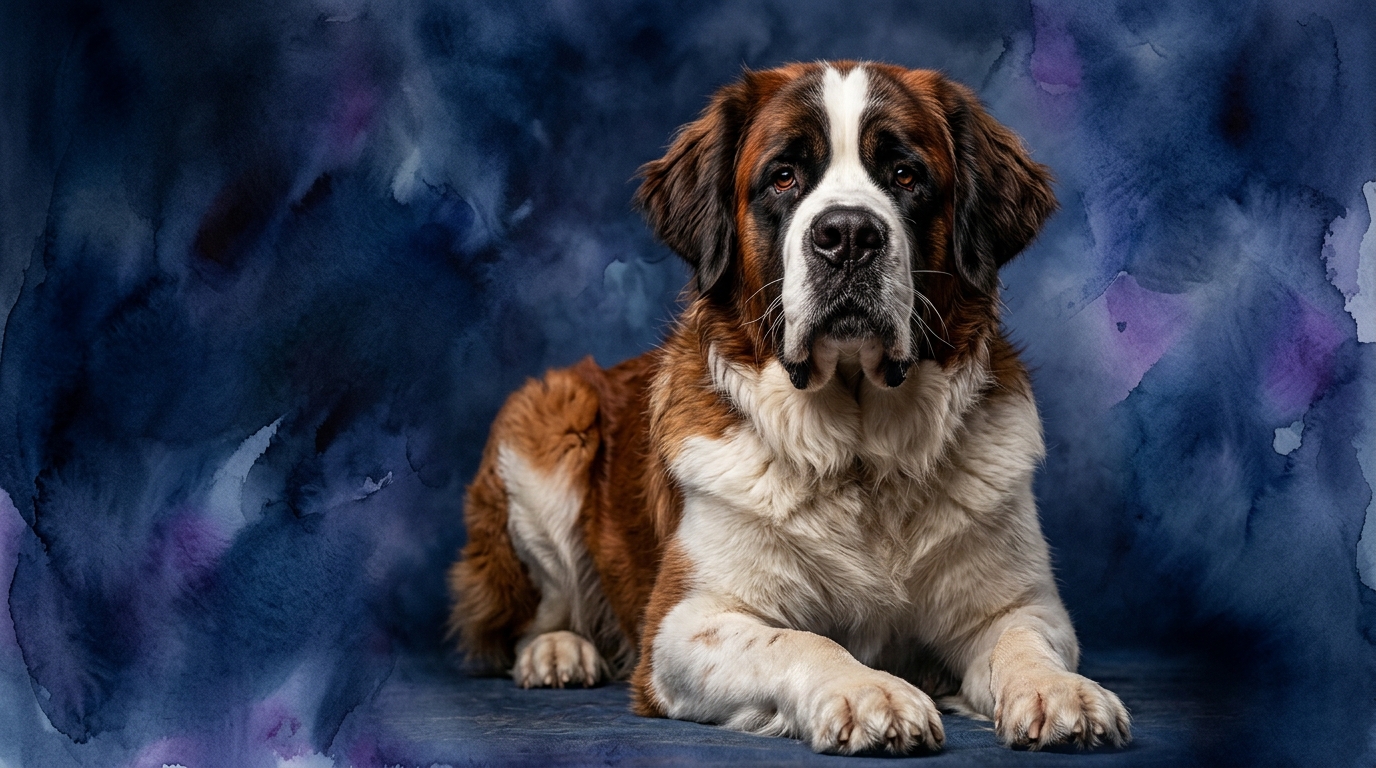
The Saint Bernard, occupying Coren's 65th rank among working breeds, demonstrates a distinct cognitive profile shaped by its history as a mountain rescue dog. Their problem-solving capacity sits at a moderate 3/5, suggesting they can navigate complex situations but might not always seek out novel solutions independently. Training speed is a slower 2/5, indicating that consistent, patient repetition is key to embedding new commands. Where they truly shine is in social intelligence, scoring 4/5, reflecting their profound empathy and ability to understand human emotional cues, crucial for their historical role. Their instinctive drive, rated 5/5, is exceptionally strong, rooted in their innate desire to search, assist, and protect, often manifesting as a deep-seated protective instinct. Memory is a solid 3/5, allowing them to retain learned behaviors and recognize individuals effectively over time.
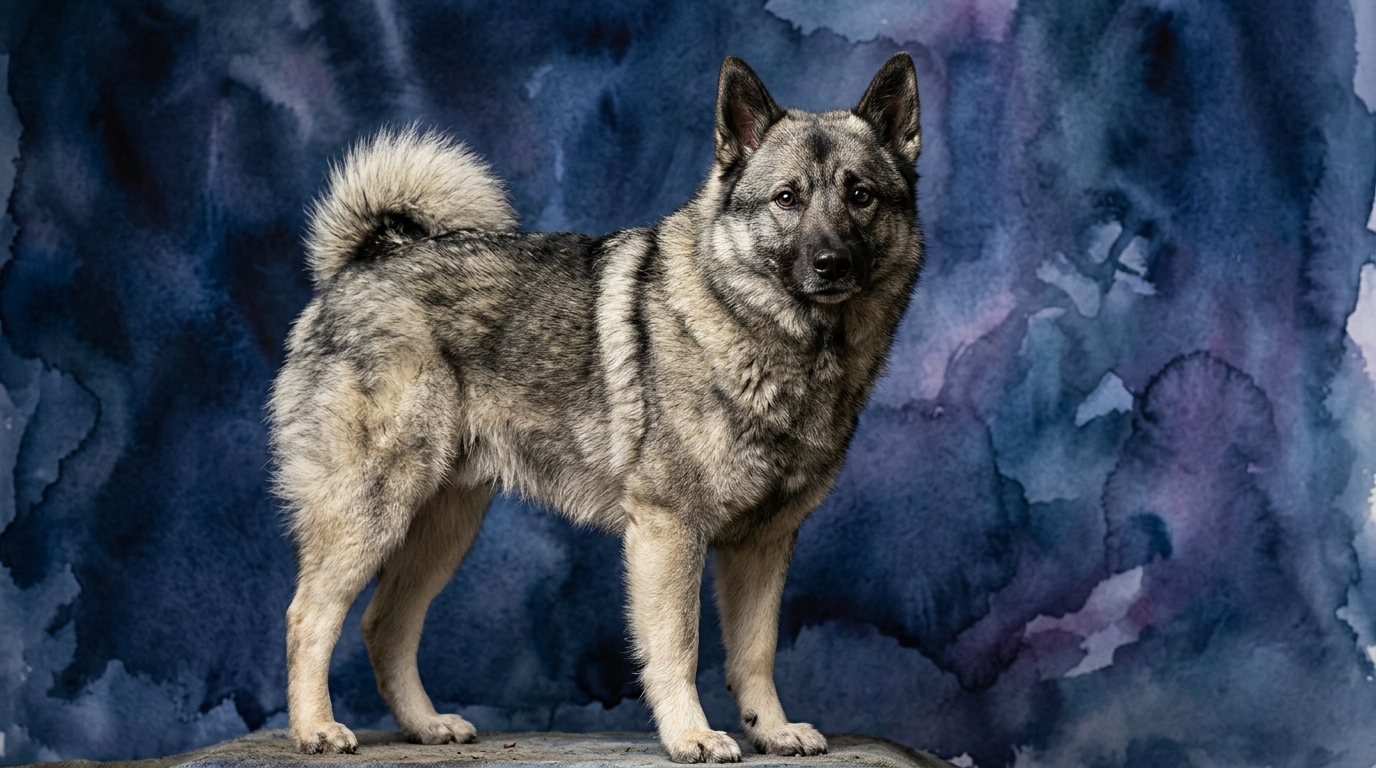
The Norwegian Elkhound, a hound breed, holds a significantly higher Coren rank at 36, signaling a generally quicker grasp of new concepts and commands. Their problem-solving ability is a robust 4/5, enabling them to independently figure out solutions, particularly when pursuing a scent or navigating challenging terrain. Training speed is also a strong 4/5, meaning they typically pick up new instructions with fewer repetitions than many other breeds. While their social intelligence is a respectable 3/5, they tend to be more independent than the Saint Bernard, focusing more on their immediate task or environment rather than human emotional states. Their instinctive drive, at 3/5, is primarily oriented towards hunting, tracking, and guarding, rather than the Saint Bernard's rescue-oriented drive. Memory is a commendable 4/5, allowing them to recall complex scent trails and learned commands over extended periods.
Where the Saint Bernard Leads Cognitively
The Saint Bernard's cognitive strengths distinctly lie in areas that reflect their historical role as compassionate mountain rescuers. Their superior social intelligence, rated at 4/5 compared to the Elkhound's 3/5, means they possess an exceptional capacity for reading human emotions and intentions. This makes them remarkably empathetic companions, often anticipating needs or offering comfort without explicit prompting. This isn't merely about affection; it's a deep cognitive understanding of social dynamics within their human family, allowing them to form profound bonds and react appropriately in sensitive situations. Furthermore, their instinctive drive, a perfect 5/5 against the Elkhound's 3/5, is a powerful force. This drive isn't about relentless physical activity but rather an innate, powerful compulsion to aid, protect, and search. It manifests as unwavering loyalty and a deep-seated desire to be useful, making them exceptionally dedicated guardians and family members who intuitively understand their role in the household's safety and well-being. This profound drive, when channeled, makes them incredibly reliable in their designated tasks, whether it's watching over children or simply being a comforting presence.
Where the Norwegian Elkhound Excels Cognitively
The Norwegian Elkhound truly distinguishes itself in cognitive areas that underscore its heritage as an independent big-game hunter and guardian. With a problem-solving score of 4/5 compared to the Saint Bernard's 3/5, Elkhounds exhibit a greater aptitude for navigating complex situations and devising novel solutions, particularly when faced with a challenge that requires independent thought, such as locating a hidden object or figuring out how to bypass an obstacle. This resourcefulness is a hallmark of their breed. Their training speed, also a robust 4/5 versus the Saint Bernard's 2/5, means they typically grasp new commands and routines with impressive alacrity, often requiring fewer repetitions to solidify a behavior. This quicker learning curve makes them more adaptable to varied training regimens and faster to integrate into new household rules. Moreover, their memory, rated 4/5 against the Saint Bernard's 3/5, is a significant asset, allowing them to retain complex sequences of commands, recognize specific individuals or locations, and recall scent trails over long distances and extended periods. This superior recall contributes to their effectiveness in tasks requiring sustained focus and the ability to remember previous experiences, making them adept at activities like obedience trials or advanced scent work.
Ease of Training: A Comparative Look
When evaluating ease of training, the Norwegian Elkhound generally presents a more straightforward path for owners, primarily due to its faster training speed and higher problem-solving capacity. An Elkhound's 4/5 training speed means they process and internalize commands relatively quickly, often requiring fewer repetitions before a behavior becomes ingrained. Their 4/5 problem-solving ability also contributes, as they can more readily extrapolate from learned commands to similar situations, making them adaptable learners. However, their hound independence and 3/5 social intelligence mean that while they learn fast, owners must make training engaging and demonstrate clear leadership to prevent them from becoming bored or deciding their own agenda is more interesting. In contrast, the Saint Bernard, with a training speed of 2/5 and problem-solving at 3/5, requires significantly more patience and consistency. Their learning process is slower, necessitating frequent, short, positive reinforcement sessions to build and reinforce behaviors. While their high social intelligence and strong instinctive drive make them eager to please and dedicated once they understand a task, their sheer size means that early, consistent training in manners and obedience is paramount. Without it, a well-meaning but untrained Saint Bernard can become a formidable challenge simply due to their physical presence. Therefore, for an owner seeking quicker results and a dog that picks up new skills with less repetition, the Elkhound has an edge, provided their independent streak is managed effectively.
Matching Breeds to Lifestyles: Active vs. Relaxed Owners
The choice between these two breeds for active versus relaxed owners hinges significantly on their inherent energy levels and cognitive needs. The Norwegian Elkhound, originating as a hunting dog, typically suits more active owners. Despite a moderate instinctive drive of 3/5, their history dictates a need for regular, stimulating exercise that engages both their body and their keen mind. They thrive on long walks, hikes, and activities that allow them to use their superb scenting abilities or engage in problem-solving tasks. An Elkhound that isn't sufficiently exercised or mentally challenged can become restless and may exhibit undesirable behaviors stemming from boredom. Their independence, while a cognitive strength, means they need structured engagement to prevent them from creating their own, potentially destructive, entertainment. Conversely, the Saint Bernard, while possessing a powerful instinctive drive of 5/5 related to their rescue heritage, is generally a more relaxed companion in terms of daily physical activity once past puppyhood. Their massive size means they are not built for endurance running, preferring moderate daily walks and comfortable indoor lounging. Their high social intelligence makes them content to be near their human companions, absorbing the family's rhythm. While they benefit from mental stimulation, it often comes in the form of social interaction or gentle training rather than high-octane physical challenges. Therefore, the Saint Bernard is typically better suited for relaxed owners who appreciate a calm, empathetic presence and can provide moderate exercise and plenty of social interaction, while the Elkhound is ideal for active individuals or families committed to providing consistent physical and mental engagement.
The Verdict
Choose the Saint Bernard if you seek an exceptionally empathetic, loyal companion who excels in social dynamics and offers a calm, comforting presence after moderate daily activity. Their deep instinctive drive for protection and companionship makes them unparalleled family guardians, requiring patient training.
Opt for the Norwegian Elkhound if you are an active owner desiring a resourceful, quicker-learning dog adept at problem-solving and retaining information, thriving on consistent physical exercise and engaging mental challenges.
🧠 Find Your Pet's IQ Score
Our Pet IQ Lab assessment covers 25+ tests across 5 cognitive dimensions — personalized to your breed.
Take the Full IQ Test →Frequently Asked Questions
Are Saint Bernards difficult to train due to their size?
Saint Bernards aren't inherently difficult, but their slower training speed (2/5) and immense size mean training requires significant consistency, patience, and positive reinforcement from a young age. Early socialization and obedience are crucial to manage their physical presence effectively.
Do Norwegian Elkhounds bark a lot?
Norwegian Elkhounds are known for their vocalizations, particularly a characteristic 'baying' bark, stemming from their hunting heritage. While they can be trained to moderate their barking, owners should anticipate a more vocal companion compared to many other breeds, especially when excited or alerting.
Which breed is better with children?
The Saint Bernard's high social intelligence (4/5) and gentle nature often make them excellent, patient companions for children, provided they are well-socialized and trained due to their size. Norwegian Elkhounds, while generally good with respectful children, are more independent and may require more supervision to ensure interactions are positive.