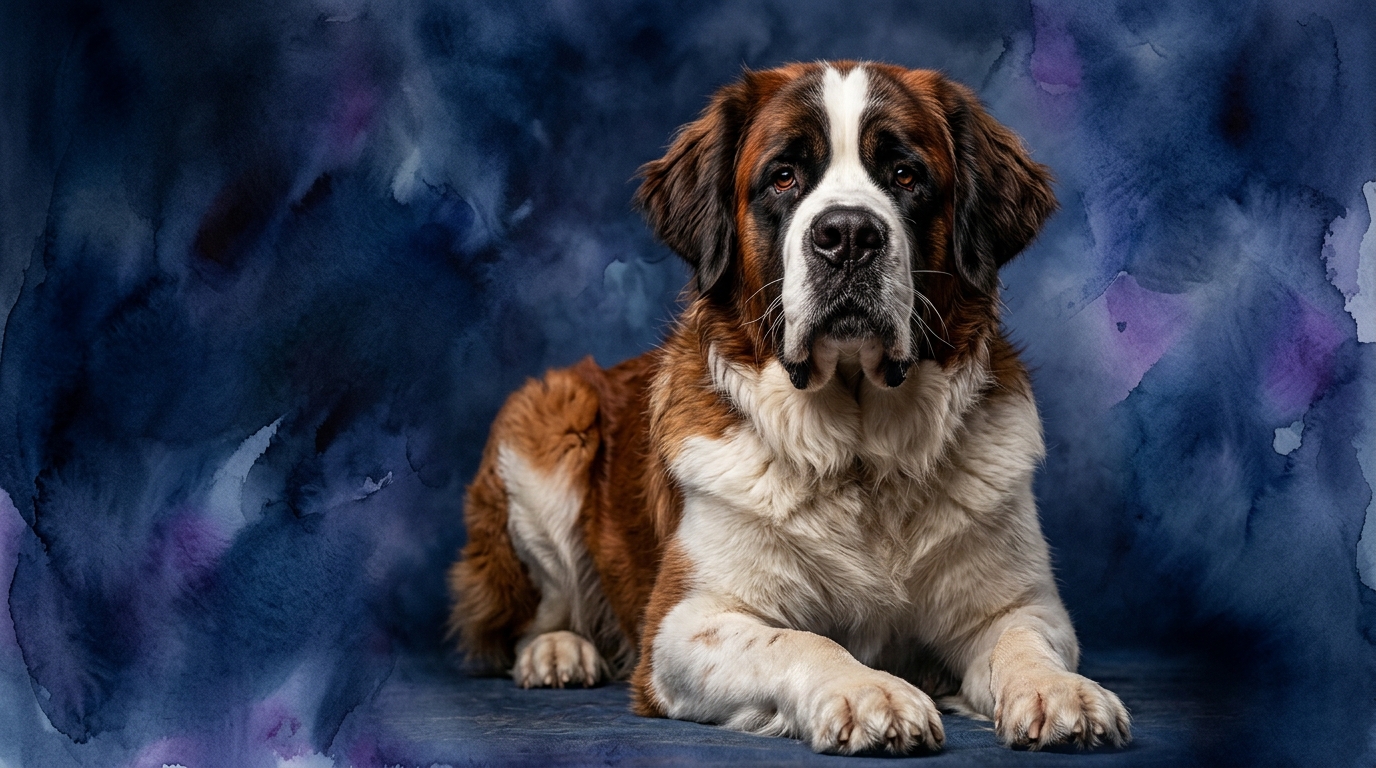
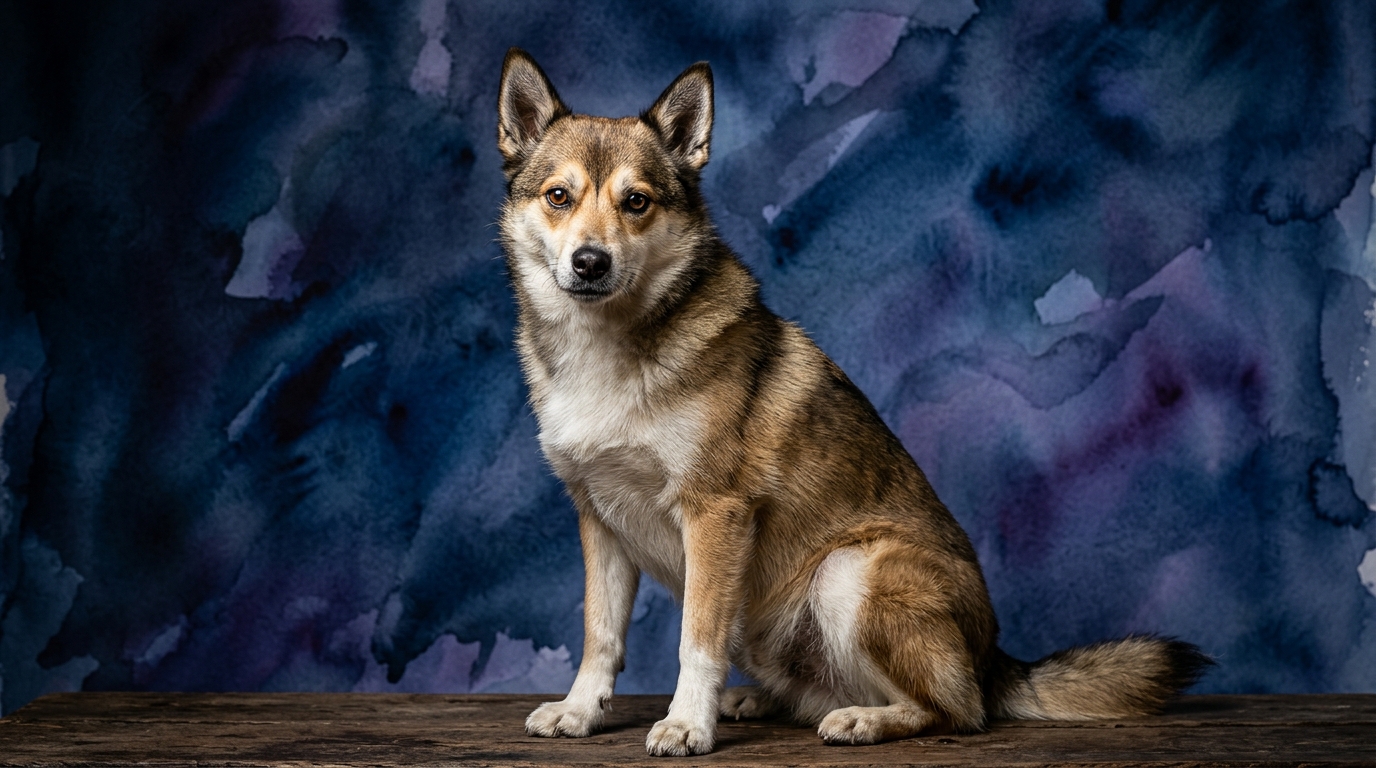
Side-by-Side Cognitive Profiles: Saint Bernard vs. Norwegian Lundehund
The Cosmic Pet Pet IQ Lab employs a multi-dimensional approach to assess canine cognition, moving beyond simple obedience to explore the nuanced ways dogs think and interact with their world. For the Saint Bernard, a breed historically dedicated to search and rescue, their cognitive profile reflects their demanding lineage. Their Coren ranking sits at #65, placing them in the moderate tier for working obedience and intelligence.
Breaking down the Saint Bernard's profile, we see a Problem Solving score of 3/5, indicating a moderate ability to navigate challenges, often applied to practical, real-world scenarios like finding a buried person. Their Training Speed is 2/5, suggesting they require patience and consistent methods to learn new commands, though their sheer size and independent streak can contribute to this pace. Where they truly shine is in Social Intelligence, earning a 4/5; these dogs are adept at reading human emotions and intentions, a crucial trait for their empathetic rescue work. An Instinctive Drive of 5/5 highlights their profound urge to protect, pull, and search, while their Memory, rated at 3/5, allows them to recall faces, routes, and learned tasks reliably.
In stark contrast, the Norwegian Lundehund, a rare and specialized breed, does not appear on the Coren ranking, a testament to their unique niche and historical isolation. Their cognitive scores, however, paint a picture of a clever, adaptable, and highly independent hunter. They register a Problem Solving score of 3/5, which, for them, translates to exceptional ability in navigating complex, confined spaces and devising strategies to extract puffins from rocky crevices.
The Lundehund's Training Speed is 3/5, indicating a moderate capacity to learn, though their independent nature means they often need engaging and creative training approaches. Their Social Intelligence scores 3/5; while friendly, they might not possess the same depth of human-attuned empathy as a rescue dog, often relying more on their own judgment. An Instinctive Drive of 3/5 reflects a strong, specific prey drive and a desire to explore and climb, rather than a broad working drive. Finally, their Memory is 3/5, enabling them to remember hunting locations and successful strategies in their challenging natural habitat.
Where the Saint Bernard's Cognition Excels
The Saint Bernard's cognitive strengths are deeply rooted in their history as companions and rescuers in the treacherous Swiss Alps. Their exceptional Social Intelligence (4/5) allows them to form profound bonds with humans and, more critically, to discern distress and provide comfort. This isn't just about being friendly; it's about a sophisticated ability to read subtle human cues, anticipate needs, and offer appropriate assistance, which is paramount in search and rescue operations.
Furthermore, their robust Instinctive Drive (5/5) isn't merely about physical power but also about cognitive persistence. This drive manifests as an unwavering determination in challenging environments, enabling them to continue searching for hours in deep snow or adverse weather conditions. Their problem-solving abilities, while moderate (3/5), are particularly effective when applied to practical, life-saving tasks, such as navigating a blizzard-swept path or locating a buried person through scent and sound, requiring a blend of sensory processing and environmental understanding.
The Saint Bernard's memory, rated at 3/5, is particularly strong in remembering the geography of their territory and the individuals within their care. They are capable of recalling complex routes through their mountain passes and recognizing specific people, which facilitates their duties as both guardians and rescuers. This cognitive strength underpins their reliability and steadfastness, making them truly dedicated partners in demanding circumstances.
Where the Norwegian Lundehund's Cognition Stands Out
The Norwegian Lundehund's cognitive profile is a testament to natural selection, honed over centuries to thrive in a highly specialized role: hunting puffins in the rugged, cliff-laden landscapes of Norway. Their Problem Solving (3/5) is uniquely adapted to this environment, demonstrating an unparalleled ability to navigate tight, complex, and often vertical spaces. They are masters of spatial reasoning in three dimensions, capable of squeezing into narrow crevices, scaling rocky ledges, and mapping intricate tunnel systems to find their prey.
This breed's instinctive drive (3/5), while not as broadly encompassing as the Saint Bernard's, is acutely focused on exploration, climbing, and the pursuit of small game. This drive is intertwined with their problem-solving, as they independently assess their environment for opportunities to climb or burrow, making quick, autonomous decisions without constant human direction. Their physical agility, combined with their cognitive mapping skills, allows them to operate effectively in environments where human intervention is impossible.
The Lundehund's memory (3/5) is particularly effective for recalling successful hunting grounds and strategies. They remember which burrows yielded results, which paths were traversable, and how to outmaneuver their agile prey. Their moderate social intelligence (3/5) reflects a breed that historically worked somewhat independently of direct human command, relying more on their own wits and instincts to achieve their objectives, yet still capable of forming affectionate bonds with their human companions.
Training Aptitude: Saint Bernard vs. Norwegian Lundehund
When it comes to training, the Saint Bernard and Norwegian Lundehund present distinct challenges and rewards, largely influenced by their historical roles and inherent cognitive biases. The Saint Bernard, with a Training Speed of 2/5, may appear slower to learn new commands compared to some breeds. However, their high Social Intelligence (4/5) and strong desire to please their human companions often make them very receptive to patient, positive reinforcement training. Their large size and occasional stubbornness require an owner who can be consistently firm, kind, and understanding of their deliberate pace. They respond well to praise and affection, eager to maintain the strong bond they form with their family, making them ultimately trainable for a wide range of tasks despite their initial slowness.
The Norwegian Lundehund, with a Training Speed of 3/5, might seem to have an edge, but their independence and specialized drives introduce different complexities. Their history as autonomous hunters means they are less naturally inclined towards rote obedience and more prone to following their instincts for exploration, climbing, and chasing. Training a Lundehund requires creativity, engaging methods, and a deep understanding of their unique physical capabilities and mental stimulation needs. Early and extensive socialization is crucial to temper their independent streak. While they can learn, their motivation is often driven by novelty and their innate drives, rather than an overwhelming desire to comply with human commands, making them challenging for owners expecting conventional obedience.
Therefore, while both breeds are trainable, the Saint Bernard is generally considered 'easier' in the sense that their strong social intelligence makes them more eager to cooperate and bond during the training process, even if they take longer to master a command. The Lundehund's intelligence is geared towards independent problem-solving in a natural environment, making conventional obedience training a more intricate dance between human and dog, requiring a patient owner who appreciates their unique, often whimsical, and independent nature.
Matching Canine Companions to Lifestyles: Active vs. Relaxed Owners
Choosing between a Saint Bernard and a Norwegian Lundehund involves more than just cognitive preferences; it's about aligning a dog's inherent needs with an owner's lifestyle. For owners who prefer a more relaxed pace, the Saint Bernard often fits beautifully. While they are large and require moderate, consistent exercise to maintain their health, they are not high-energy dogs in the way a working or sporting breed might be. They enjoy calm companionship, lounging with their family, and a predictable routine. Their exercise needs can often be met with daily walks and outdoor playtime in a securely fenced yard, making them suitable for individuals or families who appreciate a quiet, loving presence in the home.
Conversely, the Norwegian Lundehund is a breed for the active, adventurous owner. Despite their smaller size, they possess a surprising amount of energy and an insatiable curiosity. Their instinctive drives to climb, explore, and burrow mean they require significant mental and physical stimulation to prevent boredom and destructive behaviors. They thrive on varied activities such as hiking, agility, puzzle toys, and secure outdoor spaces where they can safely indulge their climbing instincts. Owners who enjoy outdoor activities and are willing to provide creative outlets for their Lundehund's unique physical and mental attributes will find a highly engaging and rewarding companion.
The Verdict: When to Choose Each Breed
The Saint Bernard is an ideal choice for owners seeking a large, calm, and profoundly empathetic companion who will bond deeply with their family, offering unwavering loyalty and a gentle, protective presence. They suit patient individuals willing to invest consistent, positive training to guide a deliberate but dedicated learner.
The Norwegian Lundehund is best for active, experienced owners who appreciate a unique, agile, and independent companion, eager for exploration and creative mental and physical challenges, and who can celebrate a dog with a strong, specialized historical purpose and a lively, inquisitive spirit.
The Verdict
Choose the Saint Bernard if you desire a gentle giant, a devoted and empathetic family member who thrives on companionship and requires patient, consistent guidance. They are a wonderful match for those who appreciate a calm presence and can accommodate their substantial size and moderate exercise needs.
Opt for the Norwegian Lundehund if you are an active, adventurous owner seeking an independent, agile, and highly curious companion with unique physical abilities. This breed thrives with owners who can provide ample mental and physical stimulation, embracing their historical instincts for climbing and exploration.
🧠 Find Your Pet's IQ Score
Our Pet IQ Lab assessment covers 25+ tests across 5 cognitive dimensions — personalized to your breed.
Take the Full IQ Test →Frequently Asked Questions
Are Saint Bernards good with children?
Yes, Saint Bernards are typically very gentle, patient, and tolerant with children due to their high social intelligence and calm demeanor. Their large size means supervision is always advised to prevent accidental bumps, but they often form strong, protective bonds with their younger family members.
Do Norwegian Lundehunds require a lot of grooming?
Norwegian Lundehunds have a double coat that is relatively easy to maintain, requiring weekly brushing to remove loose hair and minimize shedding. Their unique physical traits, like extra toes and flexible joints, don't typically add significant grooming demands, but owners should regularly check their paws.
Which breed is better for apartment living?
Neither breed is ideally suited for apartment living, but if forced to choose, the Norwegian Lundehund might be marginally better due to its smaller size, provided its significant exercise and mental stimulation needs are met daily. The Saint Bernard's immense size makes apartment living extremely challenging for both the dog and owner, requiring substantial space even indoors.