Side-by-Side IQ Profile: Unpacking Cognitive Dimensions
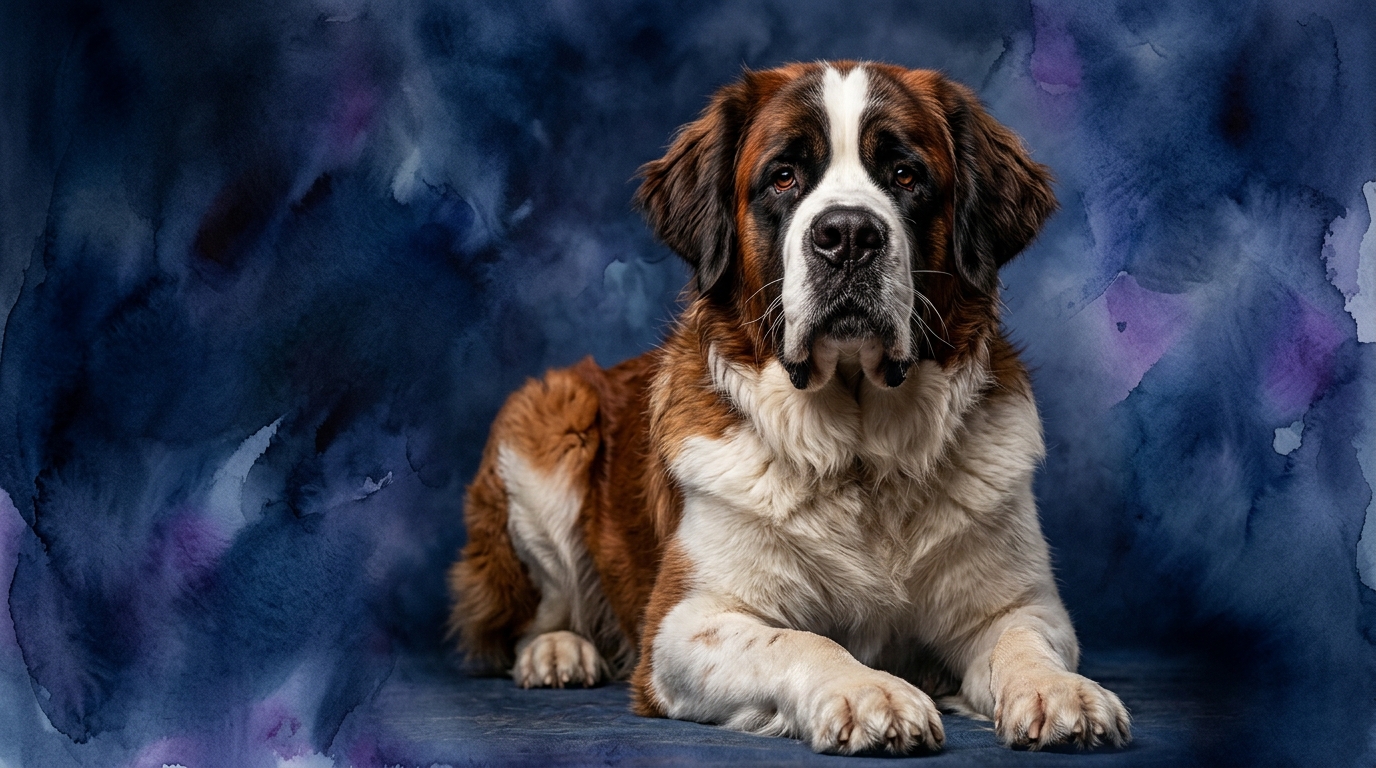
The Cosmic Pet Pet IQ Lab employs a multi-faceted approach to assess canine intelligence, looking beyond simple obedience to understand a breed's full cognitive spectrum. For the Saint Bernard, we observe a Problem Solving score of 3/5, indicating a moderate ability to navigate new challenges, often through persistence and exploration. Their Training Speed registers at 2/5, suggesting they require more repetition and patience during instruction. In contrast, their Social Intelligence shines at 4/5, reflecting a strong capacity to understand and respond to human cues and emotional states. An Instinctive Drive of 5/5 highlights their profound natural inclinations, particularly for tasks like search and rescue or companionship, while their Memory stands at 3/5, indicating a solid retention of learned experiences and routines.
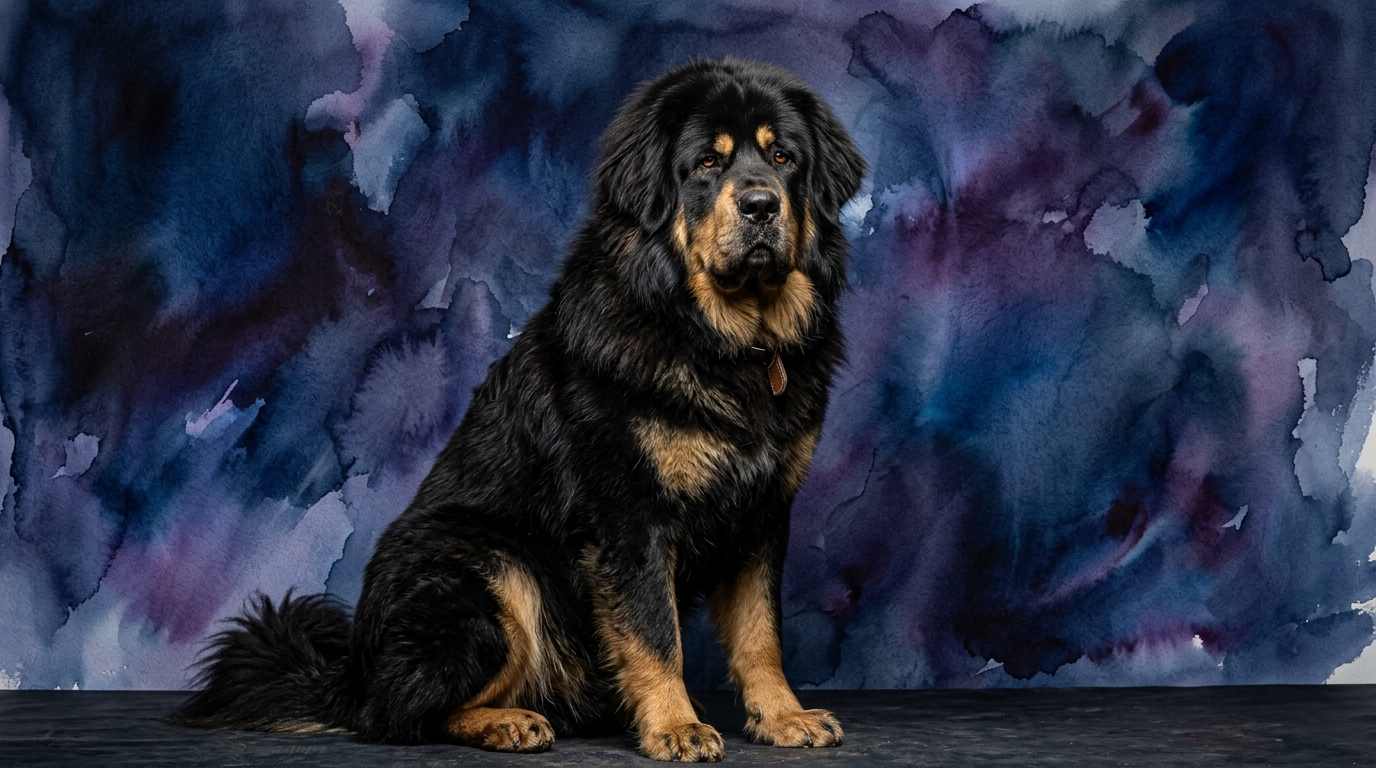
The Tibetan Mastiff, while not Coren-ranked, presents a unique cognitive blueprint based on our assessments. Its Problem Solving score matches the Saint Bernard at 3/5, demonstrating a similar moderate aptitude for independent thought when faced with novel situations. Interestingly, its Training Speed is assessed at 3/5, suggesting a slightly quicker grasp of commands compared to the Saint Bernard, though still requiring consistent effort. Social Intelligence for the Tibetan Mastiff is rated 3/5, indicating a more reserved and discerning approach to social interactions, often preferring a smaller, trusted circle. Its Instinctive Drive is 3/5, reflecting a strong, yet less outwardly directed, drive for guarding and territorial protection. Finally, its Memory also scores 3/5, allowing it to remember past events and learned behaviors effectively within its established environment.
Where the Saint Bernard Shows Cognitive Strengths
The Saint Bernard's cognitive profile reveals a distinct advantage in the realm of social interaction and an unwavering dedication to its inherent purpose. With a Social Intelligence score of 4/5, these dogs exhibit a remarkable capacity for empathy and understanding human emotions. This translates into a profound ability to bond deeply with family members, often anticipating needs and offering comfort, making them exceptional companions in emotionally sensitive roles. Their strong social aptitude also makes them responsive to subtle human cues, allowing for nuanced communication within the family unit.
Furthermore, the Saint Bernard's Instinctive Drive, rated at a perfect 5/5, is a profound cognitive asset. This isn't merely about physical drive but a deep-seated inclination to perform certain tasks, often with a selfless dedication. Historically, this has manifested in their renowned search and rescue capabilities, where their persistence and innate understanding of their role in helping others are paramount. This strong drive means they are often internally motivated by their 'job,' whether that's guarding the home, pulling a cart, or simply being a steadfast presence for their loved ones, requiring less external prompting to fulfill these roles once understood.
Where the Tibetan Mastiff Shows Cognitive Strengths
The Tibetan Mastiff's cognitive strengths are rooted in its independent problem-solving and a slightly swifter learning pace for certain tasks. Matching the Saint Bernard with a Problem Solving score of 3/5, the Tibetan Mastiff demonstrates a capacity for independent thought, often assessing situations and devising solutions on its own, a trait honed by centuries of solitary guardianship. This means they can be quite resourceful in their environment, figuring out how to navigate obstacles or manage their territory without constant human direction, reflecting a self-reliant cognitive approach.
Additionally, the Tibetan Mastiff's Training Speed, at 3/5, provides a subtle but notable advantage over the Saint Bernard in terms of initial command acquisition. While still requiring consistency, they may pick up new commands or routines with slightly fewer repetitions. This isn't to say they are always eager to comply, but when motivated, their processing of new information can be marginally faster. Their memory score of 3/5 also supports this, allowing them to retain these learned behaviors and environmental knowledge effectively, contributing to their ability to manage their domain with quiet competence.
Which is Easier to Train and Why
When considering ease of training, the Tibetan Mastiff holds a slight edge in raw Training Speed (3/5 vs. 2/5), meaning it may grasp new commands with fewer repetitions. However, 'easier' is a nuanced term, as other cognitive factors heavily influence the overall training experience. The Saint Bernard's lower Training Speed (2/5) means patience and consistency are paramount, but their high Social Intelligence (4/5) and profound Instinctive Drive (5/5) can make them highly motivated to please their human companions and fulfill their perceived role. They might take longer to learn a command, but once learned, their desire to cooperate with their family often ensures reliable execution.
Conversely, while the Tibetan Mastiff might learn a command slightly faster, its lower Social Intelligence (3/5) and Instinctive Drive (3/5) mean its willingness to perform can be more selective. They are independent thinkers, and their training often requires convincing them that a command is worthwhile or makes sense within their own understanding of their role. Their guarding instincts mean they might prioritize surveying their territory over executing a 'sit' command from a less-than-firm handler. Therefore, while the initial learning phase might be quicker for a Tibetan Mastiff, sustained, reliable obedience often demands a more experienced and consistent handler who understands their independent nature.
Which Suits Active Owners vs. Relaxed Owners
For owners seeking a companion that thrives on interaction and has a moderate but consistent need for engagement, the Saint Bernard is often a more fitting choice. Their high Social Intelligence and strong Instinctive Drive mean they flourish when integrated into family activities, whether it’s a leisurely walk, a car ride, or simply being present during household routines. While they certainly enjoy periods of rest, their inherent desire to be a part of the family's life means they are not content to be isolated; they need purposeful interaction and a sense of belonging. An owner who enjoys daily, calm engagement and can provide consistent, gentle training will find a deeply rewarding partnership with a Saint Bernard.
The Tibetan Mastiff, with its more independent nature and specific instinctive drives, generally aligns better with owners who appreciate a more self-reliant canine presence and can provide a structured, secure environment. Their moderate social intelligence means they are often content with less constant direct interaction, preferring to observe and patrol their domain. They require an owner who understands their intrinsic motivation for guarding and can channel this appropriately, providing ample secure space and mental stimulation that caters to their natural tendencies. Owners who are relaxed in their approach to constant interaction but are firm, consistent, and committed to providing a secure and predictable routine will be best suited for the Tibetan Mastiff.
The Verdict
Choose the Saint Bernard if you desire a deeply empathetic companion who thrives on social connection and is motivated by a strong desire to be a central, contributing member of your family.
Opt for the Tibetan Mastiff if you appreciate a noble, self-reliant guardian with a discerning social nature, and you are prepared to respect and manage its independent, protective instincts.
🧠 Find Your Pet's IQ Score
Our Pet IQ Lab assessment covers 25+ tests across 5 cognitive dimensions — personalized to your breed.
Take the Full IQ Test →Frequently Asked Questions
Do Saint Bernards excel in complex problem-solving tasks?
With a Problem Solving score of 3/5, Saint Bernards demonstrate a moderate aptitude for navigating novel challenges. They tend to rely on persistence and their innate curiosity rather than intricate strategic planning to find solutions.
Is the Tibetan Mastiff a good choice for first-time dog owners?
Due to their independent nature, strong guarding instincts, and discerning social intelligence (3/5), Tibetan Mastiffs are generally not recommended for first-time dog owners. They require experienced handlers who understand and can consistently manage their unique temperament and training needs.
How does social intelligence impact the daily life of these breeds?
A Saint Bernard's high social intelligence (4/5) means they are highly attuned to family dynamics, often seeking to be involved and offering comfort, making them very integrated companions. A Tibetan Mastiff's moderate social intelligence (3/5) means they are more reserved, forming deep bonds with a select few but generally being more aloof with strangers and less outwardly demonstrative in their social interactions.