
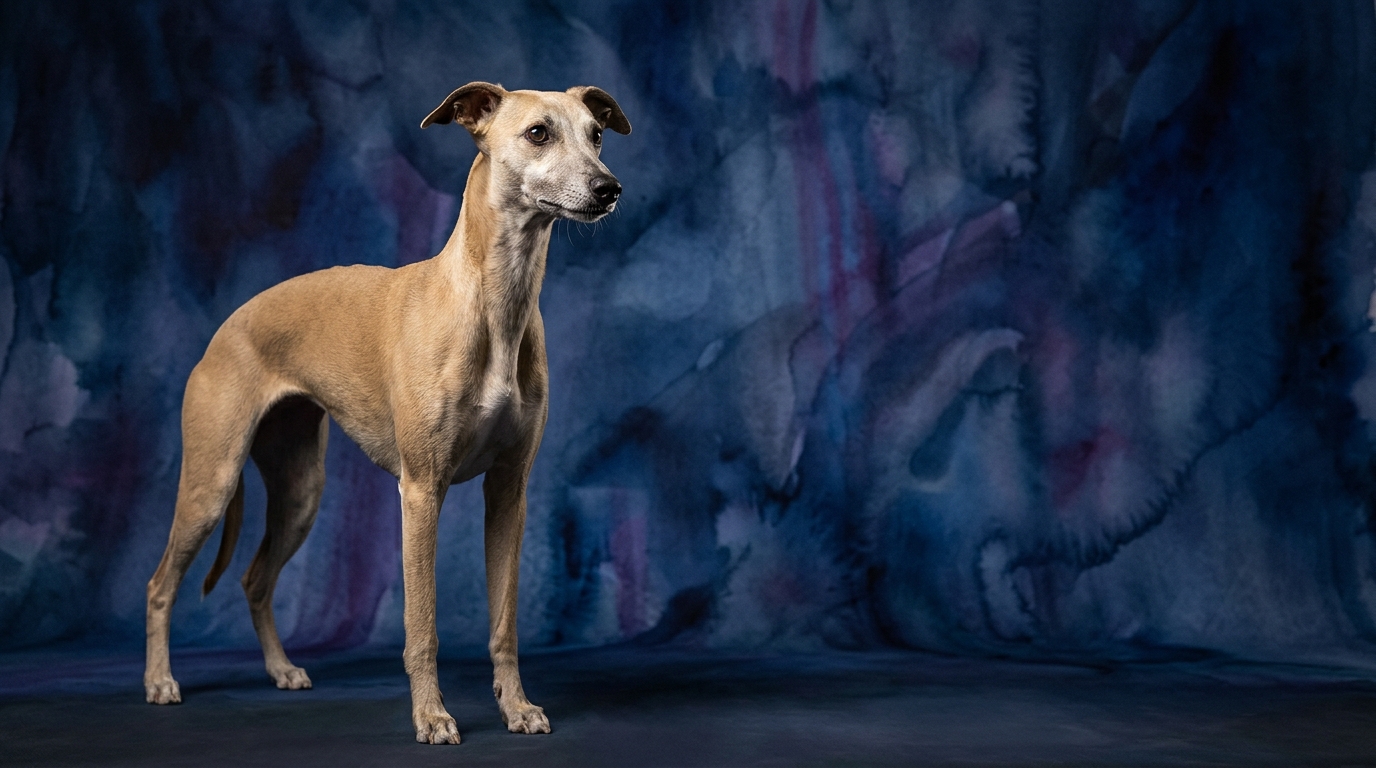
Side-by-Side IQ Profile: Saint Bernard vs. Whippet
At The Cosmic Pet Pet IQ Lab, we evaluate canine intelligence across five key dimensions. Interestingly, both the Saint Bernard and the Whippet score identically across these metrics, yet their breed-specific histories and physical attributes mean these scores play out very differently in practice. Let's delve into how each dimension applies to these distinct breeds.
Problem Solving (3/5): For the Saint Bernard, a score of 3/5 in problem-solving often relates to navigating complex, unpredictable environments like snowy mountain passes or assessing a situation to aid a struggling human. Their problem-solving leans towards practical, real-world application in crisis scenarios, requiring deliberation and spatial awareness. The Whippet, with the same 3/5, applies this skill with a different urgency; they excel at rapidly assessing the quickest path during a high-speed chase, navigating agility courses, or finding clever ways to secure a prized sunbeam. Their problem-solving is often about efficiency and immediate gratification, driven by visual cues and speed.
Training Speed (2/5): A 2/5 training speed suggests both breeds can learn new commands, but they might require patience, consistency, and highly motivating rewards. For a Saint Bernard, their sheer size and inherent independence, coupled with a deliberate nature, can make training feel slower; they aren't typically driven by a desperate need to please through endless repetitions. For a Whippet, their sighthound independence and high prey drive mean their focus can be fleeting. While they grasp concepts, their willingness to perform on command can be highly situational, often overridden by environmental distractions or their desire for comfort.
Social Intelligence (4/5): Both breeds register a strong 4/5 in social intelligence, reflecting their capacity to understand and respond to social cues. The Saint Bernard's social intelligence manifests in profound empathy, an uncanny ability to read human emotions, and a gentle, protective demeanor with their family, making them exceptional therapy or rescue companions. They are attuned to the emotional states of those around them. The Whippet's social intelligence is equally keen, allowing them to form deep, sensitive bonds with their chosen humans, often anticipating needs or moods. They are masters at reading subtle body language within their immediate social circle, though they might be more reserved with strangers.
Instinctive Drive (5/5): A maximum 5/5 in instinctive drive highlights powerful, intrinsic motivations. The Saint Bernard's drive is rooted in its historical role as a rescue dog, exhibiting a profound instinct for guardianship, protection, and a natural inclination to nurture and assist, particularly those in distress. This drive often manifests as unwavering loyalty and a strong sense of responsibility. The Whippet's 5/5 instinctive drive is dominated by its sighthound heritage: an intense drive to chase, pursue, and hunt visually, coupled with a deep-seated instinct for comfort, warmth, and swift, explosive bursts of speed. Their drive is about action and immediate sensory fulfillment.
Where the Saint Bernard Wins Cognitively
Despite identical raw scores, the Saint Bernard's cognitive profile demonstrates unique strengths, particularly in scenarios demanding empathy and sustained focus within a protective or caregiving context. Their 4/5 social intelligence, combined with their 5/5 instinctive drive for guardianship, allows them to excel in situations requiring a nuanced understanding of distress and a calm, deliberate response. A Saint Bernard's problem-solving, while rated 3/5, often involves complex, multi-variable situations like navigating treacherous terrain to find a lost person or discerning genuine threats from benign situations, tasks demanding a certain gravitas and patience that smaller, more reactive breeds might lack. Their memory (3/5) is particularly robust for recalling individuals and locations associated with their protective duties, demonstrating a long-term retention of crucial social and environmental data.
Where the Whippet Wins Cognitively
The Whippet’s cognitive advantages shine in areas requiring rapid processing, agility, and keen sensory perception, all driven by its powerful 5/5 instinctive drive for chase. Their 3/5 problem-solving manifests as quick decision-making in dynamic environments, such as choosing the optimal line in an agility course or swiftly adjusting pursuit strategies during a lure chase, requiring instant analysis of visual information and immediate physical response. Their 3/5 memory is particularly adept at recalling specific routes, the locations of game, or the precise timing of events related to their prey drive, enabling them to anticipate and react with precision. This combination of quick thinking and instinctive action gives them an edge in sports and activities demanding immediate, fluid adaptation.
Which is Easier to Train and Why
While both breeds share a 2/5 training speed, the practical experience of training them can differ significantly due to their behavioral predispositions. The Saint Bernard's training, though not lightning-fast, benefits from their strong social intelligence (4/5) and desire for companionship; they respond well to positive reinforcement and a clear, consistent approach, albeit with an independent streak. Their sheer size and strength, however, mean that even a moderate resistance can feel like a significant challenge for a handler. The Whippet’s training is often characterized by its sighthound nature: they can learn quickly when motivated, but their powerful 5/5 instinctive drive for chasing can easily override commands, especially in an open environment. Their independent spirit means they may not see the point in repetitive drills, making recall particularly challenging unless a stronger reward or intrinsic motivation is present. Therefore, while both learn at a similar pace, managing a Saint Bernard's physical presence versus a Whippet's intense prey drive presents different training complexities.
Which Suits Active Owners vs. Relaxed Owners
The suitability for active versus relaxed owners depends heavily on the *type* of activity and relaxation involved. The Saint Bernard, despite its imposing size and 5/5 instinctive drive for protection, doesn't require constant high-impact physical exertion. They are well-suited to owners who enjoy steady, moderate walks, appreciate a calm presence indoors, and can provide a clear sense of purpose or responsibility. Their social intelligence (4/5) makes them excellent companions for relaxed family settings, but their need for mental engagement and a sense of duty means they aren't purely 'couch potatoes.' Conversely, the Whippet, with its high instinctive drive (5/5) for speed and chase, thrives with owners who can provide opportunities for short, intense bursts of running in a safe, enclosed space. They are sprinters, not endurance runners. After their exercise, they transform into remarkably relaxed, quiet indoor companions, perfectly content to nap on a soft surface. Thus, a Whippet suits owners who enjoy focused, high-energy play followed by extensive downtime, while a Saint Bernard fits those who prefer a more deliberate, purposeful pace of life.
The Verdict
Choose the Saint Bernard if you seek a gentle, empathetic giant with a profound sense of duty and a calm demeanor, requiring moderate exercise and ample space for their loving presence. They excel in environments where their social intelligence and protective instincts can be thoughtfully applied.
Opt for the Whippet if you desire an elegant, sensitive companion who thrives on intense, brief bursts of speed and appreciates extended periods of quiet comfort indoors. They are ideal for owners who can manage their strong prey drive and enjoy a dog that is both athletic and serene.
🧠 Find Your Pet's IQ Score
Our Pet IQ Lab assessment covers 25+ tests across 5 cognitive dimensions — personalized to your breed.
Take the Full IQ Test →Frequently Asked Questions
Do Saint Bernards or Whippets pick up new commands faster?
Both the Saint Bernard and the Whippet share a Training Speed score of 2/5, indicating they learn at a similar, moderate pace. However, the perceived ease of training can vary, with a Saint Bernard's sheer size presenting unique handling considerations, while a Whippet's independent sighthound nature and strong prey drive can make consistent focus challenging.
Which breed is better at understanding human emotions?
Both breeds score an impressive 4/5 in Social Intelligence, meaning they are highly adept at understanding human emotions and social cues. The Saint Bernard's empathy often manifests in a calm, protective response to distress, whereas the Whippet's sensitivity leads to deep bonds and an astute awareness of their immediate family's moods.
Are Saint Bernards or Whippets more prone to following their instincts?
Both breeds score a maximum 5/5 in Instinctive Drive, indicating powerful innate motivations. A Saint Bernard's instincts are rooted in guardianship and rescue, leading to protective and nurturing behaviors, while a Whippet's instincts are dominated by a strong prey drive and an inherent desire to chase and run, which can be a significant factor in their behavior.