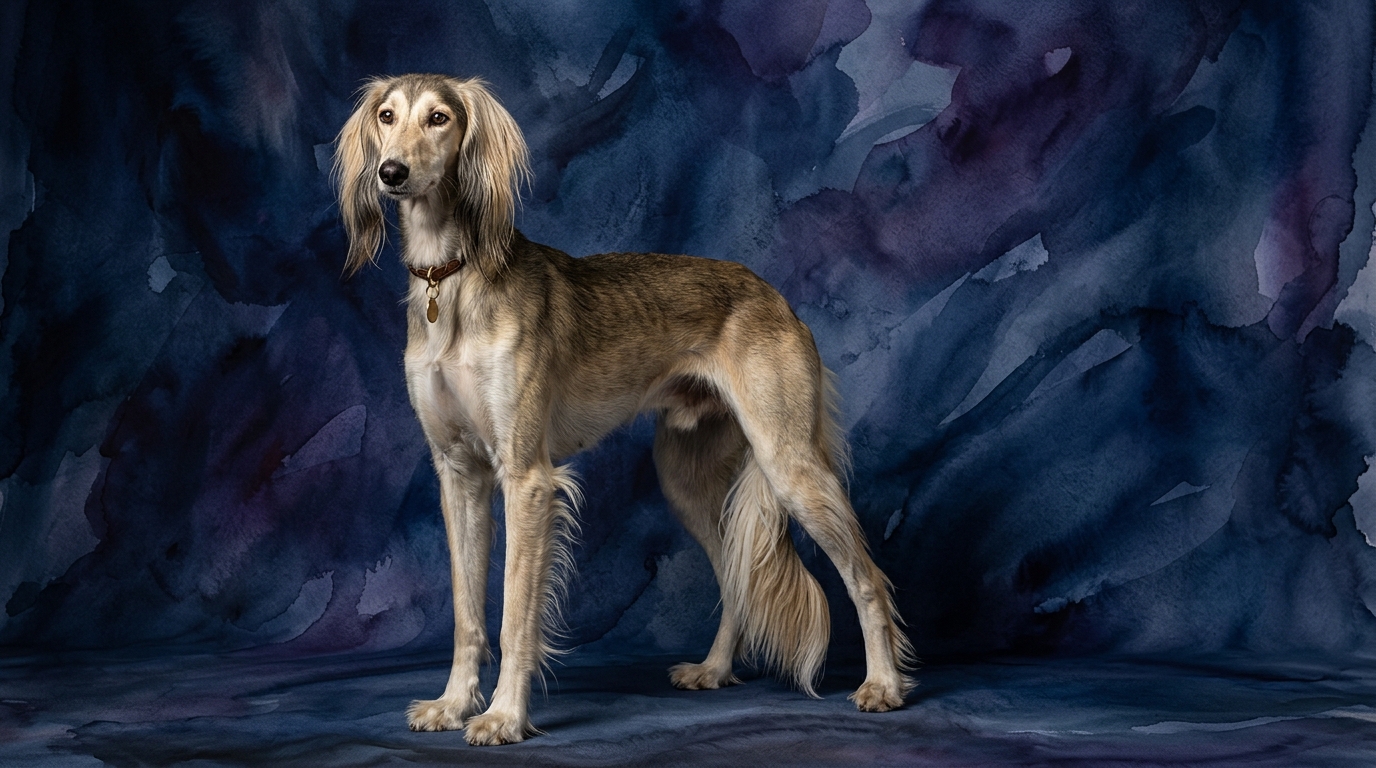
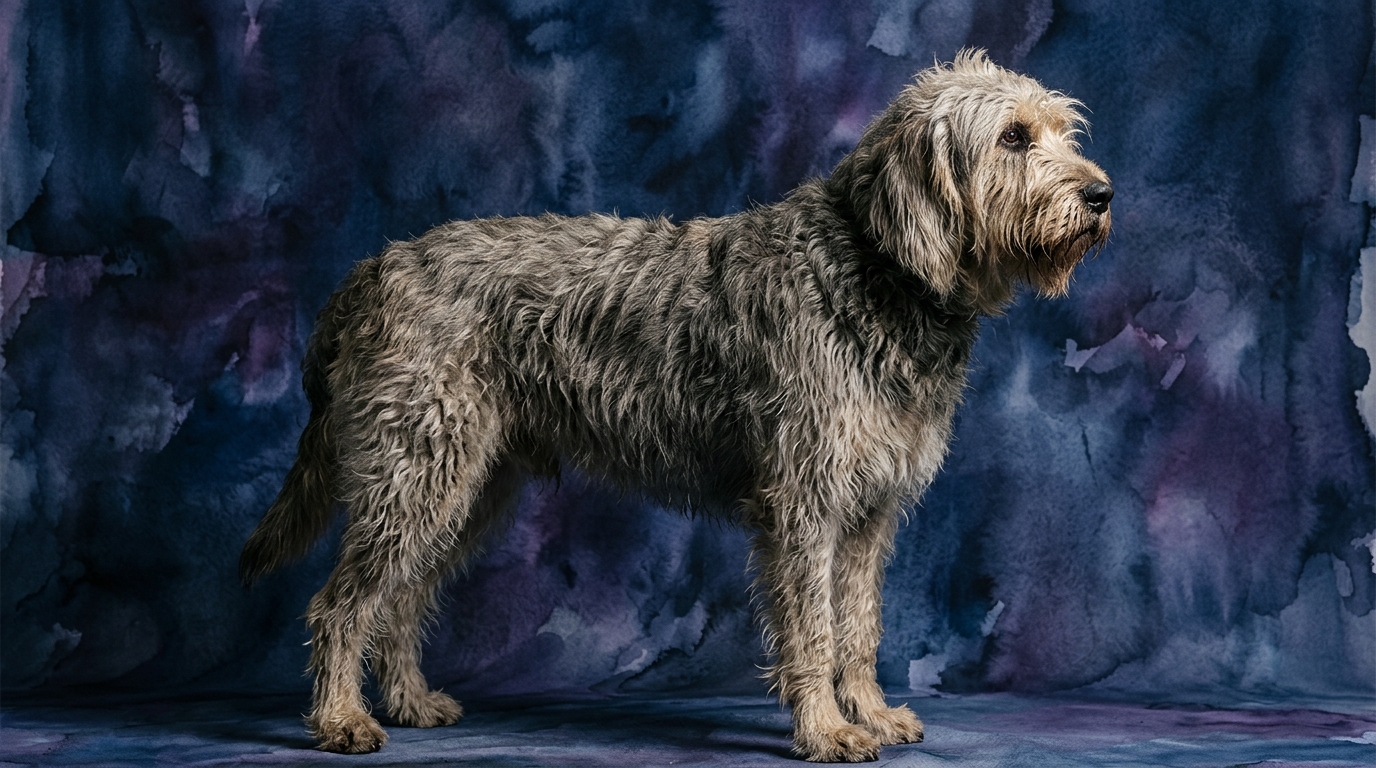
Side-by-side IQ profile
The Saluki, a sighthound of ancient lineage, and the Otterhound, a scenthound with a rich history, present a fascinating study in cognitive differentiation despite their matching numerical scores. For both breeds, a '3/5' indicates a solid, functional intelligence, but the *application* of this intelligence is deeply rooted in their ancestral roles.
For the Saluki, 'Problem Solving 3/5' often translates to a keen ability to strategize during a chase, calculating trajectories and anticipating prey movements across open terrain, rather than solving abstract puzzles. Their 'Training Speed 3/5' reflects a capacity to learn quickly, but often with a selective compliance rooted in their independent nature; they understand commands but may choose to obey only if it aligns with their perceived self-interest or a lack of more compelling visual stimuli. 'Social Intelligence 3/5' for a Saluki means they are observant and discerning, forming deep, loyal bonds with their chosen family, yet often maintaining a reserved demeanor with strangers, reading social cues with quiet dignity. Their 'Instinctive Drive 3/5' is overwhelmingly visual, an intense and unwavering focus on anything that moves, a primal urge to chase. Finally, 'Memory 3/5' in a Saluki typically involves an excellent recall of visual landmarks, established routes, and the mechanics of past successful pursuits.
The Otterhound, in contrast, applies its 'Problem Solving 3/5' to the intricate world of scent, expertly deciphering complex trails, differentiating individual odors, and persisting tirelessly to locate a hidden source. Their 'Training Speed 3/5' implies that while they can grasp commands, their powerful olfactory drive can make them highly distractible, requiring consistent, engaging methods to maintain focus over their nose. 'Social Intelligence 3/5' in an Otterhound manifests as a boisterous, gregarious nature; they are pack-oriented, eager to participate in family activities, and responsive to the moods and intentions of their human companions, often displaying a charming, clownish affection. Their 'Instinctive Drive 3/5' is a relentless pursuit of scent, an endurance-based tracking ability that can override almost all other stimuli. An Otterhound's 'Memory 3/5' is often expressed through an exceptional recall of scent profiles, the intricacies of past trails, and the routines associated with their beloved family unit.
Where Saluki excels cognitively
The Saluki's cognitive strengths lie profoundly in areas demanding visual acuity, swift decision-making, and independent action. Their 'Problem Solving 3/5' shines brightest when faced with dynamic, visually-driven challenges, such as navigating complex terrain at speed or strategically outmaneuvering a fast-moving object. This isn't about abstract thought, but rather a highly specialized, intuitive form of problem-solving honed over millennia for the chase. Their 'Memory 3/5' is particularly adept at spatial recall, remembering precise routes and visual cues, which is crucial for efficient hunting and navigation in vast landscapes. This visual memory allows them to quickly assess and react to changes in their environment, making them exceptionally responsive to fleeting opportunities. The Saluki's independent streak, often misconstrued as stubbornness, is a cognitive advantage in situations where quick, autonomous decisions are paramount, allowing them to act without waiting for human direction when their instincts are engaged.
Where Otterhound excels cognitively
The Otterhound's cognitive prowess is deeply intertwined with its extraordinary olfactory capabilities and its history as a cooperative hunter. Their 'Problem Solving 3/5' is unparalleled when it comes to scent work; they excel at unraveling intricate scent puzzles, following faint trails across challenging environments, and distinguishing specific odors with remarkable precision. This isn't just about sniffing; it's about processing complex sensory information to build a mental map of a scent's origin and path. Their 'Instinctive Drive 3/5', while strong, is also coupled with a persistent, methodical approach, allowing them to maintain focus on a trail for extended periods, enduring physical and mental fatigue. The Otterhound's 'Social Intelligence 3/5' also grants them an edge in collaborative activities; they thrive in a 'pack' environment, understanding group dynamics and often working well with humans or other dogs towards a common goal, making them excellent partners in scent games or tracking sports where teamwork is beneficial. Their 'Memory 3/5' excels in retaining a vast library of scent profiles and the learned associations with those scents, a vital asset for their working heritage.
Which is easier to train and why
When comparing the Saluki and Otterhound, both scoring 'Training Speed 3/5', the perceived ease of training diverges significantly due to their inherent breed characteristics. Salukis can be perceived as more challenging because their independence and strong visual prey drive often lead to selective hearing. They are capable of learning commands quickly, but their willingness to execute them can depend heavily on the presence of distracting visual stimuli or their assessment of whether compliance serves their immediate interest. Training a Saluki often requires understanding their sighthound nature, utilizing positive reinforcement, and ensuring high-value rewards that can compete with their innate desires, especially in environments where their chase instinct might be triggered. Their learning is more about convincing them cooperation is worthwhile, rather than a simple matter of comprehension.
Otterhounds, while also scoring 'Training Speed 3/5', present a different set of training hurdles, primarily stemming from their powerful scent drive and boisterous, sometimes clownish, personality. They are often eager to please and enjoy interaction, but their nose can be a formidable distraction, pulling their attention away from commands. Consistency, patience, and making training feel like a fun game are crucial for an Otterhound. They respond well to positive reinforcement and can be quite amenable to learning when their environment is controlled and their focus is on you. However, introducing distractions, particularly enticing scents, can quickly derail a session. Therefore, neither breed is 'easy' in the conventional sense, but the Saluki's challenge lies in its independent spirit and selective engagement, while the Otterhound's challenge stems from its overwhelming sensory focus on scent and its exuberant, sometimes unfocused, energy.
Which suits active owners vs relaxed owners
For owners seeking a companion that aligns with their lifestyle, the distinctions between Saluki and Otterhound become particularly clear, despite their shared 'Instinctive Drive 3/5' and 'Memory 3/5'. The Saluki, while capable of bursts of incredible speed, is often described as a '45-mph couch potato.' They require significant opportunities for high-speed running in a secure, fenced area, such as lure coursing or a large private yard, to satisfy their sighthound instincts. However, once their exercise needs are met, they are typically calm, quiet, and elegant indoors, often preferring to lounge on soft surfaces. This makes them suitable for active owners who understand and can provide for their specific, intense exercise requirements, but also appreciate a relaxed, dignified presence in the home. They are not dogs for casual, on-leash strolls as their prey drive can be overwhelming.
The Otterhound, conversely, is better suited for consistently active owners who enjoy robust outdoor activities and are prepared for a more boisterous companion. Their 'Instinctive Drive 3/5' is geared towards endurance and tracking, meaning they benefit from long walks, hikes, or even swimming, often with opportunities to engage their powerful nose. They need consistent, moderate exercise to prevent boredom and destructive behaviors. While affectionate, they are less inclined to be quiet, sedate house dogs compared to Salukis; their energy levels are more sustained and require regular outlets. Owners who prefer a truly relaxed, low-activity lifestyle would likely find the Otterhound's needs overwhelming. They thrive with owners who embrace adventure and are willing to engage with their dog's scent-driven world, even if it means getting a bit muddy.
The Verdict
Choose the Saluki if you are an owner who appreciates independence, can provide secure outlets for intense bursts of speed, and desires a serene, elegant companion indoors after their exercise needs are met.
Opt for the Otterhound if you are an active individual or family who enjoys outdoor adventures, is willing to engage with a dog's powerful scent drive, and seeks a boisterous, affectionate, and resilient companion.
🧠 Find Your Pet's IQ Score
Our Pet IQ Lab assessment covers 25+ tests across 5 cognitive dimensions — personalized to your breed.
Take the Full IQ Test →Frequently Asked Questions
Are Salukis good with children?
Salukis can be good with older, respectful children who understand their reserved nature and need for quiet. They are not typically boisterous playmates for very young children and prefer a calm home environment.
Do Otterhounds require a lot of grooming?
Otterhounds have a dense, wiry double coat that requires weekly brushing to prevent matting and regular attention to their ears to prevent infections. Their coat is designed to be water-resistant and can pick up debris.
What are the main differences in their exercise needs?
Salukis need intense, high-speed sprints in a secure area, followed by long periods of rest. Otterhounds require sustained, moderate exercise like long walks, hikes, or swimming, often incorporating scent work to satisfy their drive.