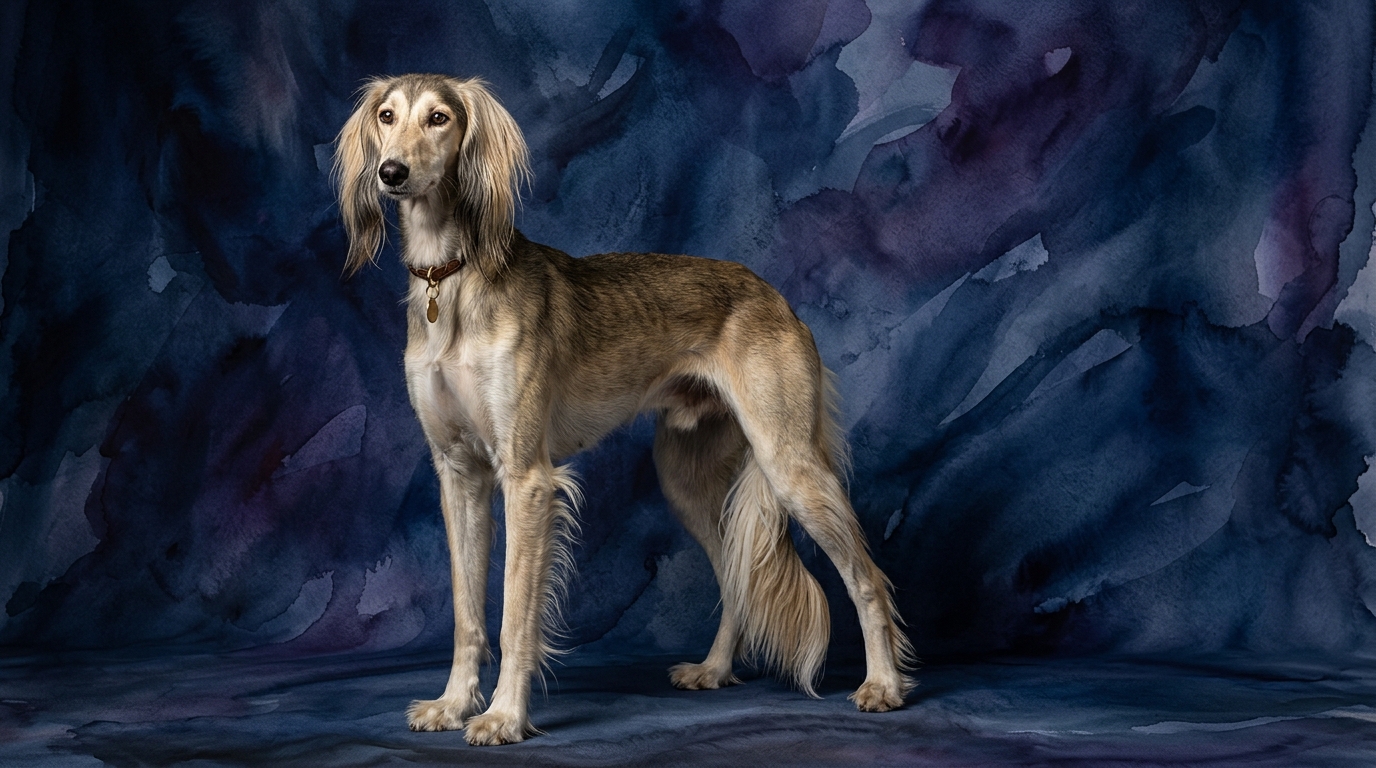
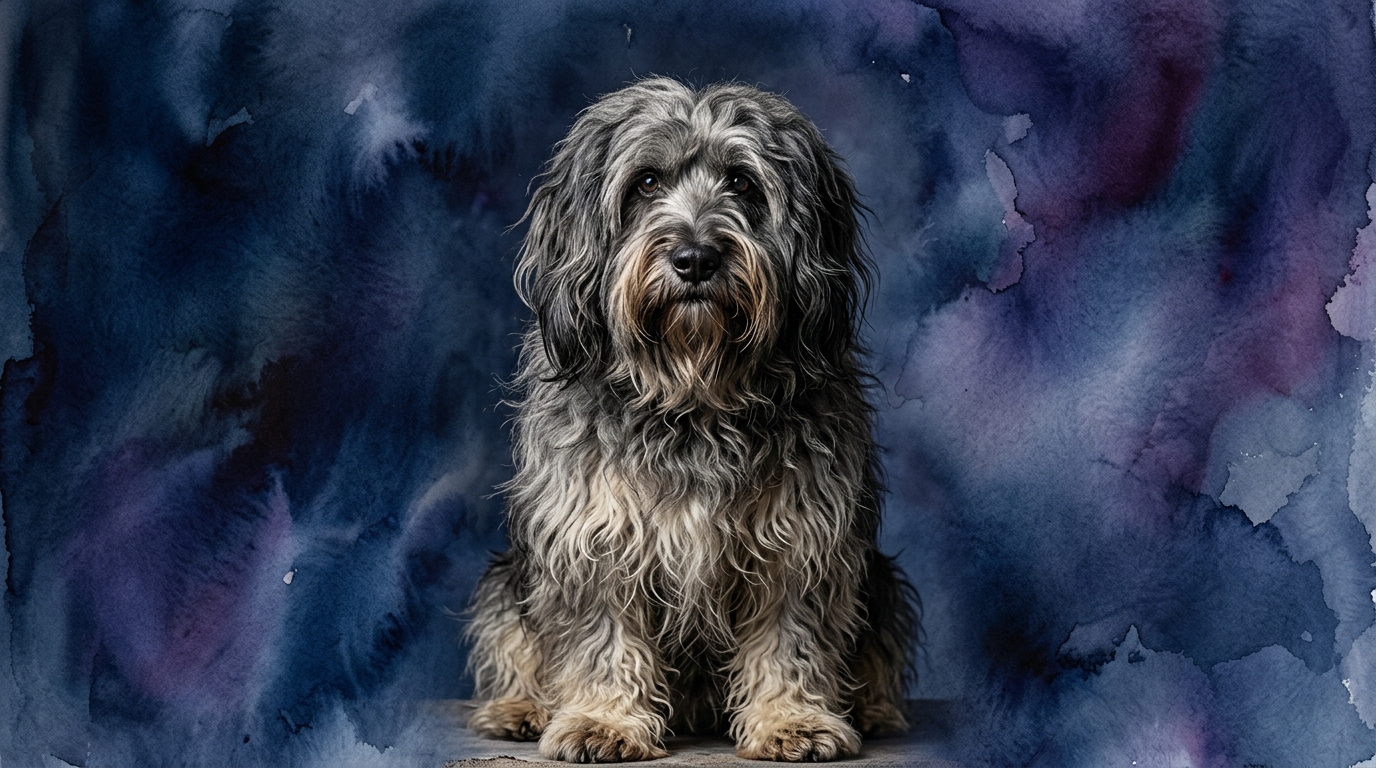
Side-by-Side IQ Profile: Saluki vs. Polish Lowland Sheepdog
At first glance, the Cosmic Pet Pet IQ Lab scores for both the Saluki and the Polish Lowland Sheepdog appear identical, each breed registering a solid 3/5 across all five cognitive dimensions. However, these identical scores belie a world of qualitative differences rooted deeply in their ancestral roles and inherent temperaments. Understanding these nuances requires looking beyond the numbers to the specific manifestations of their abilities.
The Saluki, a sighthound of ancient lineage, exhibits a Problem Solving score of 3/5. For this breed, problem-solving often manifests as independent strategic thinking, particularly in pursuit scenarios. This might involve calculating complex trajectories to intercept fast-moving objects or finding the most efficient path across varied terrain, reflecting their heritage as hunters in open landscapes. Their Training Speed also stands at 3/5, which for a Saluki often means they learn quickly when the task aligns with their intrinsic motivations, but may require more creative engagement from a trainer due to their independent spirit rather than a strong desire to please. Social Intelligence, at 3/5, typically translates to a deep, discerning bond with their immediate family, often accompanied by an elegant aloofness towards strangers. They are acutely aware of their human companions' emotional states but may not overtly seek constant interaction. Their Instinctive Drive, also 3/5, is powerfully expressed through their strong prey drive and an inherent need to run and chase. Finally, their Memory, rated 3/5, is excellent for recalling environmental layouts, habitual routines, and the locations of comfort or interest, crucial for navigating large territories.
Conversely, the Polish Lowland Sheepdog (PON), a member of the herding group, also scores 3/5 for Problem Solving, but this typically involves dynamic, real-time decision-making in complex social environments. They excel at strategizing how to manage and move groups, anticipate behaviors, and adapt to changing variables, reflecting their role in controlling livestock. Their Training Speed of 3/5 indicates they are capable learners, often eager to engage in structured activities and master commands, though they may require consistent reinforcement and a clear purpose for the task. The PON's Social Intelligence, also 3/5, is characterized by a watchful, attentive nature, often demonstrating a strong awareness of their family's needs and a protective loyalty. They are generally more outwardly expressive in their social interactions than a Saluki. Their Instinctive Drive, 3/5, is channeled into herding behaviors—gathering, nudging, and maintaining order—which can sometimes extend to their human family members. Their Memory, also 3/5, is robust for remembering intricate sequences of commands, the identities and habits of their 'flock,' and the boundaries of their perceived territory, essential for their working role.
Where the Saluki Wins Cognitively
Despite identical scores, the Saluki's cognitive strengths shine particularly in domains requiring independent thought and spatial awareness over vast distances. Their 3/5 Problem Solving, when applied to navigating complex open spaces or devising strategies for individual pursuits, often surpasses the typical herding breed's approach. A Saluki excels at processing visual cues at a distance, making rapid calculations about speed and trajectory, and executing a plan without constant human direction. This self-reliance in decision-making, honed over centuries of hunting, means they are less likely to look to their owner for cues in situations demanding immediate, autonomous action.
Furthermore, their 3/5 Memory, combined with their instinctive drive, makes them exceptional at recalling specific routes or visual landmarks encountered during their explorations. If a Saluki has discovered an interesting scent trail or a particularly good vantage point, they are likely to remember it with precision for future visits. This spatial memory, coupled with their independent problem-solving, positions them as masters of navigating their environment and pursuing individual goals with focused determination, a distinct cognitive advantage in tasks requiring self-directed exploration and execution.
Where the Polish Lowland Sheepdog Wins Cognitively
The Polish Lowland Sheepdog's cognitive advantages become apparent in scenarios demanding adaptability, responsiveness, and nuanced social interpretation. Their 3/5 Problem Solving is geared towards dynamic, interactive challenges, such as adjusting tactics based on the unpredictable movements of a group or quickly understanding a new, multi-step command sequence. This breed thrives on tasks that require sequential thinking and the ability to modify their behavior in response to changing external stimuli, making them particularly adept at learning intricate routines and dog sports that involve complex patterns and handler communication.
The PON's 3/5 Social Intelligence, while scoring the same as the Saluki's, manifests as a more overtly communicative and responsive interaction style. They are generally more attuned to subtle human body language and vocal inflections, making them highly receptive to their owner's moods and intentions. This sensitivity, combined with their instinctive drive to manage and organize, gives them an edge in collaborative problem-solving, where understanding human direction and working as part of a team is paramount. They excel at tasks where their cognitive abilities are channeled through partnership, rather than solitary action, showcasing a different but equally valuable form of intelligence.
Which is Easier to Train and Why
When comparing ease of training, the Polish Lowland Sheepdog generally presents a more straightforward experience for the average owner, despite both breeds scoring 3/5 in Training Speed. The key difference lies in their inherent motivations and historical roles. The PON, as a herding breed, possesses an intrinsic desire to work collaboratively with humans and respond to direction. Their 3/5 Training Speed means they learn commands and routines efficiently when given clear instructions and positive reinforcement, often showing a keenness to engage in structured learning activities. Their herding instinct translates into a willingness to be guided and to follow a leader, making them receptive to consistent training methods.
The Saluki, conversely, with their 3/5 Training Speed, learns quickly but often with a strong independent streak. Their sighthound heritage means they were bred to make autonomous decisions during the hunt, relying on their own judgment rather than waiting for human commands. This independence can translate into a perception of stubbornness during training; they might understand what is being asked but choose whether or not to comply based on their own priorities or environmental distractions. Training a Saluki often requires more patience, creativity, and a deep understanding of their motivations, frequently involving high-value rewards and making training feel like a game rather than a chore. While they are capable of learning a wide array of commands, their application in real-world scenarios might be more selective than that of a herding breed, making them comparatively more challenging for novice trainers seeking consistent, immediate obedience.
Which Suits Active Owners vs. Relaxed Owners
The distinction between these two breeds regarding suitability for active versus relaxed owners is quite pronounced, despite both possessing a 3/5 Instinctive Drive. The Saluki, with its profound prey drive and heritage as a long-distance runner, is best suited for active owners who can provide ample opportunities for safe, off-leash running in securely fenced areas. Their need to gallop and chase is fundamental to their well-being; a relaxed owner who cannot fulfill this intense physical requirement may find their Saluki becoming restless or engaging in undesirable behaviors born of boredom. While elegant and calm indoors, their outdoor energy bursts are non-negotiable, demanding an owner who actively enjoys and facilitates vigorous exercise.
The Polish Lowland Sheepdog also requires regular activity, but its needs are often more adaptable to varied forms of exercise and mental stimulation, making them a better fit for a broader range of active owners. Their 3/5 Instinctive Drive manifests as a need for purposeful activity, whether it's long walks, hiking, dog sports like agility or obedience, or even 'herding' their family members in the backyard. While they certainly enjoy physical exertion, their mental stimulation requirements are equally important, making them suitable for owners who enjoy engaging in training, puzzle toys, and interactive play. A more 'relaxed' owner might still find a PON manageable if they commit to consistent mental engagement and moderate daily physical activity, as their desire to work with their human often outweighs the sheer need for speed seen in the Saluki.
The Verdict: When to Choose Each Breed
The Verdict
Choose the Saluki if you are an active owner who cherishes an independent, graceful companion and can consistently provide safe, expansive spaces for them to express their profound need to run and chase. They thrive with patient individuals who appreciate their discerning affection and unique, self-reliant intelligence.
Opt for the Polish Lowland Sheepdog if you are an active owner seeking a responsive, engaged, and highly trainable partner for various activities, from structured sports to family adventures. They excel with owners who enjoy collaborative problem-solving and can provide consistent mental and physical stimulation, appreciating their watchful loyalty.
🧠 Find Your Pet's IQ Score
Our Pet IQ Lab assessment covers 25+ tests across 5 cognitive dimensions — personalized to your breed.
Take the Full IQ Test →Frequently Asked Questions
Are Salukis good with children?
Salukis can be good with older, respectful children who understand their generally reserved nature and appreciate their need for quiet spaces. They are not typically boisterous playmates and may prefer a calm environment, making them less ideal for very young, boisterous children.
Do Polish Lowland Sheepdogs bark a lot?
Polish Lowland Sheepdogs can be prone to barking, a trait rooted in their herding and guarding instincts to alert their flock or family to perceived threats. Consistent training and early socialization can help manage this tendency, but potential owners should be prepared for a vocal companion.
Can Salukis live in apartments?
While Salukis are calm indoors and can adapt to apartment living, it's only feasible if their significant exercise needs, particularly their requirement for regular, high-speed running in secure areas, are met daily. Without sufficient outlet for their energy, an apartment Saluki may become restless and unhappy.