Side-by-Side Cognitive Profiles
The Cosmic Pet Pet IQ Lab provides a structured framework for understanding canine cognition, breaking down intelligence into five key dimensions. Examining the Saluki and the Toy Poodle through this lens illuminates their inherent capabilities and tendencies.
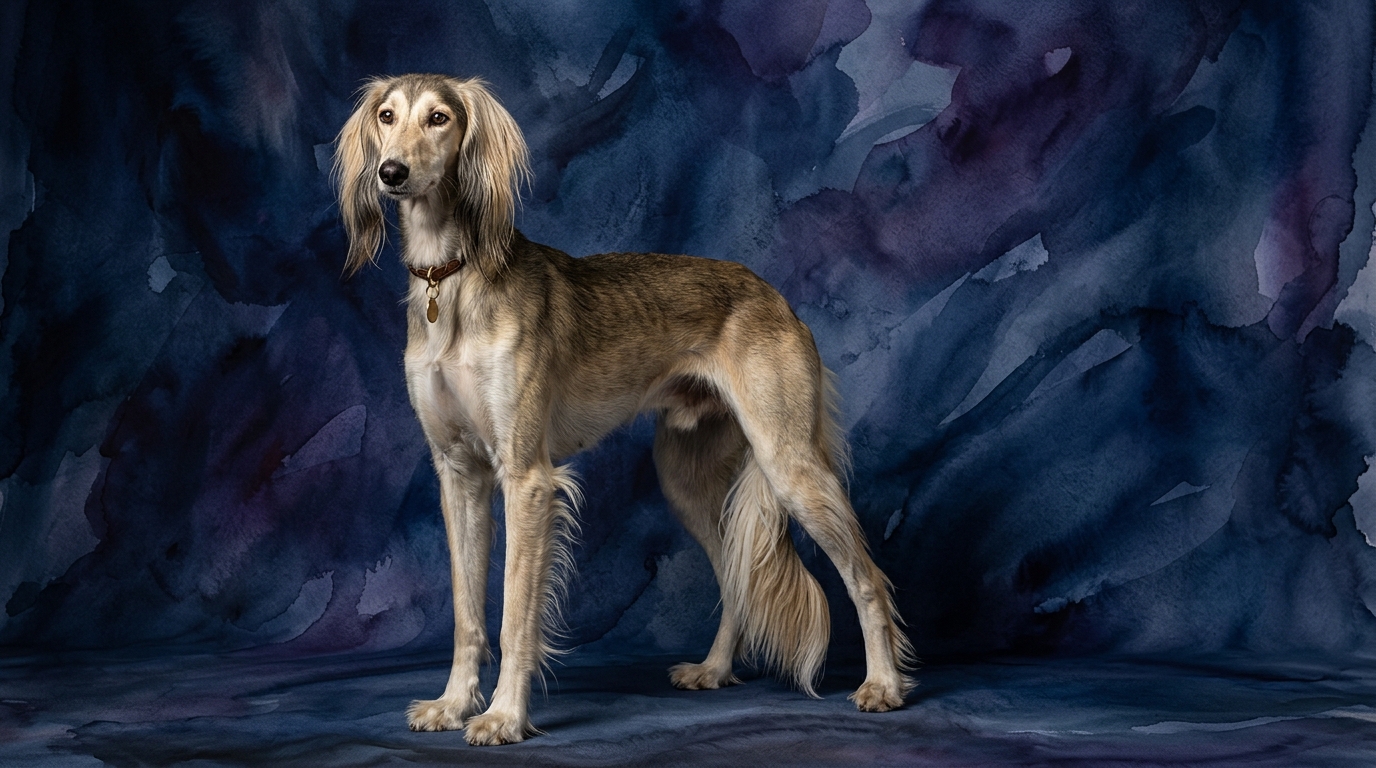
The Saluki, an ancient sighthound, is not included in Stanley Coren’s ranking system, which primarily assesses obedience-working intelligence. Its IQ profile includes: Problem Solving at 3/5, reflecting a capacity for independent thought in its historical role but less inclination for human-directed puzzles; Training Speed at 3/5, indicating they learn at a moderate pace, often requiring patience and motivation tailored to their independent nature; Social Intelligence at 3/5, suggesting they are observant of their environment and companions but typically reserved rather than overtly people-pleasing; Instinctive Drive at 3/5, highlighting their pronounced sighthound prey drive alongside a calm demeanor indoors; and Memory at 3/5, signifying a good retention of routines and familiar faces, though perhaps not complex command sequences with the same precision as other breeds.
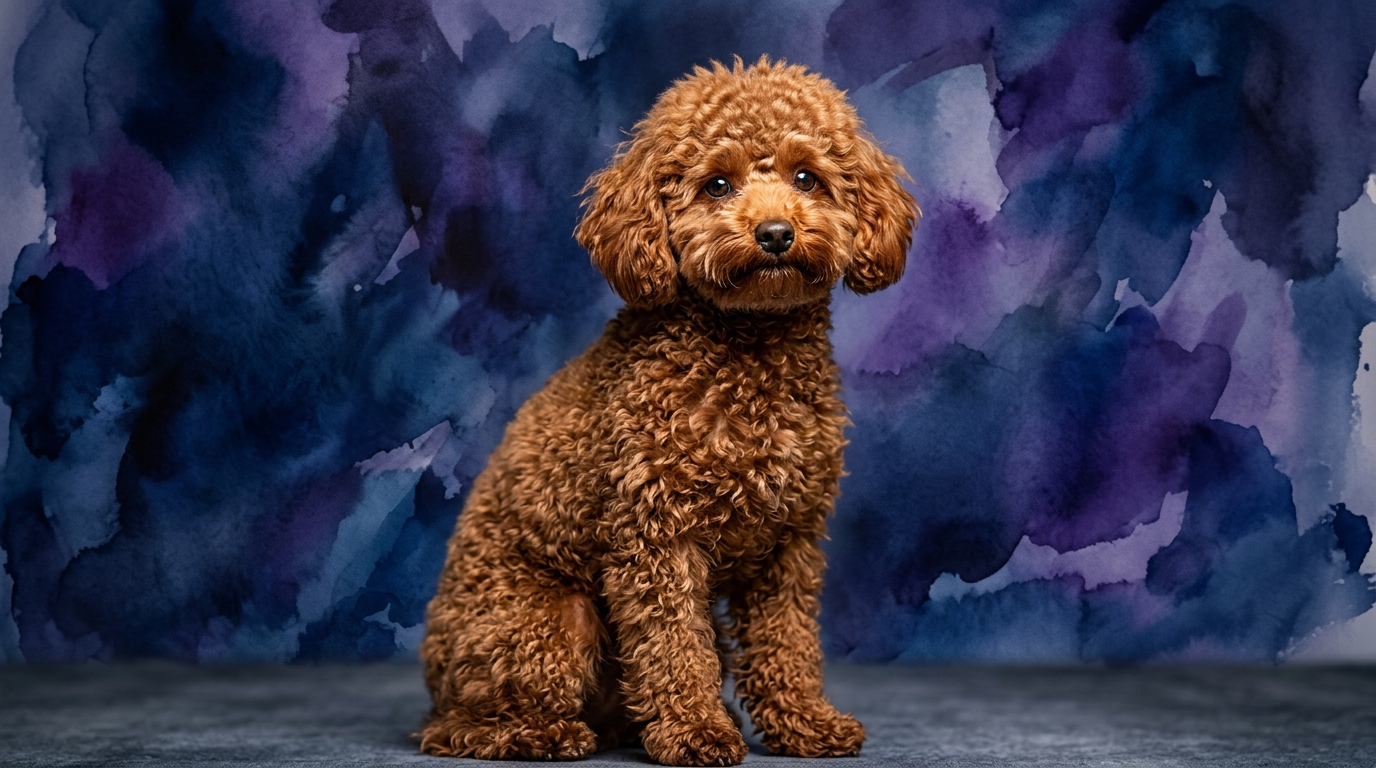
In contrast, the Toy Poodle, a descendant of water retrievers, holds a notable Coren rank of #2, indicating exceptional obedience-working intelligence. Its IQ profile is distinctly different: Problem Solving at 5/5, demonstrating a superior ability to analyze situations, learn complex tasks, and adapt strategies; Training Speed at 5/5, meaning they grasp new commands and concepts with remarkable rapidity, often needing minimal repetitions; Social Intelligence at 3/5, showing an awareness of human cues and emotions, though not necessarily an overwhelming drive for constant validation; Instinctive Drive at 3/5, reflecting a retained drive for activity and engagement, often expressed through play or retrieving, but generally less intense than a sighthound's prey drive; and Memory at 5/5, signifying an outstanding capacity to recall vast amounts of information, from training cues to social interactions, over extended periods.
Where the Saluki Excels Cognitively
The Saluki's cognitive strengths lie in its independence and self-reliance, qualities honed over millennia as a hunting companion in vast desert landscapes. While its Problem Solving score is 3/5, this reflects a different kind of intelligence: the ability to make autonomous decisions in dynamic environments without constant human instruction. A Saluki excels at assessing situations and reacting swiftly based on its own judgment, particularly when it involves spotting and pursuing quarry, a task requiring keen visual processing and strategic pursuit.
Their 3/5 in Social Intelligence, while not indicating effusive displays, points to a subtle and discerning understanding of their human companions and surroundings. They form deep, often reserved bonds, demonstrating an intuitive grasp of their family's routines and emotional states without needing to be the center of attention. This capacity for quiet observation and independent action allows them to navigate their world with a quiet dignity, relying on their own perceptions rather than always seeking direction.
Where the Toy Poodle Excels Cognitively
The Toy Poodle's cognitive prowess shines in its exceptional capacity for learning and cooperative engagement. With a perfect 5/5 in Problem Solving, they readily tackle intricate challenges, from mastering multi-step tricks to excelling in dog sports like agility or obedience. This reflects an eagerness to understand and manipulate their environment in ways that align with human goals, often showing an impressive ability to generalize learned concepts to novel situations.
Their 5/5 in Training Speed and Memory further underscore their cognitive advantages in structured learning environments. Toy Poodles can pick up new commands with remarkable speed, often requiring only a few repetitions, and retain that information over long periods. This makes them highly adaptable to complex training regimens and capable of building an extensive repertoire of behaviors. Their cooperative nature, combined with their sharp memory, allows them to consistently perform tasks with precision and enthusiasm, making them exceptionally rewarding partners for those who enjoy active mental engagement with their canine companions.
Training: Saluki's Independence vs. Toy Poodle's Eagerness
When it comes to ease of training, the Toy Poodle distinctly outshines the Saluki, a difference rooted in their fundamental behavioral drives and cognitive profiles. The Toy Poodle's 5/5 scores in Training Speed, Problem Solving, and Memory translate into a dog that not only learns quickly but actively enjoys the process of cooperative learning. They are typically keen to engage with their handlers, motivated by praise, treats, and the sheer joy of interaction. Their ability to remember complex sequences and generalize commands makes advanced obedience and trick training a natural fit.
The Saluki, with 3/5 across these same categories, presents a different training dynamic. They are not unintelligent, but rather independent thinkers. Their sighthound heritage means they are often more motivated by their environment – a distant movement, an interesting scent – than by a human command, especially if the command conflicts with their innate drives. Training a Saluki requires immense patience, consistency, and a deep understanding of their motivations. They respond best to positive reinforcement, often needing compelling reasons to comply rather than simply obeying out of a desire to please. Real behavioral differences include a Saluki's tendency to bolt after perceived prey, making recall challenging in open spaces, whereas a Toy Poodle is generally more focused on its handler and less susceptible to environmental distractions during training sessions.
Matching Canine Cognition to Owner Lifestyles
The distinct cognitive profiles of the Saluki and Toy Poodle mean they thrive in different types of households and with owners who understand their unique needs. The Saluki, despite its elegant appearance, is not a 'relaxed' dog in terms of its exercise requirements, though it is calm indoors. Owners must provide opportunities for intense, short bursts of running in securely fenced areas where their strong instinctive drive (3/5) to chase can be safely indulged. Their independent problem-solving (3/5) means they appreciate an owner who respects their autonomy and doesn't demand constant engagement. A Saluki suits an owner who understands the sighthound temperament, appreciates a reserved but deeply loyal bond, and can provide appropriate outlets for their physical and mental energy without expecting unwavering obedience.
The Toy Poodle, conversely, is an excellent match for owners who enjoy consistent mental engagement and cooperative activities. Their high scores in problem-solving (5/5), training speed (5/5), and memory (5/5) mean they thrive on learning new things, participating in dog sports, or even just engaging in regular puzzle toys and interactive play. While they can adapt to a more relaxed lifestyle, they still require consistent mental stimulation to prevent boredom. An active owner for a Toy Poodle isn't necessarily one who runs marathons but one who is active in teaching, playing games, and regularly engaging their dog's sharp mind. They are also highly adaptable to various living situations, making them suitable for both experienced and novice owners who are committed to mental enrichment.
The Verdict
Choose a Saluki if you value an independent, graceful companion with a reserved loyalty, are prepared to provide secure spaces for their specific exercise needs, and appreciate a dog that thinks for itself.
Opt for a Toy Poodle if you seek a highly trainable, engaging, and adaptable companion eager to participate in various learning activities and thrives on consistent mental and social interaction.
🧠 Find Your Pet's IQ Score
Our Pet IQ Lab assessment covers 25+ tests across 5 cognitive dimensions — personalized to your breed.
Take the Full IQ Test →Frequently Asked Questions
Are Salukis difficult to train?
Salukis are not inherently difficult to train, but they require patience, consistency, and a deep understanding of their independent sighthound nature. Their 3/5 training speed means they learn at a moderate pace and often need compelling motivation, as they prioritize their own instincts.
Do Toy Poodles need a lot of exercise?
Toy Poodles require regular exercise, but more importantly, significant mental stimulation due to their 5/5 problem-solving and memory. Daily walks, interactive play, and consistent training sessions are crucial to keep their keen minds engaged and prevent boredom.
Why isn't the Saluki on the Coren intelligence ranking?
Stanley Coren's ranking primarily assesses 'obedience-working intelligence,' focusing on a dog's ability to learn and comply with human commands. The Saluki's independent nature and strong instinctive drives, while not indicative of lower intelligence, mean they typically don't excel in the cooperative tasks measured by this specific metric.