Side-by-Side Cognitive Profile: Samoyed vs. American Staffordshire Terrier
To understand the unique mental landscapes of the Samoyed and the American Staffordshire Terrier, we turn to The Cosmic Pet Pet IQ Lab's five core dimensions of canine intelligence. These metrics offer a granular view of their cognitive abilities, shaped by their distinct histories and roles.
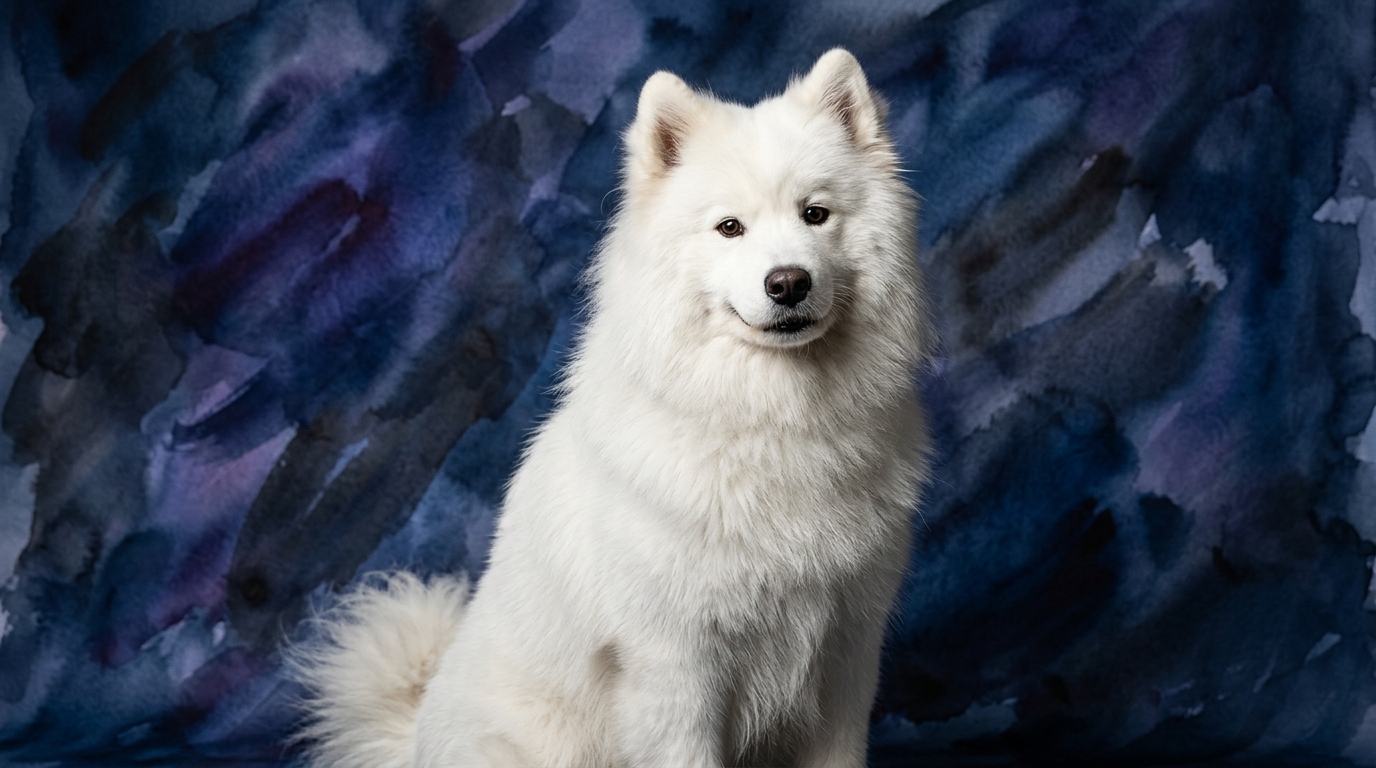
The Samoyed, a dog from the Working group with a Coren rank of #33, presents a fascinating blend of cognitive strengths. Their problem-solving ability is rated at 3/5, indicating a moderate capacity to navigate novel situations and figure out solutions independently, often leaning on practical rather than abstract thought. Training speed also scores 3/5, meaning they learn new commands at a moderate pace, but their independent spirit requires consistent, positive reinforcement. Where Samoyeds truly excel is in social intelligence, earning a perfect 5/5, showcasing an exceptional capacity to understand and respond to human emotions and cues, fostering deep bonds. Their instinctive drive is strong at 4/5, reflecting a robust inclination for activities involving collaboration, pulling, or herding. Memory for the Samoyed is moderate at 3/5, allowing them to retain learned behaviors and routines with regular reinforcement.
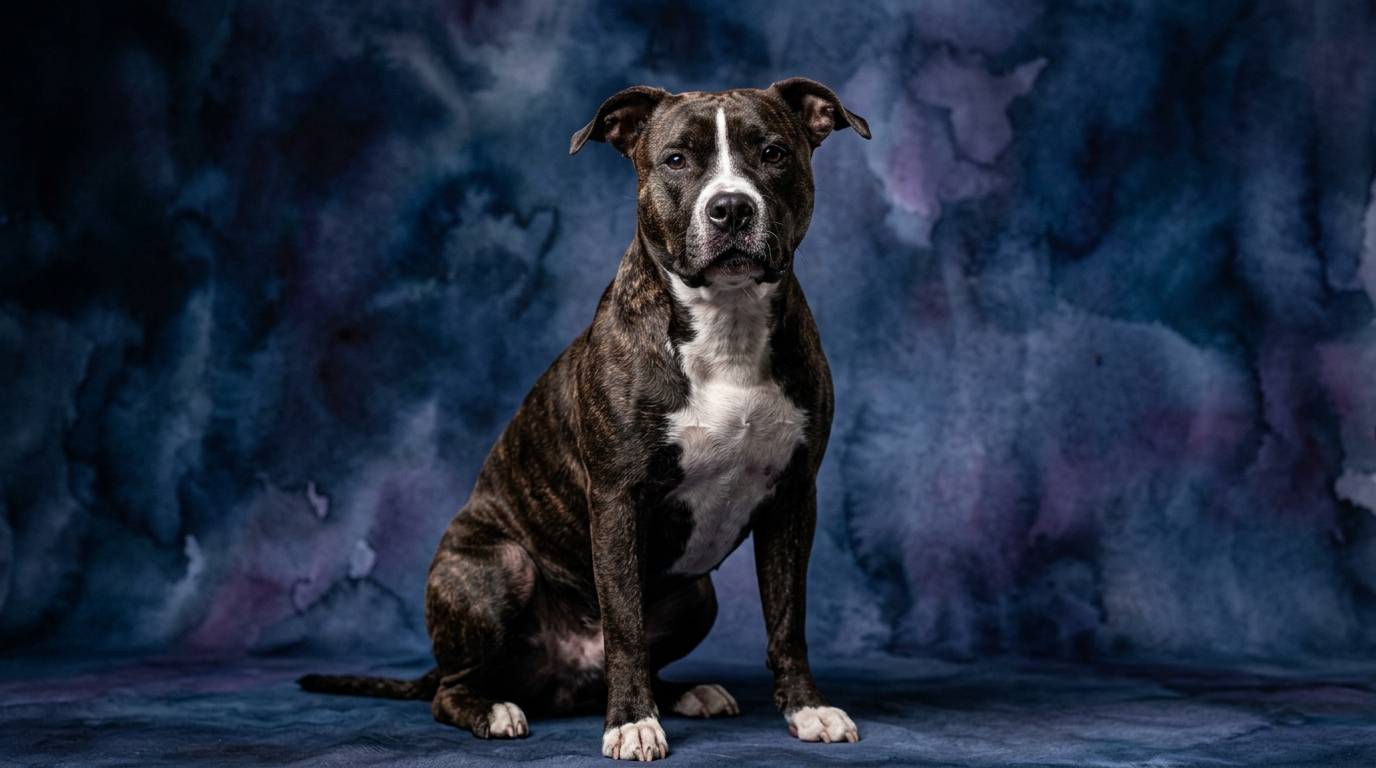
The American Staffordshire Terrier, a Terrier breed with a Coren rank of #48, offers a different cognitive blueprint. Their problem-solving ability is also 3/5, demonstrating a moderate aptitude for assessing situations and devising solutions, often with characteristic terrier tenacity. Training speed matches at 3/5, suggesting they learn new commands at a moderate pace, requiring engaging methods and a firm, consistent approach. Social intelligence for the AmStaff is 3/5, indicating a moderate capacity to read social cues; while affectionate and loyal to their family, they may not interpret subtle nuances from others with the same acuity as a Samoyed. Their instinctive drive is 3/5, primarily geared towards tasks involving strength, agility, and a certain degree of prey drive. A significant cognitive advantage for the American Staffordshire Terrier lies in their memory, scoring 4/5, making them adept at remembering commands, routines, and past interactions more reliably over time.
Where the Samoyed Wins Cognitively
The Samoyed truly excels in the realm of social intelligence, scoring a perfect 5/5, which is notably higher than the American Staffordshire Terrier's 3/5. This means a Samoyed is remarkably adept at reading human emotions, subtle body language, and even anticipating their owner's moods. Their millennia-long history of close partnership with humans, living within tents and assisting with reindeer herding and sled pulling, has finely tuned their ability to integrate into a human family unit as a deeply empathetic companion. This cognitive strength allows them to form exceptionally strong, nuanced bonds, often seemingly understanding unspoken cues and offering comfort or companionship precisely when it's needed. They are less likely to misinterpret human actions and more inclined to seek harmonious interaction.
Furthermore, the Samoyed's instinctive drive at 4/5 surpasses the American Staffordshire Terrier's 3/5. This reflects a robust inherent motivation for purposeful activity, often involving collaboration. For Samoyeds, this manifests as a strong desire to 'work' alongside their human, whether it's pulling a cart, participating in dog sports like agility or canicross, or even just carrying a backpack on a hike. Their cognitive processes are geared towards engaging in tasks with a clear objective, drawing on their ancestral roles. This drive isn't just about physical exertion; it's about mental engagement, finding satisfaction in contributing to a shared goal, which can make them very responsive to activity-based training and enrichment.
Where the American Staffordshire Terrier Wins Cognitively
The American Staffordshire Terrier holds a clear cognitive advantage in memory, earning a 4/5 compared to the Samoyed's 3/5. This superior recall means AmStaffs are generally more adept at retaining learned commands, complex sequences of behaviors, and remembering past experiences, both positive and negative, over extended periods. Their robust memory can be a significant asset in consistent training, as they are likely to pick up where they left off with less review, internalizing routines and boundaries more firmly. This strong memory also contributes to their deep loyalty, as they remember the kindness and care they receive, fostering a powerful bond with their chosen family.
While their problem-solving and training speed are on par, the AmStaff's tenacity, characteristic of the terrier group, often gives them an edge in persistent engagement with a task once they understand it. This isn't a score difference, but a qualitative aspect of their problem-solving approach. They might not be quicker to figure out a novel puzzle, but once they commit, their focus and determination can be quite formidable. This steadfastness, combined with their memory, means that once an AmStaff learns a particular behavior or task, they are likely to remember and execute it reliably, making them dependable partners in established routines and advanced obedience.
Training Dynamics: Which is Easier to Train?
Assessing which breed is 'easier' to train involves looking beyond just raw learning speed and considering their overall cognitive profile and inherent motivations. Both the Samoyed and the American Staffordshire Terrier score 3/5 in training speed, suggesting neither is inherently quicker than the other to grasp new commands. However, their distinct social intelligence and instinctive drives create different training dynamics.
The Samoyed's exceptional social intelligence (5/5) means they are highly attuned to their owner's desires and emotional state. This can make them incredibly eager to please and responsive to positive reinforcement, especially when the training involves interaction and partnership. Their strong instinctive drive (4/5) for purposeful activity also means they often thrive in training that feels like a collaborative 'job,' such as agility or sledding simulations. The challenge with Samoyeds often lies in their independent streak and moderate memory (3/5); they might understand what you want but choose not to comply if they don't see the immediate benefit or if their attention wanes. Consistency, engaging methods, and leveraging their desire for companionship are crucial.
In contrast, the American Staffordshire Terrier's moderate social intelligence (3/5) means they might not always be as finely tuned to subtle human cues, requiring clearer, more direct communication. Their instinctive drive (3/5) is less about collaborative work and more about focused determination and physical engagement. Where the AmStaff truly gains an advantage in 'ease' of training is their superior memory (4/5). Once an AmStaff learns a command or routine, they tend to retain it very well, reducing the need for constant refreshers. Their characteristic terrier tenacity, while sometimes perceived as stubbornness, can also translate into a strong focus once they are motivated and understand the task. Training an AmStaff demands a firm, consistent, and confident leader who can channel their drive and leverage their strong recall, ensuring they view training as an engaging and rewarding activity.
Lifestyle Match: Active vs. Relaxed Owners
When considering an owner's lifestyle, the cognitive and behavioral profiles of these two breeds offer distinct matches. The Samoyed, with an instinctive drive of 4/5, naturally suits active owners who enjoy engaging their dog in various purposeful activities. Their ancestral role as working dogs means they thrive on having a 'job,' whether it's long hikes, jogging, pulling activities like canicross, or participating in dog sports. Their high social intelligence (5/5) means they also crave significant interaction and companionship, making them ideal for owners who want a true partner in their adventures, rather than just a passive observer. A Samoyed requires consistent mental and physical stimulation; without it, their moderate problem-solving (3/5) might lead them to devise their own, potentially undesirable, forms of entertainment. Relaxed owners might find the Samoyed's need for engagement and their independent nature challenging, as a lack of outlets can lead to boredom and vocalization.
The American Staffordshire Terrier, with a moderate instinctive drive of 3/5, also benefits from an active lifestyle, but their needs can often be met with focused bursts of activity rather than sustained endurance. They enjoy vigorous play sessions, challenging training, and opportunities to expend energy, making them suitable for active owners who enjoy structured exercise like fetching, agility, or obedience work. While they are affectionate, their social intelligence (3/5) suggests they are somewhat less demanding of constant interactive companionship than a Samoyed, and their strong memory (4/5) allows them to settle into routines more readily. This makes them a potentially better fit for owners who appreciate active engagement but also value downtime, provided their exercise needs are consistently met. A relaxed owner who can commit to daily, intense exercise sessions, followed by calm indoor periods, might find an AmStaff manageable, whereas a Samoyed would likely require more constant, varied engagement.
The Verdict
Choose a Samoyed if you are an active, empathetic owner who desires a deeply socially intelligent companion eager to participate in collaborative activities and outdoor adventures, and you are prepared for their moderate training speed and independent spirit.
Opt for an American Staffordshire Terrier if you are a confident, consistent owner who values strong memory in training and can provide vigorous, focused exercise, appreciating a loyal companion whose affection is profound yet less overtly demanding of constant social interaction.
🧠 Find Your Pet's IQ Score
Our Pet IQ Lab assessment covers 25+ tests across 5 cognitive dimensions — personalized to your breed.
Take the Full IQ Test →Frequently Asked Questions
Do Samoyeds shed a lot?
Yes, Samoyeds are known for their dense double coat and are significant seasonal shredders, requiring regular grooming, especially during coat blowouts. Their coat is designed for cold climates, and maintenance is crucial to prevent matting.
Are American Staffordshire Terriers good with children?
American Staffordshire Terriers can be wonderful family dogs and are often very affectionate with children in their own family, provided they are well-socialized and trained from a young age. Supervision is always recommended with any dog and children.
Which breed is more vocal?
Samoyeds are generally more vocal, known for their 'Sammy smile' and a range of sounds including barking, howling, and the unique 'Sammy talk,' often used to express their feelings or demand attention. American Staffordshire Terriers are typically less vocal, usually barking only when necessary, such as alerting to visitors.