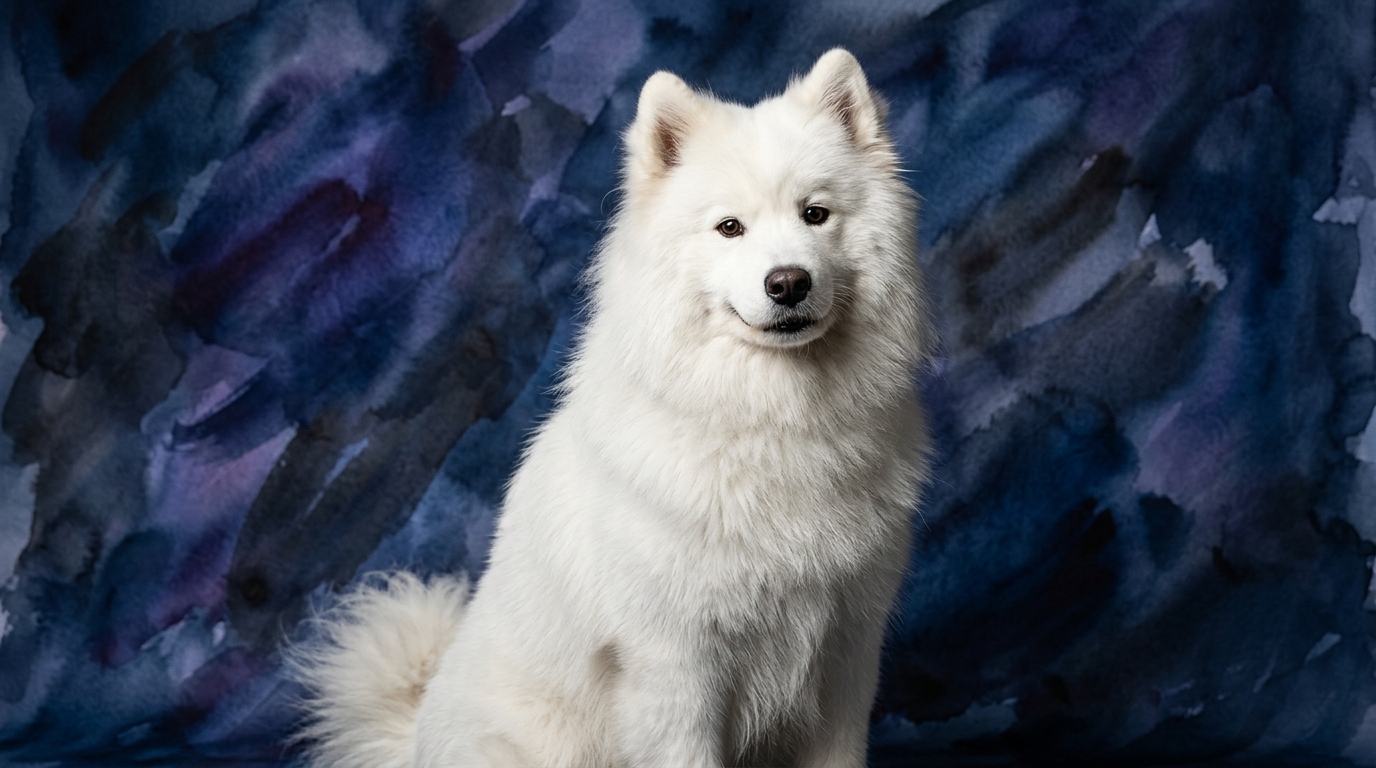

Side-by-Side Cognitive Profiles: Samoyed vs. Briard
The Cosmic Pet Pet IQ Lab's framework offers a detailed lens through which to compare the mental aptitudes of these two breeds, moving beyond generalized notions of cleverness. We assess five key dimensions: Problem Solving, Training Speed, Social Intelligence, Instinctive Drive, and Memory.
The Samoyed, a Working group dog with a Coren rank of #33, demonstrates a Problem Solving score of 3/5, indicating an ability to navigate familiar challenges but potentially requiring more guidance for novel situations, often relying on learned patterns. Its Training Speed is 3/5; these capable learners benefit from patient, consistent, and positive reinforcement, as their independent spirit means they aren't always quick to comply if they don't see immediate value or if their attention drifts. Where the Samoyed truly excels is in Social Intelligence, scoring a perfect 5/5, reflecting exceptional attunement to human emotions and social cues, making them highly empathetic and intuitive companions. Their Instinctive Drive is 4/5, possessing strong working instincts particularly for pulling and companionship, manifesting as a desire for purpose and activity. Finally, their Memory is 3/5, good at recalling learned commands and routines, especially those associated with positive experiences, though perhaps not retaining every detail with the same precision as some other breeds.
In contrast, the Briard, a Herding group dog with a Coren rank of #30, scores 4/5 in Problem Solving, demonstrating a capacity for analytical thought and often showing initiative in figuring out complex tasks. Its Training Speed is 4/5; generally eager to learn, they pick up new commands with enthusiasm and speed, thanks to a strong desire to please their handler. The Briard’s Social Intelligence is 3/5; they form deep bonds with their immediate family but can be reserved or discerning with strangers, with their social acumen primarily focused on their inner circle. Their Instinctive Drive is 3/5, with herding instincts present but often channeled into protective guardianship of their family rather than active flock management, possessing a strong sense of duty to their human 'flock.' The Briard also shines in Memory, scoring 4/5, exhibiting strong recall for commands, routines, and even specific events or people, tending to remember both positive and negative experiences.
Where the Samoyed Shines Cognitively
Samoyeds truly shine with a perfect 5/5 score in Social Intelligence. This isn't just about being friendly; it reflects a profound capacity to read and respond to human emotions and social cues with remarkable sensitivity. They intuit moods, offer comfort without prompting, and integrate seamlessly into family dynamics, often acting as emotional barometers for their households. This translates into a dog that understands nuanced interactions, making them exceptionally empathetic and intuitive companions who actively seek and reciprocate emotional connection, enriching the human-animal bond significantly. Their 4/5 in Instinctive Drive points to a strong, inherent motivation for purpose and activity, particularly reflecting their sled-pulling and companionship heritage. This drive isn't merely physical exertion; it's a mental engagement with tasks that provide a sense of contribution and belonging. When given appropriate outlets, like pulling a cart, participating in dog sports, or engaging in extensive interactive play, their mental energy is harmonized, leading to a satisfied and mentally stimulated dog rather than one prone to boredom.
Where the Briard Excels Cognitively
With a 4/5 rating, the Briard exhibits a higher aptitude for analytical thought and independent Problem Solving. This means they are more likely to assess a novel situation, strategize, and execute a solution on their own, whether it's figuring out how to open a gate or navigating a complex obstacle course to reach a desired item. Their herding background instilled a need for quick, independent decision-making in dynamic situations, a trait that translates into impressive cognitive flexibility and a capacity for strategic thinking. Scoring 4/5, Briards generally learn new commands and routines more rapidly. Their focus, combined with a strong desire to work alongside their handler, means they absorb lessons efficiently and with fewer repetitions. This isn't just about rote memorization; it’s about quickly grasping the 'why' behind a command and executing it reliably, often displaying a keen understanding of expectations. Their 4/5 Memory score indicates a superior ability to retain information over time, encompassing commands, routines, and even specific past events or people. This strong recall contributes significantly to their trainability and reliability, as they are less likely to "forget" learned behaviors or revert to undesirable habits, building a detailed mental map of their world and interactions.
Training Dynamics: Samoyed vs. Briard
The Briard typically presents as the easier breed to train, primarily due to their higher scores in Training Speed (4/5) and Memory (4/5), coupled with their problem-solving acumen. Briards possess a strong desire to please their handler and a focused work ethic, stemming from their herding roots where independent decision-making was paired with responsiveness to a shepherd's commands. They grasp concepts quickly and retain them reliably, meaning fewer repetitions are needed, and learned behaviors are more consistently performed, often with enthusiasm. Their analytical approach to tasks translates into a quicker understanding of complex sequences. Conversely, the Samoyed, with a 3/5 in Training Speed and Memory, and a more independent, playful streak, requires more patience and creative motivation. While intelligent, their training often needs to feel like a collaborative game rather than a strict command-and-obey exercise. They might test boundaries more frequently or get distracted if not sufficiently engaged, requiring consistent, positive reinforcement over longer periods to solidify behaviors and ensure compliance. Their social intelligence makes them keen on approval, but their independent spirit means persuasion is often more effective than pure command.
Lifestyle Match: Active vs. Relaxed Owners
Both breeds benefit from active engagement, but their ideal activity levels and types differ significantly. The Samoyed, with its 4/5 instinctive drive for purpose and activity, thrives with owners who can provide consistent opportunities for mentally and physically stimulating tasks, such as long walks, hiking, or dog sports like sledding or agility, which tap into their heritage. Their exceptional social intelligence also means they need significant interactive playtime and companionship; they are not content to be left alone for extended periods and can develop separation-related anxieties if their social needs aren't met. A relaxed owner who cannot commit to daily, engaging activity and extensive interaction might struggle to meet their needs, potentially leading to boredom-driven behaviors like excessive barking or destructive chewing. The Briard, while also needing activity, channels its energy differently. Its lower instinctive drive (3/5) doesn't mean it's lazy, but its exercise needs are often met through more structured activities like obedience training, herding trials, or brisk walks that also engage their problem-solving minds. They are less driven by endless physical exertion and more by purposeful interaction and mental challenges, often enjoying a job that requires thought. A relaxed owner who prioritizes consistent mental stimulation and structured, shorter bursts of physical activity over sheer endurance might find a Briard more manageable, provided they can still offer regular, engaging outings and consistent training that leverages their cognitive strengths. However, neither breed is suited for a truly sedentary lifestyle; both require commitment to their well-being.
The Verdict
Select the Samoyed if you value an extraordinarily empathetic, socially astute companion deeply woven into your family's emotional fabric, and you are prepared to channel their strong working drive into shared activities.
Opt for the Briard if you appreciate a dog with exceptional problem-solving capabilities, quick learning, and reliable memory for structured training, offering a devoted guardian that thrives on purposeful engagement.
🧠 Find Your Pet's IQ Score
Our Pet IQ Lab assessment covers 25+ tests across 5 cognitive dimensions — personalized to your breed.
Take the Full IQ Test →Frequently Asked Questions
Do Samoyeds and Briards have similar exercise requirements?
While both are active breeds, their exercise needs differ in nature. Samoyeds require consistent physical outlets to satisfy their strong instinctive drive, often enjoying activities like running or pulling, combined with significant social interaction. Briards, while also needing regular activity, benefit more from purposeful walks, training sessions, and mental challenges that engage their problem-solving skills, rather than purely endurance-based exercise.
Which breed is better with children, considering their social intelligence?
The Samoyed's 5/5 social intelligence makes them exceptionally intuitive and generally tolerant with children, often forming deep, empathetic bonds. The Briard, with 3/5 social intelligence, is devoted to its family but can be more reserved and protective, requiring careful socialization with children to ensure positive interactions, especially with non-family members.
How do their Coren ranks (Samoyed #33, Briard #30) relate to their specific IQ profiles?
The Coren rank primarily reflects "working intelligence" or obedience, meaning how quickly a dog learns and performs known commands. The Briard's slightly higher rank (#30 vs #33) aligns with its faster training speed and strong memory, indicating a greater ease in learning obedience. However, our detailed IQ profile breaks down intelligence into multiple dimensions, showing that while the Briard may excel in certain training aspects, the Samoyed shines brighter in social and emotional intelligence, which isn't fully captured by the Coren ranking alone.