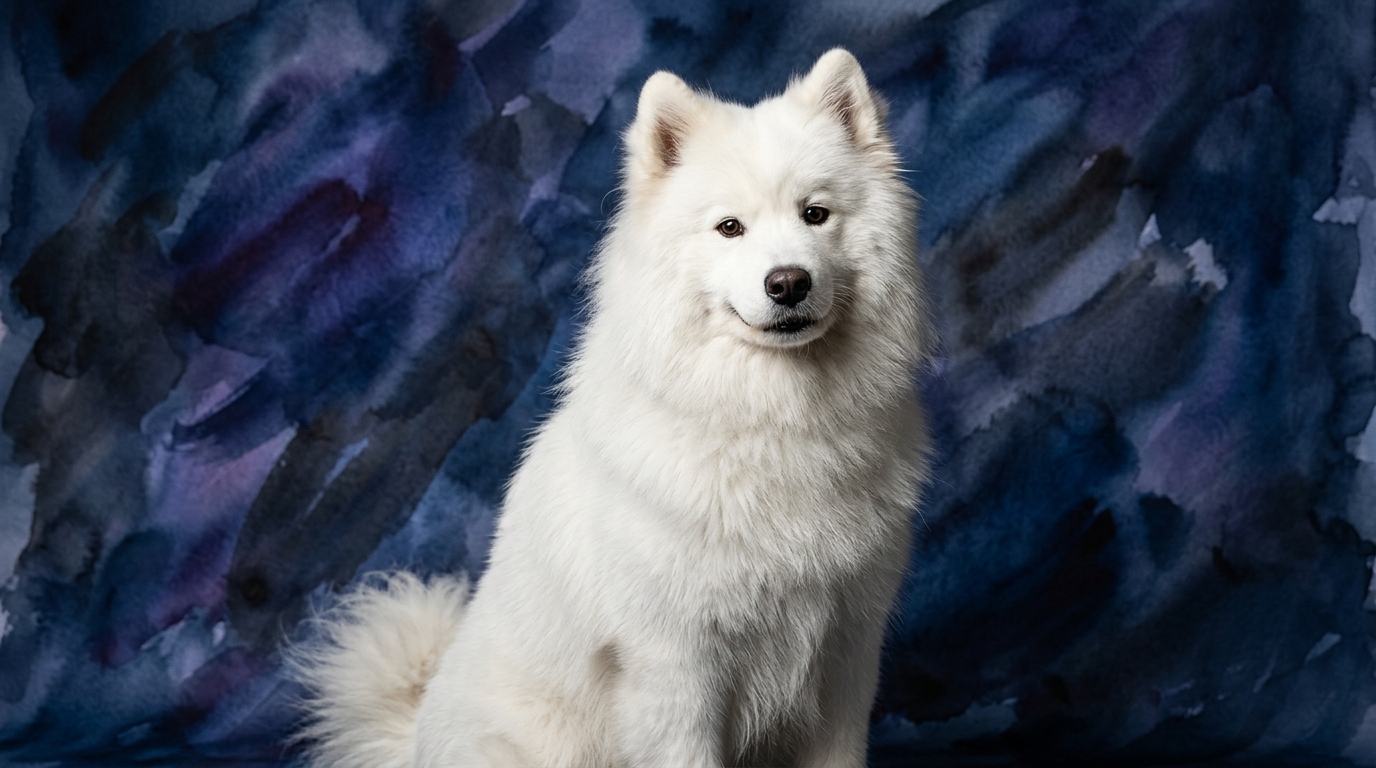
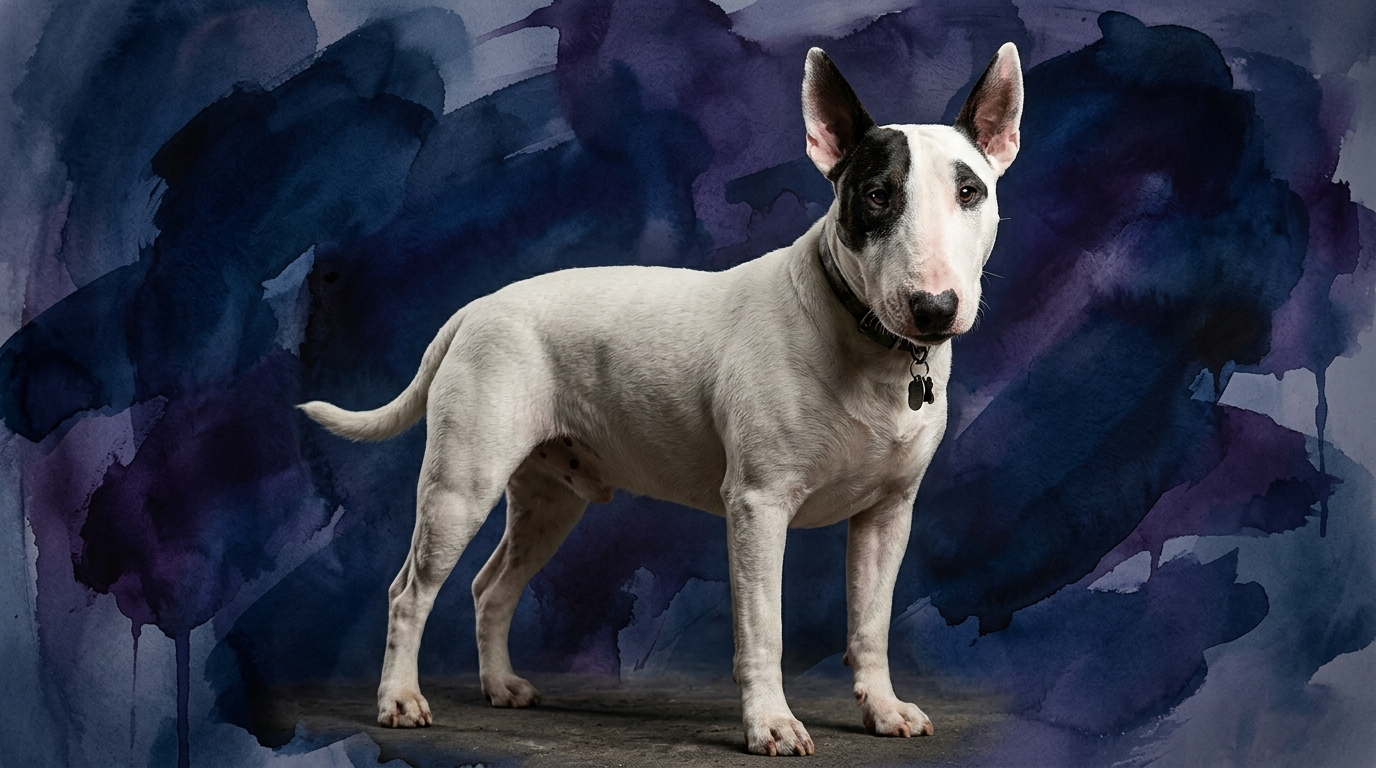
Side-by-Side Cognitive Profile: Samoyed vs. Bull Terrier
To truly understand the intellectual distinctions between these two breeds, The Cosmic Pet Pet IQ Lab employs a five-dimensional framework. For the Samoyed, categorized in the Working group, its profile includes a Problem Solving score of 3/5, indicating a moderate ability to navigate novel challenges. Its Training Speed is also 3/5, suggesting an average pace for learning new commands. A standout feature is its Social Intelligence at 5/5, reflecting a profound capacity for understanding human cues and forming strong bonds. Its Instinctive Drive is 4/5, pointing to a strong internal motivation for purpose-driven activity, while its Memory is rated 3/5, signifying an average retention of information and experiences.
The Bull Terrier, a member of the Terrier group, presents a different cognitive blueprint. It shares a Problem Solving score of 3/5, demonstrating a similar moderate capacity for tackling new problems, often through persistence. Its Training Speed is likewise 3/5, meaning it will acquire commands with consistent effort. Its Social Intelligence stands at 3/5, suggesting a moderate level of social attunement compared to the Samoyed. The Bull Terrier’s Instinctive Drive is 3/5, indicating a moderate internal motivation for activity, less intensely focused on cooperative work. Finally, its Memory is also rated 3/5, providing an average capacity for recalling learned information.
Where the Samoyed's Cognition Excels
The Samoyed’s cognitive profile truly shines in its social and cooperative dimensions, making it a highly interactive and responsive companion. Their exceptional 5/5 social intelligence signifies a profound adeptness at reading human emotions, understanding complex social dynamics, and forming deep, reciprocal bonds. This isn't merely about affection; it's a sophisticated ability to interpret subtle cues, making them highly responsive companions in shared activities. Owners will often observe their Samoyed anticipating needs or responding to unspoken requests, a clear indicator of their strong social cognition.
Furthermore, their 4/5 instinctive drive, rooted in their heritage as working sled dogs, translates into a strong internal motivation for purpose-driven tasks, often alongside their human partners. This drive isn't just for physical exertion; it's a cognitive inclination towards cooperative effort, making them naturally inclined to engage in activities that require teamwork and communication. The Samoyed's cognitive strengths lie in its capacity for harmonious co-existence and collaborative engagement, making them excellent partners for shared endeavors and family life.
Distinct Cognitive Strengths of the Bull Terrier
While the Bull Terrier's cognitive scores might appear moderate in comparison, their unique intellectual makeup offers distinct advantages for certain owners and situations. Their 3/5 problem-solving ability, coupled with the characteristic terrier tenacity, means they approach challenges with a determined, often persistent, mindset. They might not arrive at solutions through immediate social cues or cooperative brainstorming like a Samoyed, but rather through individual trial and error, demonstrating a robust mental fortitude. This persistence can be a significant cognitive asset when facing tasks that require unwavering focus and resilience.
Moreover, their 3/5 social intelligence, while moderate, fosters a more independent and self-assured companionship. They are deeply loyal and affectionate but often less reliant on constant human direction or validation, offering a different kind of bond that can appeal to those seeking a dog with a strong sense of self. Their moderate instinctive drive means their energy is often more internally motivated for play or exploration rather than a specific working purpose, which can simplify their integration into a purely companion role, requiring less structured 'work' to feel fulfilled. The Bull Terrier's cognitive strengths lie in its self-reliance, its focused determination, and its ability to engage with the world on its own terms, making it a compelling choice for owners who appreciate an independent yet devoted companion.
Trainability: Samoyed's Cooperation vs. Bull Terrier's Independence
When evaluating trainability, the Samoyed generally presents a more straightforward path for many owners, primarily due to its higher social intelligence and cooperative instinctive drive. A Samoyed's 5/5 social intelligence means they are inherently motivated to interact and work *with* their human, often finding satisfaction in pleasing their owner and understanding commands. Their 4/5 instinctive drive, stemming from their sledding heritage, means they possess an innate desire to engage in purposeful activities, making them receptive to training that channels this energy into constructive tasks. They respond well to positive reinforcement and appreciate being an active participant in the learning process.
Conversely, the Bull Terrier, with its 3/5 social intelligence and 3/5 instinctive drive, often approaches training with a more independent spirit. While capable learners (3/5 training speed), their terrier tenacity and self-assured nature can sometimes be perceived as stubbornness. They require consistent, patient, and highly motivating training methods, often responding best to engaging games and rewards rather than rote repetition. Their inherent drive is less about cooperative work and more about individual exploration or play, meaning trainers must find ways to make learning intrinsically rewarding for them. Therefore, while both breeds are trainable, the Samoyed's natural inclination towards partnership typically makes the training journey feel more collaborative and less challenging for a novice owner, whereas the Bull Terrier demands a more nuanced understanding of their independent cognitive style.
Matching Canine Cognition to Owner Lifestyles
The choice between a Samoyed and a Bull Terrier based on owner lifestyle largely hinges on the dogs' inherent drives and energy output. Samoyeds, with their 4/5 instinctive drive, are built for activity and purpose. This isn't merely physical energy; it's a cognitive need to engage in tasks, whether it's long walks, hiking, dog sports, or even complex puzzle toys. They thrive with active owners who can provide consistent mental and physical stimulation, channeling their cooperative drive into shared adventures. A Samoyed’s high social intelligence also means they prefer to be involved in family activities, not just observers.
For a relaxed owner, a Samoyed might become bored or develop unwanted behaviors if their cognitive and physical needs aren't met, as their desire for interaction and purpose is strong. The Bull Terrier, while certainly an energetic breed, has a 3/5 instinctive drive that is often less about sustained, cooperative work and more about bursts of play and focused individual exploration. They can be incredibly playful and require regular exercise, but their cognitive profile allows for more periods of relaxed companionship, provided their daily exercise needs are met. While they love their families, their moderate social intelligence means they might tolerate downtime or individual play more readily than a Samoyed constantly seeking interaction. Therefore, genuinely active, outdoorsy, and engagement-oriented owners will likely find the Samoyed a perfect match, whereas active but perhaps less intensely 'working-oriented' owners might find the Bull Terrier's blend of playfulness and independence a better fit.
The Verdict
Choose the Samoyed if you seek a deeply cooperative, socially attuned canine partner eager to participate in your active lifestyle and engage in shared, purposeful activities. Their strong drive for companionship and teamwork makes them ideal for owners who value a dog that thrives on working alongside them.
Opt for the Bull Terrier if you appreciate a resilient, independent, and playful companion who offers devoted loyalty without constant demands for cooperative engagement. They suit owners who can provide consistent exercise and stimulating play, valuing a dog with a distinct personality and robust self-reliance.
🧠 Find Your Pet's IQ Score
Our Pet IQ Lab assessment covers 25+ tests across 5 cognitive dimensions — personalized to your breed.
Take the Full IQ Test →Frequently Asked Questions
Is a Samoyed or Bull Terrier more prone to separation anxiety?
A Samoyed's 5/5 social intelligence suggests a stronger inherent need for companionship, potentially making them more prone to separation anxiety if not properly conditioned or left alone for extended periods. Bull Terriers, with 3/5 social intelligence, are generally more independent, though individual temperament varies.
Do Samoyeds and Bull Terriers learn tricks at the same rate?
Both breeds have a 3/5 training speed, indicating an average learning pace for tricks. However, the Samoyed's higher social intelligence may make them more eager to please and thus appear to pick things up more readily, while the Bull Terrier might require more creative motivation due to their independent nature.
Which breed is better for first-time dog owners?
The Samoyed's cooperative nature and higher social intelligence can make them a more forgiving and collaborative partner for a first-time owner willing to meet their significant exercise and grooming needs. The Bull Terrier's independence and tenacity, while endearing, often require a more experienced owner who understands how to work with a strong-willed breed.