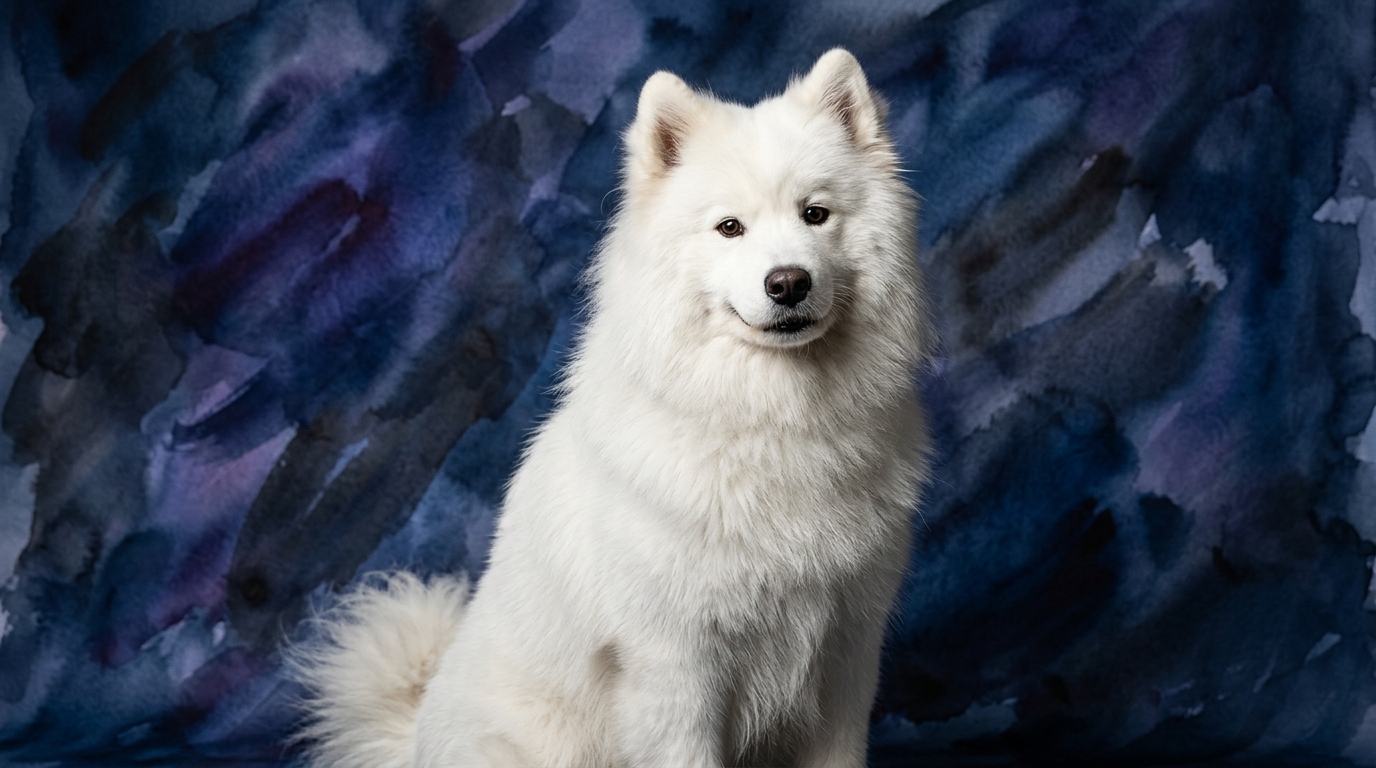
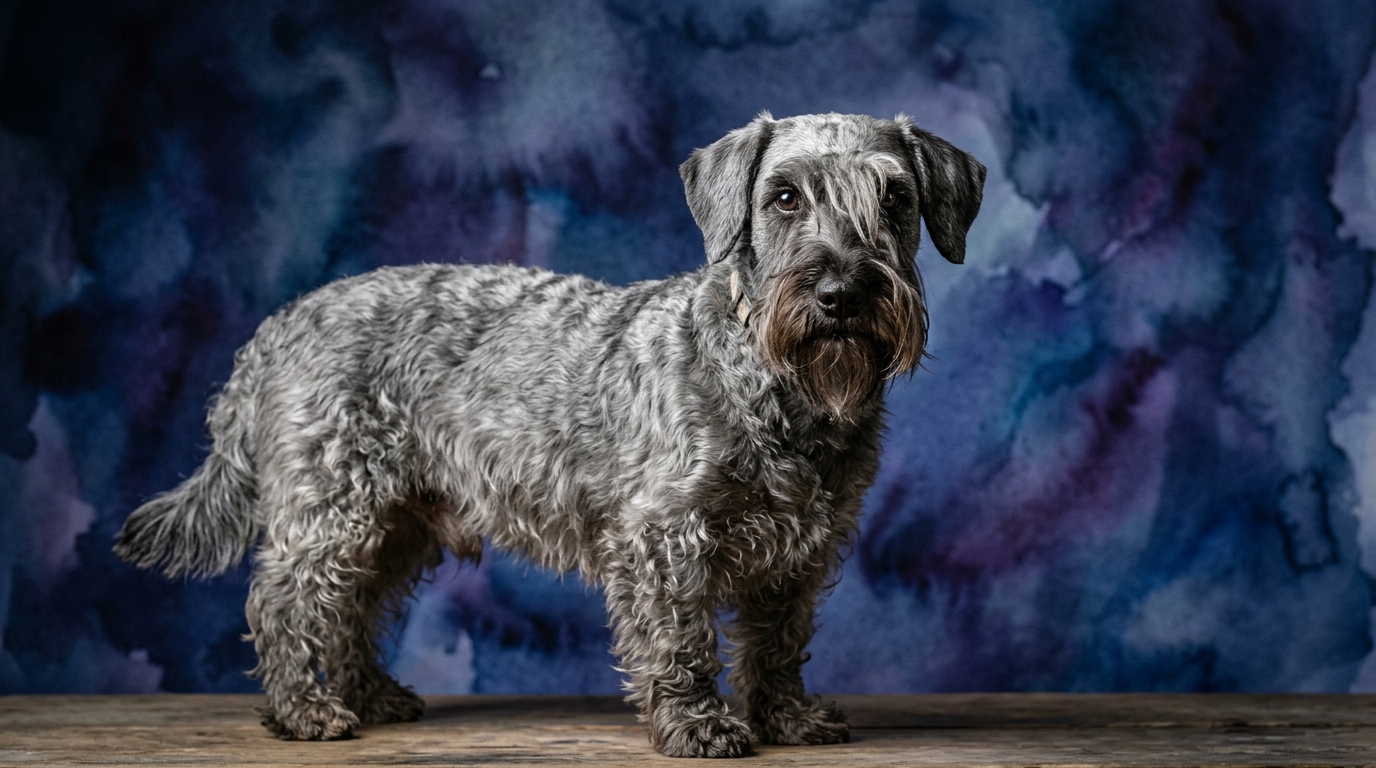
Side-by-Side Cognitive Profiles
The Samoyed, a Working group dog with a notable Coren rank of #33, exhibits a cognitive makeup reflecting its heritage of collaboration and endurance. Its problem-solving capacity scores 3/5, indicating a resourceful mind that can devise solutions, though often with an independent streak. Training speed is also 3/5; while capable of learning, their strong will requires consistent, engaging methods. Where the Samoyed truly shines is its social intelligence, boasting a perfect 5/5, demonstrating an exceptional attunement to human emotions and social cues, fostering deep bonds. Instictive drive is strong at 4/5, manifesting in pulling, herding, and vocal communication, alongside a moderate prey drive. Memory stands at 3/5, suggesting they retain information but may appear selective given their independent nature.
The Cesky Terrier, belonging to the Terrier group and not Coren-ranked, presents a different cognitive blueprint, honed for solitary hunting tasks. Its problem-solving also registers 3/5, adept at navigating complex environments for quarry, often with a methodical approach. Training speed is 3/5; typical terrier tenacity demands patience and high-value motivation, as they can be quite single-minded. Social intelligence is 3/5; while affectionate with their family, they can be more reserved with strangers and less overtly demonstrative than some breeds. Instictive drive is 3/5, focused on digging, tracking, and hunting, generally quieter than many terriers but persistent. Memory is 3/5, allowing them to recall routines and tasks, especially those linked to their inherent drives.
Where the Samoyed Wins Cognitively
The Samoyed's most pronounced cognitive advantage lies in its exceptional social intelligence, scoring a perfect 5/5 compared to the Cesky's 3/5. This isn't merely about affection; it's a sophisticated capacity to read and respond to human emotions, intentions, and social dynamics. A Samoyed often anticipates a handler's needs during a task, adjusts its behavior based on subtle cues, and actively seeks to engage in cooperative activities. Their ancestral role as a nomadic companion and sled dog demanded a high degree of collaboration with humans, fostering this deep social acumen. This manifests in their ability to form incredibly strong, empathetic bonds, making them highly responsive to praise and social interaction as motivators.
Furthermore, the Samoyed's instinctive drive at 4/5, compared to the Cesky's 3/5, represents a cognitive win in its versatility and channelability. While both breeds possess strong instincts, the Samoyed's drives for pulling, herding, and even its characteristic vocalizations can be readily integrated into structured activities like dog sports, carting, or even search and rescue. Their cognitive framework is geared towards group tasks and sustained effort, allowing them to process and execute complex sequences of actions in a team setting, which speaks to a different kind of operational intelligence than the Cesky's more solitary hunting focus.
Where the Cesky Terrier Wins Cognitively
While the Cesky Terrier's individual IQ scores may not numerically surpass the Samoyed's in any dimension, its cognitive strengths manifest in a distinctly effective manner, particularly in its specific type of problem-solving and independent drive. The Cesky's problem-solving (3/5) is characterized by methodical tenacity, especially when engaged in tasks related to its historical role as a vermin hunter. They excel at navigating complex, confined spaces, meticulously tracking scents, and persistently working towards a goal independently. This isn't about solving human-initiated puzzles for social reward, but rather about self-directed, focused determination in overcoming environmental obstacles to achieve an instinctual objective, often with little to no human direction once motivated.
The Cesky’s instinctive drive (3/5), though scoring lower than the Samoyed’s, is channeled into a profound, unwavering focus on tasks like digging or scent work. This represents a cognitive win in its deep-seated self-reliance. A Cesky can exhibit remarkable patience and persistence when pursuing a scent trail or attempting to excavate a burrow, demonstrating a singular cognitive focus that allows them to tune out distractions and concentrate on their internal mission. This independent persistence means they are less reliant on constant human feedback to maintain task engagement, a distinct advantage in roles requiring self-sufficiency.
Training: Which is Easier and Why?
Neither the Samoyed nor the Cesky Terrier can be definitively labeled as 'easy' to train, both scoring 3/5 for training speed, but their challenges stem from different cognitive frameworks. The Samoyed's training requires an owner to leverage its high social intelligence and desire for companionship. They comprehend commands quickly due to their attunement to human communication, but their independent working dog nature means they might choose to 'negotiate' or simply not comply if a task feels repetitive or unrewarding. Positive reinforcement, varied activities, and making training feel like a collaborative game are crucial. Their vocal nature means they might 'talk back' or express their opinions, requiring patience to guide rather than command.
The Cesky Terrier, conversely, presents a challenge rooted in its terrier independence and strong instinctual drives. While intelligent, their motivation often aligns more with their own agenda—a fascinating scent, a potential digging spot—than with pleasing a human. Training sessions need to be short, engaging, and highly rewarding with high-value treats to capture and maintain their focus. Their lower social intelligence score suggests that human approval alone may not be as compelling a motivator as it is for a Samoyed, necessitating more tangible incentives. Owners must be prepared for a consistent, firm, but fair approach to manage their inherent stubbornness and direct their natural drives constructively.
Active Owners vs. Relaxed Owners: A Match
For active owners, the Samoyed is generally the more suitable choice. Their working dog heritage demands significant physical exercise and mental stimulation. Daily long walks, runs, hiking, or engaging in dog sports like agility, canicross, or even weight pulling are essential to satisfy their 4/5 instinctive drive and prevent boredom-induced behaviors or excessive vocalization. Their high social intelligence means they thrive on being an integrated part of family activities, requiring an owner who enjoys consistent interaction and can provide ample opportunities for cooperative engagement. A Samoyed expects to be 'working' alongside its human, even if that work is just a long, brisk walk.
The Cesky Terrier, while still a terrier with inherent energy, generally suits owners with a more relaxed, yet consistent, activity level. They require daily walks and a secure yard for sniffing, exploring, and supervised digging to satisfy their 3/5 instinctive drive. However, they are typically less frenetic than some terrier breeds and can be content with a moderate amount of exercise followed by quiet companionship indoors. They enjoy being with their family but are not constantly demanding engagement like a Samoyed. Owners who appreciate a calm yet determined companion, and can provide structured outdoor time without needing an intense exercise partner, would find a good match in the Cesky.
The Verdict
Choose a Samoyed if you are an active individual or family seeking a highly interactive, deeply social companion, prepared for extensive grooming, consistent training, and able to provide ample physical and mental challenges befitting a cooperative working breed.
Opt for a Cesky Terrier if you appreciate a more independent, devoted, and moderately active companion, value a calm yet tenacious personality, and are prepared to manage terrier instincts with consistent training and a secure environment.
🧠 Find Your Pet's IQ Score
Our Pet IQ Lab assessment covers 25+ tests across 5 cognitive dimensions — personalized to your breed.
Take the Full IQ Test →Frequently Asked Questions
Are Samoyeds good apartment dogs?
Samoyeds can adapt to apartment living if their significant exercise and mental stimulation needs are met daily. Their vocal nature and desire for companionship mean they thrive best in environments where they are not left alone for long periods and have access to outdoor activities.
Do Cesky Terriers bark a lot?
Cesky Terriers are generally known for being quieter than many other terrier breeds. However, like any dog, they will bark to alert to strangers or during play, and their natural instincts can lead to barking if they detect interesting scents or sounds in their environment.
How much grooming do Samoyeds need?
Samoyeds require significant grooming due to their thick double coat. Daily brushing is recommended to prevent mats and tangles, especially during shedding seasons. Professional grooming every few months can also help manage their coat health and cleanliness.