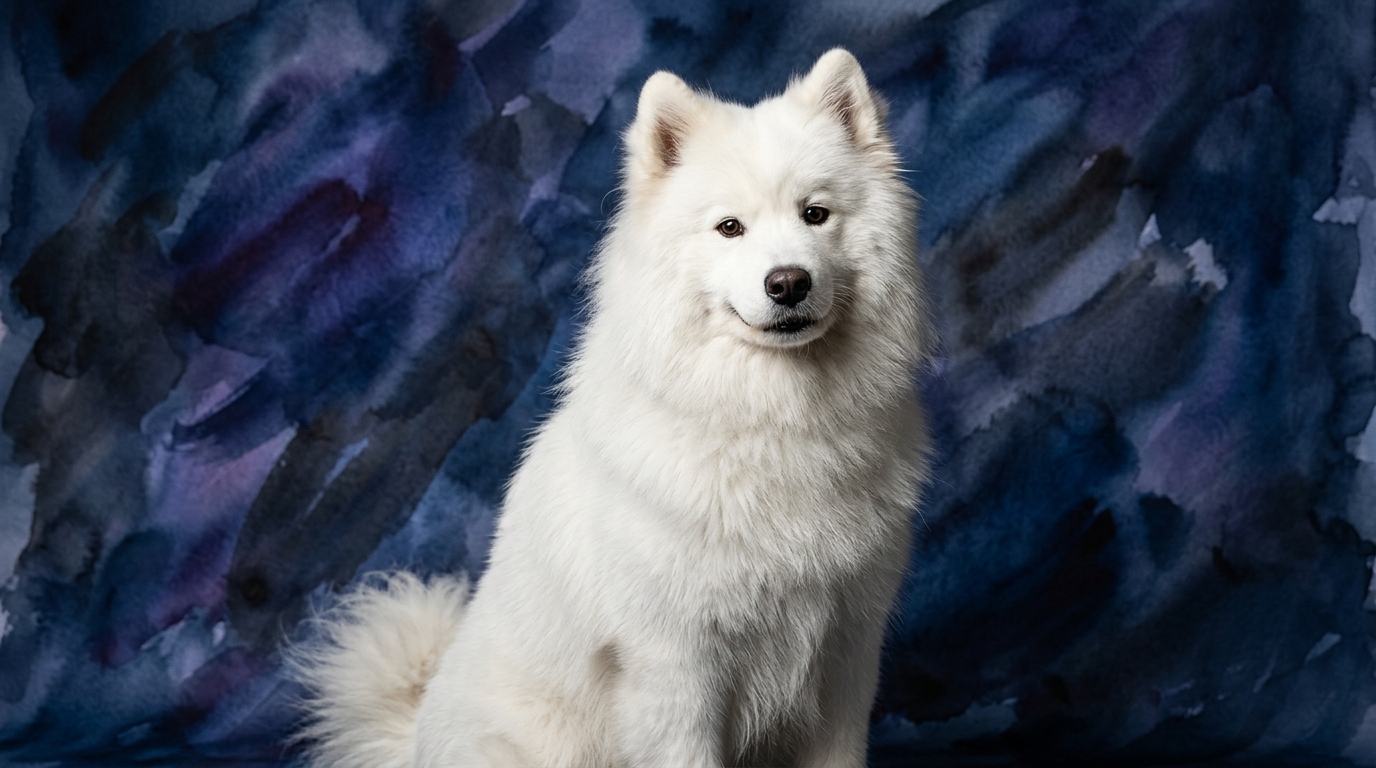

Side-by-Side Cognitive Profiles: Samoyed vs. Manchester Terrier
The Cosmic Pet Pet IQ Lab employs a five-dimensional framework to assess canine intelligence, offering a nuanced view beyond simple obedience. For the Samoyed, a breed originating from the harsh Siberian landscape, their cognitive profile reflects their history as herders, sled pullers, and loyal companions. Their Problem Solving is rated 3/5, indicating a solid capacity for navigating environmental challenges, understanding sequential tasks, and figuring out solutions to practical dilemmas, often in service of a human goal. Their Training Speed, also 3/5, suggests a steady learning curve, where consistency and positive reinforcement yield reliable results, without the lightning-fast acquisition of some herding types. Social Intelligence, rated a remarkable 5/5, is where the Samoyed truly shines, demonstrating an exceptional ability to interpret human body language, vocal tones, and emotional states, fostering profound, cooperative bonds. An Instinctive Drive of 4/5 reflects their heritage as working dogs, possessing a robust desire for sustained physical activity, pulling, and interaction within a group setting. Finally, their Memory, at 3/5, ensures they reliably recall commands, routines, and experiences, building a stable foundation for training and companionship.
In contrast, the Manchester Terrier, a dapper and agile breed developed in England for ratting, presents a different cognitive blueprint. This breed, not ranked on the Coren scale, shows a consistent performance across most cognitive dimensions. Their Problem Solving score of 3/5, though numerically similar to the Samoyed, often manifests in a more independent, tenacious approach to overcoming obstacles, particularly those related to their natural curiosity or prey drive. Their Training Speed, also 3/5, is consistent, but owners might find that their independent streak necessitates more creative and persistent methods to maintain engagement. Social Intelligence, at 3/5, means they form deep attachments to their chosen family but are generally less overtly demonstrative or universally people-focused than a Samoyed, often displaying a more reserved initial demeanor with strangers. An Instinctive Drive of 3/5 points to a focused, intense desire for chasing and investigating, rooted in their vermin-hunting past, rather than a broad working drive. Their Memory, also 3/5, is reliable for retaining training and recognizing patterns, contributing to their adaptability within a structured environment. While both breeds share a 3/5 in problem-solving, training speed, and memory, the context and manifestation of these abilities differ significantly due to their distinct histories and primary functions.
Where the Samoyed Demonstrates Cognitive Strengths
The Samoyed's most pronounced cognitive strength lies in their exceptional Social Intelligence, scoring a perfect 5/5. This dimension goes beyond simple friendliness; it signifies an advanced capacity to understand and respond to human emotions, intentions, and social cues. A Samoyed can often anticipate their owner's mood, offering comfort or initiating play at just the right moment, showcasing a deep empathic connection. This high social acumen makes them incredibly cooperative partners in activities requiring teamwork, such as therapy work, search and rescue, or simply navigating daily life within a family unit. They thrive on inclusion and direct social interaction, often seeking to be physically close and involved in all household happenings. Their ability to form strong, reciprocal bonds makes them highly responsive to praise and social rewards, which are powerful motivators in their learning process.
Complementing their social intelligence is their Instinctive Drive, rated at 4/5. This strong innate motivation for sustained activity and purpose-driven work means Samoyeds possess a robust mental endurance. They are not easily deterred from a task once engaged, especially if it involves physical exertion or fulfilling a perceived role within their 'pack.' This drive translates into a willingness to pull, to herd, or to accompany their humans on long, challenging treks, demonstrating a focused determination that goes beyond mere energy. Their cognitive system is wired for sustained engagement, making them adept at learning and performing complex, multi-step tasks that require both physical and mental stamina, particularly when those tasks involve collaboration with their human companions. This combination of deep social understanding and enduring drive defines a significant portion of their cognitive advantage.
Where the Manchester Terrier Exhibits Unique Cognitive Advantages
While the Manchester Terrier's cognitive scores are consistently 3/5 across the board, their unique application of these abilities constitutes distinct advantages in specific contexts. Their Problem Solving, rated 3/5, manifests as a tenacious, independent approach, especially when faced with challenges related to their historical role. This isn't about solving abstract puzzles, but rather a focused determination in practical scenarios, such as figuring out how to access a confined space, outwit a small critter, or retrieve a coveted toy from a difficult spot. Their solutions are often direct and persistent, reflecting a self-reliant problem-solving style that doesn't always rely on human direction for initiation. They possess a cleverness rooted in their need to navigate environments effectively and efficiently on their own terms, making them resourceful and often surprising in their ingenuity when pursuing a goal.
Furthermore, the Manchester Terrier's Instinctive Drive, also 3/5, while not as broad as the Samoyed's working drive, is intensely specialized and highly effective within its niche. This drive is primarily focused on hunting and chasing small prey, which has honed a specific set of cognitive functions for detection, pursuit, and capture. This includes keen observational skills for movement, rapid decision-making in pursuit, and an unwavering focus on their target. For owners who engage in activities that channel this natural inclination, such as earthdog trials, lure coursing, or even sophisticated hide-and-seek games, the Manchester Terrier's cognitive system is exceptionally well-suited. Their relatively lower Social Intelligence (3/5) compared to the Samoyed can paradoxically be an advantage here, allowing them to maintain a single-minded focus on their task without constant need for human validation, enabling them to operate with a degree of self-sufficiency in their preferred activities.
Training Dynamics: Which Breed is Easier to Shape?
When considering ease of training, the raw Training Speed score of 3/5 is identical for both the Samoyed and the Manchester Terrier, suggesting neither is a lightning-fast learner nor particularly slow. However, the other cognitive dimensions significantly influence the training experience. The Samoyed's outstanding Social Intelligence (5/5) means they are inherently more inclined to cooperate and please their human companions. They are highly responsive to positive reinforcement, especially praise and affection, viewing training as a collaborative activity that strengthens their bond. This eagerness to please can make them appear easier to train for obedience and complex tasks, as they readily engage and seek to understand what is expected of them. Their cooperative nature allows for a more fluid and enjoyable training process, even if the learning itself takes a steady rather than instantaneous pace.
In contrast, the Manchester Terrier's training experience, while equally capable of success, often requires a different approach due to their 3/5 Social Intelligence and independent streak. While they form strong bonds, they are typically less motivated by human approval alone and can be more selective in their compliance. Their Problem Solving (3/5) and Instinctive Drive (3/5) often mean they are thinking for themselves, sometimes prioritizing their own interests (like chasing a scent) over a command. Owners must employ consistent, clear, and highly motivating training methods, often incorporating games and activities that appeal to their natural prey drive and independent intellect. What might be perceived as stubbornness is often a manifestation of their independent cognitive processing; they learn, but they might decide whether or not to apply that learning based on their assessment of the situation. Therefore, while both breeds learn at a similar pace, the Samoyed's inherent cooperativeness often makes their training journey feel more straightforward and less challenging for the average owner.
Matching Breeds to Lifestyles: Active vs. Relaxed Owners
The Samoyed, with an Instinctive Drive of 4/5, is undeniably suited for active owners who can provide consistent and engaging physical and mental stimulation. Their heritage as working dogs means they thrive on purpose-driven activities. Owners who enjoy long hikes, running, biking with their dog, dog sledding, canicross, or participation in dog sports like agility or obedience will find a Samoyed to be an enthusiastic and enduring partner. Their need for sustained activity is not just physical; their high social intelligence also means they require significant interactive playtime and involvement in family life. An owner with a more relaxed lifestyle who cannot commit to daily vigorous exercise and mental challenges might find a Samoyed prone to boredom-driven behaviors, such as excessive vocalization, digging, or destructive chewing, as their cognitive and physical needs remain unmet.
The Manchester Terrier, with an Instinctive Drive of 3/5, offers a more adaptable profile for owners, though they are by no means sedentary. They require regular exercise, including daily walks, playtime, and opportunities to run and explore. Their focused prey drive means they also benefit greatly from mental stimulation through puzzle toys, training sessions that challenge their problem-solving (3/5), and games that tap into their chasing instincts. They can fit well into moderately active households, perhaps those who enjoy brisk walks and structured play sessions rather than multi-hour endurance activities. While they possess bursts of energy, they are generally content with a more varied routine than a Samoyed, often enjoying lounging with their family after their exercise needs are met. A truly relaxed owner might still find their energetic moments and curiosity a bit much, but they are more forgiving of variations in daily activity levels compared to their Samoyed counterparts, provided their mental needs are met.
The Verdict
Choose the Samoyed for a deeply social, cooperative companion eager to participate in family activities and requiring a dedicated owner for consistent engagement in outdoor pursuits and mental challenges.
Opt for the Manchester Terrier if you appreciate an independent, spirited companion who thrives on focused, engaging activities and can adapt to a moderately active lifestyle, with an owner prepared for consistent, patient training that channels their unique terrier tenacity.
🧠 Find Your Pet's IQ Score
Our Pet IQ Lab assessment covers 25+ tests across 5 cognitive dimensions — personalized to your breed.
Take the Full IQ Test →Frequently Asked Questions
Do Samoyeds and Manchester Terriers learn at the same pace?
Both breeds share a training speed rating of 3/5, suggesting they learn new commands at a consistent, moderate pace. However, the Samoyed's high social intelligence often translates to a greater eagerness to please and cooperate, which can make their training feel more fluid and less challenging for the owner.
Which breed is better for complex problem-solving tasks?
Both breeds have a problem-solving rating of 3/5, but they apply this intelligence differently. Samoyeds might excel in cooperative tasks that benefit from social cues, while Manchester Terriers often display tenacious, independent problem-solving, especially when motivated by their prey drive or curiosity to achieve a specific personal goal.
How do their instinctive drives influence their behavior?
The Samoyed's 4/5 instinctive drive translates to a strong desire for sustained working activities like pulling or herding, requiring significant physical and mental outlets to prevent boredom. The Manchester Terrier's 3/5 drive is more focused on hunting small prey, leading to bursts of intense focus and a need for outlets that mimic this natural behavior, such as chasing games or scent work.