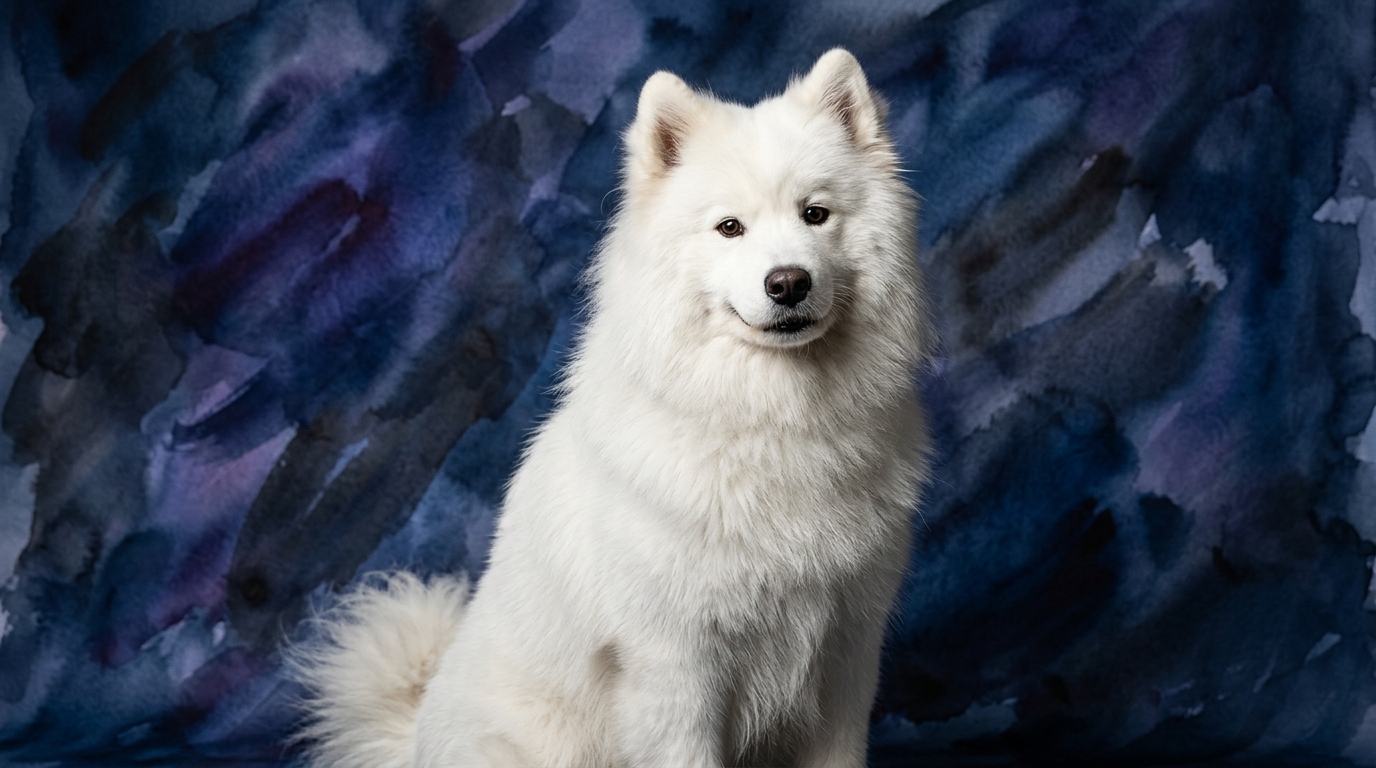

Side-by-Side IQ Profile: Samoyed vs. Norfolk Terrier
The Cosmic Pet Pet IQ Lab employs five key dimensions to assess canine intelligence, providing a nuanced understanding of each breed's mental aptitude. For the Samoyed, a Working group dog with a Coren ranking of #33, we observe a Problem Solving score of 3/5, a Training Speed of 3/5, an exceptional Social Intelligence of 5/5, an Instinctive Drive of 4/5, and a Memory score of 3/5. This profile paints a picture of a cooperative, driven companion.
In contrast, the Norfolk Terrier, a Terrier group dog without a specific Coren ranking, presents a more uniformly balanced cognitive profile. It scores 3/5 in Problem Solving, 3/5 in Training Speed, 3/5 in Social Intelligence, 3/5 in Instinctive Drive, and 3/5 in Memory. These scores indicate a capable, independent thinker whose cognitive strengths lie in a consistent, rather than specialized, application across various mental tasks.
Delving deeper into these dimensions, Problem Solving assesses a dog's ability to navigate new challenges and figure out solutions. Training Speed measures how quickly a dog grasps and retains new commands. Social Intelligence reflects their understanding of human cues and desire for interaction. Instinctive Drive quantifies their innate working or breed-specific behaviors, and Memory gauges their capacity to recall past experiences and learned information. Understanding these specifics helps us appreciate the unique mental landscape of each breed.
Where the Samoyed Wins Cognitively
The Samoyed's cognitive strengths are particularly evident in its exceptional Social Intelligence, scoring a perfect 5/5. This dimension signifies a profound ability to understand human emotions, intentions, and communication, making them highly intuitive partners. This translates into a strong desire for cooperation and an eagerness to engage in activities that foster a deep human-animal bond. They excel in environments where their capacity to 'read' their owners and respond empathetically is valued, making them superb therapy dogs or companions for complex, cooperative tasks.
Furthermore, the Samoyed's Instinctive Drive of 4/5, combined with their high social intelligence, means they are often highly motivated by shared tasks and purposeful work alongside their human companions. Their historical role as sled dogs and herders instilled a drive for contributing to a team. This isn't just about physical exertion; it's a cognitive drive to fulfill a role, to be useful, and to derive satisfaction from collaborative effort. This makes them eager participants in dog sports, obedience, or any activity that leverages their desire for partnership and contribution within a family unit.
Unique Cognitive Strengths of the Norfolk Terrier
While the Norfolk Terrier's scores are consistently 3/5 across the board, this balanced profile, particularly within the Terrier group, represents a distinct cognitive strength. Their Problem Solving score of 3/5, for instance, isn't driven by a desire to please but by an independent, tenacious spirit. They are adept at figuring out solutions to obstacles on their own terms, often demonstrating a spirited persistence to achieve their goals, whether it's outsmarting a puzzle toy or finding a way to their desired spot. This self-reliance is a cognitive asset for owners who appreciate a dog capable of making its own decisions and exploring solutions with determined ingenuity.
The Norfolk Terrier's moderate Instinctive Drive (3/5) is another area where their cognitive profile shines for specific owners. While they possess the characteristic terrier prey drive and curiosity, it is often more manageable than in some higher-drive terrier breeds. This means their innate drives, while present and needing outlets, are less likely to overwhelm daily life with constant, intense redirection. Their Social Intelligence (3/5) further supports this; they appreciate companionship but are not overly dependent on constant human validation or interaction, offering a quieter, self-sufficient presence that can be a cognitive 'win' for lifestyles valuing independence in a companion.
Which is Easier to Train and Why?
When comparing ease of training, the Samoyed's exceptional Social Intelligence (5/5) gives it a significant edge, despite both breeds scoring 3/5 in Training Speed. The Samoyed's profound understanding of human cues and strong desire for cooperation mean they are generally more eager to please and highly attuned to their owner's feedback. They often view training as a collaborative game, thriving on positive reinforcement and the partnership it fosters. Their moderate learning speed is amplified by their willingness to engage and their inherent motivation to perform tasks that strengthen their bond with their human, making them responsive to consistent, kind training methods.
The Norfolk Terrier, while also scoring 3/5 in Training Speed, approaches learning with a more independent mindset due to its 3/5 Social Intelligence. They are capable learners but might require more patience, creativity, and a stronger emphasis on making tasks inherently rewarding to capture their attention. A Norfolk Terrier might question the necessity of a command if it doesn't align with their immediate interests or seem inherently valuable to them. Their training success relies heavily on engaging their spirited personality and strong will, meaning consistency and clear, fun motivations are paramount to prevent selective hearing and ensure compliance. They learn, but often on their own terms, rather than solely to please.
Suitability for Active vs. Relaxed Owners
The Samoyed, with its robust 4/5 Instinctive Drive and unparalleled 5/5 Social Intelligence, is an ideal match for active owners who can dedicate significant time to engagement and purposeful activities. These dogs thrive on mental and physical stimulation that leverages their desire for cooperation and their historical working heritage. Activities such as long hikes, sledding, agility, or extensive playtime that involves their human companion are not just beneficial but essential for their well-being. Their deep need for social interaction means they are not content to be left alone for extended periods; they seek to be an integral part of their family's daily life and activities, flourishing when given a job to do, even if that job is simply being a beloved companion on an adventure.
Conversely, the Norfolk Terrier, with its balanced 3/5 scores across most dimensions and moderate Instinctive Drive, is well-suited for owners who appreciate a dog with a robust, independent spirit but without overwhelming demands for intense, structured activity. While they certainly enjoy brisk walks, exploring their surroundings, and engaging in play, their need for constant human-directed engagement is less pronounced than the Samoyed's. They are content with a good romp in the yard, investigating new scents, and then settling down for quiet companionship, often on their own terms. This independence allows for a more relaxed dynamic, making them suitable for owners who might not have hours each day for vigorous, cooperative training sessions but still desire an engaged, spirited, and self-sufficient companion who fits comfortably into a moderately active lifestyle.
The Verdict: When to Choose Each Breed
Choosing between a Samoyed and a Norfolk Terrier hinges on the specific cognitive traits you seek in a companion and how they align with your lifestyle. The Samoyed is an excellent choice for individuals or families seeking an exceptionally socially intelligent, cooperative, and deeply bonded companion eager to partner in activities and fully integrate into family life.
Opt for the Norfolk Terrier if you value an independent, tenacious companion with a balanced cognitive profile and a spirited personality that thrives on self-directed exploration, offering a robust presence without demanding constant, intense interaction.
The Verdict
Select the Samoyed if you seek an exceptionally socially intelligent, cooperative companion eager to partner in activities and deeply integrate into family life.
Opt for the Norfolk Terrier if you value an independent, tenacious companion with a balanced cognitive profile and a spirited personality that thrives on self-directed exploration.
🧠 Find Your Pet's IQ Score
Our Pet IQ Lab assessment covers 25+ tests across 5 cognitive dimensions — personalized to your breed.
Take the Full IQ Test →Frequently Asked Questions
Are Samoyeds difficult to train due to their working dog instincts?
While Samoyeds possess a strong instinctive drive (4/5), their exceptional social intelligence (5/5) makes them highly responsive to positive, relationship-based training. Their desire to cooperate and please their human partners often outweighs any stubbornness, making them capable learners with consistent guidance.
Does the Norfolk Terrier's average social intelligence mean they are aloof?
Not necessarily aloof, but a Norfolk Terrier's 3/5 social intelligence suggests they are more independent than breeds like the Samoyed. They appreciate companionship and bond deeply with their families but may not constantly seek human validation or overt affection, offering a more self-reliant presence.
How do both breeds compare in terms of adapting to new environments?
Both breeds have a problem-solving score of 3/5 and memory of 3/5, suggesting moderate adaptability. The Samoyed's high social intelligence might make them seek human reassurance in new situations, while the Norfolk Terrier's independent spirit could lead them to explore and assess new surroundings more self-sufficiently, both adapting steadily with proper introduction.