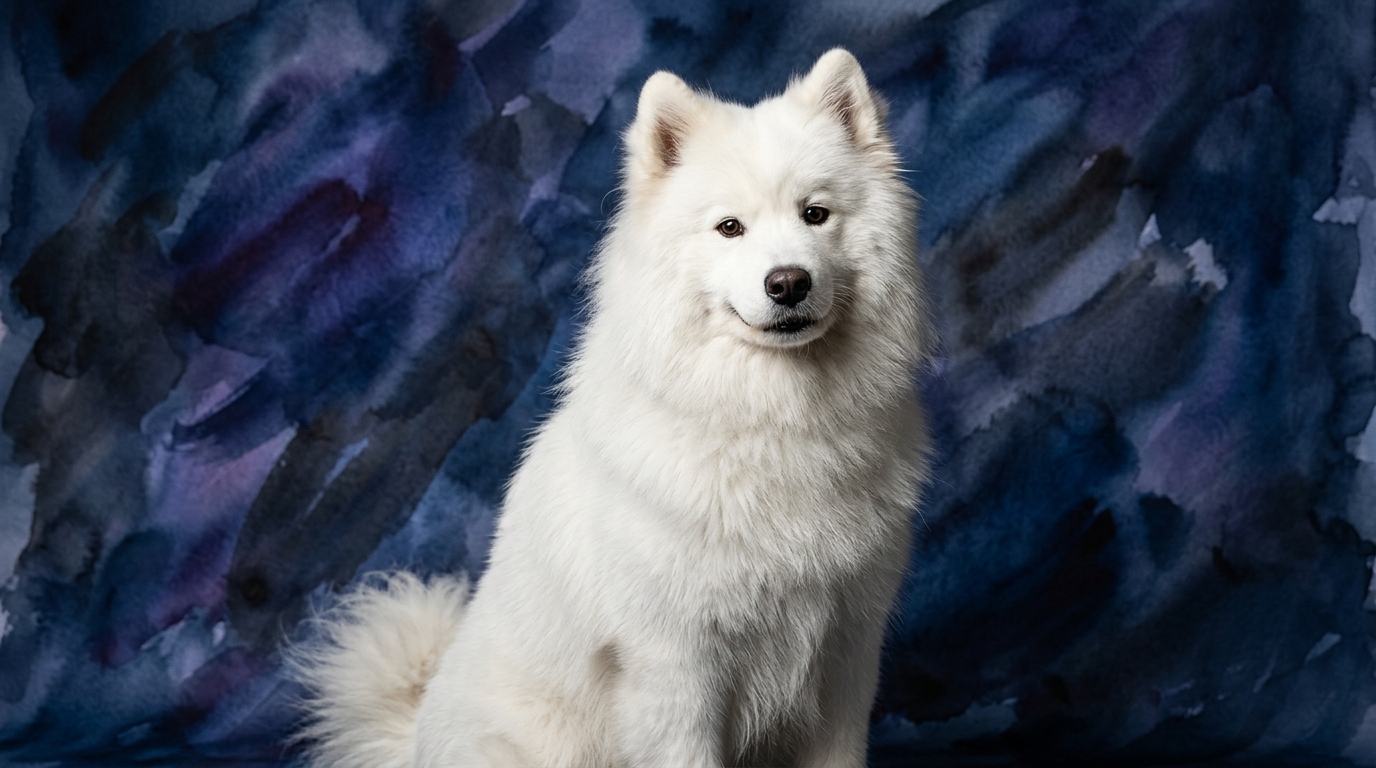

Side-by-Side IQ Profile: Samoyed vs. Old English Sheepdog
The Cosmic Pet Pet IQ Lab employs a five-dimensional framework to assess canine cognition, providing a granular view beyond overall rankings. For the Samoyed, ranked #33 in Coren's scale and hailing from the Working group, their profile is marked by strong social connection and drive. Their Problem Solving ability registers at 3/5, indicating a capacity to learn and execute complex tasks, but perhaps less inclination for independent, novel solutions without guidance. Training Speed also sits at 3/5, suggesting a moderate pace for acquiring new commands, requiring consistent and engaging methods. Where the Samoyed truly shines is in Social Intelligence, scoring a perfect 5/5, reflecting their deep attunement to human companionship and cooperative nature. Their Instinctive Drive is robust at 4/5, pointing to a strong inner motivation for activity and purpose, often linked to their historical role as sled dogs. Memory, however, is moderate at 3/5, meaning learned behaviors require regular reinforcement to remain sharp.
The Old English Sheepdog, a member of the Herding group and ranked #44 by Coren, presents a different cognitive emphasis. Like the Samoyed, their Problem Solving score is 3/5, indicating a similar capacity for understanding and navigating tasks, but not necessarily for spontaneous innovation. Their Training Speed also matches at 3/5, suggesting a need for patience and repetition during the learning phase. Social Intelligence for the Old English Sheepdog is 3/5; while they form strong bonds, they may exhibit a more independent streak compared to the highly gregarious Samoyed, often focusing more on a task than constant human interaction. Their Instinctive Drive is 3/5, reflecting a herding impulse that, while present, might be less overtly persistent or varied than the Samoyed's working drive. The Old English Sheepdog's standout cognitive dimension is Memory, scoring 4/5, which suggests a superior capacity for retaining learned commands, routines, and spatial information over time.
Where the Samoyed Wins Cognitively
The Samoyed's undisputed cognitive strength lies in its exceptional Social Intelligence, scoring a perfect 5/5. This isn't merely about friendliness; it signifies an acute ability to read human cues, understand social dynamics, and engage in deeply cooperative behaviors. A Samoyed is often acutely aware of its owner's mood and intentions, responding with a genuine desire to participate and please. This high social acumen makes them incredibly responsive to positive reinforcement centered around interaction and praise, and they thrive on being integral members of a family unit, often initiating engagement. Their cognitive processing is deeply intertwined with their desire for companionship, making shared activities not just physical exercise but profound mental stimulation.
Furthermore, the Samoyed's 4/5 Instinctive Drive translates into a robust internal motivation for purposeful activity. This isn't just random energy; it's a drive to engage with tasks, whether it's pulling a sled, participating in agility, or simply joining a long hike. Their minds are wired to seek and enjoy engagement, finding satisfaction in accomplishing a goal alongside their human companions. This drive, combined with their social intelligence, makes them highly adaptable to varied working roles where cooperation and enthusiasm are paramount, readily applying their problem-solving skills to tasks when motivated by a shared objective.
Where the Old English Sheepdog Wins Cognitively
The Old English Sheepdog’s primary cognitive advantage is its superior Memory, rated at 4/5. This means that once a command, a routine, or a specific task sequence is learned, the Old English Sheepdog is likely to retain it with impressive fidelity over extended periods. This strong memory is a significant asset in consistency, allowing owners to build a complex repertoire of behaviors and rely on their dog's ability to recall them accurately. For tasks requiring sequential steps or the remembrance of specific locations and people, the Old English Sheepdog's cognitive architecture provides a reliable foundation.
While their Problem Solving and Training Speed align with the Samoyed at 3/5, their strong memory complements these dimensions, making them capable of mastering intricate patterns once the initial learning phase is complete. This cognitive trait is particularly beneficial in activities that demand precision and adherence to established protocols, such as competitive obedience or complex herding trials where remembering specific patterns and cues is critical. Their ability to retain information well means less need for constant re-teaching, allowing for the building of a deep and intricate behavioral vocabulary.
Which is Easier to Train and Why?
When assessing ease of training, both the Samoyed and the Old English Sheepdog share a 3/5 rating for Training Speed, suggesting that neither breed will learn a new command instantly, but both are capable with consistent effort. However, the 'easier' designation often hinges on which cognitive strengths an owner can best leverage. The Samoyed's exceptional Social Intelligence (5/5) means they are often highly motivated by human interaction, praise, and the desire to be involved. They tend to seek out engagement and respond well to an owner who makes training a cooperative, joyful experience. Their problem-solving (3/5) allows them to grasp concepts, and their social nature can make them eager to comply, even if it takes a moderate number of repetitions. However, their 4/5 Instinctive Drive means they can also be independently minded and prone to following their nose or their urge to explore, requiring an owner who can channel that drive into productive training rather than letting it become a distraction.
The Old English Sheepdog, with its 3/5 Social Intelligence, may be less overtly motivated by social praise alone, sometimes appearing more focused on the task itself or what tangible reward is offered. Their 4/5 Memory, however, becomes a significant advantage in the long run. Once an Old English Sheepdog learns a command or routine, they are likely to remember it accurately, reducing the need for constant refreshers. This means that while initial learning might require the same moderate effort as a Samoyed, the retention of that training is often more robust. Their 3/5 Instinctive Drive, often manifesting as a herding instinct, might require redirection from behaviors like nipping at heels, but once these instincts are channeled, their strong memory helps solidify alternative responses. Ultimately, the Samoyed might feel 'easier' to train for owners who prioritize social bonding and can make training a game, while the Old English Sheepdog might be 'easier' for those who value long-term retention and are prepared for consistent, structured sessions focused on routine and clear expectations.
Which Suits Active Owners vs. Relaxed Owners
For owners with an active lifestyle, the Samoyed stands out as a more suitable companion. Their 4/5 Instinctive Drive means they possess a deep-seated need for physical activity and purposeful engagement, thriving on long walks, hikes, or activities like sledding or carting. This drive is not merely about burning energy; it's a cognitive need to participate in shared endeavors. Coupled with their 5/5 Social Intelligence, Samoyeds are happiest when their physical and mental activities are shared with their human family. They are not content to merely observe; they want to be an active, cooperative participant in adventures, making them ideal for owners who enjoy integrating their dog into every aspect of an energetic life. Their cognitive profile demands an owner who is ready to provide consistent mental and physical stimulation, or they may find their own (potentially mischievous) ways to occupy their active minds.
Conversely, the Old English Sheepdog, while still requiring regular exercise, is generally a better fit for owners with a slightly more relaxed approach to daily activity. Their 3/5 Instinctive Drive suggests a moderate need for physical output, and while they enjoy their walks and playtime, they may not demand the same intensity or novelty of activity as a Samoyed. Their 4/5 Memory makes them creatures of habit who appreciate established routines; a consistent schedule of walks and play sessions will satisfy their cognitive need for structure. Their 3/5 Social Intelligence means they are affectionate but might be less demanding of constant, intense social interaction, often content to observe or enjoy quiet companionship once their exercise needs are met. For owners who appreciate a reliable, routine-oriented companion who can retain a calm demeanor indoors after moderate activity, the Old English Sheepdog's cognitive makeup aligns well.
The Verdict
Choose the Samoyed if you are an active, highly social individual or family seeking a deeply cooperative companion eager to share adventures and thrive on constant human engagement and purposeful activity.
Opt for the Old English Sheepdog if you appreciate a reliable, routine-oriented companion with an excellent memory, content with moderate activity and a slightly more independent, yet affectionate, presence.
🧠 Find Your Pet's IQ Score
Our Pet IQ Lab assessment covers 25+ tests across 5 cognitive dimensions — personalized to your breed.
Take the Full IQ Test →Frequently Asked Questions
Are Samoyeds prone to stubbornness during training?
Samoyeds are not necessarily stubborn, but their 4/5 Instinctive Drive means they have strong inherent motivations. If training conflicts with a natural urge, like exploring a scent, they might appear less compliant. Effective training leverages their 5/5 Social Intelligence, making cooperation rewarding.
Do Old English Sheepdogs require much mental stimulation?
Yes, Old English Sheepdogs benefit greatly from mental stimulation, particularly due to their 4/5 Memory. Activities like puzzle toys, learning new tricks, and practicing obedience routines keep their minds engaged and prevent boredom, utilizing their strong retention abilities.
Which breed adapts better to new environments or changes in routine?
The Samoyed, with its 5/5 Social Intelligence, often adapts well to new environments when accompanied by its trusted human, as their focus is on companionship. The Old English Sheepdog, with its 4/5 Memory and preference for routine, might take a bit longer to adjust to significant changes, thriving more on predictability.