Side-by-Side IQ Profile: Samoyed vs. Saluki Cognition
The Cosmic Pet Pet IQ Lab provides a unique framework for evaluating canine intelligence across five key dimensions. For the Samoyed, a breed ranked #33 by Coren, and the Saluki, an unranked but ancient sighthound, these dimensions highlight their distinct cognitive blueprints.
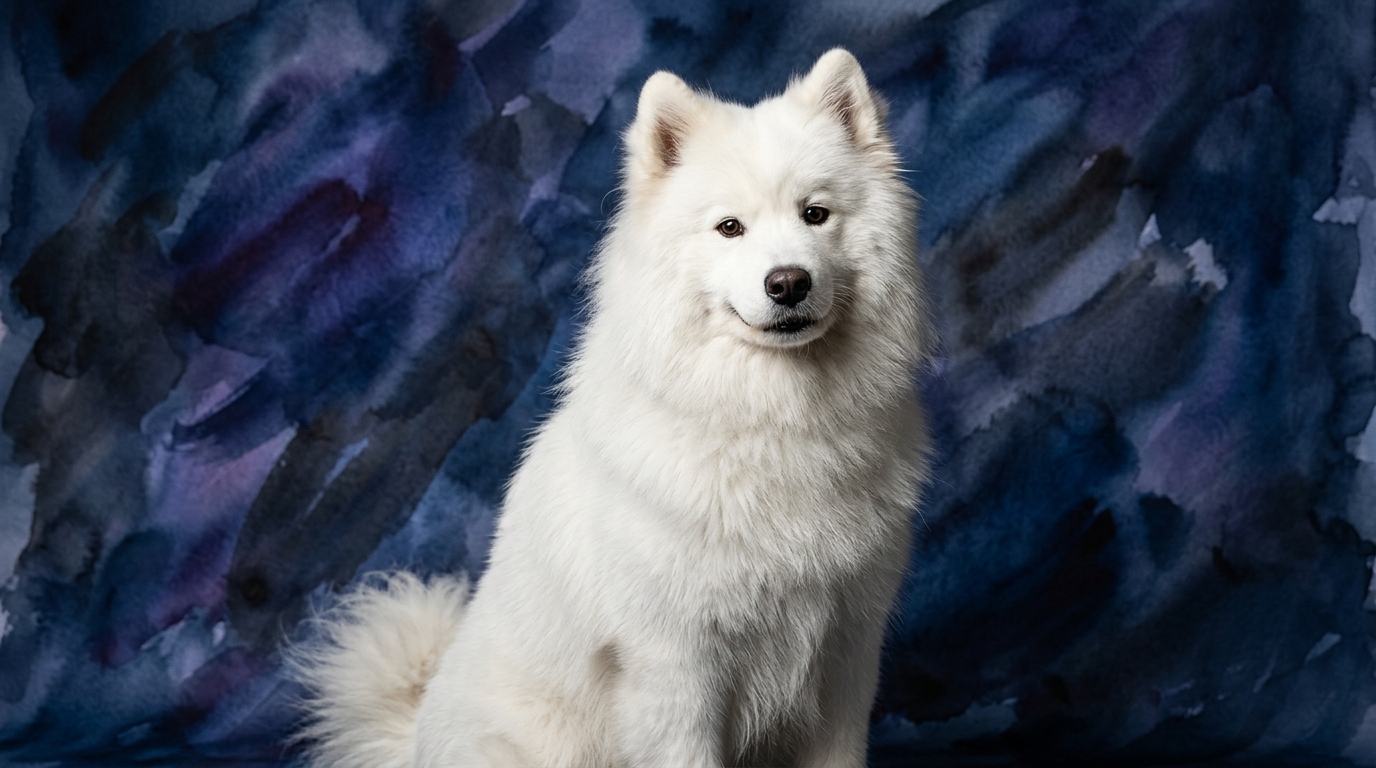
Samoyed Profile:
Problem Solving (3/5): Samoyeds exhibit moderate problem-solving capabilities, often employing their resourcefulness to achieve goals like opening gates or finding hidden toys, demonstrating a practical intelligence rooted in cooperative work.
Training Speed (3/5): While capable of learning, Samoyeds can sometimes show an independent streak, requiring consistent and engaging training methods to maintain their focus and willingness to comply, balancing their desire to please with their working dog independence.
Social Intelligence (5/5): This breed excels in social understanding, forming deep bonds with their human families and displaying a keen awareness of social cues, making them highly attuned to human emotions and interactions within their pack.
Instinctive Drive (4/5): Their strong instinctive drives are primarily channeled into cooperative tasks and herding, reflecting their heritage as working dogs used for reindeer herding and sled pulling, requiring outlets for this inherent energy and purpose.
Memory (3/5): Samoyeds possess a good memory for routines, commands, and familiar people, which aids in their daily interactions and reinforces learned behaviors over time, contributing to their reliability in established contexts.
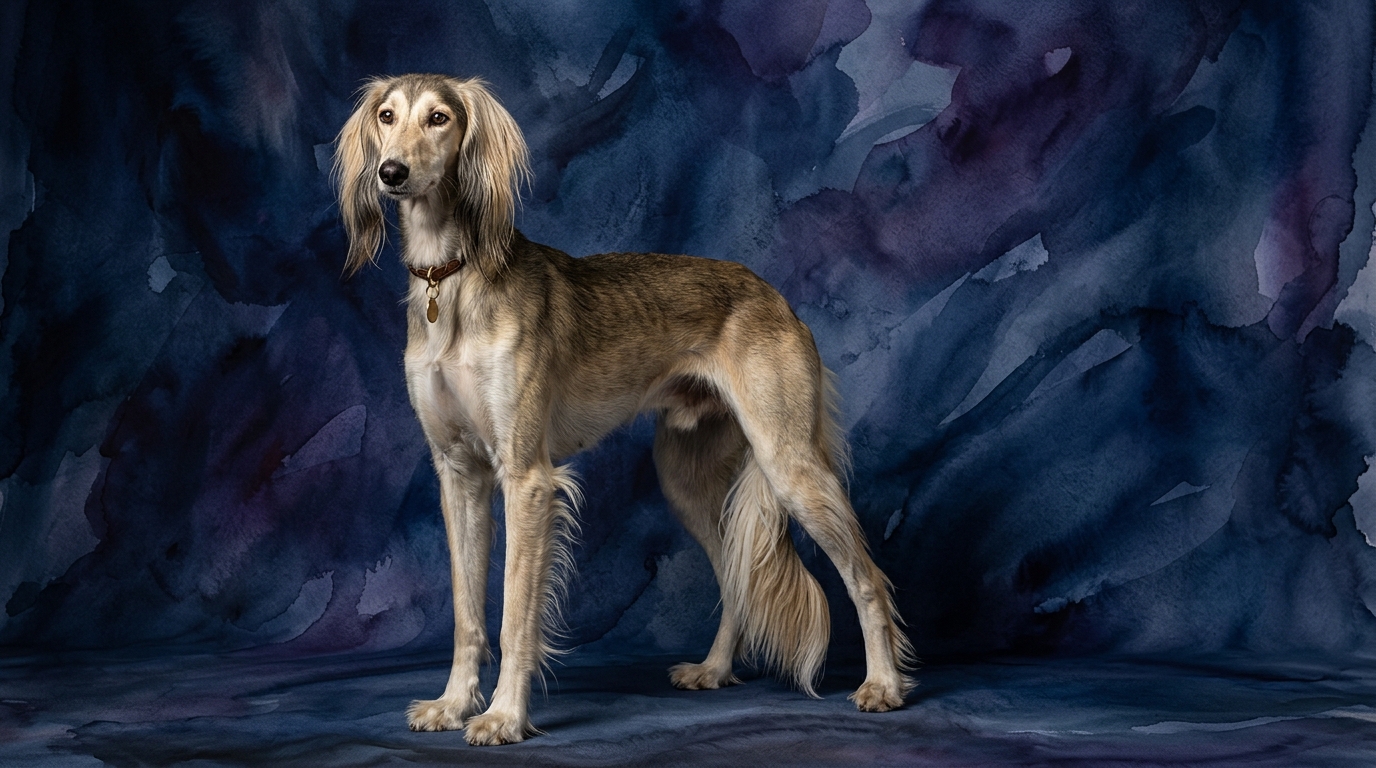
Saluki Profile:
Problem Solving (3/5): Salukis demonstrate a comparable moderate capacity for problem-solving, often approaching challenges with a discerning and sometimes aloof observation, preferring to figure things out independently rather than relying on handler cues.
Training Speed (3/5): Similar to Samoyeds, Salukis learn at a moderate pace, but their training can be influenced by their independent, sometimes cat-like nature; they respond best to positive reinforcement and may disengage if bored or perceive a lack of purpose.
Social Intelligence (3/5): While affectionate with their chosen family, Salukis typically display a lower social intelligence rating, often being reserved or indifferent towards strangers and other dogs, preferring a smaller, more intimate social circle.
Instinctive Drive (3/5): Their instinctive drive is predominantly focused on sight-hunting, with a powerful prey drive that makes them keen observers of movement and quick to pursue; this drive is less about cooperative work and more about independent pursuit.
Memory (3/5): Salukis have a solid memory for their environment, familiar people, and established routines, which helps them navigate their world efficiently and remember where their favorite napping spots or hunting grounds are.
Where the Samoyed’s Cognition Shines
The Samoyed’s cognitive strengths are deeply rooted in its history as a working companion, particularly evident in its exceptional social intelligence. Rated 5/5, their capacity for understanding human emotions and social dynamics is unparalleled compared to the Saluki. This translates into a dog that not only comprehends commands but also anticipates its owner's mood and intentions, fostering a remarkably intuitive partnership. Their instinctive drive, rated 4/5, is geared towards cooperative tasks, meaning they thrive when given a role within the family unit, like participating in family activities or even "herding" children. This strong desire to work alongside humans, combined with their social acumen, makes them highly adaptable to complex household structures and group dynamics, offering a communicative and responsive presence that actively seeks interaction and collaboration. Unlike the more independent Saluki, a Samoyed will actively engage in seeking solutions that involve human input and social negotiation, making them adept at navigating nuanced social situations.
Unpacking the Saluki’s Unique Cognitive Strengths
While not scoring higher in any single cognitive dimension than the Samoyed, the Saluki's overall profile reflects a distinct and effective intelligence shaped by its sighthound heritage. Their problem-solving (3/5) and training speed (3/5) scores, though matching the Samoyed, manifest differently. Salukis often exhibit a quiet, independent problem-solving approach, observing situations carefully before acting, rather than immediately seeking human collaboration. Their instinctive drive (3/5) is intensely focused on pursuit, demonstrating a profound understanding of visual cues and movement, making them masters of their hunting craft. This drive, while not cooperative, showcases a specialized form of intelligence: rapid decision-making in pursuit, spatial awareness over vast distances, and an ability to focus intensely on a moving target. Their moderate social intelligence (3/5) allows them to form deep, though often selective, bonds, demonstrating loyalty without the constant need for human validation seen in more socially driven breeds. The Saluki's cognitive strengths lie in its self-reliance and specialized sensory processing, allowing it to excel in tasks demanding independent thought and swift, targeted action.
Training Dynamics: Samoyed vs. Saluki
Both breeds share a 3/5 rating for training speed, suggesting neither is a "quick study" in the conventional sense, yet their training experiences diverge significantly due to underlying behavioral differences. The Samoyed's superior social intelligence (5/5) means they are generally more inclined to please their human companions and eager to engage in interactive learning. They respond well to positive reinforcement and thrive on praise and connection, viewing training as a shared activity. Their cooperative instinctive drive (4/5) further encourages participation in structured tasks, though their independent streak means consistency is key to prevent them from "testing boundaries." In contrast, the Saluki’s training journey is often shaped by its independent nature and lower social intelligence (3/5). They can be perceived as aloof or easily bored, requiring highly engaging, reward-based methods that cater to their sighthound instincts, such as lure coursing or fast-paced recall games. Their powerful prey drive means off-leash training in unsecured areas can be particularly challenging, as their instinct to chase can override learned commands. While both require patience, training a Samoyed often feels like guiding a willing partner, whereas training a Saluki can feel more like negotiating with a discerning independent thinker who needs to be convinced of the value of the exercise.
Lifestyle Match: Active vs. Relaxed Owners
The choice between a Samoyed and a Saluki largely depends on an owner's lifestyle and their willingness to cater to specific breed needs. Samoyeds, with their 4/5 instinctive drive for cooperative tasks and high social intelligence, are better suited for active owners who enjoy incorporating their dog into daily routines and outdoor adventures. They thrive on activities like hiking, jogging, or dog sports that engage both their physical energy and their desire for partnership. Their need for social interaction means they prefer being part of family activities and can become lonely or destructive if left isolated for extended periods. Conversely, the Saluki, despite its powerful sighthound instincts, can surprise owners with its capacity for relaxation indoors. While they require bursts of intense exercise, such as sprinting in a securely fenced area, they are often content to lounge gracefully for much of the day. Their independent nature and lower social intelligence (3/5) mean they may tolerate alone time better than a Samoyed, making them a potential fit for owners who appreciate a dog that is affectionate but not constantly demanding attention. However, "relaxed" for a Saluki owner still means providing regular opportunities for high-speed running, a non-negotiable outlet for their specialized instinctive drive.
The Verdict
Opt for a Samoyed if you seek a highly social, cooperative companion eager to participate in family life and outdoor activities, valuing a deep, communicative bond.
Select a Saluki if you appreciate an independent, elegant dog that requires specific outlets for its sighthound instincts but is otherwise a calm, discerning presence in the home.
🧠 Find Your Pet's IQ Score
Our Pet IQ Lab assessment covers 25+ tests across 5 cognitive dimensions — personalized to your breed.
Take the Full IQ Test →Frequently Asked Questions
Are Samoyeds difficult to train?
Samoyeds are not inherently difficult, but their moderate training speed (3/5) combined with an independent streak means they require consistent, positive reinforcement. Their high social intelligence makes them responsive to engaging, relationship-based training methods.
Do Salukis need a lot of exercise?
Salukis require regular opportunities for high-speed running in a safe, enclosed space to satisfy their strong instinctive drive. Beyond these bursts of activity, they are often content to be relaxed companions indoors, contrasting with the Samoyed's more sustained activity needs.
Which breed is better with children?
Samoyeds, with their 5/5 social intelligence and cooperative nature, are generally more tolerant and engaging with children, often enjoying being part of family play. Salukis can be gentle but are typically more reserved and may prefer quieter interactions, making careful supervision essential with young, boisterous children.