Side-by-Side Cognitive Profile
The Cosmic Pet Pet IQ Lab employs five key dimensions to evaluate feline cognitive abilities, offering a nuanced understanding beyond simple classifications. For the Scottish Fold and Ragdoll, these dimensions reveal both shared aptitudes and subtle distinctions.
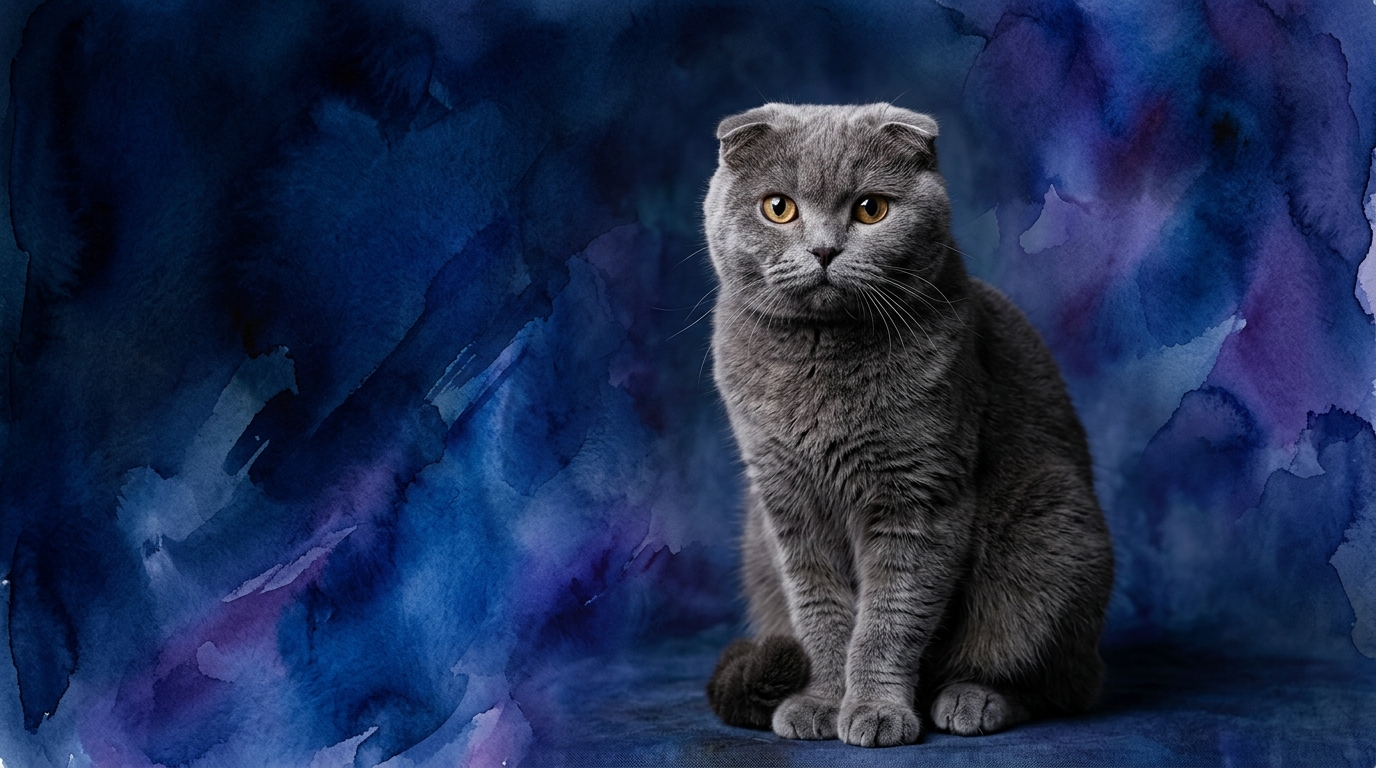
The Scottish Fold demonstrates a Problem Solving score of 3/5, indicating a moderate capacity for navigating challenges. These cats can typically figure out how to open simple cupboard doors, retrieve hidden toys with a few attempts, or learn complex routes around a home. Their approach is often one of trial-and-error, retaining successful strategies for future use. In Training Speed, they also score 3/5, exhibiting a steady aptitude for learning new commands or routines. They grasp basic cues like 'sit' or coming when called with consistent, positive reinforcement, though they may require more repetition than breeds at the higher end of the spectrum. Their Social Intelligence is rated at 4/5, reflecting a strong inclination for social bonding and forming deep attachments with primary caregivers. They are adept at recognizing familiar faces and routines, often seeking out human presence and expressing affection through physical proximity, though they might be slightly less overtly expressive than some social specialists. The Instinctive Drive for Scottish Folds stands at 3/5; their innate motivation for typical feline behaviors like hunting, exploring, and marking territory is moderate. They enjoy engaging with toys that mimic prey and exhibit curiosity about new environments, but their drive is balanced, not typically overwhelming their domestic nature. Finally, their Memory at 3/5 signifies good recall for established routines, learned commands, and the location of favored items, remembering people and places over considerable periods.
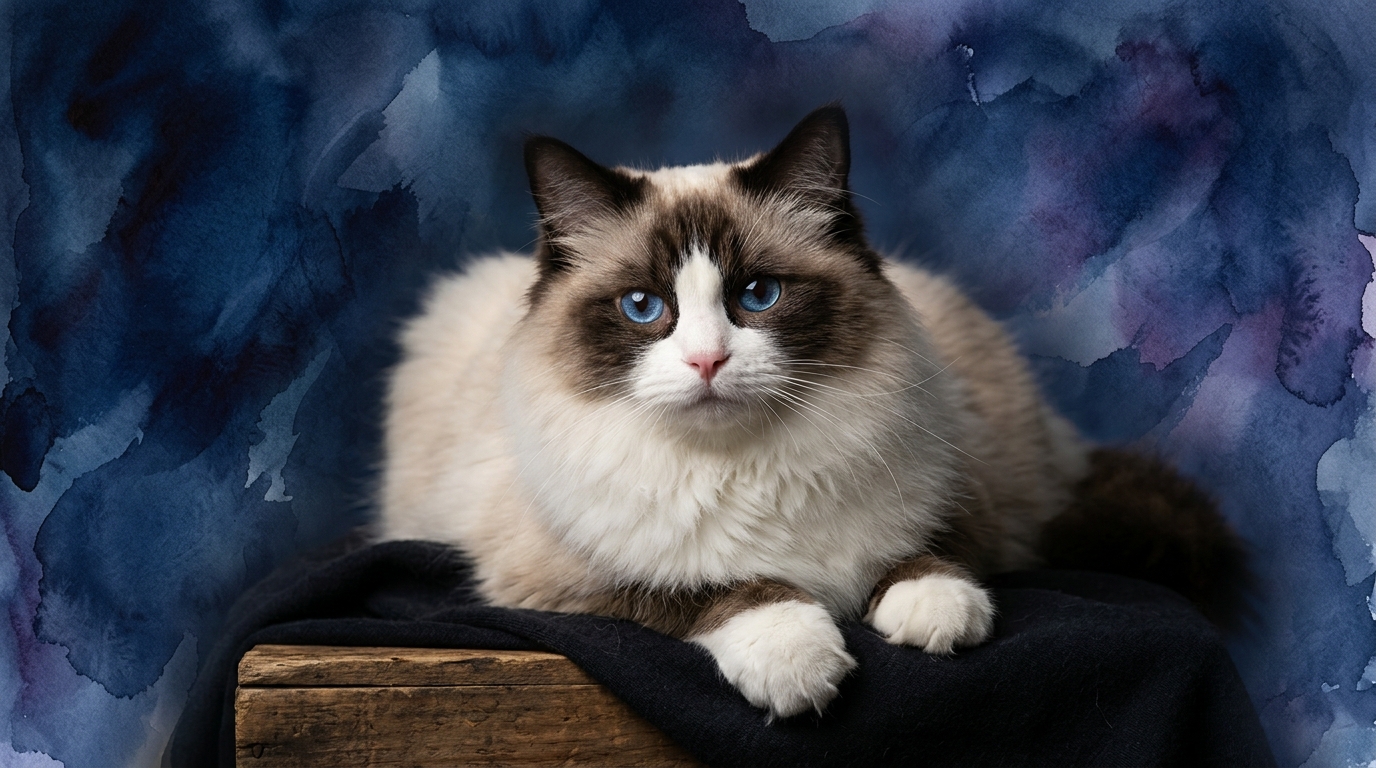
The Ragdoll also scores 3/5 in Problem Solving, demonstrating a moderate ability to solve practical challenges. They are capable of understanding simple mechanisms, like pushing open a door, or learning how to access specific areas to find treats. Their cognitive approach is practical, focused on achieving desired outcomes rather than complex abstract thought. Their Training Speed mirrors the Scottish Fold at 3/5, exhibiting a steady learning pace for new behaviors and commands. They respond well to reward-based training and consistency, capable of mastering a variety of tricks or household routines over time with patient instruction. Where the Ragdoll truly shines is in Social Intelligence, achieving a perfect 5/5. This breed excels in social cognition, displaying an exceptional ability to form profound bonds with humans. Ragdolls are highly attuned to their owners' moods and cues, often seeking out interaction, following family members from room to room, and adapting their behavior to maintain social harmony. Their capacity for empathy and connection is a defining cognitive trait. Their Instinctive Drive, however, is comparatively lower at 2/5. Ragdolls possess a less pronounced motivation for hunting and territory defense. While they will engage in play, their impulse for stalking prey or asserting dominance is less intense, making them generally more placid and less prone to intense bursts of high-energy "cat antics." Their Memory, like the Scottish Fold, is 3/5, meaning they retain information effectively, remembering familiar people, their names, and learned routines, which supports their strong social bonds.
Where Scottish Fold Wins Cognitively
The Scottish Fold, while sharing many cognitive parallels with the Ragdoll in areas like problem-solving and memory, demonstrates a distinct cognitive edge in its Instinctive Drive (3/5 compared to the Ragdoll's 2/5). This isn't about being "more primal," but rather reflects a slightly more pronounced cognitive engagement with the world as a feline explorer and hunter. A Scottish Fold is more likely to be driven by a natural curiosity to investigate new spaces, engage intensely with laser pointers or feather wands, and might spend more time "stalking" imaginary prey or observing birds outside a window. Cognitively, this means their attention is more readily captured by environmental stimuli related to exploration or mimicry of the hunt. They might exhibit a greater internal motivation to physically interact with their surroundings, using their problem-solving skills to access higher perches or discover hidden nooks, driven by this innate exploratory impulse. This nuanced difference can manifest as a more self-directed playfulness, where the cat initiates games or seeks out novel interactions that tap into its inherent cat behaviors, without necessarily needing constant human prompting. This higher drive translates into a cat that might show more persistent focus when engaged in play that simulates hunting, or a greater internal curiosity to explore the boundaries of their territory.
Where Ragdoll Wins Cognitively
The Ragdoll's standout cognitive strength lies unequivocally in its Social Intelligence (5/5, surpassing the Scottish Fold's 4/5). This indicates an unparalleled capacity for understanding and interacting within a human social structure. A Ragdoll's social acumen allows it to not only recognize individual family members but also to discern subtle emotional cues, such as tone of voice, body language, or even facial expressions. Cognitively, this means they are exceptional at forming and maintaining strong social bonds, often displaying behavior that suggests an almost dog-like devotion. They are highly motivated by companionship and approval, readily seeking out human presence and adapting their actions to foster positive interactions. For example, a Ragdoll might instinctively offer comfort when detecting distress in a human, or learn complex household routines simply by observing their owners' habits. Their extraordinary social intelligence makes them highly responsive to human companionship, thriving in environments where they receive consistent interaction and affection, often preferring to be involved in household activities rather than pursuing independent exploration. This manifests as a unique ability to integrate seamlessly into the family unit, often "shadowing" their favorite people throughout the day, driven by an innate desire for connection, making them deeply attuned to the dynamics of their human family.
Which is Easier to Train and Why
Both the Scottish Fold and the Ragdoll exhibit a Training Speed of 3/5, suggesting a similar inherent capacity for learning new behaviors. However, the *experience* of training can differ significantly due to their other cognitive traits, particularly their social intelligence and instinctive drive.
The Ragdoll, with its exceptional Social Intelligence (5/5), often proves to be an easier and more eager participant in training sessions. Their strong desire for human companionship and approval means they are highly motivated by positive reinforcement and the opportunity for interaction with their owner. They are more likely to focus intently on the trainer, responding well to vocal cues and body language, and demonstrating a keenness to please. While their raw learning speed is on par, their cooperative nature and deep social bond can translate into more consistent engagement and quicker real-world application of learned commands, such as coming when called, leash training, or performing simple tricks. Their lower Instinctive Drive (2/5) also means they are generally less distracted by environmental stimuli during training, allowing for more focused learning, making the process feel more intuitive and rewarding for both parties.
The Scottish Fold, while also trainable at a steady pace (3/5 Training Speed) and possessing good social intelligence (4/5), might present slightly different challenges. Their moderately higher Instinctive Drive (3/5) means they may be more prone to distraction by sudden movements, sounds, or the lure of a new scent. While they enjoy interaction, their cognitive focus might occasionally shift to exploring their environment or engaging in self-directed play, especially if a training session isn't captivating enough. Their social bond is strong, but perhaps not as singularly focused on human interaction as the Ragdoll's, meaning they might require a bit more creative engagement and patience to keep their attention fully on the task at hand. Therefore, while both breeds are capable learners, the Ragdoll's profound social motivation often makes the training process feel more effortless and consistently rewarding for both cat and owner, leveraging its innate desire for close human interaction to facilitate learning.
Which Makes a Better Family Pet for Active Owners vs. Relaxed Owners
Choosing between a Scottish Fold and a Ragdoll as a family pet largely depends on the household's lifestyle and energy levels, particularly considering their cognitive profiles.
For active owners who enjoy engaging their pets in interactive play and mental stimulation, the Scottish Fold may be a slightly more suitable companion. Its moderately higher Instinctive Drive (3/5) translates into a greater natural inclination for play that mimics hunting, such as chasing toys, pouncing, and exploring. These cats can be quite curious and might appreciate owners who provide a variety of puzzle toys, opportunities for vertical exploration, or regular interactive play sessions that tap into their innate drive. While still affectionate, their cognitive makeup suggests they derive satisfaction from self-initiated exploration and engaging with their environment in a more active, cat-like manner, aligning well with an owner who can facilitate these activities. Their problem-solving skills (3/5) mean they can figure out complex toys or navigate interesting cat trees, thriving with opportunities for cognitive and physical engagement.
Conversely, for relaxed owners who cherish companionship, quiet affection, and a less demanding pet, the Ragdoll is often the ideal choice. Its exceptional Social Intelligence (5/5) means it thrives on human interaction and physical closeness, often content to simply "be with" its family. These cats are less driven by intense hunting instincts (2/5 Instinctive Drive) and are generally more placid, preferring to cuddle on a lap or follow their owners around the house rather than embark on vigorous explorations. Their cognitive profile makes them highly attuned to human needs for companionship, making them superb "lap cats" or constant, gentle presences. They require less active engagement to be content, finding deep satisfaction in consistent social interaction and a calm home environment, making them perfectly suited for those who desire a devoted and serene feline companion who will readily integrate into a tranquil household rhythm.
The Verdict
Choose a Scottish Fold if you appreciate a cat with a balanced blend of affectionate companionship and a slightly more pronounced independent, exploratory nature, and whose play involves a moderate engagement of their hunting instincts.
Choose a Ragdoll if your priority is an exceptionally devoted, placid companion who thrives on constant human interaction and provides a deeply connected, serene presence in a relaxed home environment.
🧠 Find Your Pet's IQ Score
Our Pet IQ Lab assessment covers 25+ tests across 5 cognitive dimensions — personalized to your breed.
Take the Full IQ Test →Frequently Asked Questions
Do Scottish Folds or Ragdolls enjoy puzzle toys more?
Both breeds have a 3/5 in Problem Solving, indicating they can engage with puzzle toys. However, a Scottish Fold's 3/5 Instinctive Drive might give it a slightly stronger internal motivation to "hunt" for treats hidden in puzzles, while a Ragdoll might be equally engaged, driven more by the social interaction involved with its owner.
Which breed is more likely to follow me around the house?
The Ragdoll, with its outstanding 5/5 Social Intelligence, is significantly more prone to "shadowing" its human companions around the house, driven by its deep desire for connection and companionship. While Scottish Folds are social (4/5), they may not display the same level of constant proximity-seeking.
Are there significant differences in how these breeds learn from their environment?
Both breeds share a 3/5 Memory and Problem Solving, suggesting similar capacities for learning from experience. However, the Scottish Fold's higher Instinctive Drive (3/5) might mean it's more inclined to learn about its environment through active exploration and interaction with objects, whereas the Ragdoll's learning might be more centered around social cues and routines established with its human family.