Side-by-Side Cognitive Profiles
While both the Scottish Terrier and the Borzoi register a consistent 3 out of 5 across all five cognitive dimensions in The Cosmic Pet Pet IQ Lab, understanding these scores requires appreciating the distinct contexts of their breed groups. A '3/5' for a terrier means something different than a '3/5' for a sighthound, reflecting their evolved purposes.
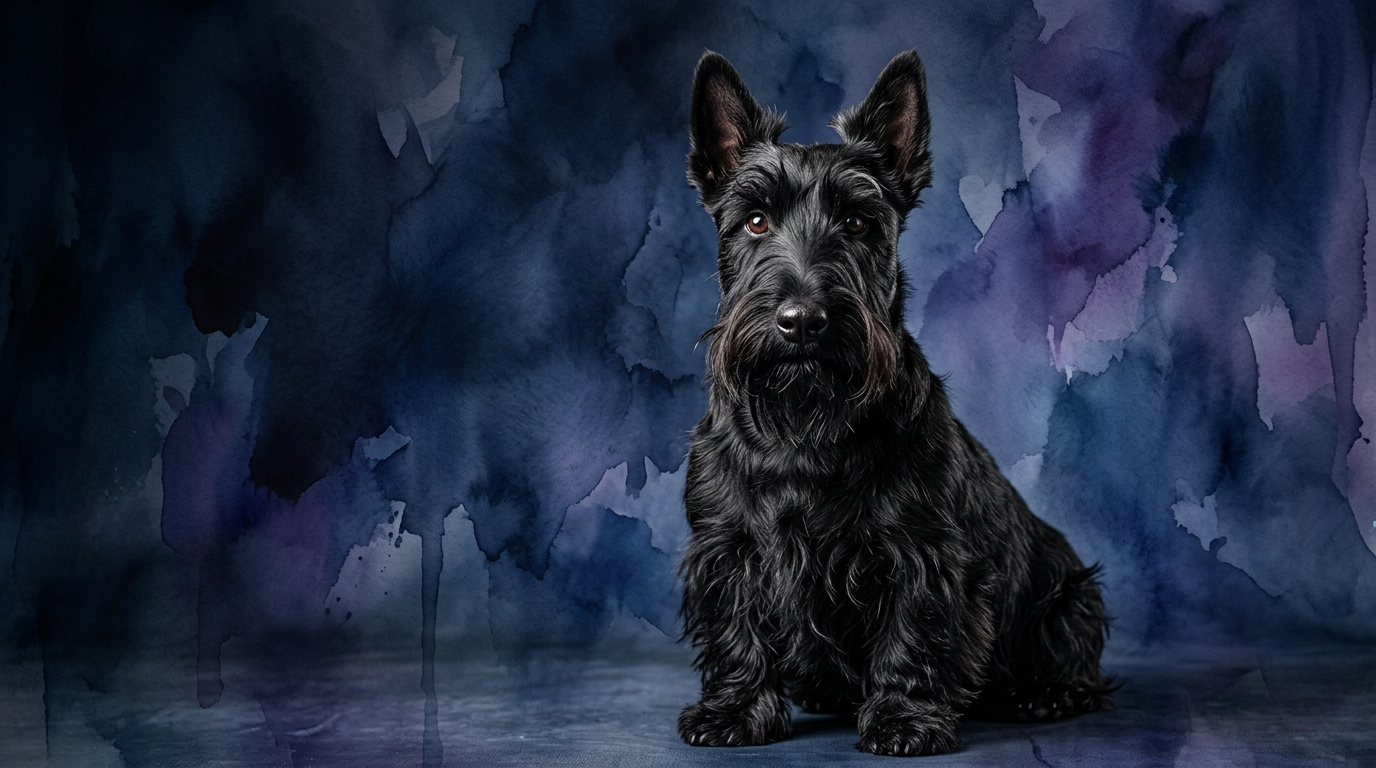
The Scottish Terrier, a dog with a Coren rank of #65, demonstrates its Problem Solving at 3/5 through tenacious ingenuity in navigating confined spaces and persistent pursuit of quarry, often requiring independent decision-making to outwit small game. Their Training Speed, also at 3/5, indicates they are certainly capable learners, but their independent spirit means they often weigh commands against their own perceived interests, demanding engaging and consistent methods. Social Intelligence at 3/5 describes a discerning companion who forms deep, loyal bonds with their family but typically maintains a reserved demeanor with strangers, observing rather than overtly engaging. Their Instinctive Drive, a robust 3/5, manifests as a powerful prey drive for small animals, a strong inclination to dig, and an alert, territorial nature. Finally, their Memory at 3/5 enables them to retain learned behaviors, routines, and the locations of intriguing scents or potential digging spots.
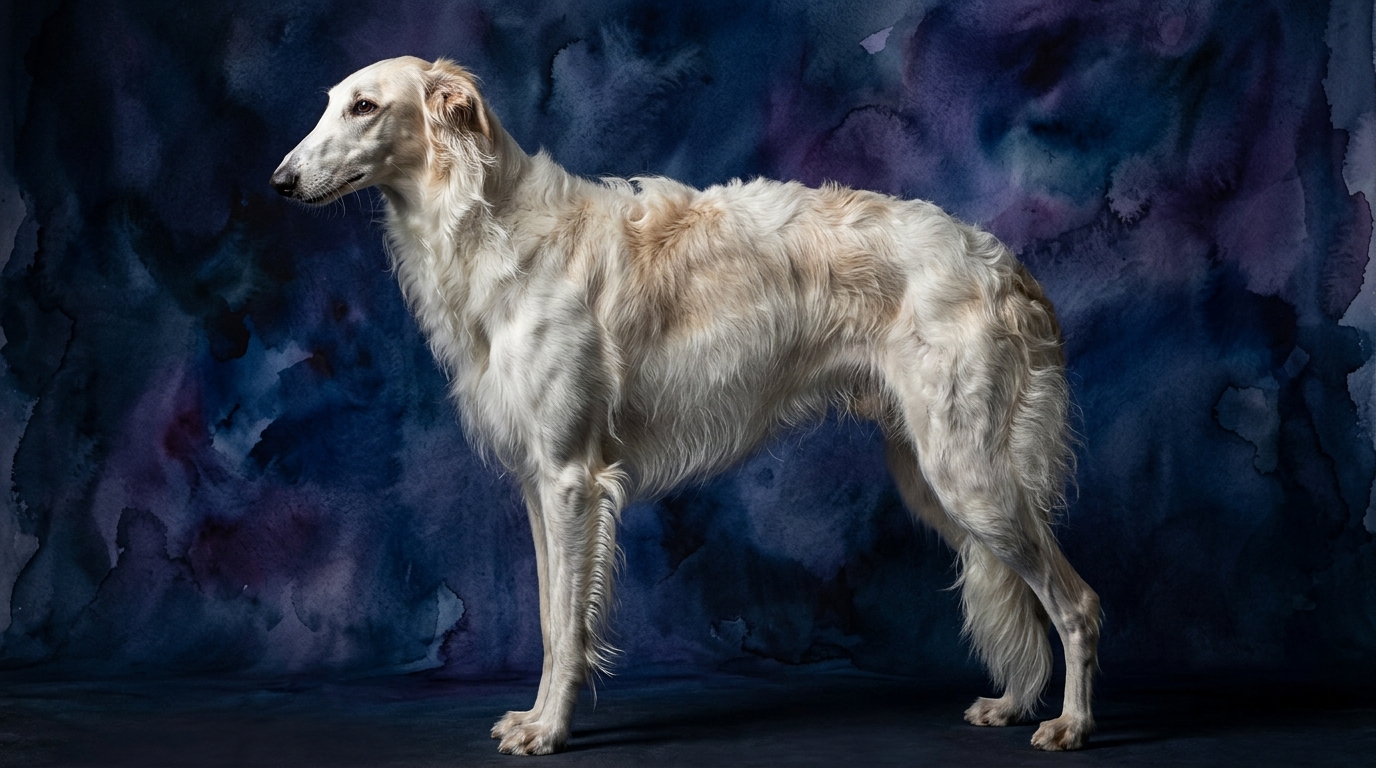
The Borzoi, with a Coren rank of #75, exhibits its Problem Solving at 3/5 primarily through its incredible spatial reasoning and rapid decision-making required for high-speed pursuit across open terrain, anticipating prey movements with precision. Their Training Speed, also 3/5, suggests they learn new commands efficiently, yet their independent and sometimes aristocratic nature means they can be easily bored by repetitive drills, responding best to varied, positive reinforcement that respects their intellect. Social Intelligence at 3/5 portrays a gentle, affectionate companion within their trusted circle, yet they are typically aloof and dignified with outsiders, preferring quiet observation over boisterous interaction. Their Instinctive Drive, a powerful 3/5, is characterized by an unparalleled visual prey drive, compelling them to chase anything that moves quickly over vast distances. Their Memory, at 3/5, is particularly adept at recalling vast landscapes, visual cues, and the intricate patterns of a chase, crucial for their hunting heritage.
Where the Scottish Terrier Excels Cognitively
The Scottish Terrier's cognitive strengths often lie in their tenacious persistence and their capacity for intricate problem-solving within defined, often challenging, environments. While both breeds score 3/5 in problem-solving, a Scottie’s ingenuity manifests in figuring out how to access a hidden toy or persist in digging to a perceived target, showcasing a sustained mental engagement that can outlast many other breeds. Their independent decision-making, honed by generations of solitary hunting, means they are adept at assessing a situation and acting without constant human direction, a trait that translates into a certain 'street smarts' in adapting to various domestic scenarios.
Furthermore, their focused attention on specific tasks, driven by their instinctive drive, allows them to delve deeply into an activity, whether it's tracking a scent or guarding their territory. This intense focus, combined with their sturdy build, means they are less easily distracted by broad environmental stimuli and more likely to see a task through to completion, even if it requires significant mental and physical effort. This deep engagement with a singular objective is a distinct cognitive advantage when the situation demands sustained, independent effort.
Where the Borzoi Excels Cognitively
The Borzoi’s cognitive prowess shines brightest in their extraordinary spatial reasoning, visual processing speed, and the complex decision-making required during high-speed pursuit. Their ability to scan vast landscapes, identify a moving target at incredible distances, and then calculate its trajectory while simultaneously navigating complex terrain at a full gallop is a testament to their unique intellect. This involves rapid assessment of variables, predictive analytics of prey movement, and immediate adjustments to their own course – a truly sophisticated form of problem-solving that is distinct from a terrier's approach.
Beyond the chase, the Borzoi's social intelligence, while reserved, suggests a nuanced understanding of social dynamics within their family unit. Their calm, dignified presence indoors, often described as 'cat-like,' speaks to a strong capacity for self-regulation and a preference for quiet observation once their physical needs are met. This ability to switch from explosive athleticism to serene composure requires a unique cognitive control, allowing them to conserve energy and maintain a peaceful presence in the home, demonstrating a different kind of adaptable intelligence.
Training Dynamics: Independence vs. Tenacity
While both breeds share a 3/5 rating for training speed, their Coren ranks (Scottish Terrier #65, Borzoi #75) suggest slightly different approaches and outcomes in formal obedience. The Scottish Terrier, despite its independence, often possesses a desire to engage in structured activity with its human, even if on its own terms. Their inherent tenacity, which serves them well in hunting, can be channeled into training, requiring consistent, clear boundaries and positive reinforcement to overcome their occasional stubbornness. They may take a bit longer to grasp complex multi-step commands, but their persistence means they will often work diligently to solve the puzzle if the motivation is right.
The Borzoi's independence, conversely, stems more from a self-directed nature and a less inherent drive to 'please' for the sake of it. They are thinkers who need to be convinced of the value of a command. They can grasp concepts quickly, but their high intelligence means they can also become bored with repetitive drills and might simply choose not to perform if they don't see the point or if the reward isn't compelling. Training a Borzoi necessitates short, engaging sessions, varied activities, and a focus on intrinsic motivation rather than rote repetition. While a Scottie might challenge you with its 'what's in it for me?' attitude, a Borzoi might challenge you with its 'why bother?' aloofness, demanding a trainer who understands their sighthound sensibilities.
Matching Canine Minds to Lifestyles
Considering their cognitive profiles and inherent drives, the Scottish Terrier and Borzoi appeal to different owner lifestyles. The Scottish Terrier, with its active mind and bursts of energy, thrives with owners who enjoy consistent mental engagement, structured play, and daily walks that allow for sniffing and exploration. They are not a sedentary companion, requiring owners who appreciate a dog with a strong personality, a watchful nature, and a need for regular, stimulating interaction to prevent boredom-driven behaviors like excessive digging or barking. An owner who can channel their tenacity into constructive activities will find a rewarding companion.
The Borzoi, on the other hand, suits owners who can provide dedicated opportunities for explosive physical activity in safe, enclosed spaces, such as lure coursing or a very large, securely fenced yard. After these exhilarating bursts of speed, they transform into remarkably calm, dignified, and often quite lazy indoor companions, content to lounge near their family. They are not suited for owners seeking a jogging partner for miles on end, nor for those unable to manage their powerful prey drive. An owner who appreciates a quiet, serene presence indoors and can fulfill their unique exercise requirements will find a deeply affectionate, albeit independent, companion.
The Verdict
Choose the Scottish Terrier if you appreciate a compact, tenacious companion with a discerning personality, a sharp mind for problem-solving in everyday scenarios, and a desire for engaging, consistent interaction, even if it comes with a strong independent streak.
Choose the Borzoi if you are drawn to a graceful, serene companion that thrives on exhilarating bursts of speed in safe environments, values a quiet indoor presence, and respects a dog with an independent, visually driven intellect that requires understanding rather than forceful command.
🧠 Find Your Pet's IQ Score
Our Pet IQ Lab assessment covers 25+ tests across 5 cognitive dimensions — personalized to your breed.
Take the Full IQ Test →Frequently Asked Questions
Are Scottish Terriers and Borzoi similar in overall intelligence?
While both breeds score 3/5 across the five cognitive dimensions in our lab, their Coren ranks (Scottie #65, Borzoi #75) suggest slight differences in working obedience. Their intelligence manifests in distinct ways, with terriers often showing more problem-solving in confined spaces and sighthounds excelling in spatial reasoning and visual processing for high-speed pursuits.
How do their hunting instincts affect their cognitive behavior?
The Scottish Terrier’s instinct to hunt small game drives their persistent problem-solving, digging, and focused attention on scent trails. The Borzoi’s sighthound heritage fuels their incredible visual acuity, spatial awareness, and rapid decision-making necessary for chasing prey across open fields, shaping their distinct cognitive strengths.
Do they require different training approaches?
Yes, due to their distinct motivations and independent natures. Scotties benefit from consistent, engaging training that channels their tenacity, while Borzoi respond best to varied, positive reinforcement in short sessions that respect their intellect and avoid boredom, as they need to be convinced of the value of a command.