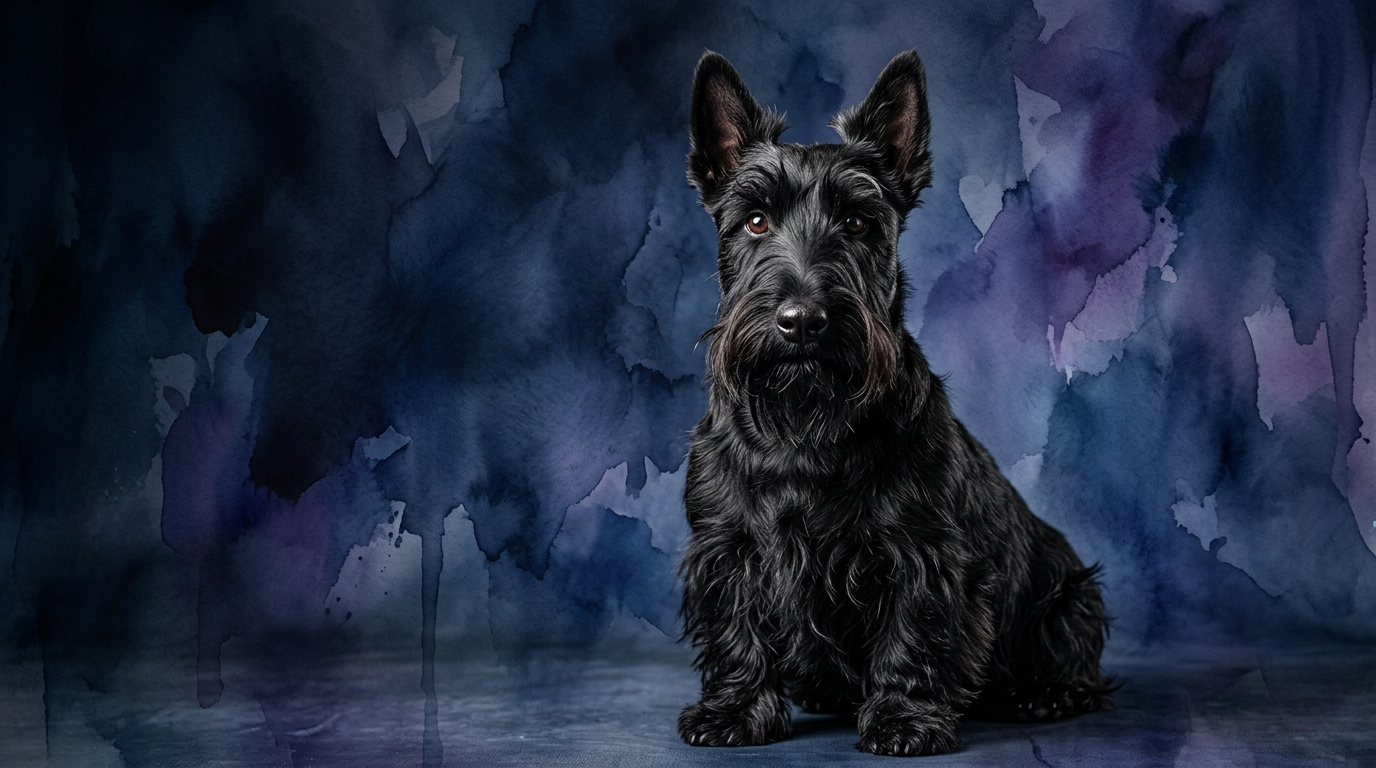
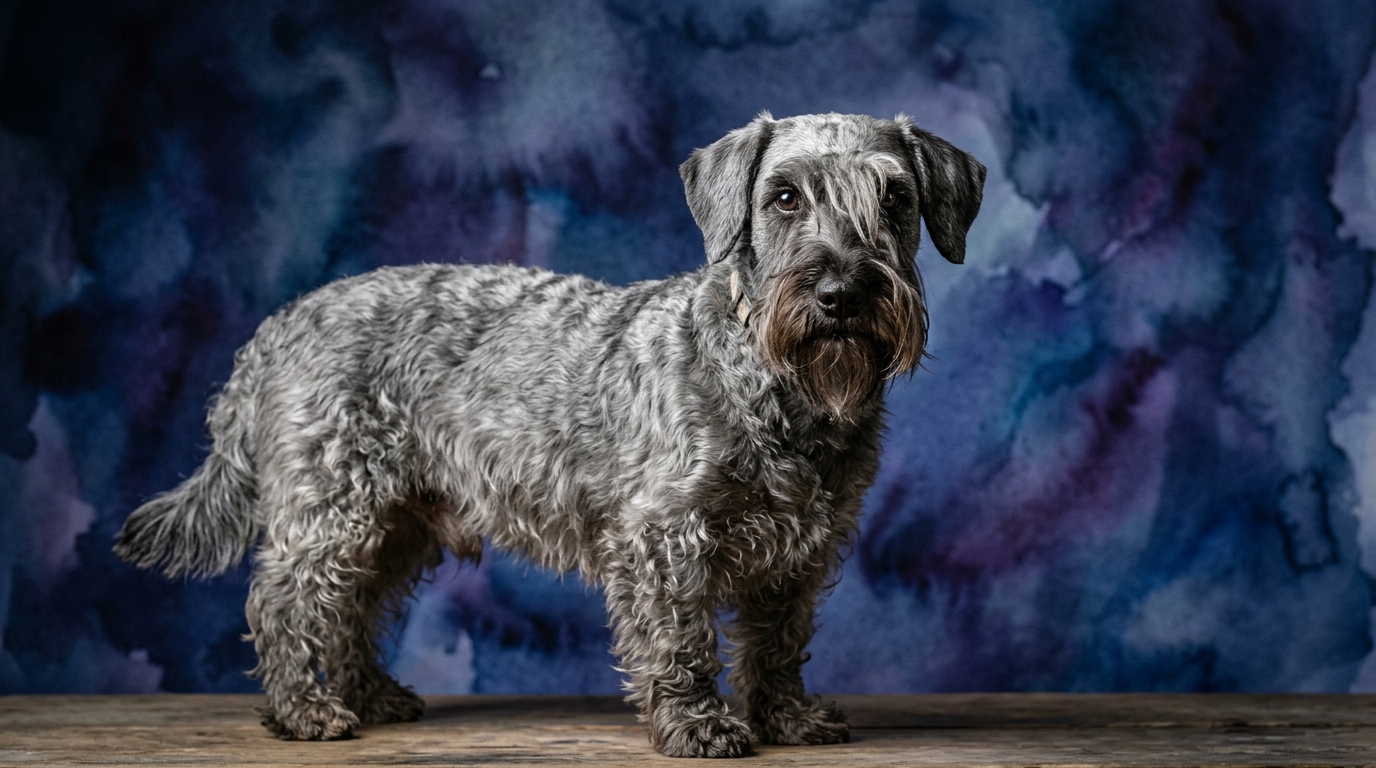
Side-by-Side Cognitive Profiles
At first glance, the Scottish Terrier and the Cesky Terrier present an intriguing cognitive paradox, both registering a consistent 3 out of 5 across all five dimensions of our Pet IQ Lab assessment. This parity doesn't suggest identical minds, but rather a shared moderate capacity that manifests through their unique breed lenses. Understanding these breeds requires looking beyond the numbers to the qualitative expression of their mental faculties.
For Problem Solving (3/5), Scottish Terriers often tackle challenges with a determined, self-reliant approach. Their historical role as tenacious vermin hunters instilled a persistence that translates into figuring out how to reach a coveted treat or navigate a tricky obstacle course, often through sheer will. Cesky Terriers, while equally capable, tend to apply their problem-solving with a slightly more cooperative or observant flair, perhaps seeking human assistance or studying a situation before diving in, reflecting their past as adaptable hunting companions.
Training Speed (3/5) indicates that both breeds learn new commands at a moderate pace, but the journey differs. Scotties, with their inherent independence, might grasp a concept quickly but require consistent, engaging motivation to execute it reliably, often weighing the 'what's in it for me?' factor. Cesky Terriers generally exhibit a greater eagerness to please, making their learning curve potentially smoother for an owner who provides positive reinforcement and clear, gentle guidance.
Social Intelligence (3/5) in the Scottish Terrier often appears as a reserved demeanor, particularly with strangers, reserving their deeper understanding of human cues for their trusted inner circle. They keenly observe family dynamics and can subtly communicate their needs or gauge moods without overt displays. The Cesky Terrier, typically more open and less aloof, demonstrates its social intelligence through a greater adaptability to new people and situations, often integrating smoothly into diverse social settings and showing a clear sensitivity to emotional atmospheres.
Instinctive Drive (3/5) for both breeds is rooted in their terrier heritage, manifesting as a strong inclination to chase, dig, and investigate. For the Scottish Terrier, this drive is often expressed with an intense, focused determination, reflecting their solitary hunting background. The Cesky Terrier's drive, while equally present, might show a slightly more adaptable or cooperative edge, stemming from their history of working in varied terrains and sometimes in packs, though the core prey instinct remains potent.
Finally, Memory (3/5) ensures both breeds retain information moderately well. Scottish Terriers are adept at remembering routines, boundaries, and specific events, especially those tied to strong emotions or rewards, often recalling commands but choosing when to apply them based on current context. Cesky Terriers also possess solid recall for training, house rules, and social interactions, which contributes to their generally more compliant nature and willingness to follow established patterns.
Where the Scottish Terrier Excels Cognitively
The Scottish Terrier's cognitive strengths lie in its robust independence and tenacious resourcefulness. Their problem-solving, though rated 3/5, is marked by an unwavering resolve; once a Scottie sets its mind on achieving a goal, whether it’s retrieving a hidden toy or accessing a forbidden area, they will often employ a series of persistent, sometimes surprisingly clever, strategies until successful. This self-directed cognitive drive can make them adept at navigating complex environments or figuring out intricate puzzles on their own terms.
Furthermore, their distinctive social intelligence, while not overtly demonstrative, allows for a profound understanding of their primary human companions. A Scottie can often anticipate an owner's next move or respond to subtle shifts in mood with uncanny accuracy, forging a deep, unspoken bond. This capacity for nuanced observation and memory of past interactions contributes to their reputation as discerning and loyal companions who truly 'get' their people, even if they don't always show it with effusive displays.
Where the Cesky Terrier Excels Cognitively
The Cesky Terrier's cognitive advantages often manifest in its remarkable adaptability and cooperative spirit. While also possessing a 3/5 in problem-solving, the Cesky tends to leverage its social intelligence more readily, often looking to humans for guidance or adapting its approach based on observed cues. This makes them particularly adept at learning new rules or adjusting to changes in routine with less resistance than their more independent terrier cousins, demonstrating a cognitive flexibility valuable in diverse household settings.
Their social intelligence, also a 3/5, shines through their generally more amenable and less aloof disposition. Ceskys are often quicker to accept new people and situations, and their ability to integrate smoothly into family dynamics points to a refined capacity for reading social environments. This makes them excellent family dogs, capable of forming strong, harmonious relationships with various household members and responding sensitively to the emotional climate around them, fostering a truly interactive partnership.
Training: Which is Easier and Why?
When it comes to training, the Cesky Terrier generally presents a smoother path for most owners. Their moderate training speed (3/5) is complemented by a greater desire to please and a less pronounced independent streak compared to many terriers. They are often more receptive to direction and respond positively to consistent, reward-based methods, making them quicker to internalize commands and less likely to challenge authority. Their slightly softer temperament means they thrive on positive reinforcement and clear communication, eager to cooperate.
The Scottish Terrier, while equally capable of learning at a 3/5 pace, can be more challenging due to its independent nature and inherent stubbornness. They possess the cognitive capacity to understand commands but often require a trainer who can make learning feel like a collaborative effort rather than a directive. Patience, creativity in motivation, and a deep understanding of their terrier mindset are essential to overcome their selective hearing and ensure consistent compliance. Training a Scottie often becomes a test of wills and wit.
Active Owners vs. Relaxed Owners: A Cognitive Match
For owners seeking a companion with a moderate activity level that can adapt to varied lifestyles, the Cesky Terrier often proves to be an excellent cognitive match. They thrive on regular walks, engaging play sessions, and mental enrichment, but are also content to relax quietly with their family. Their adaptability means they can comfortably adjust to both active outings and quiet evenings, making them suitable for owners who appreciate a dog that can transition between different paces of life without becoming overly restless or demanding.
The Scottish Terrier, while not requiring marathon exercise, suits owners who appreciate a dog with a focused, deliberate energy. Their activities often involve bursts of intense investigation, digging, or chasing, followed by periods of dignified rest. They thrive with owners who provide consistent mental stimulation through puzzle toys and short, engaging training sessions, alongside their daily walks. Their independent nature means they are content with quiet companionship but still require consistent engagement to prevent boredom from leading to self-directed, sometimes mischievous, problem-solving.
The Verdict
Choose the Scottish Terrier if you appreciate an independent, dignified companion with a tenacious spirit and a unique approach to problem-solving, and are prepared for a rewarding, albeit potentially challenging, training journey.
Opt for the Cesky Terrier if you seek a more biddable, adaptable, and socially sensitive terrier that thrives on cooperation and integrates seamlessly into a family's varied lifestyle.
🧠 Find Your Pet's IQ Score
Our Pet IQ Lab assessment covers 25+ tests across 5 cognitive dimensions — personalized to your breed.
Take the Full IQ Test →Frequently Asked Questions
Do Scottish Terriers or Cesky Terriers suffer from separation anxiety more?
Neither breed is inherently more prone to severe separation anxiety than the other, as individual temperament and early training play a larger role. However, Scottish Terriers' strong bonds with their primary caregivers and independent nature might make them more prone to expressing distress if not properly accustomed to alone time. Cesky Terriers, being generally more cooperative, might adapt more readily to strategies for preventing anxiety.
Are Scottish Terriers good with children compared to Cesky Terriers?
Both breeds can be good with respectful children, but their social intelligence manifests differently. Scottish Terriers are often tolerant but prefer calm interactions and may not appreciate boisterous play, best suited for older, considerate children. Cesky Terriers are generally more amiable and adaptable, often integrating better into a busy family environment and potentially being more forgiving of the unpredictable nature of younger children, provided interactions are supervised and appropriate.
What kind of mental stimulation do these breeds enjoy most?
Scottish Terriers often enjoy puzzle toys that challenge their problem-solving skills, scent work that engages their instinctive drive, and short, engaging training sessions that allow them to 'win.' Cesky Terriers thrive on interactive games that involve their human companions, obedience training that reinforces their desire to please, and varied enrichment activities that leverage their adaptability and cooperative nature.