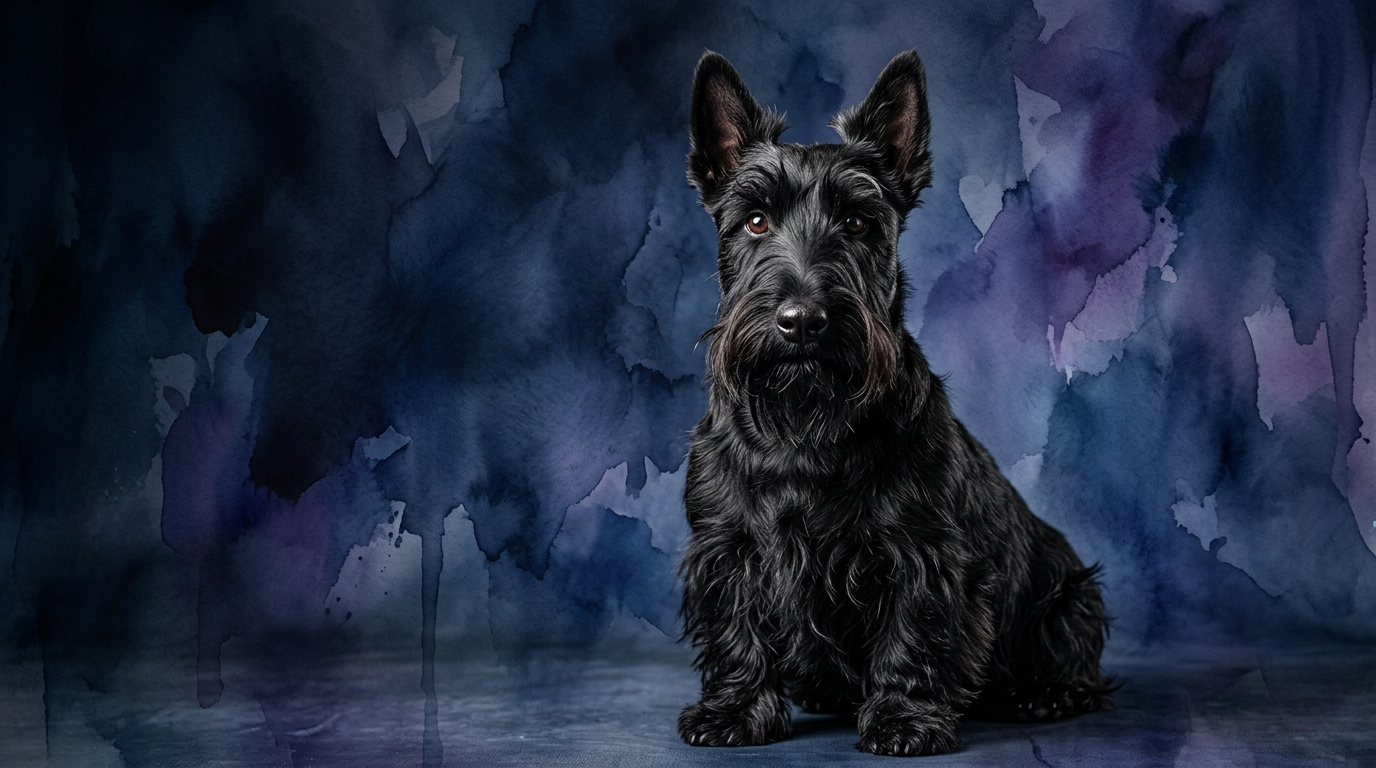

Side-by-Side IQ Profile: Scottish Terrier
The Scottish Terrier exhibits a moderate capacity for problem-solving (3/5), typically manifesting as focused determination in tasks relevant to their historical role. This isn't about complex puzzles but rather persistent, often independent, strategizing to achieve a goal, like finding a hidden treat or navigating an obstacle to reach a desired location. Their solutions are often direct and driven by instinct, reflecting a terrier's single-minded pursuit.
With a moderate training speed (3/5), Scottish Terriers are capable of learning new commands and routines, but their independent nature often means they require consistent, patient, and engaging methods. They can quickly grasp what is expected but may choose to comply based on their own perceived value of the task or reward, rather than an inherent desire to please. Their learning is often solidified through repetition and positive reinforcement that appeals to their strong will.
Scottish Terriers possess a moderate level of social intelligence (3/5), forming deep, loyal bonds with their primary caregivers. While they can be reserved or aloof with strangers, they are adept at reading the moods and intentions of their trusted humans, often displaying a quiet empathy. Their social interactions are discerning, valuing quality over quantity, and they communicate their needs and desires through subtle cues and expressions.
Their moderate instinctive drive (3/5) is heavily influenced by their terrier heritage, manifesting as a strong urge to dig, chase small animals, and patrol their territory. This drive is not overwhelming but consistently present, informing their curiosity and sometimes leading to independent ventures. This instinctual wiring means they are often alert and responsive to environmental stimuli, always ready for an adventure or a perceived challenge.
Scottish Terriers demonstrate a moderate memory capacity (3/5), enabling them to recall learned commands, routines, and the locations of favored objects or people. They remember past experiences, both positive and negative, which shapes their future behaviors and social interactions. This memory contributes to their consistent character and their ability to navigate familiar environments with confidence.
Side-by-Side IQ Profile: Chinese Crested
The Chinese Crested also shows a moderate aptitude for problem-solving (3/5), but their approach is often more nuanced and socially oriented. They might excel at figuring out how to gain attention from their owner, manipulate a toy for play, or navigate complex household environments to find a comfortable spot. Their problem-solving is less about independent hunting and more about adapting to and influencing their immediate social and domestic surroundings.
With a moderate training speed (3/5), Chinese Crested dogs are generally attentive and eager to learn, often motivated by praise and affection. They can pick up new commands and tricks at a steady pace, especially when the training is fun and positive. Their sensitive nature means they respond best to gentle encouragement and clear, consistent instruction, making them responsive learners who aim to please their human companions.
Chinese Cresteds exhibit a moderate social intelligence (3/5), characterized by their strong attachment to their families and a keen awareness of social dynamics within the home. They are often highly attuned to human emotions, offering comfort or seeking interaction when sensing a shift in mood. Their social skills are geared towards companionship, thriving on close physical proximity and reciprocal affection, making them excellent at reading and responding to human cues.
Their moderate instinctive drive (3/5) is typically channeled into play, seeking comfort, and interacting with family members rather than strong prey drive or territoriality. While they might occasionally chase a squirrel or bark at a perceived intruder, these instincts are generally less intense and more easily redirected than those of a working terrier. Their drives are often directed towards seeking warmth, security, and affectionate engagement.
Chinese Cresteds possess a moderate memory (3/5), allowing them to remember routines, household rules, and the people they encounter. They recall training cues effectively and can remember past interactions, which influences their trust and behavior towards individuals. This memory contributes to their reliability as companions and their ability to thrive within a structured home environment.
Where Scottish Terrier Wins Cognitively
The Scottish Terrier's cognitive strengths truly shine in scenarios demanding independent thought and tenacious focus. Their problem-solving, though rated 3/5, is distinctly geared towards overcoming physical obstacles or pursuing a goal with unyielding determination, a direct legacy of their vermin-hunting past. This means they often display a unique ingenuity when faced with a barrier, not giving up easily, and employing a trial-and-error approach until a solution is found, particularly if it involves digging or navigating tight spaces. Their instinctive drive, also 3/5, is more singularly directed and robust, giving them an edge in tasks requiring sustained attention to a specific target or scent, making them excellent at scent work or engaging in games that simulate a 'hunt.' This internal motivation allows them to work through challenges with less external prompting compared to breeds whose drives are primarily social.
Where Chinese Crested Wins Cognitively
The Chinese Crested, while sharing the same 3/5 cognitive scores, demonstrates distinct advantages in areas requiring adaptability and social attunement. Their problem-solving is often more refined for navigating complex social situations or domestic environments, excelling at figuring out how to gain their owner's attention or find the coziest spot in a room. Their social intelligence, rated 3/5, manifests as an exceptional ability to read human body language and emotional states, allowing them to provide comfort or seek interaction at opportune moments. This sensitivity makes them particularly adept at forming deep, intuitive bonds, often anticipating their owner's needs or desires with subtle cues. Their moderate training speed benefits from their eagerness to please and their focus on their human companions, making them highly responsive to positive reinforcement and gentle guidance, a valuable trait for learning new tricks or adapting to household rules.
Which Is Easier to Train and Why
When considering ease of training, the Chinese Crested generally presents a more straightforward experience for most owners. While both breeds have a training speed rating of 3/5, the Chinese Crested's inherent desire to please their human companions and their sensitivity to emotional cues make them highly receptive to positive reinforcement. They thrive on praise and affection, which acts as a powerful motivator, leading to quicker and more consistent responses to commands. Their social intelligence means they are often more focused on their handler during training sessions, reducing distractions. In contrast, the Scottish Terrier's independent and often stubborn nature, a hallmark of their terrier group, means that while they *can* learn quickly, they might choose *not* to comply if a command doesn't align with their immediate interests or if they perceive a better alternative. Training a Scottie requires more patience, creativity, and a consistent, firm yet fair approach to overcome their self-assured will, often feeling less 'easy' despite their moderate learning capacity.
Which Suits Active Owners vs. Relaxed Owners
For owners leading a more relaxed lifestyle, the Chinese Crested typically makes an excellent companion. Their moderate instinctive drive means they are content with moderate exercise, such as daily walks and indoor play, and their strong social intelligence makes them happiest when nestled close to their human family. They thrive on companionship and are perfectly suited for quiet evenings on the couch, requiring less intense physical or mental stimulation to remain content. Their adaptability to indoor living and lower energy demands align well with a calmer pace. Conversely, the Scottish Terrier, with its moderate but distinctly focused instinctive drive and independent problem-solving, is better suited for more active owners. While not requiring marathon runs, they benefit from consistent outdoor exploration, engaging walks that allow for sniffing and 'hunting' opportunities, and mental challenges that satisfy their tenacious nature. Owners who enjoy structured outdoor activities, puzzle toys, and consistent engagement to channel their Scottie's determined spirit will find a rewarding partnership, as their cognitive makeup thrives on purpose-driven activity.
The Verdict
Choose the Scottish Terrier if you appreciate a tenacious, independent canine companion with a strong sense of purpose, ideal for owners who enjoy consistent engagement in purposeful activities and can appreciate a dog with a robust, self-assured personality.
Choose the Chinese Crested if you seek an affectionate, highly attuned companion eager to please and thrive on close social bonds, perfect for owners who value a sensitive, adaptable dog content with a more relaxed domestic lifestyle.
🧠 Find Your Pet's IQ Score
Our Pet IQ Lab assessment covers 25+ tests across 5 cognitive dimensions — personalized to your breed.
Take the Full IQ Test →Frequently Asked Questions
Do Scottish Terriers or Chinese Crested dogs respond better to specific training methods?
Scottish Terriers often benefit from short, engaging sessions that appeal to their problem-solving and instinctive drive, using high-value rewards to overcome their independence. Chinese Crested dogs, with their social intelligence and desire to please, respond exceptionally well to positive reinforcement, praise, and gentle, consistent methods that build trust.
How do their social intelligence scores of 3/5 differ in daily interaction?
The Scottish Terrier's 3/5 social intelligence manifests as deep loyalty to a select few, often reserved with strangers but keenly observant of their family's moods. The Chinese Crested's 3/5 social intelligence is expressed through a more overt desire for companionship and physical closeness, actively seeking interaction and comfort, and being highly attuned to human emotional cues.
Can a Chinese Crested participate in dog sports despite being a Toy breed?
Absolutely! While their instinctive drive might be different from working breeds, Chinese Crested dogs can excel in sports like agility, obedience, and even rally. Their moderate training speed and eagerness to please, combined with their natural athleticism, make them surprisingly capable and enthusiastic participants, especially when training is fun and positive.